24 wholesale USB fast-charge cables can be a useful test-market or replenishment order, but buyers should evaluate compatibility, charging protocols, power ratings, documentation, packaging, and supplier reliability rather than quantity or price alone. A cable delivers its intended performance only when the phone, charger, connector, cable, and charging protocol work together.[2]
Many buyers search for 24 wholesale USB fast-charge cables because they want a small, practical order for a retail test or urgent replenishment. The problem is that “fast charge” does not describe one universal performance level.[1] A low-priced cable may look attractive until customers report slow charging, poor compatibility, or unclear product claims. I recommend checking the complete charging system and supplier documents before confirming the order.
Quick Answer
- Treat 24 cables as a small test order or inventory replenishment, not a fixed industry packaging standard or universal MOQ.[3]
- Confirm the USB connector types, supported charging protocols, power rating, data capability, and intended device compatibility.
- Do not assume that a high-wattage label guarantees the same charging speed on every phone or tablet.
- Request product specifications, packaging artwork, test reports, and relevant certification documents from the supplier.
- Compare the likely return and after-sales risk, not only the unit quotation.
I have handled USB cable quotations for European and American customers for many years. In my experience, the most useful purchasing conversation starts with the intended retail use, not with the phrase “How cheap can 24 pieces be?” The sections below explain how I would review this type of order with a retailer, wholesaler, or e-commerce seller.
Why should 24 wholesale USB fast-charge cables not be evaluated by quantity, price, or the phrase “fast charge” alone?
A small order can still create a large commercial problem when the product description is unclear. Twenty-four pieces may appear low risk, but a retailer can still receive negative reviews, returns, and customer questions if the cable does not work as shoppers expect. The safer approach is to evaluate the cable as part of a complete charging solution.
Twenty-four USB cables should be assessed according to their intended devices, charger combinations, charging protocol support, physical specifications, packaging, and supplier documentation. Quantity can define the purchasing purpose, but it cannot prove performance or compatibility.
What does “24 pieces” actually mean?
- The buyer wants to test a new product.
- The buyer needs a small replenishment quantity.
- The supplier accepts a mixed sample order.
- The product is packed in inner boxes of 12 or 24.
- The buyer is asking for a trial quantity before a larger purchase.
I would confirm the commercial meaning in writing. The supplier may have different prices for 24, 100, 500, and 1,000 pieces. The supplier may also apply a sample fee, shipping charge, or packaging surcharge to a small order. A small quantity can sometimes have a higher unit cost because production, inspection, and export handling still require time.
Why is the word “fast” incomplete?
- The power source or wall charger.
- The cable connector and construction.
- The phone, tablet, laptop, or other device.
- The charging protocol supported by each part.
- The device’s battery condition, temperature, and charging control.[4]
- The quality and resistance of the cable.[7]
A USB-C cable marked with a high power figure may support a certain capability under specified conditions, but that does not mean every connected device will charge at that level.[5] I explain this point carefully when customers ask for one cable that will “fast charge everything.” That expectation is usually too broad.
How do 24 wholesale USB fast-charge cables work with different devices and protocols?
Compatibility should be reviewed before price comparison because the wrong connector or protocol can make an apparently good product difficult to sell. Buyers should identify the devices they expect customers to use and then match the cable specification to those devices and chargers.
USB fast charging depends on agreement between the device, charger, cable, and charging protocol. Buyers should confirm connector type, power capability, protocol notes, and compatibility limits instead of treating “fast charge” as a universal feature.
Connector type is the first filter
| Cable type | Typical use | Main purchasing question |
|---|---|---|
| USB-A to USB-C | Older chargers and many general accessories | Does the charger support the required output through USB-A? |
| USB-C to USB-C | Modern phones, tablets, laptops, and USB-C chargers | Does the cable support the required power and data capability? |
| USB-A to Lightning | Older Apple accessory ecosystems and existing USB-A chargers | Is the product claim and documentation suitable for the intended market? |
| USB-C to Lightning | Certain Apple device charging setups | Does the cable meet the buyer’s required compatibility and certification expectations? |
| USB-C to Micro-USB | Older accessories and selected low-cost electronics | Is there enough market demand to justify the inventory? |
The connector at each end affects the charger and device combination. A USB-A to USB-C cable should not be presented as equivalent to a USB-C to USB-C cable.[8] The customer may use a different wall charger, and the resulting charging capability can differ.
Charging protocols need specific wording
- USB Power Delivery, often abbreviated as USB PD.
- Programmable Power Supply, or PPS, where relevant.
- Quick Charge or another brand-specific charging system.
- Manufacturer-specific fast-charging modes.
- General high-current charging without a named protocol.
I would ask the supplier to state exactly which protocols the cable is designed to support. I would also ask whether the statement applies to charging only, charging and data transfer, or a specific charger and device combination.
The USB-IF USB Power Delivery information can help buyers understand the role of USB Power Delivery. The USB-IF Certified USB Product Search is also useful when a supplier claims a product has a particular USB certification. I would still verify that the document applies to the exact model, not only to a similar-looking product.
Power rating is not the same as guaranteed charging speed
A cable may be described with a wattage, current, or voltage figure. Buyers should ask what the figure represents and under which test conditions. A higher number may indicate a capability of the cable, but it does not override the limits of the charger or device.[6]
For example, a phone may accept only a lower input level even when the cable and charger have higher capabilities. A laptop may require a suitable USB-C cable and charger combination. A cable can also carry power while offering limited or unspecified data performance.
What specifications should buyers request before ordering 24 wholesale USB fast-charge cables?
A short specification sheet can prevent many misunderstandings. Before I compare quotations, I ask the supplier to provide the exact model number, connector combination, cable length, power information, protocol statement, data specification, materials, packaging, and available documents.
Buyers should request a model-specific specification sheet and verify the connector, length, power capability, charging protocol, data function, materials, packaging, and supporting documents. A supplier should identify limits clearly rather than use “fast charge” as the only technical description.
A practical specification checklist
- Model number: The exact product reference used by the supplier.
- Connector combination: For example, USB-C to USB-C or USB-A to USB-C.
- Length: Such as 1 m or another agreed length, with reasonable tolerance stated if relevant.
- Power capability: The claimed current, voltage, or wattage, together with conditions.
- Protocol support: USB PD, PPS, Quick Charge, or another named system where applicable.
- Data transfer: Charging-only, USB 2.0, a higher data specification, or unspecified.
- Cable construction: Conductor material, shielding, jacket material, strain relief, and outer diameter if important.
- Color and appearance: Especially important for retail planograms and private-label orders.
- Packaging: Individual bag, paper box, blister, display box, or bulk packing.
- Included accessories: Such as cable ties, labels, or protective caps.
- Documents: Test reports, declarations, certification evidence, and quality records that apply to the exact model.
The supplier should not need to hide basic product information behind a vague catalogue title. If the same photograph appears beside several different specifications, I would request a model-specific confirmation.
How should buyers read a supplier quotation?
| Quotation item | What I would confirm |
|---|---|
| Unit price | Quantity basis, currency, tax treatment, and whether it includes standard packaging |
| MOQ | Whether 24 pieces is accepted for this model and color |
| Sample or setup fee | Whether the fee is refundable against a later order |
| Packaging | Standard packaging, custom printing, barcode, language, and artwork charge |
| Lead time | Whether the estimate starts after payment, artwork approval, or sample approval |
| Shipping | Incoterm, courier cost, carton size, and destination |
| Warranty or after-sales | Defect handling process, evidence required, and replacement method |
| Payment | Deposit, balance, and payment method |
Documentation needs careful verification
- Whether the document names the same supplier and model.
- Whether the test scope covers the claimed product.
- Whether the document is current and readable.
- Whether the issuing laboratory or organization can be identified.
- Whether the document supports the destination market and intended claim.
For European sales, I would also review applicable product, packaging, labeling, and environmental requirements with a qualified compliance professional. The European Commission’s CE marking guidance explains that CE marking applies only to products covered by relevant EU rules, and it is not a general quality mark. The buyer remains responsible for checking the requirements that apply to the finished product and sales channel.
How should retailers compare 24 wholesale USB fast-charge cables from suppliers?
A supplier should be evaluated on communication accuracy, specification control, sample quality, packaging support, and after-sales handling. A low quotation may not be economical if the supplier changes the model, cannot explain compatibility, or provides documents that do not match the product.
Retailers should compare suppliers using a weighted review of product fit, specification clarity, quality controls, documentation, packaging, MOQ, lead time, and after-sales support. Price should be one factor, not the entire selection method.
A simple supplier evaluation table

| Evaluation factor | Strong supplier response | Warning sign |
|---|---|---|
| Product identity | Exact model number and consistent photos | Several models described with one generic title |
| Compatibility | Clear device and protocol limitations | “Works with all fast-charge phones” |
| Technical details | Power and data claims explained | Only a high wattage number is shown |
| Documents | Model-specific files available for review | Unclear screenshots or unrelated reports |
| Sample process | Sample approval and inspection plan | Supplier discourages written confirmation |
| Packaging | Retail artwork and language options explained | Packaging details are left until production |
| Quality control | Defined incoming, in-process, and final checks | No explanation of inspection |
| After-sales | Defect evidence and resolution process | No written policy |
| Commercial terms | Quantity, lead time, and shipping basis are clear | Price changes after basic questions |
I have found that clear communication is often a useful early indicator. A capable supplier may not promise that one cable works with every device. Instead, the supplier will usually ask which charger, phone brands, connector types, and retail claims are involved.
What should a small test order prove?
- Does the physical design match the listing and packaging?
- Do the connectors fit the intended charger and device combinations?
- Does the cable perform as described under the buyer’s planned use?
- Are the retail claims understandable and supportable?
- Does the packaging meet barcode, language, and shelf requirements?
- Does the supplier maintain consistent model identification?
- Can the supplier explain how defects will be handled?
The buyer can ask a qualified technician or testing service to evaluate application-specific performance. I can help organize specifications and supplier questions, but a trader’s quotation review is not a substitute for laboratory or professional electrical evaluation.
Build a landed-cost comparison
- Product price for 24 pieces.
- Sample or small-order fees.
- Individual packaging.
- Custom labels and barcodes.
- Freight and courier charges.
- Import duties and taxes.
- Inspection costs.
- Expected replacement or return handling.
- Marketplace or retailer compliance costs.
For related purchasing guidance, I would connect this article to an internal resource such as How to Choose a Wholesale USB Cable Supplier or USB-C Cable Specifications Buyers Should Check. Those topics can help buyers create a repeatable procurement process.
What packaging and retail claims matter for 24 wholesale USB fast-charge cables?
Packaging must explain the product without creating a promise that the cable cannot support. A good package identifies the connector type and gives customers enough information to choose correctly. It should also support the retailer’s barcode, language, display, and traceability needs.
Retail packaging should state the connector combination, length, relevant charging or data capability, compatibility limits, and supplier or model information. Buyers should avoid unsupported universal claims and confirm artwork before production.
Claims I would review carefully
- “Fast charging.”
- “High power.”
- “Universal compatibility.”
- “For laptop charging.”
- “Supports 100 W.”
- “Data cable.”
- “High-speed data transfer.”
- “Certified.”
- “Original” or “official,” where those words could create brand concerns.
The claim may be acceptable when it includes a clear condition. For example, “supports charging up to the stated power with compatible equipment” is more responsible than “charges all devices at maximum speed.”
If the cable is charging-only, the package should not suggest that it is suitable for file transfer. If the data speed is not confirmed, the packaging should not imply a specific data standard. These details can reduce customer confusion and after-sales questions.
Packaging requirements vary by market
- English or multilingual instructions.
- Product and importer information.
- Barcode and SKU.
- Country-of-origin information where applicable.
- Recycling or packaging marks where required.
- Warning statements.
- Retail-ready hanging holes or shelf boxes.
- Consistent carton labels for warehouse receiving.
For EU sales, the European Commission packaging and packaging waste information is a useful starting point. Buyers should obtain current, product-specific advice because requirements can change and may differ according to packaging materials and national implementation.
Customization can change the order economics
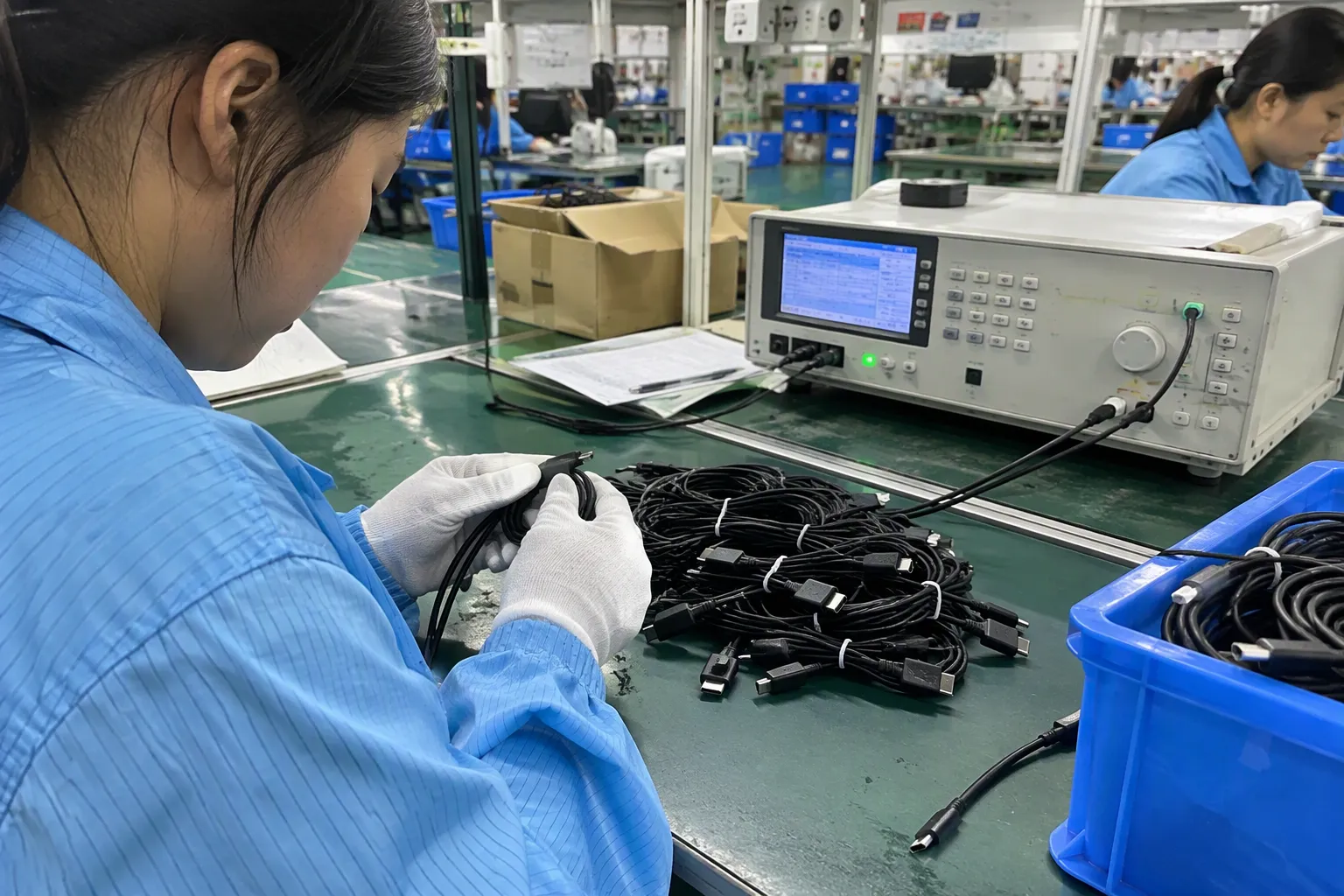
- Standard neutral packaging.
- A sticker label with the buyer’s barcode.
- A small custom insert.
- Private-label packaging at a larger MOQ.
- Mixed colors or connector types.
- A display box for several units.
I would separate the product approval from the artwork approval. The buyer should confirm the technical model first. Then the buyer should check that the final package uses the same connector, length, and power wording.
How can buyers reduce returns and after-sales disputes on 24 wholesale USB fast-charge cables?
Returns often begin with a mismatch between what the customer expected and what the product actually supports. Clear listings, controlled specifications, and a simple compatibility explanation can reduce this risk. Supplier cooperation also matters when a defect or confusion appears after launch.
Buyers can reduce disputes by matching the cable to a defined use case, using conditional product claims, checking samples, recording approvals, and agreeing on a written defect-handling process before shipment.
Separate compatibility issues from physical defects
- The charger does not support the expected protocol.
- The phone limits charging because of temperature or battery status.
- The customer uses the wrong connector combination.
- The cable supports charging but not the expected data function.
- The cable has a physical defect.
- The product listing created an unrealistic expectation.
These cases require different responses. A retailer should have a basic troubleshooting script that asks about the device, charger, cable ends, and charging display. The retailer should not automatically accept that every slow-charge report proves a manufacturing defect.
Keep an approval record
- Approved product photograph.
- Model number and specification sheet.
- Quotation and agreed quantity.
- Packaging artwork.
- Supplier documents.
- Sample comments.
- Any agreed inspection standard.
- Shipping carton information.
- Written after-sales terms.
Use a risk-based inspection approach
A qualified inspection provider can help buyers evaluate dimensions, appearance, connector fit, labeling, packaging, and other agreed characteristics. The buyer should define the inspection scope before the order is shipped.
I would not present a supplier’s internal check as independent laboratory evidence. I would also avoid promising a defect rate or performance result without a relevant report. The most appropriate inspection level depends on the product, sales channel, customer expectations, and legal obligations.
Plan the customer-facing explanation
This statement does not replace complete specifications, but it helps set a realistic expectation. The retailer can also list whether the cable supports data transfer and which devices or charger types it is intended to serve.
Is a 24-piece order suitable for your wholesale USB cable strategy?
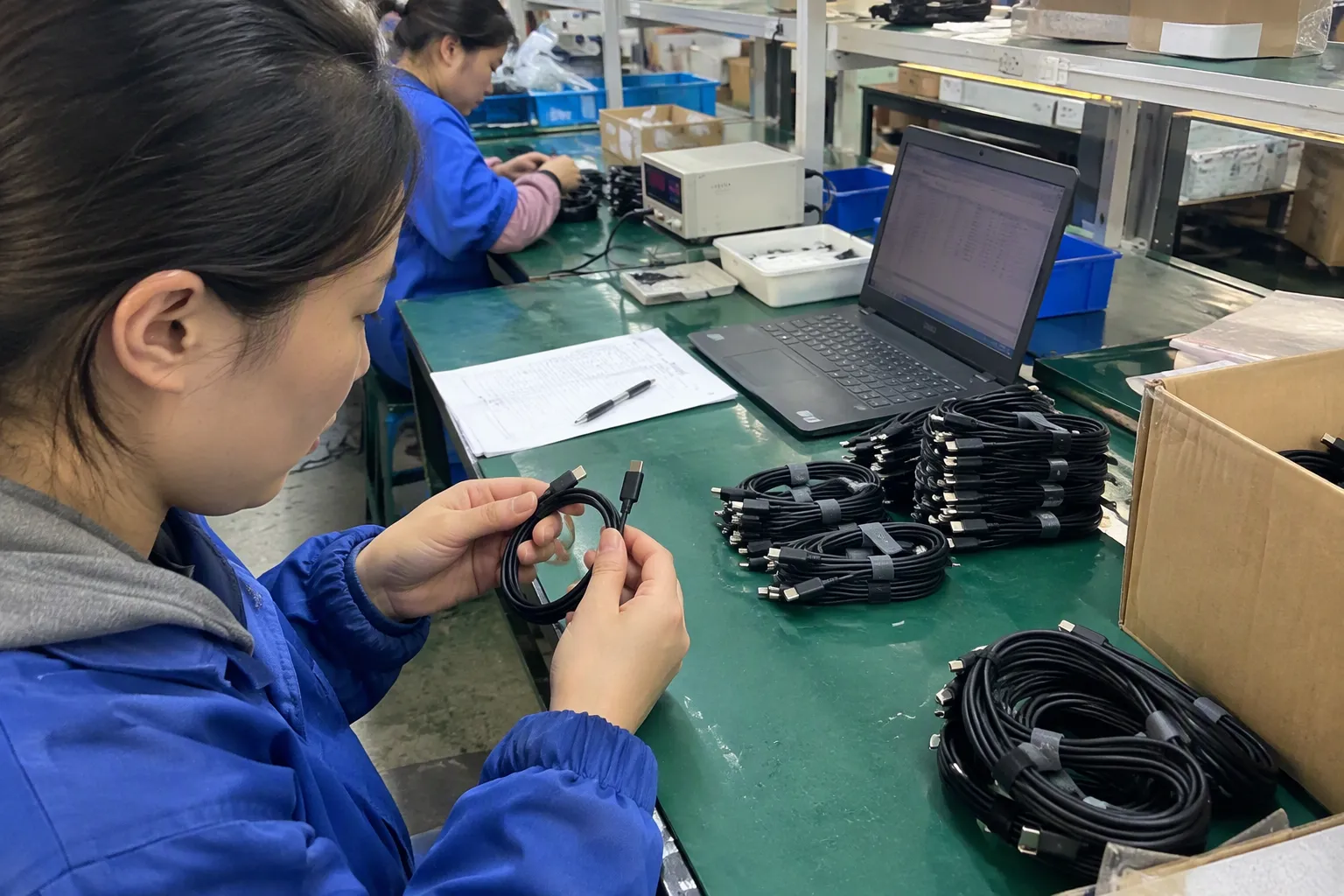
A 24-piece order can make sense when the buyer needs to test demand, validate packaging, replenish a fast-moving SKU, or compare a supplier before committing to a larger order. It may be less suitable for custom packaging, many colors, or several connector combinations because the quantity becomes fragmented.
Twenty-four cables are most suitable for a focused trial or replenishment plan with a clearly defined model. Buyers should confirm the commercial terms, test objective, and reorder conditions before treating the order as a long-term wholesale program.
When a small order is useful
- The buyer wants to test one connector type.
- The buyer uses standard supplier packaging.
- The buyer needs a small replenishment.
- The buyer is checking customer response to a new price point.
- The buyer wants to compare two suppliers.
- The buyer is validating a product listing before a larger order.
When the buyer should request a broader quotation
- Custom printed packaging.
- Private-label production.
- Multiple language versions.
- Retail chain onboarding.
- Several power and data specifications.
- Regular monthly supply.
- A formal quality agreement.
- Batch traceability.
- Forecast-based production.
In those cases, I would ask the supplier to quote different quantity tiers and explain what changes at each tier. The supplier may offer better packaging or production efficiency at a larger volume, but the buyer should not increase the order before confirming demand and compliance requirements.
Questions I would send to a supplier
- What is the exact model number for this cable?
- Is the quantity of 24 pieces accepted for this model?
- What connector combinations and lengths are available?
- What charging protocols does the cable support?
- What power capability is documented, and under what conditions?
- Does the cable support data transfer? If yes, what specification?
- Which charger and device combinations were used for the supplier’s claim?
- What standard packaging is included?
- Can the supplier provide model-specific test or certification documents?
- What is the estimated lead time for 24 pieces?
- What shipping terms and carton details apply?
- What is the process for defective units or incorrect shipment?
- Can the supplier provide a sample before the final order?
- Which specifications will appear on the retail package?
Frequently Asked Questions
Are 24 wholesale USB fast-charge cables a standard MOQ?
No. Twenty-four pieces may be a supplier’s accepted trial quantity, inner-pack quantity, or buyer-requested amount, but it is not a universal wholesale MOQ. I recommend confirming the exact MOQ, price basis, packaging rules, and shipping cost with each supplier.
Do all USB fast-charge cables work with every phone?
No. Compatibility depends on the connector, phone, charger, cable capability, and supported charging protocol. Some cables support charging only, while others also support data transfer. Buyers should identify the intended device and charger combinations before making a universal compatibility claim.
Does a higher wattage cable always charge a device faster?
No. The device and charger can limit the actual charging speed. A high-rated cable cannot force a phone to accept more power than its design or supported protocol allows. Buyers should present wattage as a capability under specified conditions, not as a guaranteed result for every device.
What documents should I request from a USB cable supplier?
I would request a model-specific specification sheet, available test reports, applicable declarations, packaging details, and any certification evidence related to the exact model. Buyers should verify the document issuer, product reference, date, and scope. A document for a similar cable may not support the same claim.
Can I order 24 cables with custom packaging?
Possibly, but custom packaging often has its own MOQ, setup cost, or artwork requirements. Standard packaging or a barcode sticker may be more practical for a 24-piece test order. The buyer should approve the technical model before approving the final artwork.
Conclusion
24 wholesale USB fast-charge cables can be a practical way to test a product or replenish a focused SKU, but the number 24 does not prove wholesale value or product suitability. I recommend checking connector type, charging protocol, power capability, data function, packaging, documentation, supplier communication, and after-sales terms. Buyers should use conditional claims and seek qualified professional evaluation for application-specific or regulatory decisions. I can help European and American retailers, wholesalers, and e-commerce sellers compare suitable USB cable models, quotation terms, customization options, and supplier documentation.
Sources
- USB PD, PPS, QC: What Do These Fast-Charging ...", Technical documentation on USB charging standards distinguishes among charging protocols and device capabilities, supporting the view that “fast charge” is not a single, universally defined performance level
- USB Charging and Cables Explained: Safe and Simple", Research and standards-based analyses of USB charging describe charging as an interaction among the power source, sink device, cable characteristics, and negotiated protocol rather than as a property of the cable alone
- Raw Material Minimum Order Quantity Optimization", Procurement guidance generally treats minimum order quantities as supplier- and product-specific commercial conditions, which supports interpreting 24 units as a negotiated trial or replenishment quantity rather than a universal standard
- Innovative Lithium-Air Battery Design Poised to Increase ...", Studies of lithium-ion battery management show that temperature, state of charge, and control algorithms influence the allowable charging current and therefore the observed charging rate
- What's the maximum wattage a USB A to C cable can ...", USB-IF technical materials describe USB Power Delivery as a negotiated system in which the delivered power depends on the capabilities of the source, sink, and cable, rather than on the cable label alone
- USB Power Delivery: The Technology 1", USB power-delivery research and specifications indicate that charging power is negotiated within the limits of the source and sink, so a higher-rated cable cannot by itself increase a device’s permitted input
- Don't let a drooping USB voltage slow down your charger", Electrical engineering analyses show that conductor resistance causes voltage drop and resistive heating, which can affect power transfer and charging behavior in cable assemblies
- USB A vs USB C: Differences in Connectivity Standards", USB standards documentation distinguishes USB-A and USB-C implementations and shows that cable and port combinations can support different power-delivery and signaling capabilities