Quick Answer
USB cables can look like simple, low-risk retail products, but small specification gaps often create customer complaints after the sale. A cable that charges one device well may disappoint with another, while a low purchase price can quickly lose its advantage through returns, replacements, and poor shelf reviews. I recommend starting with the real retail use case before comparing quotations.
The most important thing buyers overlook when ordering USB cables is that connector type alone does not define charging speed, data performance, or compatibility[1]. Retail buyers should confirm the intended use, required power and data capability, cable length, retail positioning, product claims, sample-to-bulk consistency, and final written specification before placing a bulk order.

In our Shenzhen 3C export work, we have handled USB-cable inquiries for many years. Buyers often ask for price, length, color, and connector type first. Those are valid questions, but the questions that protect the retail business usually come later. The best buying process brings them forward.
Is a USB-C Connector Just a Physical Interface for USB Cables?
A USB-C cable may look modern and universal on the shelf, which makes it easy to treat every similar-looking item as interchangeable. That assumption can create avoidable trouble. When a consumer expects fast charging or laptop use and receives a basic charging cable, the store—not the connector—receives the complaint.
A USB-C connector is a physical interface, not a complete performance promise. USB cables with USB-C ends can support different charging levels, data functions, display-related uses, and device combinations[2]. Buyers should define the consumer’s expected use first, then ask suppliers to confirm the cable specification that matches that use.

For retailers, chain stores, wholesalers, and e-commerce sellers, the key question is not simply, “Do we need USB-C?” The better question is, “What will our customer use this cable for after purchase?”
A value retailer may need dependable replacement USB cables for everyday phone charging. A consumer electronics chain may need a more clearly positioned fast-charging range. A laptop-accessory category may require cables with data-transfer or display-related capability. An automotive buyer may need shorter cables that work well in-car. These are different retail jobs, even when the cable ends look similar.
1. The Intended Sales Scenario
The first overlooked point is the retail use case. It should guide every later specification decision.
We usually see buyers begin with a message such as “Please quote USB-C cable, 1 meter.” That message is understandable, but it leaves out the reason the customer will buy it. Without that context, suppliers can quote products that appear comparable but are designed for different positions in the market.
Before requesting a quote, I suggest that buyers classify the product line:
- Charging-only replacement cable for phones, earbuds, speakers, and basic accessories
- Fast-charging cable for consumers who own compatible chargers and devices
- Data cable for file transfer, synchronization, or computer use
- Laptop-oriented cable where power capability and data needs may be more demanding
- Display-related cable for use cases where video output may be relevant
- In-car cable where cable length, bend resistance, and connector handling matter
- Travel cable where compactness, convenience, and broad device use matter
- Value retail cable where clear, honest claims and stable quality matter more than maximum specifications
This is not only a technical exercise. It is a merchandising decision. The intended sales scenario affects packaging language, shelf placement, price tier, and the staff explanation needed in store.
A cable should be selected for the promise a retailer wants to make to the end customer, not only for the connector shown in a product photo.
2. Required Charging Capability
The second overlooked point is charging capability. USB cables can differ in the amount of power they are designed to support. A USB-C connector does not automatically mean that every cable supports the same charging experience.
Retail buyers should avoid broad assumptions such as “USB-C equals fast charging.” Charging speed depends on several elements working together, including the cable, charger, device, and the charging protocols involved[3]. A cable may be physically compatible with a device while not being appropriate for the charging expectation printed on the package.
For purchasing discussions, I recommend asking suppliers to confirm the intended charging specification in writing. Buyers should also make sure that the retail claim matches what the final agreed product is intended to support.
Useful questions include:
- What charging use is this cable designed for?
- What power capability does the supplier state for this specific model?
- Is the cable intended for phones only, or also for tablets and laptops?
- Does the cable include the components needed for the stated power use?
- What charging-related wording will appear on packaging and listings?
- Can the supplier provide a sample that matches the quoted bulk specification?
The goal is not to turn every buyer into an engineer. The goal is to prevent a basic cable from being sold as a premium fast-charging item, or a higher-specification cable from being wasted in a category that does not need it.
3. Data Capability Is a Separate Conversation
The third overlooked point is data performance. Consumers often assume that if USB cables fit their devices, they will also transfer files at the expected speed. That is not always the case.
Some cables are primarily positioned for charging. Others may support data transfer, but the data capability can vary substantially by model[4]. Buyers should therefore avoid using vague language such as “high speed” unless the product specification and intended claim have been confirmed.
This matters especially for:
- Computer accessory retailers
- Mobile-phone retailers
- Electronics chains
- E-commerce sellers with detailed product-comparison pages
- Buyers selling cables alongside storage devices, monitors, hubs, or laptops
A shopper who only needs overnight phone charging may not care about data speed. A shopper connecting a phone to a laptop may care a great deal. A shopper buying a cable for a workstation may expect a different level of performance again.
| Retail position | Main customer expectation | Specification discussion to have |
|---|---|---|
| Entry-level replacement cable | Reliable everyday charging | Charging purpose, length, connector type, packaging |
| Fast-charging accessory | Faster charging with compatible devices | Stated power capability, compatible charging scenario, claim wording |
| Phone and computer cable | Charging plus file transfer | Data function, charging requirement, intended devices |
| Laptop accessory cable | Higher-demand use | Power use, data use, cable construction, device scenario |
| Display-related accessory | Connection beyond basic charging | Specific device setup, data/video need, claim verification |
In our experience, a clear product title helps prevent confusion. “USB-C charging cable” communicates a different retail expectation from “USB-C data cable” or a cable positioned for a specified laptop-related use. The packaging, online title, bullet points, and sales training should all tell the same story.
4. Cable Length Changes the Customer Experience
The fourth overlooked point is cable length. Many buyers treat length as a simple price variable, but it is also a usability decision.
A short USB cable may work well in a car, with a power bank, or at a crowded desk. A longer cable can be more convenient beside a bed, sofa, hotel desk, or wall outlet. However, a longer cable may not be the best choice for every power or data requirement[5]. Buyers should discuss the intended length together with the required performance rather than treating each item as separate.
Common retail lengths often serve different situations:
| Cable length | Typical retail use | Buyer consideration |
|---|---|---|
| Short length | Power banks, vehicles, travel, desk use | Compactness and reduced cable clutter |
| Around 1 meter | Everyday phone charging | Broad retail appeal and easy shelf communication |
| Longer length | Home, bedside, office, hotel use | Convenience, storage, and intended charging scenario |
| Multi-length assortment | Mixed retail displays and online stores | Clear differentiation to prevent shopper confusion |
I suggest that buyers do not list too many nearly identical lengths unless the retail channel supports it. A small, well-defined assortment is often easier to merchandise and replenish. For example, a retailer may choose one short travel cable, one standard everyday cable, and one longer home-use option. Each should have a clear reason to exist.
Length also affects packaging. If the package says “extra-long,” the buyer should decide what that promise means in the target market. Clear metric labeling, readable use-case messaging, and accurate online descriptions reduce the chance of a consumer receiving something different from what they imagined.
5. Target Retail Positioning Matters More Than the Lowest Unit Price
The fifth overlooked point is retail positioning. A quotation can only be judged properly when the buyer knows whether the item belongs in a value bin, a mid-tier accessory wall, a branded online listing, or a premium electronics display.
I do not view low price as automatically negative. Value-focused USB cables have a real place in many markets. The problem begins when the product, packaging, claim, and consumer expectation do not match.
A lower unit price can become a higher total retail cost[6] when it leads to:
- More customer questions at the service desk
- Dissatisfied reviews on an online listing
- Replacement handling and reverse logistics[7]
- Store staff spending time explaining compatibility
- Reduced confidence in the retailer’s accessory range
- Repeat buyers choosing another seller next time
The correct comparison is not only landed cost per cable. It is total commercial cost.
A Practical Cost Comparison
| Evaluation area | Lowest-price approach | Specification-led approach |
|---|---|---|
| Initial purchase cost | Often lower | May be higher depending on the model |
| Product definition | Can be broad or unclear | Tied to an intended end use |
| Consumer expectation | May be inconsistent | Better aligned with shelf claims |
| Packaging message | Often generic | Supports the retail position |
| Returns risk | Harder to assess before launch | Reduced through clearer selection and sampling |
| Supplier discussion | Mainly price and MOQ | Price, specification, consistency, and delivery |
For a discount retailer, the answer may still be a basic cable. That can be a good commercial choice if the product is honestly positioned as a basic charging accessory. For a specialist electronics retailer, a slightly higher-cost cable with clearer performance positioning may be more suitable.
The important point is that a buyer should compare like with like. Two USB cables with the same connector, color, and length may not be equivalent retail products.
6. Product Claims Need to Be Specific and Checkable
The sixth overlooked point is product claims. Broad claims can sell a cable quickly, but unclear or unverified wording can create commercial risk later.
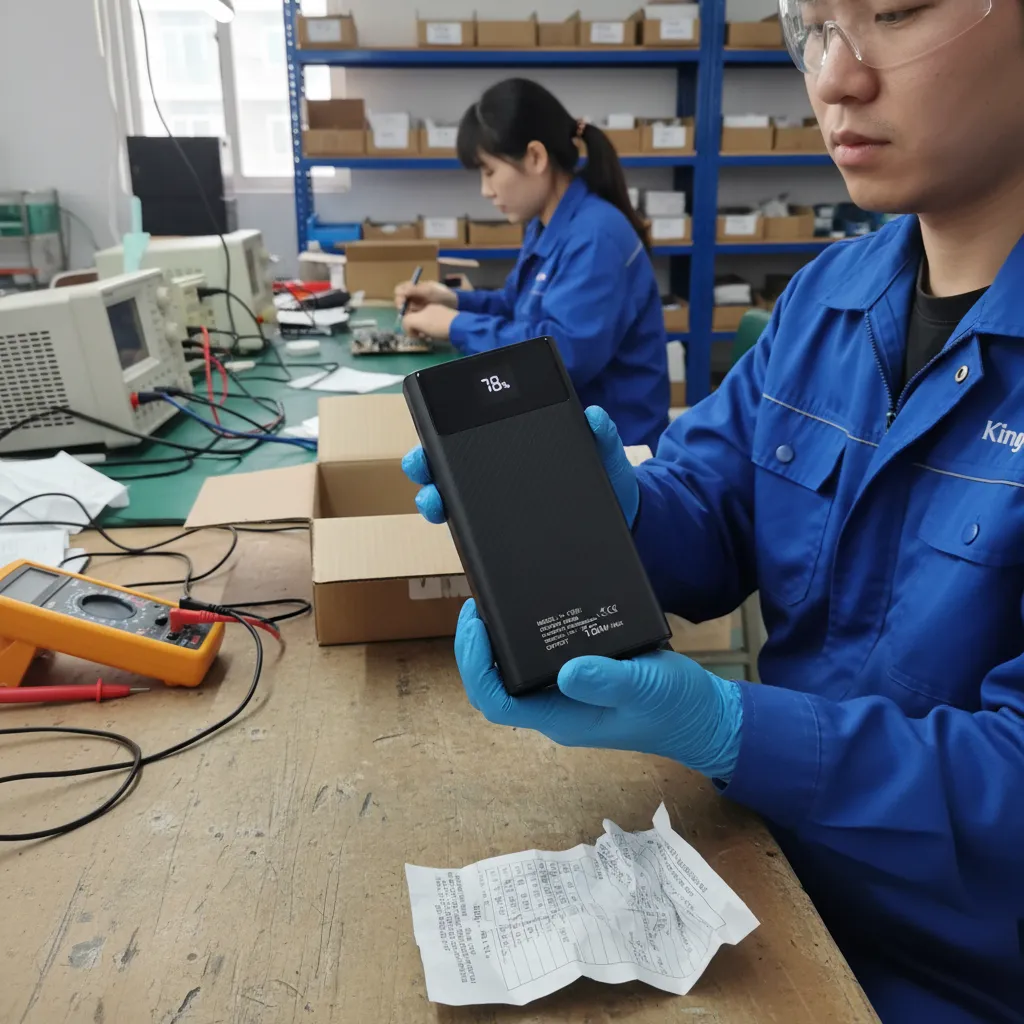
Buyers should decide in advance what the packaging, listing, and sales materials will say. Then they should make sure the supplier’s final specification supports those statements. This process is particularly important for claims about charging capability, data function, compatibility, durability, materials, and market compliance[8].
I recommend using language that is accurate, practical, and easy for consumers to understand. For example, a buyer may describe the intended use rather than making an overly broad technical promise. A cable sold for “everyday charging” should not imply that it performs every advanced USB-C function.
Questions to Ask Before Approving Claims
- What exact product model does this claim apply to?
- Is the claim based on the agreed cable construction and specification?
- Will the same claim appear on the carton, retail package, listing, and invoice description?
- Does the claim need market-specific review before sale?
- Are any compliance documents required for the destination market?
- Can the supplier identify which documents are available for the exact item?
Our role as an export supplier is to communicate product information and provide available documents for buyers to review. Buyers should independently verify market-specific compliance, labeling, certification, and legal requirements for their own destination and sales channel. Where a decision is application-specific, qualified technical or compliance professionals should be involved.
This careful approach protects both sides. It also prevents a retail team from creating product copy that goes beyond the agreed cable specification.
7. Sample-to-Bulk Consistency and Final Confirmation
The seventh overlooked point is often the most important operational one: the approved sample must match the bulk order specification.
A buyer may spend time comparing samples, colors, connector finishes, packaging, and cable feel. However, that work loses value if the final purchase order does not clearly record what was approved.
In repeated inquiry conversations, we often see that buyers confirm many details in separate messages. One message may cover cable length. Another may cover packaging. A third may mention a charging requirement. Later, the order may be placed with only a general product name. That creates room for misunderstanding.
I recommend a final pre-order checklist that combines the commercial and product details in one place.
USB Cable Pre-Order Checklist
| Item to confirm | Why it matters |
|---|---|
| Intended end use | Defines the right product category |
| Connector configuration | Prevents incorrect device pairing |
| Required charging capability | Aligns cable selection with customer expectations |
| Required data capability | Avoids confusing charging-only and data-use products |
| Cable length | Supports the actual consumer scenario |
| Color and exterior material | Matches brand and shelf presentation |
| Target retail position | Keeps cost, packaging, and performance aligned |
| Product claims | Reduces misleading marketing language |
| Packaging artwork | Confirms consumer-facing information |
| Sample reference | Links bulk goods to an approved benchmark |
| MOQ and delivery schedule | Supports inventory planning |
| Final written specification | Creates a shared order record |
A final specification sheet does not need to be overly complex. It should be clear enough that the buyer, supplier, quality-control team, and packaging team are all discussing the same product.
For larger orders or demanding applications, buyers may also consider independent inspection or qualified third-party evaluation. The right level of review depends on the retail channel, the product claim, the order value, and the commercial risk involved.
Frequently Asked Questions
Are all USB-C cables fast charging cables?
No. A USB-C connector does not automatically mean that a cable supports the same charging capability as another USB-C cable. Charging performance depends on the cable, charger, device, and compatible charging setup. Buyers should confirm the intended charging specification for each product model.
Can USB-C cables transfer data and charge at the same time?
Some USB-C cables are designed to support both charging and data transfer, but data capability can vary between products. Buyers should not assume that every cable has the same data performance. The supplier should confirm the intended data function and product specification before a retail claim is made.
What USB cable length should retailers stock?
The best length depends on the sales scenario. Short cables suit cars, travel, and power banks. Standard lengths suit everyday charging. Longer options suit homes and offices. I recommend stocking a focused range with clear consumer use cases instead of many confusing, similar options.
How should buyers compare USB cable quotations?
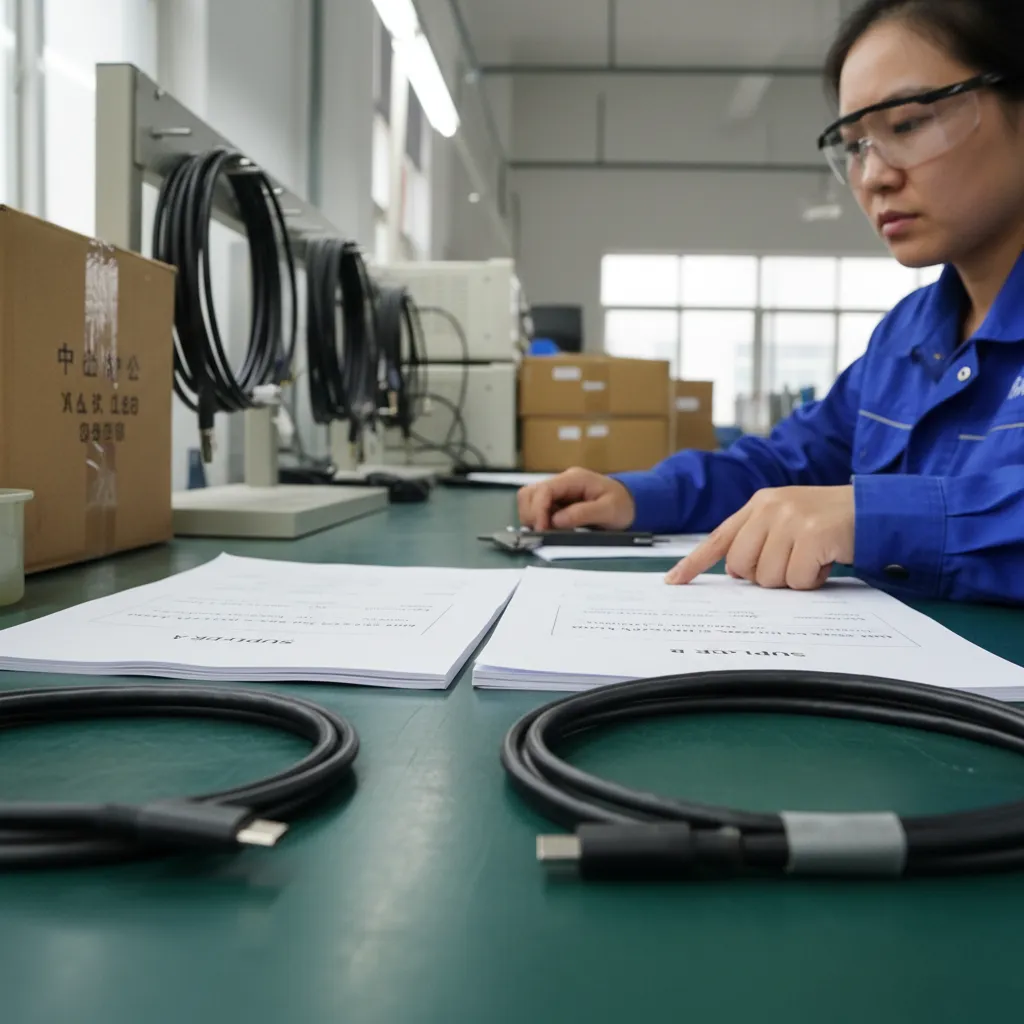
Buyers should compare more than unit price. They should compare intended use, charging capability, data function, length, packaging, claims, sample approval, MOQ, delivery terms, and after-sales expectations. Two cables that look alike may serve very different retail positions.
Should buyers ask for compliance documents when importing USB cables?
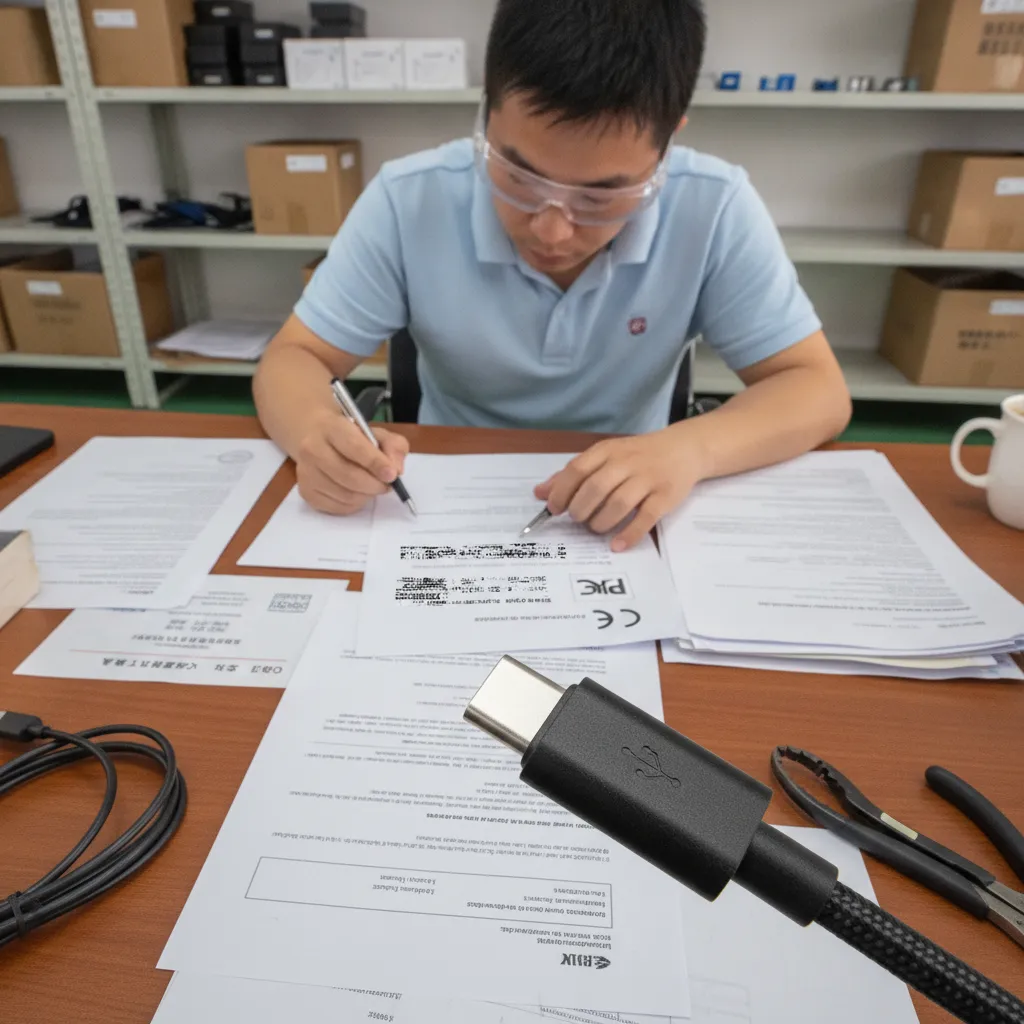
Buyers should verify the compliance, labeling, and documentation requirements that apply in their destination market and sales channel. Suppliers may provide available documents for the specific product, but the buyer should review their applicability with qualified compliance professionals when needed.
Conclusion
Ordering USB cables is not simply a connector, length, and price decision. Retail buyers need to match each cable to a clear consumer use case, confirm charging and data needs, choose an appropriate retail position, control product claims, and document the approved specification before bulk production. We help overseas buyers translate those commercial requirements into practical USB-cable discussions, samples, packaging details, and export supply plans. Contact us when you need a clearer specification process for your next cable range.
Sources
- A Primer on USB Type-C and Power Delivery Applications ...", USB Implementers Forum documentation distinguishes the USB Type-C connector system from the USB data and USB Power Delivery specifications; connector shape alone does not establish a product's data rate or charging capability
- USB Type-C and Power Delivery DisplayPort Alternate Mode", USB-IF technical materials describe USB Type-C as a connector ecosystem in which data operation, USB Power Delivery, and alternate-mode functionality depend on the supported specifications and product implementation
- USB Charger (USB Power Delivery)", The USB Power Delivery specification describes negotiated power contracts between source and sink devices and specifies cable-related requirements for certain power levels, supporting the view that charging performance is system-dependent rather than determined by the connector alone
- USB 3.2 Specification", USB-IF specifications and product guidance identify multiple USB data-performance categories, from USB 2.0 through later USB 3.x and USB4 generations, demonstrating that USB cable data capability is not uniform across products
- What is the Maximum Length of USB Cable?", Engineering literature on interconnects explains that increasing cable length can increase conductor resistance and high-frequency attenuation, factors that must be controlled when designing cables for specified power and data-performance requirements
- Retail Returns & Reverse Logistics: Challenges and ...", Research on retail reverse logistics finds that returned merchandise generates handling, transportation, inspection, disposition, and inventory costs, so the lowest acquisition price need not represent the lowest total commercial cost
- Retail returns management strategy: An alignment ...", Reverse-logistics research characterizes returns as a separate supply-chain flow requiring collection, transportation, inspection, and disposition, which explains why replacements and returns can add costs after the original sale
- FTC Policy Statement Regarding Advertising Substantiation", Consumer-protection guidance from the U.S. Federal Trade Commission states that objective advertising claims must be truthful, non-misleading, and substantiated before they are made