Galaxy Watch Charging Compatibility is a frequent source of confusion when I help buyers review charging products. A USB plug may fit, and a product may carry a “wireless charging” label, yet the watch may not charge correctly. I reduce the risk by matching the exact watch model, charging method, coil design, and documented supplier claim.
Galaxy Watch charging compatibility depends on the specific watch model, charging accessory, coil alignment, charging method, and evidence behind the supplier’s claim. A USB-C connector or high wattage rating does not prove compatibility.[2] Buyers should request a model-by-model compatibility list, check current Samsung documentation, and describe the product only as compatible with the models that have been verified or documented.
Quick Answer
- I identify the exact Galaxy Watch model and generation before reviewing any charger.
- I treat USB connector type, input rating, output rating, coil alignment, and charging method as separate questions.
- I do not treat “wireless charger” or “compatible with Galaxy Watch” as proof of universal compatibility.
- I ask suppliers for model-specific documentation, sample verification, and the exact product version covered by the claim.
- I use narrow product-page wording when evidence is incomplete, such as “compatible with the listed models.”
When I review a charging product for a European or North American retailer, I look beyond the headline specification. A buyer is not only purchasing a coil, cable, or dock. The buyer is also accepting responsibility for the accuracy of the product page, customer expectations, returns, and after-sales support. The following checks help separate a useful compatibility claim from a vague marketing statement.
Why Does Galaxy Watch Charging Compatibility Need a Model-by-Model Check?
A broad compatibility claim creates a practical problem: Galaxy Watch is a product family, not one single charging specification.[1] Different generations, sizes, accessories, and charging scenarios can introduce different requirements. I therefore start with the watch model rather than the charger’s connector or package design.
Galaxy Watch charging compatibility should be checked against the exact model and intended use case. Buyers should confirm whether the product is meant for a particular watch generation, whether it supports the required charging method, and whether the supplier has evidence for that model. A family-level claim is not enough when the model list is incomplete.
The product family is not the product specification
- A specific Galaxy Watch generation.
- A particular case size or physical design.
- A replacement puck for travel.
- A charging dock using a separate power adapter.
- A multi-device station that also charges a smartphone or earbuds.
- A product intended for retail packaging with several named models.
- A private-label accessory that has changed internally between supplier batches.
The same product title can appear on different supplier listings. One version may use a different cable length, housing, coil position, magnet arrangement, or internal board. I never assume that a revised product is covered by an earlier sample approval.
Why model identification matters commercially
- Returns: Customers may report that the watch does not charge or charges inconsistently.
- Poor reviews: Buyers often judge the retailer when the original claim was too broad.
- Support costs: Staff may need to explain positioning, power requirements, and exclusions.
- Inventory problems: A product that works for only a small model group may be overstocked if advertised universally.
- Disputes with suppliers: A buyer may believe that “Galaxy Watch compatible” covered every current and older model, while the supplier intended only a few.
| Information to record | Why I record it |
|---|---|
| Exact watch model and generation | It defines the scope of the technical check |
| Watch size or physical variant | It may affect contact and positioning |
| Charger or dock version | Supplier revisions can change performance |
| Input connector and adapter requirement | It clarifies how the accessory receives power |
| Charging method described by the supplier | It avoids confusing generic wireless charging with watch charging |
| Verification status | It separates documented, sampled, and unverified claims |
| Intended sales wording | It controls customer expectations |
Use manufacturer information as a reference point
I advise buyers to consult the current official product and support information from Samsung Support and the relevant regional Samsung website. Official pages can help identify the watch model, included charger, charging instructions, and accessory recommendations.[7] I still ask the supplier to provide evidence for the actual third-party product, because a Samsung page does not automatically validate another company’s accessory.
A practical first-pass question set
- Which exact Galaxy Watch models are covered?
- Does the claim apply to this exact SKU, color, cable version, and packaging?
- Is the product a replacement charger, a charging stand, or a multi-device dock?
- Does the buyer need to provide a separate adapter?
- Has the supplier tested the listed models, or is the list based on design similarity?
- What behavior was checked: charging start, stable charging, charging notification, or full charging?
- Are there exclusions, such as cases, bands, or particular watch generations?
Which Charging Variables Actually Determine Compatibility?
A common procurement mistake is to combine several technical terms into one conclusion. USB type describes a physical interface. Wattage describes electrical power capability. Coil alignment describes physical positioning. The charging method describes how energy is transferred and managed. I assess each variable separately.
The main compatibility variables are the watch model, charging method, coil and watch alignment, input power arrangement, accessory construction, and supplier evidence. A USB-A or USB-C connection only explains how power reaches the accessory. It does not prove that the accessory can charge a particular Galaxy Watch.
USB connector: useful, but limited
A USB connector is easy to identify, so product pages often give it too much attention. A USB-C plug may connect to a charger or laptop, while a USB-A plug may connect to a different power source. This information helps the buyer plan the power arrangement.
- Does the watch recognize the charging field?
- Is the coil positioned correctly?
- Is the accessory designed for the watch’s charging method?
- Does the product maintain charging during normal positioning?
- Is a separate power adapter required?
- Does the accessory’s claimed model list include the customer’s watch?
Wattage: capacity is not proof of operation
A power rating can indicate the maximum or expected input capability of an accessory.[5] It does not prove that the watch will draw that power, nor does it prove that the charging system uses the correct method. A high-output adapter connected to an unsuitable watch accessory remains unsuitable.
Coil alignment: the physical part of the decision
The coil is central to inductive charging, but coil terminology alone does not settle compatibility. The accessory must place its charging area in a suitable relationship with the watch’s receiving area.[3] Housing thickness, curvature, magnets, stand angle, watch orientation, and the presence of a case can all affect the result.[4]
- The charging surface is too flat for the intended watch position.
- The watch may slide away from the center.
- A raised rim may prevent close contact.
- The cable exits in a way that twists the charger.
- A stand supports a different watch orientation than the product description suggests.
Charging method and protocol wording
I use the word “protocol” carefully. In supplier conversations, it may refer to a formal charging standard, an internal recognition behavior, a power-management feature, or simply a general wireless charging function. These meanings are not interchangeable.
- Is the product intended specifically for Galaxy Watch charging?
- Is it a generic wireless charging surface?
- Does it support phones only, watches only, or both?
- Is the stated compatibility based on a manufacturer-approved accessory, an engineering design, or sample testing?
- Does the claim cover charging initiation, stable charging, or only physical placement?
Separate the questions in a procurement sheet
| Question | Example of a careful answer |
|---|---|
| How does power enter the product? | USB-C input; adapter supplied or not supplied |
| What is the electrical rating? | Supplier-stated input range, subject to document review |
| What is the charging method? | Watch-specific charging design or generic wireless surface |
| How is the watch positioned? | Flat, vertical stand, magnetic, or guided cradle |
| Which models are claimed? | Only the models listed in the supplier document |
| What evidence exists? | Datasheet, sample result, photo, or supplier statement |
| What remains uncertain? | Unverified models, cases, charging speed, or adapter combinations |
How Should Buyers Evaluate Supplier Compatibility Claims?
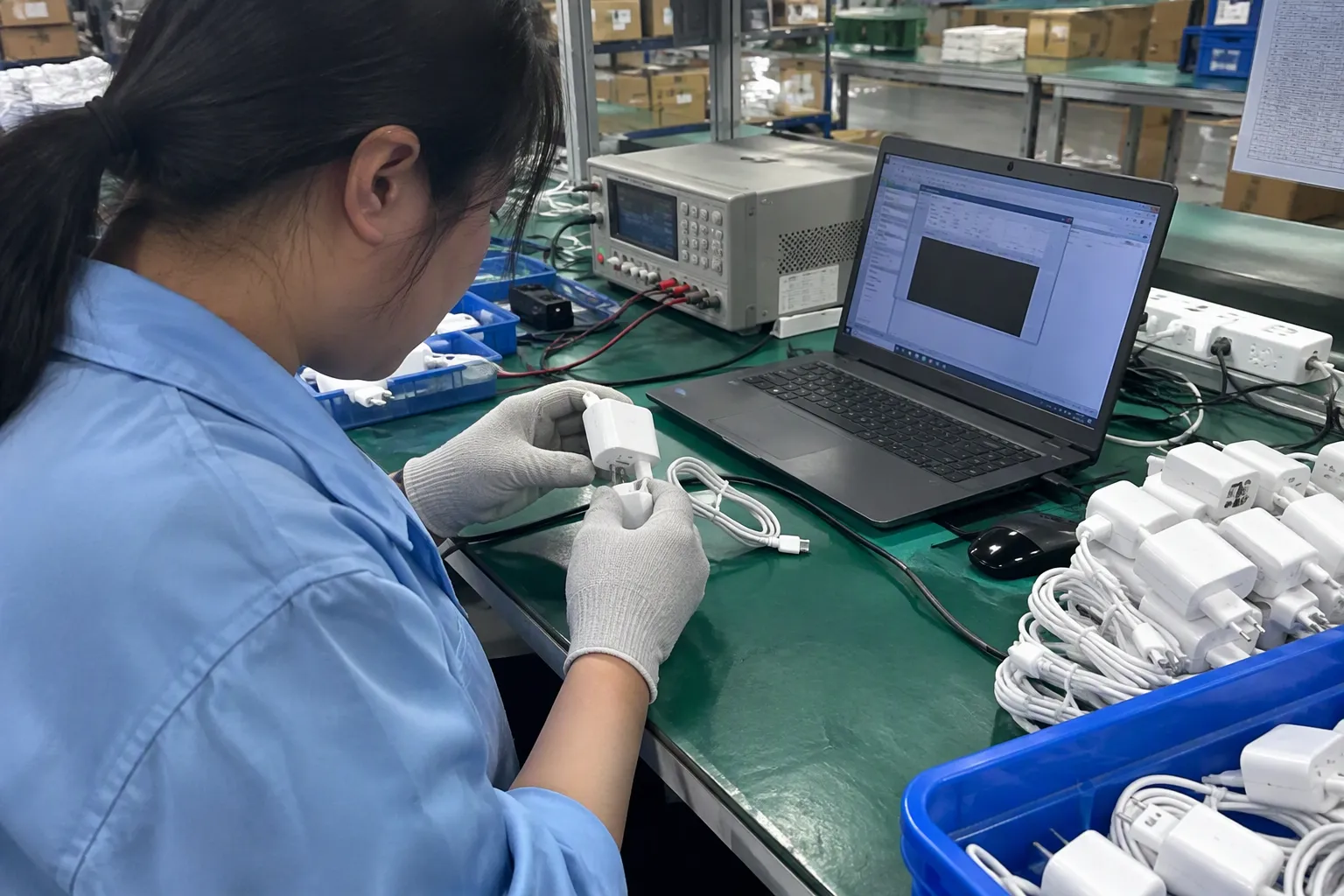
A supplier claim can be useful, but I treat it as a starting point rather than final proof. The strength of the claim depends on its wording, scope, supporting documents, and relationship to the exact product being purchased.
Buyers should ask suppliers for a model-by-model compatibility list and supporting evidence for the exact SKU. They should distinguish tested models from assumed models, record exclusions, and use narrow wording when the documentation is incomplete. Certification documents should also be checked for the correct company, product, model, and issuing body.
Three levels of evidence
Level one: a general marketing statement
Level two: a documented model list
A stronger document names specific models or generations. It may include product photographs, charging instructions, input information, and exclusions. I still check whether the document applies to the exact SKU and whether the supplier has updated it after a design change.
Level three: model-specific sample verification
A sample check gives the buyer more useful information about the actual product. I recommend checking the listed models with the intended adapter and, where relevant, with common watch cases or bands. The buyer should record the test conditions rather than relying on a verbal statement.
Questions I ask when a claim is broad
- Which models were physically tested?
- When did the test take place?
- Was the test performed on the current production version?
- What input adapter and cable were used?
- Was the watch bare or inside a case?
- Did charging remain stable after repositioning?
- Did the supplier check more than one watch size?
- Are older models included, or only current models?
- Does the claim cover a dock, a puck, and a replacement cable equally?
- What wording does the supplier recommend for a retail listing?
Match documents to the product
- Product name and model number.
- Manufacturer or applicant name.
- Factory information where relevant.
- Report or certificate date.
- Scope of testing.
- Applicable market or standard.
- Whether the document covers a charger, cable, adapter, or complete set.
- Whether the document is current and verifiable.
For EU and US customers, I also remind them that compliance responsibilities can depend on the product category, electrical design, importer role, packaging, and market. The European Commission’s CE marking guidance explains the general framework, but a CE mark is not a universal proof of Galaxy Watch compatibility. For US sales, buyers should review applicable requirements with a qualified compliance professional and consult official resources such as the [FCC equipment authorization information](https://www.fcc.gov/oet/ea/rfdevice)[8].
Define the claim boundary in writing
What Should a Retailer or Importer Check Before Listing a Charger?
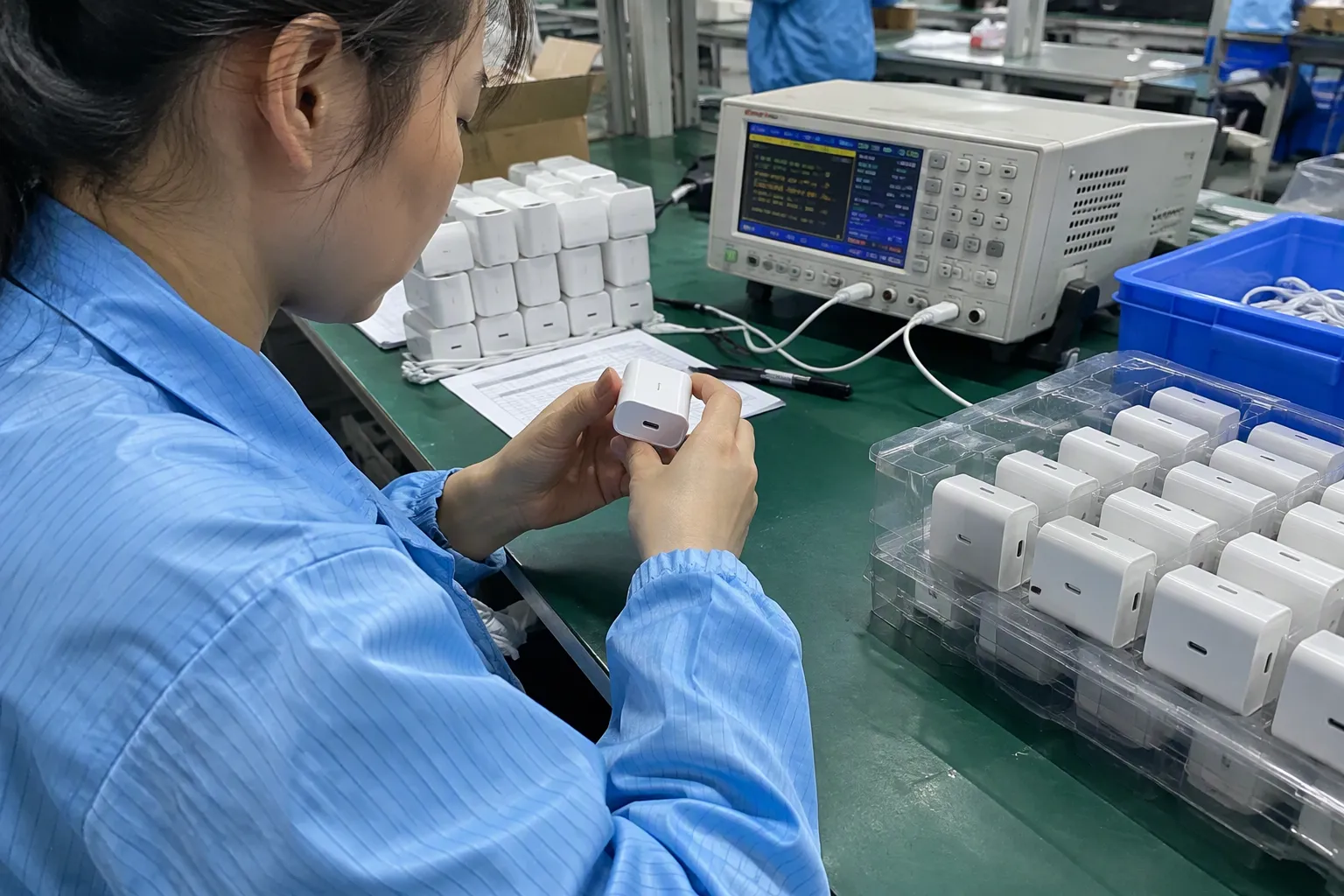
Before listing a Galaxy Watch charger, buyers should confirm the exact included items, model list, power requirements, charging position, limitations, packaging language, and after-sales process. The listing should state what has been verified and should avoid implying universal support when the evidence covers only selected models.
Check the actual sales configuration
- Charging puck, dock, or multi-device station.
- Fixed cable or detachable cable.
- USB-A or USB-C input.
- Wall adapter included or excluded.
- Cable length and color.
- Retail box, neutral packaging, or custom packaging.
- User instructions and language versions.
- Model list printed on the package.
- Warranty and replacement policy.
A listing may describe a charging dock while the shipment contains only a puck. Another listing may show an adapter in the product photograph while the quotation excludes it. I resolve these differences before purchase order approval.
Review the customer’s likely use case
| Use case | Main review point |
|---|---|
| Home bedside charging | Stable positioning and clear power requirement |
| Office or travel use | Cable durability, compactness, and adapter availability |
| Retail display | Packaging clarity and visible model list |
| Multi-device charging | Separate performance and power limits for each position |
| Charging with a case | Case thickness and physical clearance |
| Private-label sales | Correct branding, instructions, and claim ownership |
Build listing language around verified facts
- Exact compatible models.
- Charging accessory type.
- Input interface.
- Whether the adapter is included.
- Intended watch positioning.
- Any case or band limitations.
- Basic safety instructions.
- A note that the watch model should be checked before purchase.
I would avoid phrases such as “works with all Galaxy Watches” unless the claim is genuinely supported by current, model-specific evidence. I would also avoid using “fastest,” “official performance,” or “universal” without documentation that supports those words.
Plan after-sales answers in advance
- The exact Galaxy Watch model.
- Whether the product has power.
- Whether the watch is centered on the charging area.
- Whether the watch or charger has a case, film, or obstruction.
- Which adapter and cable are being used.
- Whether the customer followed the supplied instructions.
- Whether another verified setup produces the same result.
Use a pre-listing approval record
- Approved title.
- Approved model list.
- Prohibited claims.
- Product photographs.
- Included accessories.
- Supplier document references.
- Sample test notes.
- Responsible reviewer.
- Review date.
- Recheck trigger, such as a supplier revision or new watch generation.
How Can Buyers Compare Charging Products and Suppliers?
Buyers often compare products by unit price first. I understand the pressure, especially when a customer requests a competitive quotation. However, the cheapest accessory can become the most expensive option after returns, relabeling, and customer support.
I compare Galaxy Watch charging products by verified model coverage, construction, power arrangement, documentation quality, sample performance, MOQ, lead time, and after-sales support. A lower unit price is valuable only when the product claim is accurate and the supplier can maintain consistent quality.
Compare the product, not only the headline price
| Evaluation area | Lower-risk indication | Warning sign |
|---|---|---|
| Model coverage | Named models with evidence | “All models” with no list |
| Product identity | Stable SKU and revision record | Same photos used for several versions |
| Coil and housing | Clear design and positioning information | No explanation of placement |
| Power arrangement | Input and adapter requirements are clear | Adapter shown but not included |
| Sample verification | Buyer tested intended models | Supplier relies only on a generic statement |
| Quality control | Inspection points are documented | No batch or production records |
| Packaging | Model claim matches the product | Packaging uses wider claims than the document |
| After-sales | Clear replacement and response process | Responsibility is unclear |
| MOQ and lead time | Confirmed in quotation | Only verbal estimates |
| Customization | Artwork and claim review included | Custom copy is accepted without technical check |
Ask how production quality is controlled
- Does the supplier inspect the coil or charging module before assembly?
- Does the supplier check cable continuity and connector quality?
- Does the supplier conduct a power-on test?
- Does the supplier inspect the housing, magnets, and surface finish?
- Does the supplier check labeling and model information?
- Does the supplier retain samples from each production batch?
- Does the supplier control component substitutions?
- Does the supplier notify buyers when the internal design changes?
Distinguish supplier experience from technical proof
My Shenzhen trading business has handled 3C export orders for many years, and customer questions often reveal where product descriptions are too broad. That experience helps me organize questions, compare supplier documents, and identify gaps. It does not replace model-specific testing or a qualified technical evaluation.
I use the same restraint with supplier experience. A factory may have sold watch chargers for years, but that history does not prove that a newly revised model supports every Galaxy Watch. Experience is useful context. Evidence still needs to match the product.
Consider the total procurement cost
- Sample and testing cost.
- Packaging development.
- Certification or compliance review.
- Inspection cost.
- Freight and import charges.
- Marketplace return fees.
- Replacement units.
- Customer service labor.
- Cost of revising an inaccurate listing.
- Inventory risk if a new model changes demand.
Select wording as part of supplier approval
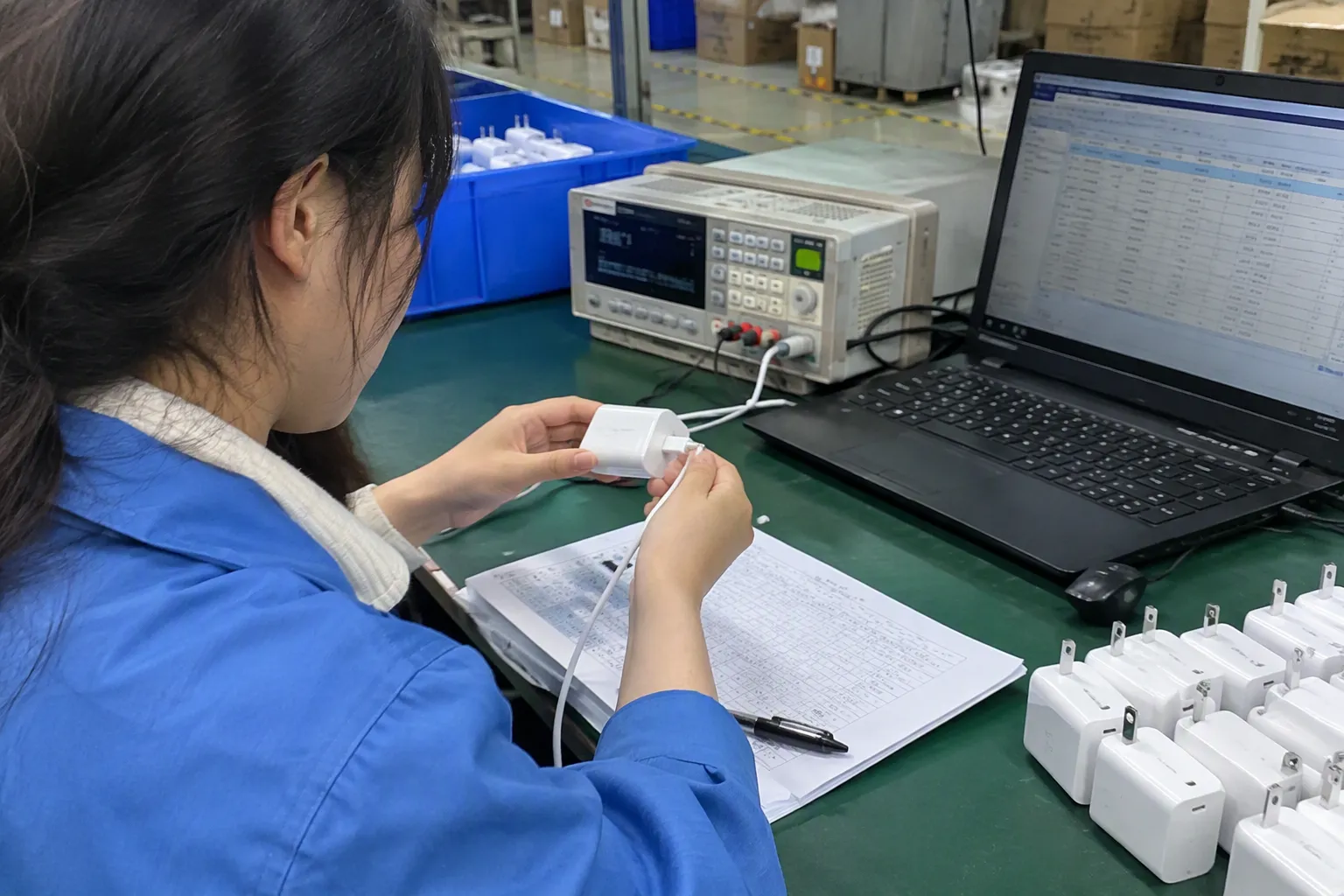
This wording gives both sides a clear reference. It also helps when the buyer requests private-label packaging. I ask the supplier to review the translated claim before printing because a small wording change can create a much larger promise.
How Should I Handle Unverified Models and Unclear Protocol Claims?
Uncertainty is normal in accessory procurement. The mistake is not uncertainty itself. The mistake is hiding it inside a confident product description. I prefer a controlled decision that identifies what is known, what is unknown, and what action will close the gap.
When a model or charging claim is unverified, buyers should not add it to a universal compatibility list. They should request documentation, obtain a sample, or use bounded wording. If the model is commercially important and evidence remains incomplete, the buyer should delay listing or choose a product with clearer support.
Use a simple evidence status
- Documented: The supplier names the model in a current product document.
- Sample verified: The buyer has checked the model using the intended product and setup.
- Supplier stated: The supplier claims support, but the evidence is limited.
- Pending: The model is important but has not yet been checked.
- Excluded: The supplier or test result indicates that the product should not be marketed for that model.
Decide what action fits the risk
| Evidence status | Recommended commercial action |
|---|---|
| Documented and sample verified | List the model with normal qualification |
| Documented but not sampled | List only if the buyer accepts the documentation risk |
| Supplier stated only | Request evidence before broad promotion |
| Pending and commercially important | Sample test before purchase or launch |
| Excluded or failed | Do not list as compatible |
| Conflicting documents | Pause approval and resolve the discrepancy |
Explain uncertainty without sounding weak
Know when to ask for professional review
I recommend qualified professional evaluation when the product has a complex electrical design, a multi-device power system, a private-label compliance requirement, or an intended market with specific regulatory obligations. I also recommend review when the supplier provides conflicting safety or certification documents.
Compatibility questions and regulatory questions overlap in commercial risk, but they are not the same question. A product can have an appropriate compliance document and still be unsuitable for a particular watch. Conversely, a successful sample charge does not by itself prove full market compliance.
Keep verification current
- A new Galaxy Watch generation.
- A supplier component change.
- A new product SKU.
- A revised cable or adapter.
- A packaging redesign.
- A customer report of inconsistent charging.
- A change in the supplier’s model list.
- A change in the intended sales market.
Frequently Asked Questions
Does a USB-C charger automatically support Galaxy Watch charging?
No. USB-C describes the physical power interface. It does not confirm the charger’s coil design, charging method, positioning, or model support. I check the exact watch model and the supplier’s evidence for the complete accessory before describing it as compatible.
Does a higher wattage rating mean faster Galaxy Watch charging?
No. A higher input or adapter rating does not automatically determine the watch’s charging speed. The watch, accessory, charging method, and power arrangement all matter.[6] I avoid speed claims unless the exact model and setup have been specifically verified.
Can I describe a charger as compatible with all Galaxy Watch models?
I do not recommend that wording without strong, current, model-specific evidence. A safer approach is to list the verified or documented models and explain that unlisted models require confirmation. This approach reduces returns and prevents a supplier’s broad marketing statement from becoming an unsupported retail promise.
What documents should I request from a supplier?
I request a current datasheet, model-by-model compatibility list, product photographs, input and accessory information, user instructions, and relevant test or compliance documents. I check that each document identifies the exact product version. I treat certifications as documents to verify, not as automatic proof of watch compatibility.
Should a buyer test every watch model before placing an order?
The right scope depends on volume, risk, and the importance of each model. I test commercially important models with the intended product configuration whenever possible. For other models, I request documentation and mark the evidence status clearly. I ask a qualified professional to advise on application-specific or compliance-sensitive decisions.
Conclusion
Galaxy Watch Charging Compatibility is a model-and-use-case decision, not a conclusion based on a USB connector, wattage figure, or generic wireless charging label. I separate the watch model, coil alignment, charging method, power arrangement, supplier evidence, and sales wording. I also record which claims are documented, tested, or still pending. If you are sourcing charging products for a retailer, wholesaler, or e-commerce store, I can help you compare suppliers, review compatibility lists, confirm MOQ and lead time, and prepare a narrower product claim for the intended market.
Sources
- Find the right charger for your Samsung Galaxy Watch", Samsung support documentation distinguishes charging instructions and accessory information by Galaxy Watch model, supporting the use of model-specific compatibility checks rather than assuming a single specification for the entire product family
- Wireless Power Transfer: Systems, Circuits, Standards, and ...", Research on wireless power transfer treats electrical input capability, transmitter-receiver coupling, alignment, and device-side charging control as separate factors; consequently, a USB connector or nominal wattage rating alone does not establish compatibility
- Energy Efficiency Analysis through Misalignment on New ...", Engineering studies of inductive wireless power transfer report that transmitter-receiver misalignment changes magnetic coupling and can reduce transfer efficiency, supporting alignment as a relevant charging variable
- Wireless Charging Distance: How Far Can It Really Work?", Studies of inductive wireless charging show that coil separation, relative orientation, and surrounding construction can alter coupling and transfer efficiency, providing technical context for evaluating cases, housings, stands, and positioning
- External Power Supplies", Electrical engineering references distinguish a power supply's rated capacity from the power drawn by the connected load, supporting the article's separation of adapter rating from watch charging behavior
- Wireless Charging Technologies: Fundamentals ...", Wireless-charging research indicates that delivered charging power is constrained by the interaction of the transmitter, receiver, coupling conditions, power electronics, and device control systems rather than by an adapter rating in isolation
- How to charge your Samsung Galaxy smart watch", Samsung's official support materials provide model-specific product information and charging guidance, making them an appropriate reference for identifying the watch and its documented charging setup
- Equipment Authorization – RF Device", FCC equipment-authorization guidance describes the regulatory procedures applicable to covered radio-frequency devices and distinguishes authorization mechanisms used for different equipment categories