Quick Answer
Force vs touch controls for TWS can look like a small product detail, but they often affect customer reviews, return rates, and perceived value[1]. A control method that feels unclear or inconsistent can frustrate users after only a few days.[2] I recommend choosing the control design based on the product’s price position, use case, and support-risk tolerance. **Force vs touch controls for TWS should be selected according to the
Both designs can perform well when they provide clear feedback, avoid unwanted commands, and are properly validated in the final earbud configuration.**
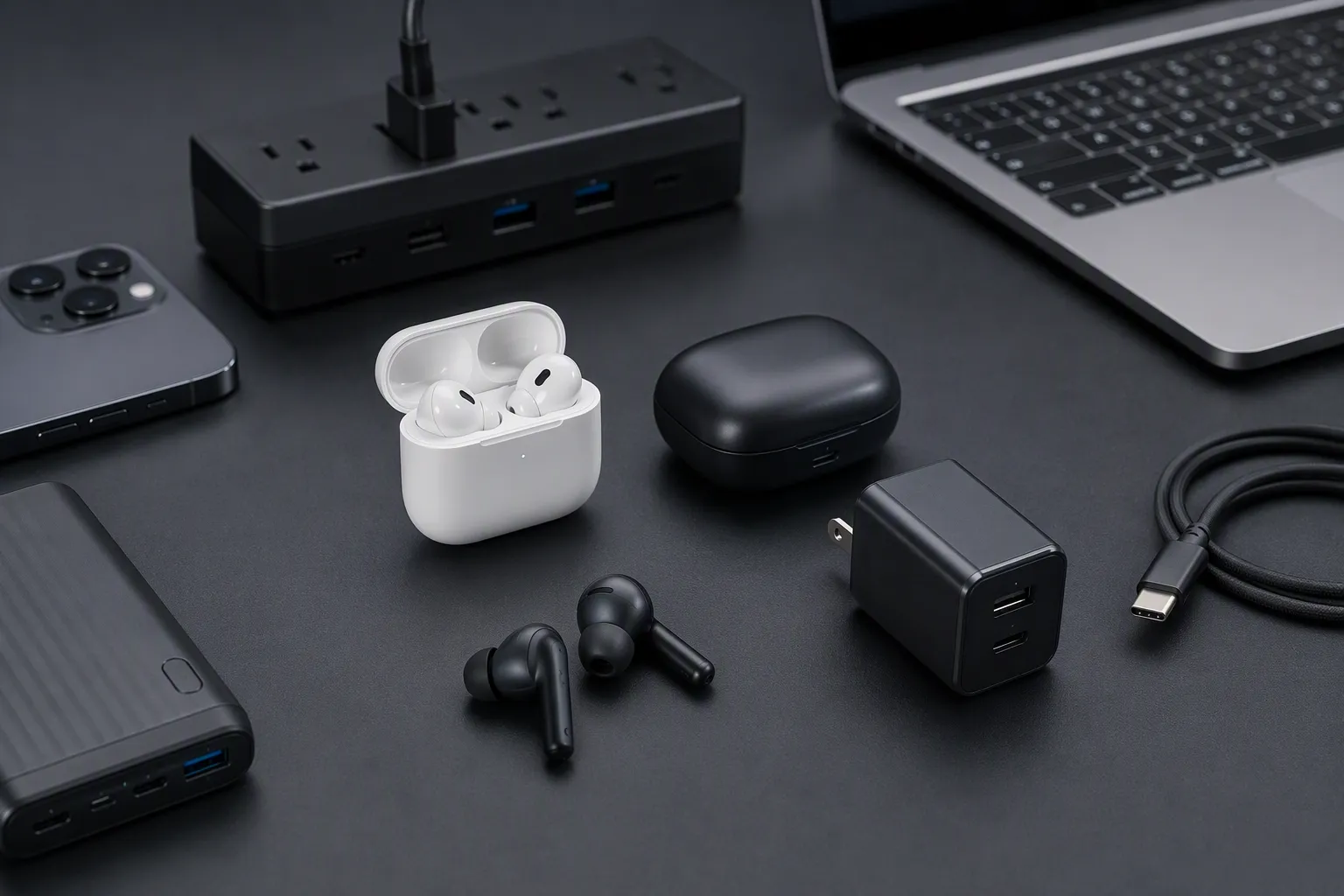
In my work as a Shenzhen 3C export trader, I have seen buyers spend a great deal of time comparing battery capacity, Bluetooth versions, and ANC claims. Those points matter. However, the daily control experience is often what users notice first after unboxing a pair of TWS earbuds.[3]
When buyers compare force vs touch controls for TWS, the first question is often, “Which one costs less?” The second question is usually, “Which one feels more premium?” Those questions are understandable, but they can lead to the wrong sourcing decision if they replace real product evaluation.
I believe buyers should choose TWS control methods by matching the control experience to the intended retail price, customer habits, and acceptable after-sales risk. A lower component cost can become expensive if users struggle with commands, while a higher-cost design may not add value if the target customer does not notice or need it.
Start With the Customer Promise, Not the Control Name
In TWS sourcing discussions, “touch control” and “force control” can become shorthand labels. Some buyers assume touch is basic. Others assume force control automatically means better quality. I do not think either assumption is safe.
A control technology is only one part of the final user experience. The same type of control can feel very different across products because of:
- Earbud shape and surface material
- Sensor position and active area
- Firmware tuning
- Command assignment
- Audio confirmation prompts
- Fit in the ear
- Charging case design
- Production consistency
- Quality-control standards
For example, a touch-controlled earbud may be easy to operate when its active area is clear, its sensitivity is tuned appropriately, and the firmware confirms each action with a reliable tone. On the other hand, a force-based solution may still disappoint users if the press area is unclear, the required pressure feels uncomfortable, or the command response is delayed.
I usually advise buyers to define the customer promise before they ask for a quotation. That promise should answer practical questions:
What should the user be able to do without taking out a phone?
How likely is the user to wear the earbuds while walking, commuting, exercising, or working?
What retail price creates the expectation of a refined control experience?
How much negative feedback can the seller realistically absorb?
For a value-focused retail product, a simple and understandable control scheme may be more important than adding many gestures. For a mid-range private-label model, customers may expect smoother interaction, clearer feedback, and fewer accidental command concerns. For a premium-positioned item, the control experience becomes part of the overall brand impression.
What Is the Practical Difference Between Touch and Force Controls?
In common TWS product discussions, touch controls usually refer to a capacitive or touch-sensitive area on the earbud shell.[4] The user taps, double taps, holds, or sometimes swipes to trigger a command. Force controls usually require a deliberate press or pressure action on a designated area[5], although the exact implementation can vary by supplier and design.
The important point is that these labels do not describe one universal technical standard. I always ask suppliers to explain the actual implementation rather than relying on a broad product description.
| Evaluation point | Touch controls | Force controls |
|---|---|---|
| Typical user action | Tap, double tap, hold, or swipe | Press or squeeze a defined area |
| Main buyer question | Is the touch area easy to find and properly tuned? | Is the press action comfortable and clearly confirmed? |
| Potential strength | Quick interaction without a physical pressing sensation | More deliberate input can suit some command designs |
| Potential concern | Tuning and user handling can affect perceived responsiveness | Pressure level, location, and fit can affect comfort |
| Best sourcing approach | Test real use scenarios with final firmware | Test real use scenarios with final firmware |
| Quality judgment | Depends on implementation and validation | Depends on implementation and validation |
This comparison does not mean touch is less reliable or force is more reliable. I would not make that claim without product-specific evidence. The final result depends on the supplier’s engineering choices, assembly control, firmware, and validation process.
Unit Cost Is Real, but Total Commercial Cost Matters More
Unit cost matters in every private-label TWS project. Retailers, importers, and e-commerce sellers all need a workable margin. However, I encourage buyers to look beyond the quoted difference between control options.
The total commercial cost includes more than the factory price.[6] It can include:
-
Product-development time
A new control design may require more sampling, firmware adjustments, or packaging revisions. -
Quality-control effort
If the interaction is difficult to judge visually, buyers may need more detailed inspection standards and functional checks. -
Listing and marketing expectations
If a seller positions a product as highly refined, customers will judge small usability problems more harshly. -
Returns and replacement handling
A user may describe a control issue as “not working” even when the product technically operates as designed.[7] -
Customer-service workload
Confusing gestures can create questions about pairing, controls, reset procedures, and app functions. -
Brand reputation
A low-price product can still receive poor reviews if basic actions feel unreliable. A higher-priced product can receive even stronger criticism if it fails to meet its promise.
I have found that the better question is not “How much does force control add?” It is:
“What customer problem does this control design solve for our intended retail position, and what risk does it create if the implementation is weak?”
That question keeps the buying team focused on outcomes. It also makes supplier discussions more specific.
Feedback Is a User-Facing Promise
Feedback is one of the most important factors in force vs touch controls for TWS. When a customer taps or presses an earbud, the customer needs to know whether the command worked. If the user cannot tell, they may repeat the action, trigger another function, or assume the earbuds are defective.[8]
Feedback can include several elements:
- A confirmation sound in the earbud
- A voice prompt
- A visible LED response, where applicable
- A physical sensation from the press action
- A predictable command delay
- Clear command logic in the user manual
I recommend that buyers evaluate feedback as part of the retail experience, not as a feature-list item. A supplier may say that a touch panel is sensitive or that a force design provides precise operation. Those phrases are too broad to guide a commercial decision.
Instead, I ask practical questions:
- Can a first-time user find the active area without reading a long manual?
- Does the earbud give a clear confirmation after a single action?
- Does double tap feel easy to complete while wearing the earbuds?
- Can users pause audio without disturbing the earbud fit?
- What happens when the user adjusts the earbud in the ear?
- Does the control response remain understandable during calls?
- Are the command assignments sensible for the product category?
For example, a basic TWS model may only need play/pause, answer/end call, and track skip. Adding volume controls, voice assistant functions, gaming mode, ANC mode switching, and multiple gesture combinations may create more confusion than value.
Keep the Command Map Simple
A good command map should match the customer profile. I often see product concepts become overloaded because each function sounds useful during development. Yet every added gesture gives users another action to remember.
Here is a practical way I suggest reviewing the command map:
| Product position | Recommended control approach | Buyer priority |
|---|---|---|
| Entry-level TWS | Fewer commands, simple tap or press logic | Easy learning and low support burden |
| Mid-range daily-use TWS | Core commands plus selected advanced features | Clear feedback and consistent operation |
| Sports-oriented TWS | Controls that suit movement and secure fit | Reduced disruption during active use |
| ANC or feature-rich TWS | Separate important modes with understandable prompts | Avoiding confusing multi-gesture behavior |
| Private-label branded TWS | Control logic aligned with packaging and brand claims | Consistency across product, manual, and listing |
I do not recommend copying the command map from a famous consumer brand without checking whether the target users, earbud shape, and firmware quality are comparable. A well-known brand may have spent significant time on industrial design, software tuning, user research, and support documentation. A private-label product should be evaluated on its own final configuration.
Reliability Is a Sourcing and Specification Question
Reliability is often oversimplified in TWS conversations. Buyers may ask, “Is force control more reliable than touch?” I understand why. Buyers want fewer complaints and lower return exposure. Still, a broad yes-or-no answer is not useful.
For force vs touch controls for TWS, I treat reliability as a sourcing and validation question. I want to know how the supplier has designed, assembled, tested, and verified the control system in the actual earbud model.
A buyer should ask the supplier to clarify:
- What control technology is used in this specific model?
- Is the solution already used in mass production, or is it new?
- Where is the control area located on each earbud?
- What firmware version is installed in the sample?
- What gestures or press actions are available?
- How is control sensitivity or pressure threshold set?
- Can the settings be adjusted during development?
- What functional tests are included in the factory process?
- What checks are performed after final assembly?
- What changes if the shell material, coating, logo process, or tooling changes?
- What warranty and failure-analysis process does the supplier offer?
I would also ask for available test documents, internal inspection criteria, and quality records relevant to the supplied configuration. Buyers should verify any claimed certifications and test documents independently, especially when the product will be sold into Europe or North America.
This approach is more useful than accepting broad statements such as “our touch control is stable” or “our force sensor is premium.” Those statements do not explain the production controls behind the claim.
Test the Final Configuration, Not Only an Engineering Sample
A TWS sample may perform differently after changes to the earbud shell, surface finish, firmware, battery layout, microphone configuration, or packaging schedule. I always consider the final configuration important because small changes can affect user handling and production consistency.
For a private-label project, I suggest that buyers test at least the following during sample evaluation:
Basic interaction checks
- Play and pause audio repeatedly
- Answer and end calls
- Trigger the main command with both left and right earbuds
- Test the intended single, double, and long-press gestures
- Confirm audio or voice feedback is clear
- Check command response during music playback and calls
Real-use handling checks
- Insert and remove the earbuds several times
- Adjust the fit while music is playing
- Try controls while standing, walking, and seated
- Test with dry hands and ordinary daily-use conditions
- Check whether hair, hats, or common handling habits affect the user experience
- Ask several people to try the earbuds without detailed instructions
Commercial consistency checks
- Compare multiple samples, not one pair only
- Confirm that the retail box and manual explain the controls correctly
- Check whether the product listing language matches actual behavior
- Confirm that firmware and command settings are documented
- Include control-function checks in the pre-shipment inspection plan
I am careful not to describe these checks as laboratory certification. They are practical buyer-side evaluations. For application-specific quality requirements, buyers should use qualified engineering, testing, and inspection professionals.
Build Control Requirements Into the Purchase Specification
The easiest time to manage control risk is before mass production. If the purchase order only says “touch control” or “force control,” it leaves too much open to interpretation.
I recommend including a simple control specification sheet. It does not need to be overly technical. It should clearly define what the buyer expects.
A useful specification can include:
| Requirement area | Example of what to define |
|---|---|
| Control type | Touch, force, or other supplier-defined implementation |
| Active location | Left/right earbud position and user-facing description |
| Command map | Single tap, double tap, hold, press, or other assigned actions |
| Feedback | Tone, voice prompt, response behavior, and language requirements |
| Firmware | Approved version for production and change-control process |
| User instructions | Manual, quick-start guide, and packaging icon requirements |
| Inspection | Functional control check during pre-shipment inspection |
| Change management | Buyer approval needed before component or firmware changes |
| After-sales support | Supplier process for analyzing repeated field complaints |
This document is valuable because it turns subjective feedback into review points. Instead of saying, “The controls should feel good,” the buyer can state, “The control must trigger the documented command, provide the approved feedback, and match the signed-off sample behavior.”
That is a more practical basis for supplier communication, inspection, and post-sale discussion.
Match the Control Choice to Your Sales Channel
The right answer can also change by sales channel. An e-commerce seller may receive direct reviews within days. A chain retailer may need consistent product behavior across a larger launch. A wholesaler may focus on price and basic usability, while still wanting to avoid repeated after-sales questions.
E-commerce sellers
For e-commerce, I would prioritize clear operation and accurate listing content. Review language often focuses on what customers experience immediately:
- “It keeps changing songs.”
- “I cannot pause it properly.”
- “The button does not respond.”
- “I do not know where to tap.”
- “It works, but the controls are confusing.”
Even if these comments do not prove a technical defect, they can damage conversion and increase support work. I would select a design that users can understand quickly and explain it clearly with images and instructions.
Private-label brand owners
For private-label TWS buyers, I would connect the control design to the brand position. If the brand uses terms such as effortless, refined, active lifestyle, or workday convenience, then the actual control experience should support those claims.
The goal is not to make every function complex. The goal is to make the promised functions easy to use.
Retail chains and importers
For retail chains and importers, I would focus on repeatability. The product should perform consistently across bulk deliveries, and the supplier should have a documented process for managing changes. A stable control solution that fits the intended retail price can be more commercially attractive than a feature-heavy solution that creates uncertainty.
Questions I Would Ask Before Approving a TWS Control Design
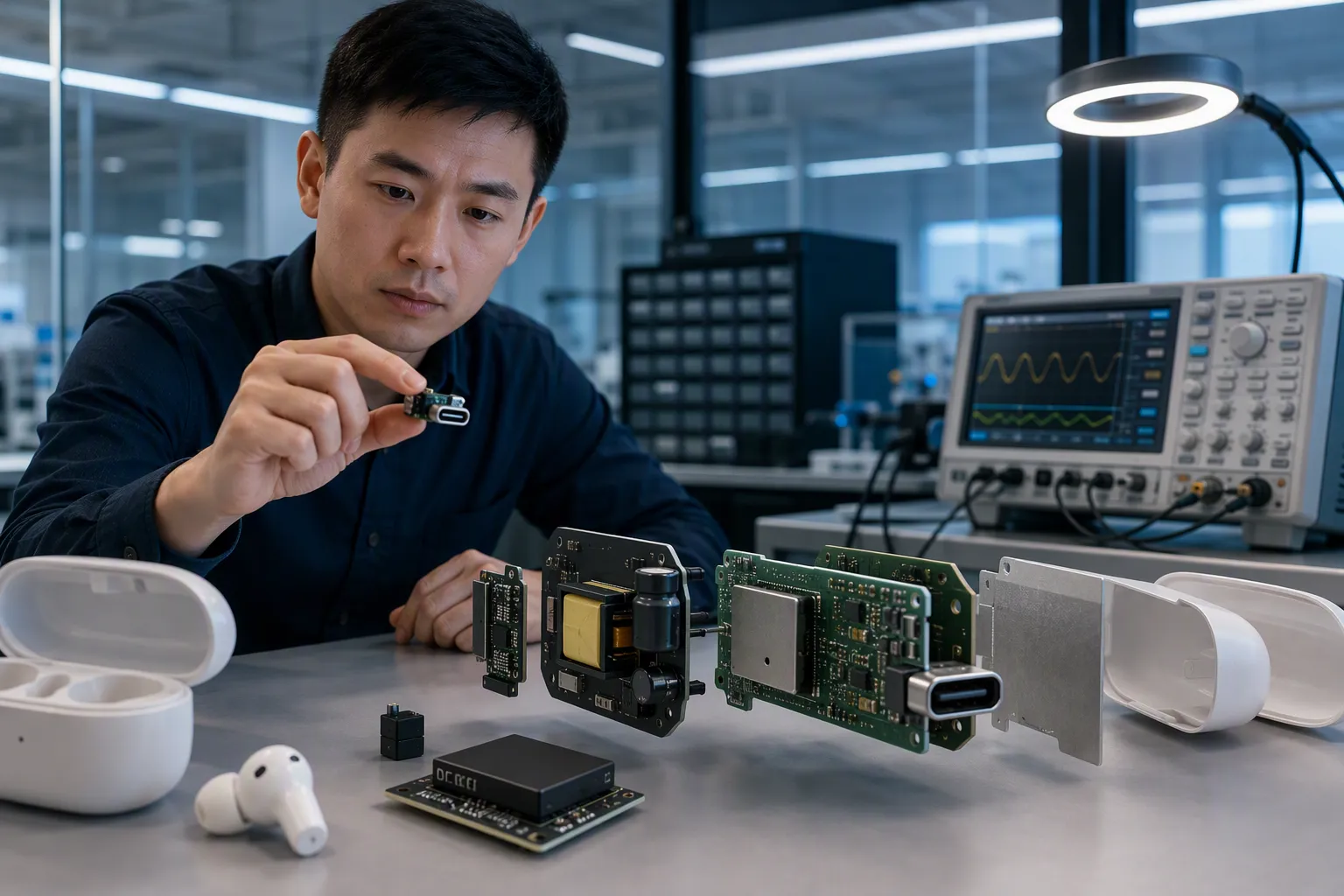
Before committing to either option, I would ask the supplier and internal buying team these questions:
- Who is the intended customer, and what retail price will they see?
- What are the three to five most important commands for this product?
- How does the user know a command has succeeded?
- Can a new user operate the earbuds without guessing?
- Does the control design suit the earbud shape and intended wearing scenario?
- What firmware version is included in the approved sample?
- What factory checks cover the control function after final assembly?
- What happens if the supplier changes a component, coating, or firmware version?
- Can the supplier provide relevant quality and test documentation for review?
- What is our plan if customer feedback identifies a repeated control complaint?
These questions help buyers move from a technology label to a sourcing decision. They also give suppliers a clearer basis for quoting and developing the correct product.
Frequently Asked Questions
Is force control always better than touch control for TWS earbuds?
No. I do not consider force control automatically better than touch control. Both can suit TWS earbuds when the implementation, firmware tuning, feedback, and command map match the product’s target market. Buyers should compare the final user experience rather than rely on a “premium” label.
Are touch controls more likely to cause accidental commands?
Touch controls are not inherently prone to accidental commands. The outcome depends on the touch area, sensitivity settings, earbud fit, user behavior, and firmware logic. I recommend testing normal handling, earbud adjustment, and daily-use scenarios with the final sample before production approval.
What should a buyer test in force vs touch controls for TWS?
I recommend testing play/pause, call functions, track changes, mode switching, confirmation feedback, and normal earbud adjustment. Buyers should also ask several users to try the product without detailed instructions. This reveals whether the control experience is intuitive for the intended customer.
Should private-label TWS brands use more control gestures?
Not always. More gestures can create more product functions, but they can also make the earbuds harder to understand. I prefer a focused command map that supports the main customer use cases. A clear, repeatable experience is often more valuable than a long feature list.
What should be written in a TWS control specification?
A buyer should define the control type, control area, command map, confirmation feedback, firmware version, user-manual instructions, inspection requirements, and change-control process. This helps ensure that the production product matches the approved sample and that supplier responsibilities are clear.
Conclusion
Force vs touch controls for TWS is not a simple choice between cheap and premium. I believe the best option is the one that supports your intended retail price, customer habits, product positioning, and after-sales capacity. Both control types can deliver a good experience when feedback is clear, commands are simple, and the supplier validates the final product configuration. If you are sourcing private-label TWS earbuds for Europe or North America, I can help you review control options, sample expectations, MOQ, lead time, and quality documentation before you place an order.
Sources
- The Effect of User Interface Design and User Experience ...", Usability research indicates that difficulties with product interaction can reduce user satisfaction and perceived quality and may contribute to negative evaluations and return intentions
- USER FRUSTRATION IN HIT INTERFACES - PMC - NIH", Human-computer interaction guidance identifies consistency, clear system feedback, and learnability as core usability factors because ambiguous or unpredictable interactions increase user errors and dissatisfaction
- Best Wireless Earbuds 2026", Studies of first-use interaction in consumer technologies show that immediately accessible controls and feedback can strongly shape users' early usability judgments
- Capacitive Touch Sensor | OpenBehavior - EdSpace", Capacitive touch interfaces detect changes in an electric field or capacitance caused by a nearby conductive object, such as a finger, and are widely used for touch-sensitive controls
- The Effect of Biomechanical Variables on Force Sensitive ...", Force-sensitive input devices register user actions by measuring applied pressure or force, allowing an interface to distinguish a deliberate press from non-press contact
- Life-cycle costing as a tool in mainstreaming green public ...", Total-cost-of-ownership frameworks assess procurement decisions using costs incurred across the product life cycle, rather than the initial purchase price alone
- Usability Testing and the System Usability Scale Effectiveness ...", Human-factors research distinguishes technical operation from perceived usability: when feedback or interaction logic is unclear, users may interpret unsuccessful or uncertain interaction as system failure
- Improving the Usability and Safety of Digital Health Systems", Usability research finds that users rely on timely, interpretable feedback to assess system state; absent or ambiguous feedback can prompt repeated input and increase interaction errors