A factory free sample C to USB A can reduce sourcing risk, but the phrase often creates the wrong expectation. I have seen buyers focus on the word “free” and overlook shipping, testing, customization, and bulk-order conditions. I use the sample as a practical procurement checkpoint, not as an unconditional gift or proof that every future shipment will be identical.
Quick Answer
- Ask the supplier exactly what “free” covers before confirming the sample.
- Confirm whether shipping, taxes, customized packaging, and branding are excluded.
- Test charging, data transfer, connector fit, cable length, and device compatibility separately.
- Compare the sample with the written quotation and intended bulk-order specification.
- Evaluate MOQ, lead time, after-sales support, and batch-control procedures before placing an order.
A factory free C-to-USB-A sample is usually a supplier’s way to help a buyer evaluate a product before a commercial order. The sample may be free while shipping, taxes, customization, or special packaging remain chargeable. I recommend confirming the complete cost, testing the intended use, and checking bulk-order conditions before treating the sample as a reliable purchasing signal.
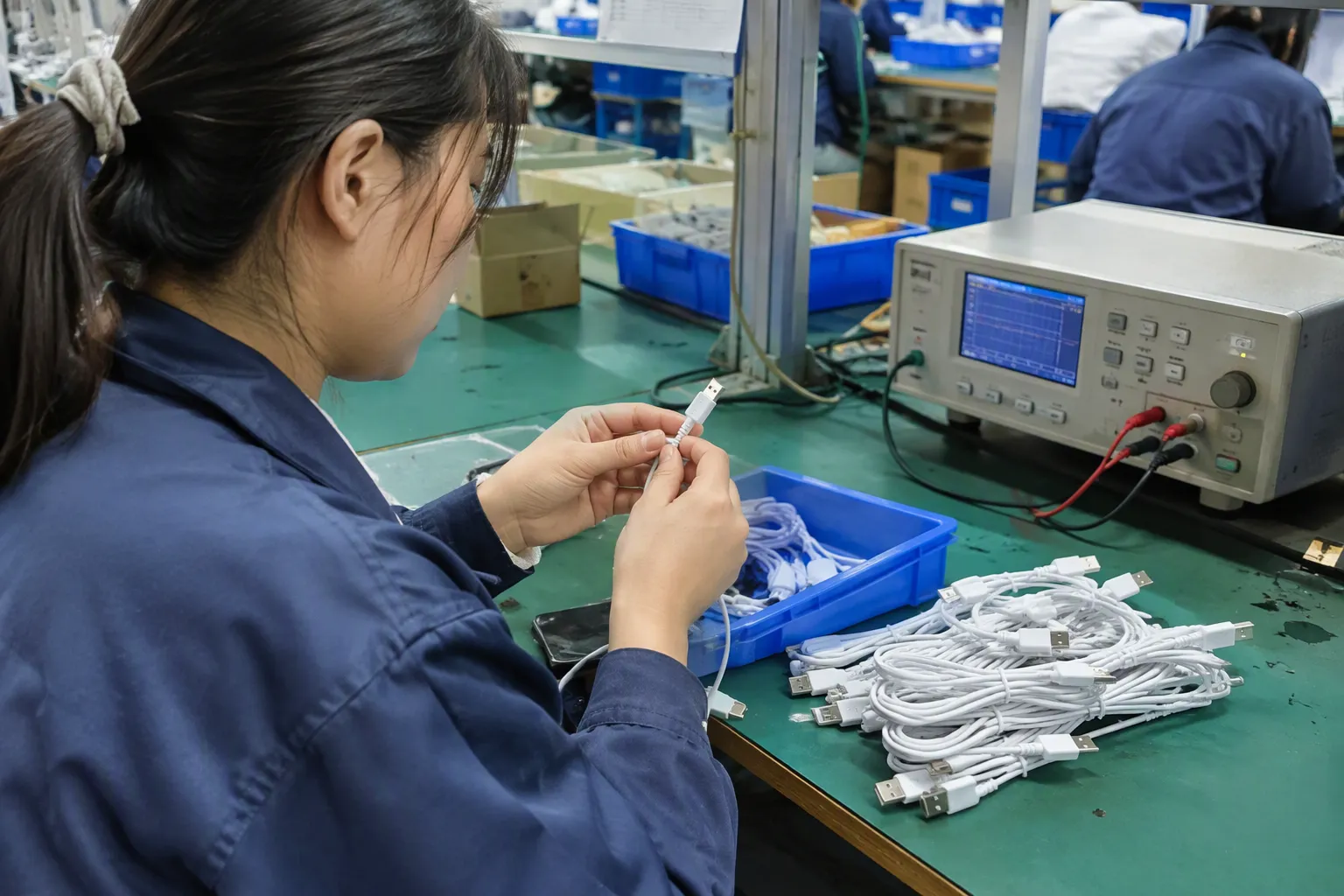
The useful question is not simply whether I can receive a free cable. The better question is whether the sample gives me enough information to make a low-risk buying decision. I normally review the sample offer, product specification, testing plan, and supplier terms together.
What Does a Factory Free C-to-USB-A Sample Really Mean?
“Free sample” sounds simple, but suppliers may use it in different ways. One supplier may provide one standard cable without a product charge. Another may offer a free sample only after the buyer pays courier costs. A customized sample may involve additional tooling or printing fees.
The usual meaning of a free sample
In many sourcing discussions, “free” refers only to the product price. The following costs may still apply:
- International courier or freight charges
- Import taxes, duties, or customs handling
- Customized logo printing
- Retail packaging or special inserts
- Non-standard cable length or color
- Special connectors, materials, or requested specifications
- Sample tooling or setup charges
- Bank or payment processing fees
I do not describe any sample as fully free until I have checked these points with the supplier. The actual arrangement may vary by project, order value, destination, and customization level.
A practical cost-confirmation checklist
Before I approve a sample, I ask the supplier to write the terms in one message or quotation. I look for:
| Item | Question I ask |
|---|---|
| Product charge | Is one standard sample provided without a product fee? |
| Freight | Who pays the courier or shipping cost? |
| Taxes | Could import VAT, duty, or brokerage apply in my market? |
| Customization | Are logos, colors, labels, and packaging included? |
| Specification | Is the sample the same model proposed for bulk production? |
| Refund policy | Can the sample or freight cost be credited against a later order? |
| Delivery time | How many working days are needed before dispatch? |
| Documentation | Will I receive a quotation, packing details, and tracking number? |
I once handled a request where the buyer asked for a “free sample” with a logo and custom retail card. The standard cable itself could be offered without a product charge, but the requested packaging made the sample a separate project. That distinction prevented an argument later.
For European and American buyers, I also recommend checking the likely landed cost. A courier invoice is not always the final import cost. Customs treatment depends on the destination, shipment value, product description, and local rules.[4] Buyers should confirm tax and duty obligations with their customs broker or relevant authority.
A supplier can provide a free standard sample and still be commercially reasonable. The important point is that both sides understand what is included. Clear conditions protect the buyer from unexpected costs and protect the supplier from an unrealistic request.
How Should I Test a Free C-to-USB-A Sample?
A cable that charges one device is not automatically suitable for every application. I test the sample against the buyer’s intended task, because charging, data transfer, physical durability, and compatibility are separate questions.
Start with the use case
I first define how the cable will be sold and used. A cable for a low-cost retail bundle may have different requirements from a cable supplied to business customers or included with a branded electronic product.
I ask:
- Which devices will the cable connect?
- Is the main purpose charging, data transfer, or both?
- What length and flexibility are needed?
- Will customers use wall chargers, computers, power banks, or car adapters?
- Does the buyer need a standard product or a customized version?
- Will the cable be sold in a retail package or a bulk carton?
- What return or warranty expectations exist in the destination market?
Separate the major tests
I avoid treating one successful test as proof of every capability.
| Test area | What I check | What the result does not prove |
|---|---|---|
| Basic charging | Whether the connected device begins charging | It does not prove a specific power level |
| Data transfer | Whether the cable transfers files with the intended devices | It does not prove compatibility with every device |
| Connector fit | Whether both connectors insert correctly and remain stable | It does not prove long-term mechanical life |
| Cable length | Whether the delivered length suits the product listing | It does not prove every future batch will match |
| Flexibility | Whether the cable bends appropriately for the use case | It does not replace a formal durability test |
| Appearance | Whether color, molding, printing, and finish meet expectations | It does not prove production consistency |
I recommend using the actual devices and accessories that customers will use. A test with one phone and one charger can miss problems that appear with a laptop, power bank, older adapter, or different operating system.
Check the physical construction
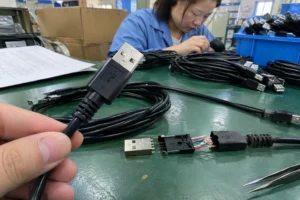
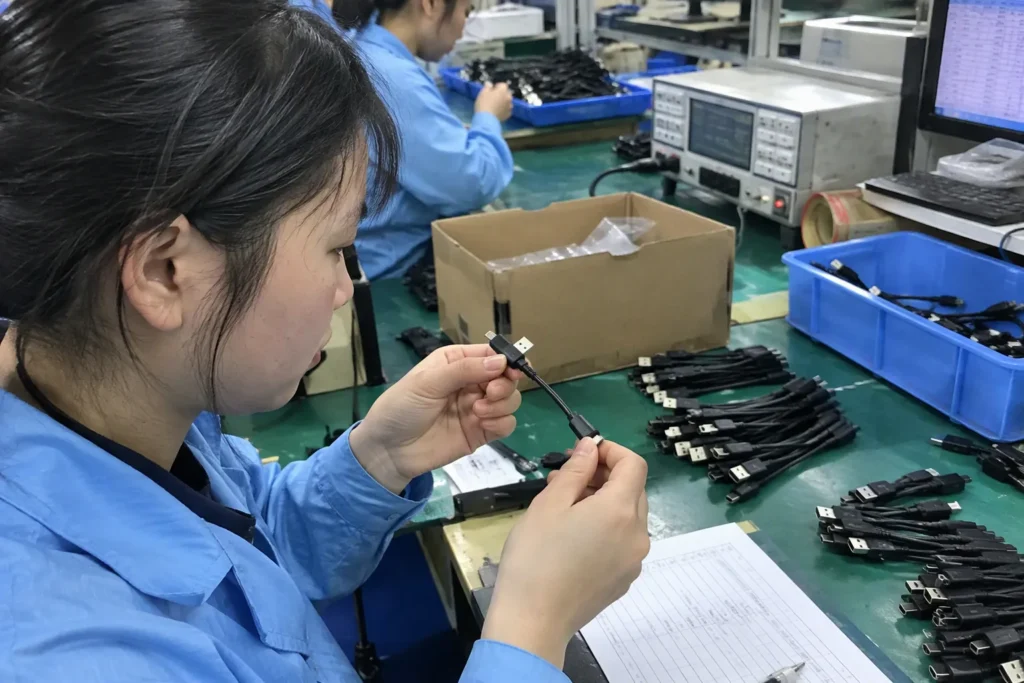
I inspect the connector housings, strain relief, cable jacket, and visible molding. I look for uneven seams, loose parts, sharp edges, poor printing, and inconsistent color. I measure the cable if the product listing requires a specific length. I also compare the sample with any photos or product drawings used in marketing.
I do not claim that a visual inspection proves electrical safety or long-term durability. Those conclusions require appropriate testing by qualified professionals and, where relevant, recognized laboratories.[3] Buyers should request applicable test reports and verify that the documents match the actual product model.
The most useful sample test produces written observations. I record the device used, charger or computer used, test date, cable length, visible condition, and any failure. This record gives me a stronger basis for approving a supplier than a general statement such as “the cable works.”
Which Specifications Should I Confirm Before Ordering?
Many sample disputes begin because the buyer and supplier use different meanings for a basic product description. “C-to-USB-A cable” identifies the connector arrangement, but it does not fully describe the product.
Confirm the product specification
I request a written specification that covers the points relevant to the project:
- USB Type-C connector to USB Type-A connector
- Cable length and permitted tolerance
- Outer material and color
- Connector housing material
- Cable gauge or construction, when relevant
- Data-transfer requirement, if applicable
- Charging-use requirement, if applicable
- Logo position, printing method, and color
- Individual packaging and carton quantity
- Product weight and carton dimensions
- Quality inspection standard
- Warranty or replacement arrangement
I use “when relevant” because not every buyer needs the same technical detail. A wholesale importer may care about carton efficiency and replacement rates. An e-commerce seller may care more about listing accuracy, packaging, and customer returns.
Do not assume modern performance from the connector shape
A USB Type-C connector does not, by itself, identify every charging or data feature.[1] The buyer should confirm the intended performance with the supplier and verify it through suitable testing. A cable may support basic charging but not the data function that a customer expects.
I also avoid copying technical claims from another listing. If a product page says “fast charging,” I ask what that claim means in the specific quotation and whether supporting test evidence is available. The buyer should verify claims with the supplier and seek professional evaluation for application-specific electrical decisions.
Match the sample to the quotation
I compare the physical sample with the written offer line by line. I check whether the sample has the same:
- Connector appearance
- Cable color and length
- Logo or label
- Packaging
- Model number
- Stated use
- Included accessories
- Carton and labeling requirements
If the supplier sends a convenient standard sample while quoting a different customized bulk product, I treat the sample as a reference rather than final approval. I ask for a pre-production sample or approved production reference when the differences could affect the customer experience.
Use a specification sheet
I find a simple one-page document useful. It can include the buyer’s approved photographs, measurements, packaging artwork, inspection points, and notes about acceptable variation. Both parties can refer to the same document during production and final inspection.
| Specification item | Approved reference | Bulk-order check |
|---|---|---|
| Cable length | Buyer’s required length and tolerance | Measure random cartons |
| Color | Approved sample or color reference | Compare under consistent light |
| Connector molding | Approved sample image | Inspect appearance and fit |
| Logo | Position, size, and color | Check printing quality |
| Packaging | Approved artwork and materials | Check labeling and quantity |
| Function | Intended charging or data use | Test according to agreed plan |
This document does not replace laboratory testing or a formal quality agreement. It does reduce ambiguity during quotation, production, inspection, and after-sales discussions.
How Can I Evaluate the Supplier After Receiving the Sample?
The sample tells me something about the product, but the supplier’s communication tells me something about the purchasing process. I evaluate both because a low sample price cannot compensate for poor follow-up, unclear documents, or unreliable delivery.
Review the supplier’s response quality
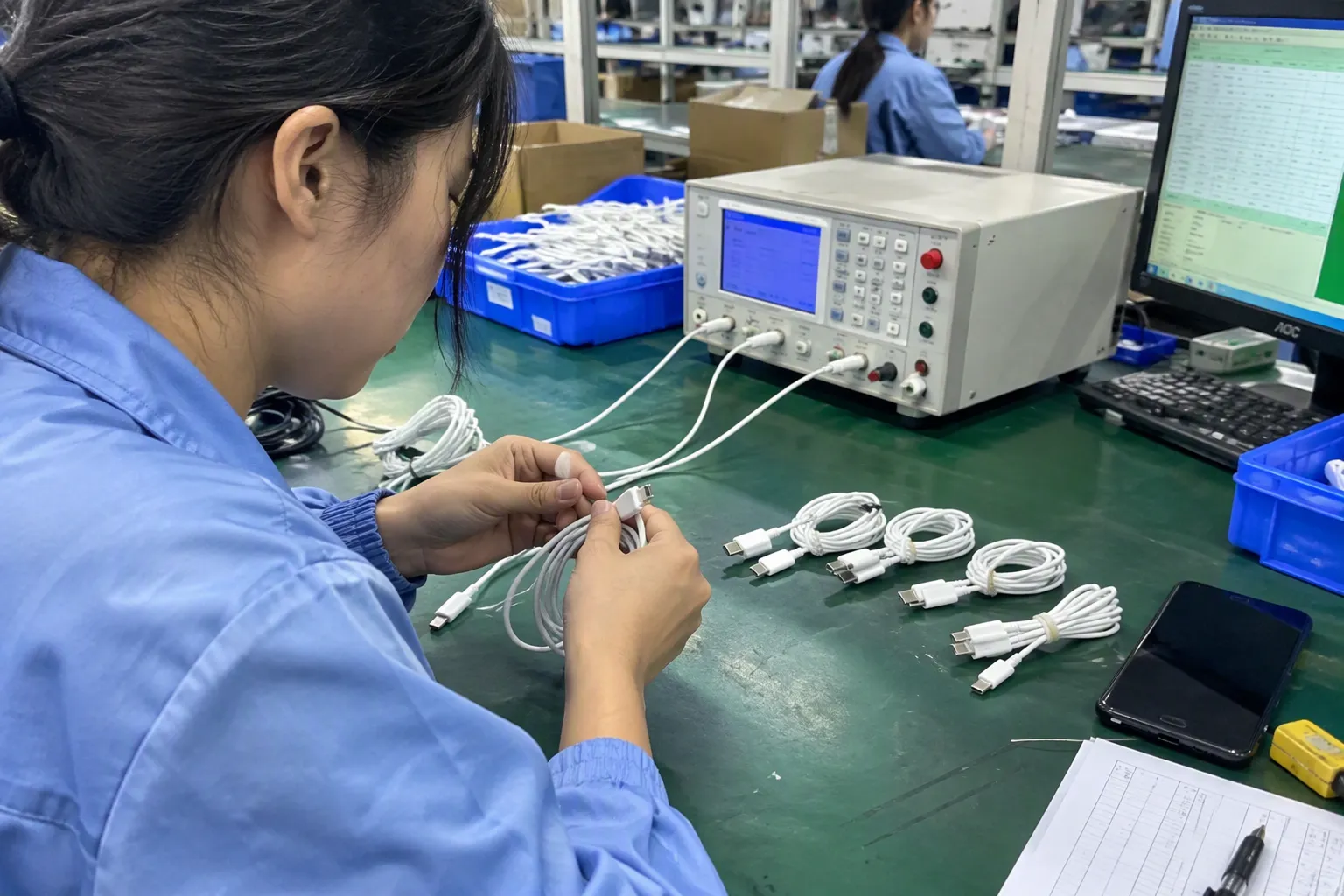
I notice whether the supplier answers questions directly. A capable export supplier should be able to clarify product options, MOQ, lead time, packaging, payment terms, and shipping arrangements. The supplier should not avoid reasonable questions about what the sample includes.
I also check whether the supplier records my requirements accurately. If I request a specific length and receive a different length without explanation, I treat that as a warning. A small error during sampling may become a larger error during mass production.
Check relevant business documents
I ask for documents that are relevant to the product and destination. Buyers should verify certificates, test reports, and declarations independently where necessary. A document should match the supplier, product model, market, and validity period. A generic file with no clear connection to the quoted product is not enough.
Useful documents may include:
- Commercial quotation
- Product specification sheet
- Packing information
- Business license or company details
- Applicable test reports
- Quality-control process description
- Sample invoice and shipping information
- Warranty or replacement terms
I do not assume that a certificate automatically proves product quality. Certification requirements vary by market and product configuration. The buyer should ask a qualified compliance professional to assess obligations for the intended destination, especially when the cable forms part of a regulated product package.
Evaluate export experience and communication
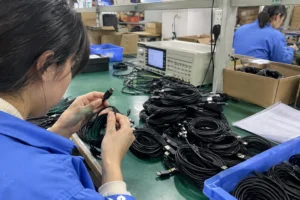
My company is based in Shenzhen, and I have worked with Western buyers for 15 years on samples, quotations, order communication, and follow-up. In my experience, many problems are not caused by one dramatic defect. They come from small misunderstandings about packaging, delivery dates, branding, or approved specifications.
I look for practical signs of supplier control:
- The supplier confirms the same product model in writing.
- The supplier explains sample and bulk pricing separately.
- The supplier gives a realistic lead time rather than an attractive promise.
- The supplier identifies what can and cannot be customized.
- The supplier explains how quality issues will be handled.
- The supplier keeps communication consistent between sales and production.
A polished catalog is useful, but it does not replace clear procurement communication. I prefer a supplier that gives a precise answer, even when the answer is “that customization needs an additional fee.”
Is a Free C-to-USB-A Sample Enough for a Bulk Order?
A sample is an important checkpoint, but I never treat one unit as proof that every bulk shipment will be identical. Bulk purchasing introduces production, packing, inspection, and logistics variables.
Understand sample-to-batch risk
The risk is higher when the buyer orders a customized item, changes the specification after sampling, or works with a supplier that uses multiple materials or production sources. A sample may also come from a better-controlled line than a later replenishment if the buyer has not defined the approved standard.
I reduce this risk by agreeing on:
- The final product model.
- The approved sample or pre-production reference.
- The written specification.
- The inspection method.
- The acceptable quality level or defect criteria.
- Packaging and carton requirements.
- The process for handling non-conforming goods.
I recommend that buyers consider a pre-shipment inspection for commercial orders. The inspection scope should be agreed in advance. It might cover quantity, appearance, dimensions, packaging, labeling, and selected functional checks. A qualified inspection company can advise on the appropriate plan.
Compare the full commercial offer
The cheapest sample or lowest unit price does not necessarily represent the best supplier. I compare the full purchasing picture.
| Evaluation factor | Why it matters |
|---|---|
| [MOQ | It affects inventory risk and cash flow](https://som.yale.edu/sites/default/files/2025-04/On%20the%20Nature%20of%20Working%20Capital%20Understanding%20its%20Mysteries%20and%20Complexities.pdf)[8] |
| Unit price | It affects margin, but should match the exact specification |
| Sample cost | It helps initial evaluation but is a small part of total cost |
| Lead time | It affects product launch and replenishment planning |
| Shipping method | It affects landed cost and delivery reliability |
| Packaging | It affects retail presentation and warehouse handling |
| Quality control | It affects returns and customer satisfaction |
| After-sales support | It affects resolution when problems occur |
| Customization | It affects brand fit and setup costs |
| Reorder consistency | It affects long-term supply stability |
For an e-commerce seller, a low MOQ may be valuable because it limits inventory exposure. For a retail chain, consistent packaging and replenishment capacity may matter more. For a wholesaler, carton quantity, price tiers, and replacement support may have greater importance.
Use a small commercial order carefully
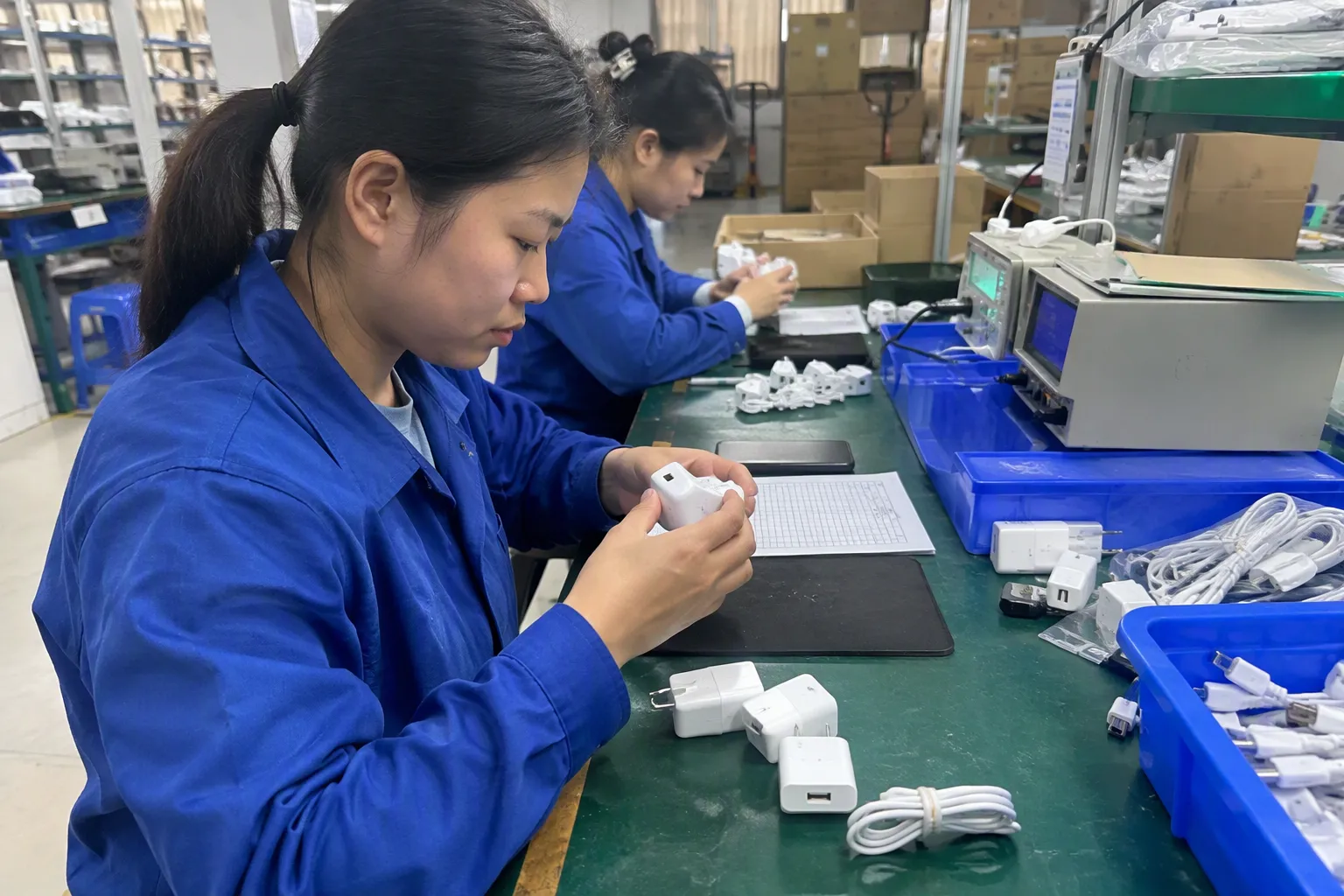
A small trial order can provide more information than a single free sample.[7] It shows how the supplier handles production scheduling, packaging, inspection, shipping documents, and after-sales communication under real commercial conditions.
I still define the trial order clearly. I confirm whether the supplier can use the approved sample and whether the trial order has the same materials and packaging planned for future orders. I also avoid changing several specifications at once, because too many variables make the result difficult to interpret.
The sample is therefore one step in a staged decision:
Request → clarify → test → approve specification → trial order → inspect → review → scale carefully.
How Should I Compare C-to-USB-A Cable Suppliers?
A buyer can compare suppliers more fairly when each supplier receives the same written request. Otherwise, one quotation may describe a basic cable while another includes packaging, testing, or customization.
Send a consistent RFQ
I prepare a short request for quotation with the essential details:
- Product type and connector arrangement
- Target length and color
- Intended use
- Estimated quantity
- Destination country
- Packaging requirement
- Branding requirement
- Target sample date
- Target bulk delivery date
- Required commercial terms
I ask each supplier to separate sample charges, freight, customization, unit price, MOQ, and lead time. This format makes hidden differences easier to see.
Build a supplier comparison table
| Question | Supplier A | Supplier B | Supplier C |
|---|---|---|---|
| Sample product fee | |||
| Sample shipping | |||
| MOQ | |||
| Bulk unit price | |||
| Custom logo cost | |||
| Packaging cost | |||
| Production lead time | |||
| Payment terms | |||
| Inspection support | |||
| Warranty or replacement terms | |||
| Quotation validity |
I do not score a supplier only by price. I add notes about response speed, accuracy, technical clarity, and willingness to document the agreement. These factors often predict how smoothly an order will proceed.
Verify shipping and import assumptions
For international purchasing, I ask how the supplier proposes to ship the sample and bulk order. I confirm the delivery term and what each party is responsible for.[5] I do not assume that courier delivery, customs clearance, taxes, and final delivery are all included in one quoted figure.
Buyers can review official customs and import guidance from their own government or customs authority. For European shipments, the European Commission’s Access2Markets portal provides information about tariffs and trade requirements. For United States imports, buyers can consult U.S. Customs and Border Protection. These sources do not replace a broker’s advice, but they help buyers ask better questions.
I also recommend reviewing relevant USB information through the USB-IF official website. Buyers should not use a logo or technical claim without confirming that the product and documentation meet the applicable requirements.
Consider internal approval
A retailer or distributor may need approval from several people. Purchasing may approve price, product staff may approve function, marketing may approve packaging, and compliance staff may review documents. I try to provide one shared sample record so every person evaluates the same item.
This process may feel slower than simply accepting a free sample. In practice, it can save time. A clear approval record reduces repeated sampling and prevents a sales listing from promising features that the final product does not provide.
What Should I Ask Before Requesting a Free Sample?
A focused message helps the supplier give a useful answer. I normally ask questions that cover both the sample and the future order.
Sample questions
- Is the standard C-to-USB-A sample free of product charges?
- What shipping cost should I expect to my country?
- Could taxes, duties, or courier handling fees apply?
- Is the sample made with the same materials planned for bulk production?
- Can the supplier provide a tracking number?
- How long will sample preparation and dispatch take?
- Can the sample include my logo or packaging?
- If customization is charged, can that fee be credited against a bulk order?
Product questions
- What charging and data functions are supported?
- What cable length and tolerance will be supplied?
- Which colors and packaging options are available?
- Is the product intended for a particular use or device group?
- Which test documents are available for this exact model?
- What inspection points does the factory use?
- What variations might occur between samples and production?
I phrase technical questions carefully. For example, I ask, “Please confirm the intended data-transfer function and provide supporting documentation if available,” rather than assuming that a connector type proves a performance level.
Commercial questions
- What is the MOQ for the standard product?
- What is the MOQ for customized packaging?
- What is the bulk unit price at different quantities?
- What is the normal production lead time?
- What payment terms are available?
- How does the supplier handle defects or shortages?
- Can the supplier support repeat orders?
- How will the approved sample be referenced in the purchase order?
A buyer can also ask for a quotation validity period. Material, freight, exchange-rate, or production conditions may change. A validity date helps both sides understand when the price should be reconfirmed.
Frequently Asked Questions
Is a factory free C-to-USB-A sample always completely free?
No. “Free” commonly refers to the sample product price, while shipping, taxes, customization, packaging, tooling, or courier handling may remain payable. I always ask the supplier to state the included and excluded costs before confirming the sample.
Can a charging test prove that a C-to-USB-A cable supports data transfer?
No. Charging and data transfer are separate functions.[2] I test each intended function with suitable devices and equipment. I also ask the supplier for the relevant product specification or supporting test documentation.
Does one approved sample guarantee that the bulk order will be identical?
No. One sample provides a reference, not an automatic guarantee of batch consistency.[6] I use a written specification, approved sample, inspection plan, and clear replacement terms to reduce production risk.
Should I request a customized sample with my logo?
I request customization when branding, packaging, or retail presentation is central to the buying decision. I first confirm the setup cost, minimum quantity, artwork requirements, and whether the customization sample will match the proposed bulk production.
What matters more than the free sample price?
I consider the complete commercial offer. MOQ, unit price, lead time, quality control, packaging, after-sales support, shipping, and reorder consistency may affect profitability more than the small value of one sample.
Conclusion
A factory free sample C to USB A can be a useful first step for Western retailers, wholesalers, and e-commerce sellers, but I treat it as a procurement checkpoint rather than an unconditional offer. I confirm the real sample cost, test charging and data functions separately, match the sample with the written specification, and review MOQ, lead time, quality control, and after-sales terms. If you are comparing USB cable suppliers, contact me with your target quantity, packaging, destination, and customization needs. I can help prepare a clear quotation and sample plan for your project.
Sources
- USB Type-C Charging Connectors: Design, Optimization ...", The USB Implementers Forum specifications distinguish the USB Type-C connector and cable interface from the protocols, power capabilities, and signaling modes implemented by a particular product
- Types of USB Cables: The Ultimate Guide", USB technical documentation treats power delivery and data communication as distinct functions, so evidence that a cable supplies power does not by itself establish that it carries USB data
- 2940.16. Testing and Test Facilities.", Product-safety guidance generally requires applicable electrical and mechanical performance to be assessed through defined tests or conformity procedures; visual inspection alone is insufficient to establish those properties
- Customs Duty Information", Customs authorities determine import treatment through rules concerning tariff classification, customs value, origin, and the importing jurisdiction; consequently, the final duty and tax burden cannot be inferred from freight cost alone
- Know Your Incoterms", International commercial delivery terms such as Incoterms define agreed allocations of transport responsibilities, costs, and risk between seller and buyer
- Ensuring Product Quality, Consistency and Patient Supply ...", Quality-control methods recognize that production processes vary and therefore use defined specifications, representative sampling, and process controls rather than treating approval of one item as proof of uniformity
- SUPPLIER ASSESSMENT PROCESS FOR ... - SOAR", Research on supplier qualification and pilot production treats limited commercial runs as a means of observing process, fulfillment, and quality performance under operating conditions rather than relying solely on an isolated sample
- On the Nature of Working Capital: Understanding its Mysteries ...", Inventory-management research links minimum purchase quantities to order size, inventory holding, and the amount of working capital committed before goods are sold