A USB 2.0 cable manufacturer and supplier can offer many products that look almost identical, but appearance alone does not show whether a cable is suitable for data synchronization, peripheral connection, or charging. I often see buyers begin with only the words “USB 2.0 cable.” A clearer task, specification, and verification process usually leads to a safer purchasing decision.
Quick Answer
- Define whether the cable is mainly for data transfer, peripheral connection, charging, or mixed use.
- Confirm the connector combination, cable length, construction, packaging, and target market before requesting prices.
- Ask the USB 2.0 cable manufacturer and supplier for written specifications and representative samples.
- Compare samples for connector fit, cable flexibility, labeling, packaging, and actual use performance.
- Review batch consistency, quality-control records, lead time, MOQ, after-sales support, and compliance documents.
- Do not select only by the lowest unit price, because similar-looking cables can create different retail and customer-service results.
A USB 2.0 cable manufacturer and supplier should be evaluated by the cable’s intended task, connector configuration, construction, documented specifications, sample performance, and batch consistency. Buyers should confirm whether the product is designed for data synchronization, peripheral use, charging, or a combination of these functions before approving a factory or purchase order.
The label is a useful starting point, but it is not a complete purchasing specification. In my work with European 3C retail buyers, I have found that many misunderstandings begin when a buyer compares two products only by connector type and price. The sections below explain how I would turn a general inquiry into a practical supplier-evaluation process.
What Should Buyers Ask a USB 2.0 Cable Manufacturer and Supplier to Confirm?
A vague inquiry creates a vague quotation. When a buyer asks for “USB 2.0 cables,” a supplier may not know the intended device, length, packaging, market, or performance expectation. The buyer may then receive several prices that cannot be compared fairly.
The first step is to create a short product brief. The brief should identify the application and the physical specification before the buyer discusses price. This approach helps a retailer, wholesaler, or e-commerce seller reduce avoidable differences between samples and mass production.
Start with the cable’s actual task
Some cables support more than one purpose. However, a USB 2.0 label should not be treated as automatic proof that every cable will provide the same real-world result. The buyer should request product-specific evidence and test the sample with the intended equipment.
| Inquiry point | Example buyer requirement | Why it matters |
|---|---|---|
| Connector combination | USB-A to USB-C, USB-A to Micro-USB, or another combination | The connector determines device compatibility[3] |
| Main task | Data synchronization, keyboard connection, charging, or mixed use | The task influences construction and testing |
| Length | 0.5 m, 1 m, 1.5 m, or another length | Length affects packaging, handling, and user experience |
| Cable construction | PVC, braided, reinforced, or custom design | Construction affects appearance and durability expectations |
| Device environment | Mobile accessories, office peripherals, retail display, or household use | The use environment influences selection |
| Packaging | Polybag, paper box, hanger card, or private label | Packaging affects shelf presentation and cost |
| Target market | EU, UK, North America, or another market | Documentation and labeling requirements may differ |
| Order plan | Trial quantity, repeat order, or seasonal program | MOQ and production planning depend on the program |
Use clear wording in the request for quotation
I recommend that buyers avoid sending a product photograph as the only reference. A photo can help identify the visual style, but it does not define internal construction, connector quality, cable gauge, or testing requirements.
“We are looking for a USB-A to USB-C cable for retail packaging. The main use is connection and data synchronization for compatible consumer devices. Please quote the available lengths, cable construction, connector details, MOQ, sample lead time, production lead time, packaging options, and available product documentation.”
Ask for documents without treating them as proof of every claim
A supplier may provide a specification sheet, test report, declaration, or certification document. These documents can be valuable, but I would check that the document clearly relates to the quoted product, model, manufacturer, and intended market.
- Product model and connector combination
- Report or document date
- Issuing organization
- Scope of the document
- Sample description
- Applicable standards or test methods
- Whether the document covers the cable itself or another product
- Whether the document is current and relevant to the planned order
The USB Implementers Forum provides public information about USB specifications and compliance programs at usb.org. Buyers can use authoritative sources such as this one to understand terminology, but they should still request product-specific information from the supplier.
I do not present a supplier’s document as independent laboratory proof unless the document can be checked and its scope is clear. The practical goal is not to collect paperwork. The goal is to connect the paperwork with the exact item that will be purchased.
How Can Buyers Compare USB 2.0 Cable Samples Correctly?
Two samples may have the same connector combination and similar packaging, yet they may not provide the same customer experience[4]. A buyer should compare samples under the same conditions and record observations instead of relying on a quick visual impression.
Sample comparison is especially useful for retailers and e-commerce sellers. A cable that feels weak, fits poorly, or performs inconsistently may lead to returns and negative reviews. In my communication with European 3C buyers, sample comparison often reveals questions that did not appear in the first quotation.
A practical sample-review sequence
- Check the physical appearance
- Check connector fit
- Check cable flexibility and strain relief
- Use the cable with the intended device
- Repeat the basic use test
- Compare labeling and packaging
- Record the result for future batch comparison
The test should match the product’s intended task. A cable intended mainly for a peripheral should not be evaluated only by connecting it to a phone. A cable described for data synchronization should be checked with compatible equipment and files, while a charging-focused product should be reviewed according to the buyer’s documented charging expectations.
What to observe during a physical inspection
| Sample area | Questions for the buyer |
|---|---|
| Connector housing | Does the housing look clean and consistent? Are there visible gaps or rough edges? |
| Contact fit | Does the connector insert smoothly without excessive looseness? |
| Strain relief | Does the cable transition look supported? Does it bend sharply at the housing? |
| Outer jacket | Does the material match the quotation and sample description? |
| Marking | Are required product marks, model information, or packaging details present? |
| Packaging | Does the packaging protect the cable and match the retail plan? |
| Length | Does the measured length match the agreed specification and measurement method? |
Compare repeated samples, not only one sample
One sample can show the general product concept, but it cannot establish batch consistency. I prefer to ask for more than one sample when the product is important to a retail program. The buyer can compare samples from the same production run or, where possible, from different production lots.
- Connector appearance
- Fit with the same test device
- Cable length
- Flexibility
- Printing and labels
- Packaging assembly
- Any visible difference between pieces
- Date and source of each sample
This record creates a reference point for pre-shipment inspection or future reorders. If the buyer later receives a different-looking product, the original sample helps both sides discuss the issue more precisely.
Do not overstate what a sample proves
A successful sample connection does not prove that every production unit will perform identically[5]. It also does not prove compliance with every regulation or standard. I describe sample testing as one part of qualification, together with supplier documentation, production controls, and shipment inspection.
For application-specific performance, the buyer should use a qualified testing professional or an appropriate laboratory. This is particularly important when the cable will be included in a larger electrical system, sold with specific performance claims, or supplied into a market with defined compliance obligations.
Which Construction Details Matter When Selecting a USB 2.0 Cable?
Buyers often focus on the connector and overlook the rest of the cable. However, the outer jacket, internal conductors, shielding approach, strain relief, connector housing, and assembly process can all influence the product’s suitability[6] and perceived quality.
The correct construction depends on the use. A cable supplied for occasional household use may have different commercial priorities from a cable placed beside premium mobile accessories. A braided appearance may improve shelf appeal, but appearance alone does not guarantee better electrical or mechanical performance.
Cable material and appearance
Common outer constructions may include PVC or textile-braided designs. Each option can have different cost, flexibility, appearance, and packaging implications. The buyer should ask the supplier to identify the construction clearly rather than relying on a catalog photograph.
- Outer jacket material
- Diameter and flexibility
- Braiding quality, if applicable
- Color consistency
- Resistance to visible scuffing
- Connector housing design
- Strain-relief shape
- Printing or branding quality
A thicker cable is not automatically a better cable[7]. A heavier construction may increase packaging volume and shipping cost. A very soft cable may be attractive to some users, while a more structured cable may be easier to organize in retail packaging. The buyer should connect the construction to the intended customer and price position.
Connector details and fit
Connector quality deserves direct attention because the connector is the part that the customer handles repeatedly. The housing should appear consistent, and the connection should be stable with the intended device. The buyer should not assume that all connectors with the same name have the same assembly quality.
- Connector source or approved component range
- Housing material
- Assembly method
- Strain-relief design
- Available color and logo options
- Inspection points during production
- Product-specific connector documentation
The supplier may not disclose every internal component detail, particularly for a standard product. However, the supplier should be able to explain the product specification at a level that supports procurement and quality control.
Length and packaging trade-offs
Length affects more than convenience[8]. It changes the product’s appearance in the package, carton quantity, shipping volume, and expected user application. A short cable may be suitable for compact retail packs, while a longer cable may be selected for desk or household use.
| Buyer priority | Shorter cable | Longer cable |
|---|---|---|
| Packaging size | Usually easier to pack compactly | May require larger or different packaging |
| Desk use | May limit placement flexibility | May provide more flexibility |
| Shipping volume | Generally lower | May be higher |
| Cable management | Often easier to organize | May create more excess cable |
| Retail choice | Useful for specific compact kits | Useful when reach is important |
The buyer should define how the length is measured. Some suppliers measure from connector tip to connector tip, while others describe only the cable body. A written measurement method avoids unnecessary disagreement.
Electrical claims require verification
USB 2.0 describes a data-transfer category[1], but buyers should not use the label as a complete description of charging behavior or compatibility. Charging results can depend on the connected devices, power source, cable construction, and other system factors[2].
If the product listing will include a charging claim, I recommend that the buyer request the relevant product information and arrange suitable verification. If the cable will be sold with a charger, power bank, or other accessory, the buyer should evaluate the complete combination where appropriate.
The buyer should also avoid publishing unsupported statements such as “works with all devices” or “supports every fast-charging function.” Accurate product language reduces customer confusion and protects the retailer from avoidable claims.
How Should Buyers Evaluate a USB 2.0 Cable Manufacturer and Supplier?
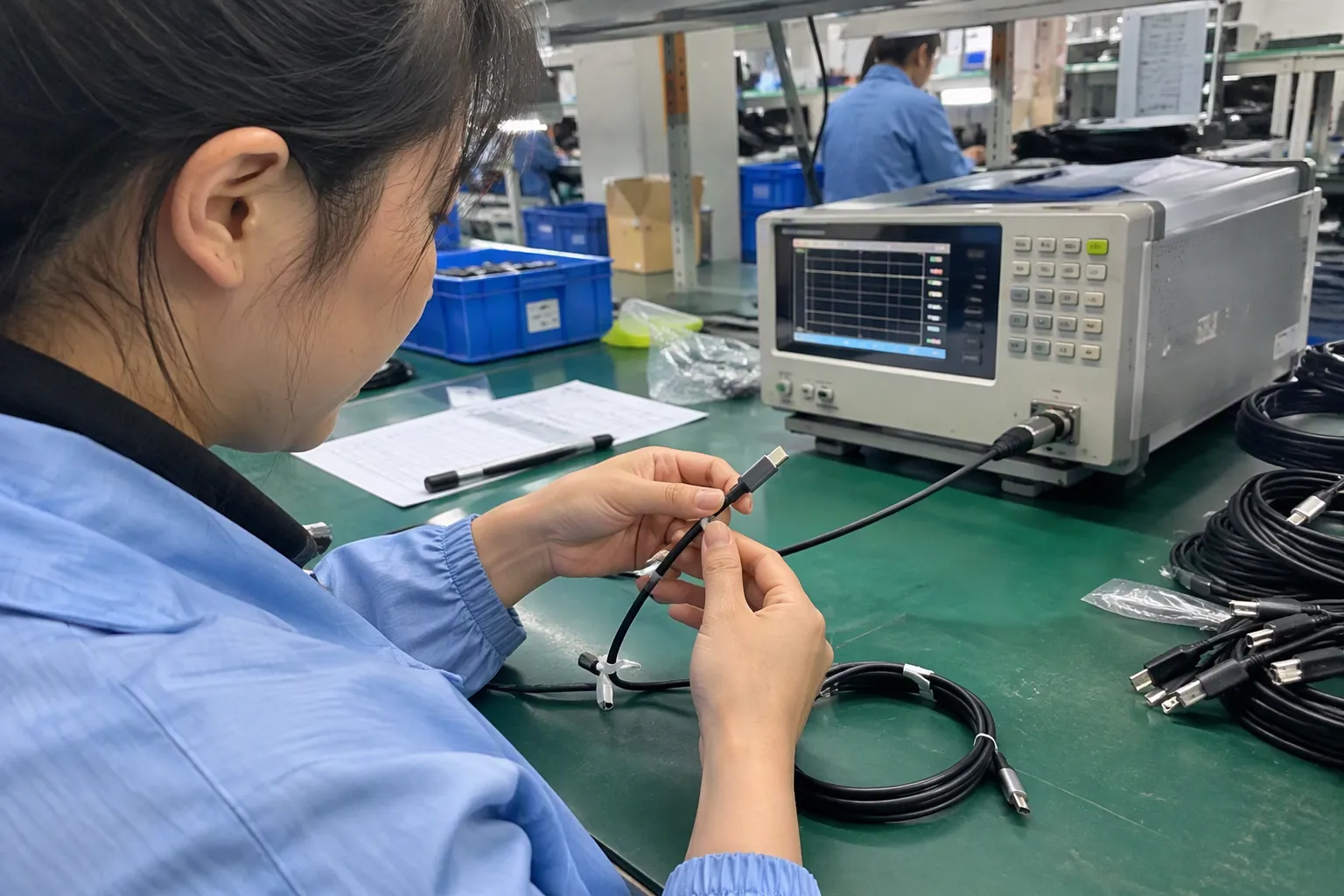
A low quotation can be attractive, especially when a buyer is comparing large quantities. However, unit price does not show how the supplier manages specifications, production changes, packaging, inspection, communication, or after-sales issues.
I have seen inquiries become more productive when buyers ask the same structured questions to each supplier. The buyer can then compare commercial value rather than comparing numbers that describe different products.
Review the supplier’s communication quality
- Answers each requirement directly
- Identifies unclear points instead of guessing
- Distinguishes confirmed specifications from optional choices
- Explains MOQ and sample charges clearly
- Provides a realistic lead-time estimate
- Discusses packaging and labeling requirements
- Responds consistently when the buyer asks follow-up questions
Check manufacturing and trading responsibilities
Some suppliers manufacture directly. Some work with partner factories. Some combine sourcing, quality control, export, and packaging services. None of these models is automatically suitable or unsuitable. The buyer needs to understand who controls the product and who handles corrective action if a problem appears.
- Who is the legal seller on the quotation and invoice?
- Who produces the cable?
- Who approves changes to materials or components?
- Who performs production inspection?
- Who prepares compliance or test documents?
- Who manages replacement, credit, or corrective action?
- Can the supplier support private labeling and packaging changes?
As a Shenzhen-based 3C trading company, we often coordinate between buyers and production partners. I treat that coordination role as a responsibility to communicate specifications and feedback clearly. I do not present trading experience as proof that every product is suitable. The buyer still needs to approve the exact item and documents.
Use a supplier scorecard
| Evaluation area | Suggested question |
|---|---|
| Product fit | Does the proposed cable match the intended task? |
| Specification clarity | Are connector, length, construction, and packaging documented? |
| Sample consistency | Do multiple samples match one another? |
| Quality process | Can the supplier explain inspection and batch controls? |
| Documentation | Are relevant documents available and verifiable? |
| Commercial terms | Are MOQ, price, payment, and lead time clear? |
| Communication | Does the supplier respond accurately and promptly? |
| After-sales | Is there a defined process for quality complaints? |
| Customization | Can the supplier manage logo, color, and packaging requirements? |
| Market support | Can the supplier support the buyer’s destination-market needs? |
The score does not need to be complicated. The main benefit is that it prevents the buyer from choosing solely on price before the product and service risks are understood.
What Quality-Control Steps Should Be Included Before Shipment?
Quality control should begin before production, not only after goods arrive. The buyer and USB 2.0 cable manufacturer and supplier should agree on the approved sample, specification, packaging, and inspection method before the order is released.
A quality plan cannot remove every risk, but it can make expectations measurable. It also gives both sides a common reference when the buyer raises a complaint.
Confirm the approved sample and specification
- Product name and model
- Connector combination
- Agreed length and tolerance
- Cable construction and color
- Packaging artwork or packaging description
- Logo and marking requirements
- Carton quantity and carton marks
- Required documents
- Inspection requirements
- Approved sample reference
The buyer should avoid relying on informal messages alone. Messages can support the order, but the final commercial documents should contain the requirements that matter.
Separate appearance checks from performance checks
- Connector insertion and fit
- Connection with agreed test equipment
- Basic data synchronization where this is part of the approved use
- Other documented checks suitable for the product
The exact test method should be agreed by a qualified person or inspection provider. I would not claim that a basic warehouse check replaces laboratory evaluation.
Control changes between sample and production
A common risk occurs when a sample uses one component or construction, but production uses a substitute without clear approval. The buyer should ask the supplier to notify them before changes to:
- Connector components
- Cable materials
- Internal construction
- Molding design
- Packaging materials
- Factory or production location
- Labeling or product claims
A supplier may propose a change because of availability or cost. The buyer can then decide whether to approve a revised sample or reject the change. This process is much safer than discovering the change after delivery.
Consider pre-shipment inspection
For a new supplier, a private-label program, or a large order, the buyer may consider an independent pre-shipment inspection. The inspection company should receive the approved specification and sampling instructions. The buyer should understand the limits of the inspection and should not treat a pass result as a guarantee of future production.
In some programs, the buyer may also arrange laboratory testing for specific claims or market requirements. The appropriate scope depends on the product, destination market, and sales claims. European buyers can consult official sources such as the European Commission’s product safety information and obtain professional advice for their specific obligations.
How Do MOQ, Lead Time, Packaging, and After-Sales Terms Affect Selection?
Product quality is important, but a supplier must also fit the buyer’s business model. A chain store, online seller, wholesaler, and promotional distributor may require different order quantities, packaging formats, and delivery plans.
A technically suitable product may still be commercially unsuitable if the MOQ is too high, the lead time does not match the sales calendar, or the supplier cannot manage replenishment.
Match MOQ to the sales plan
A supplier may quote a low MOQ for a standard cable but require a higher MOQ for custom packaging or private labeling. The buyer should request a breakdown rather than assuming that every option has the same threshold.
Understand lead time in stages
The supplier should clarify which stages are included in the quotation. A seasonal retailer should also ask how the supplier manages holidays, material shortages, and repeat orders.
Review packaging as part of the product
Packaging affects shelf appeal, protection, shipping efficiency, and labeling. I often recommend that buyers approve a packaging sample, not just a digital artwork file. The buyer should check the actual package for:
- Product visibility
- Hanging or shelf placement
- Barcode position
- Language requirements
- Brand presentation
- Connector protection
- Package strength
- Carton efficiency
Define after-sales handling before the first order
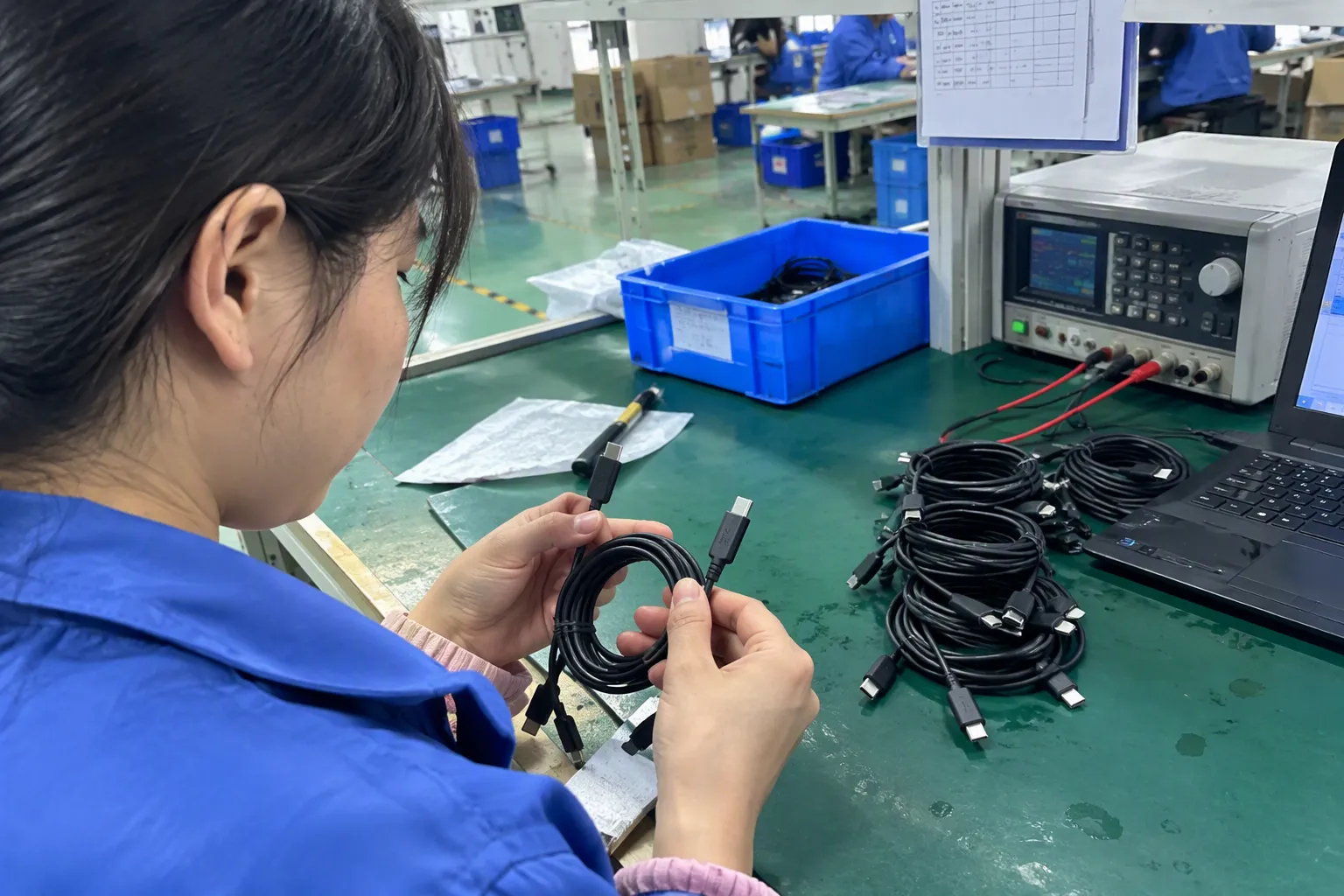
- How the buyer reports a suspected quality issue
- What evidence is needed
- How many units may be requested for review
- The response time
- Possible corrective actions
- Replacement, credit, or other commercial treatment
- How repeated issues are investigated
Customer feedback is useful, but it is not universal laboratory evidence. If end users report connection problems, the supplier and buyer should review the affected batch, usage conditions, device combination, and product specification before deciding on a cause.
Our 15 years of export experience has taught me that prompt communication is especially important after delivery. A buyer may need support with a packaging question, a replacement request, or a repeat-order adjustment. Clear records make that conversation more efficient.
Frequently Asked Questions
Is every USB 2.0 cable the same?
No. The USB 2.0 category does not by itself describe every construction detail, connector quality, length, packaging format, or intended application. Buyers should compare the actual specification, sample, supplier documentation, and quality-control process.
Can a USB 2.0 cable be used mainly for charging?
It may be suitable for some charging applications, but buyers should not assume that every USB 2.0 cable supports every charging expectation. The connected devices, power source, cable construction, and product claims should be reviewed together.
What information should I include in a cable inquiry?
Include the connector combination, main use, length, construction, color, packaging, logo requirements, target market, MOQ, delivery plan, and requested documents. A clear brief allows suppliers to quote comparable products.
Should I buy directly from a factory or use a trading supplier?
The better option depends on the buyer’s needs. A factory may offer direct production communication, while a trading supplier may coordinate multiple product categories, packaging, export, and after-sales support. Buyers should verify who controls quality and who is responsible for the final product.
How can I reduce the risk of inconsistent batches?
Approve a clearly identified sample, document the specification, request change notification, compare production samples, and consider pre-shipment inspection. Buyers should also keep records of complaints and review repeat orders against the approved reference.
Conclusion
Choosing a USB 2.0 cable manufacturer and supplier requires more than comparing photographs or unit prices. I recommend starting with the cable’s actual task, then confirming the connector combination, length, construction, packaging, documentation, and destination-market needs. Sample comparison and batch-control procedures can expose differences that a product label does not show. Our Shenzhen team has 15 years of export experience supporting European and other international 3C buyers with USB cables and related accessories. Contact us with your target specification, MOQ, packaging plan, and market requirements so we can prepare a more relevant quotation and sample review.
Sources
- E-Rate - Schools & Libraries USF Program", The USB Implementers Forum defines USB 2.0 as a specification for USB bus operation and data signaling; this definition does not, by itself, establish every cable's construction, charging capability, or device-specific performance
- A Primer on USB Type-C and Power Delivery Applications ...", USB charging specifications describe charging as a system interaction involving the power source, connected device, signaling conditions, and applicable cable or connector requirements, rather than as a property guaranteed by the USB 2.0 designation alone
- EU Conformity to USB-IF Specifications (IEC 62680)", USB technical guidance treats connector form factor as a necessary physical compatibility condition, while complete interoperability also depends on the supported USB functions, electrical characteristics, and device requirements
- Electric Cable Construction Parameter and Its Potential ... - PMC", Comparative testing research indicates that visually similar cables may differ in internal materials, assembly quality, electrical behavior, or mechanical durability, so external appearance is not sufficient evidence of equivalent performance
- Measurement and Sampling Standards", Statistical quality-control guidance treats sample inspection as evidence about the likely condition of a production lot, not as proof that every unit in that lot has identical performance
- Modeling an ESD Gun Discharge to a USB Cable", Cable-engineering literature describes conductor geometry, shielding, insulation, connector interfaces, and strain-relief design as factors that can affect signal integrity and mechanical reliability
- Wire Gauge Chart and Ampacity | Guide for Electricians", Cable-design research indicates that overall performance results from several interacting electrical and mechanical parameters; outer diameter or apparent thickness alone is therefore not a sufficient quality measure
- USB Cable Max Length: How Long Can a USB Cable Be?", USB and cable-engineering guidance recognizes cable length as a factor in signal transmission limits; longer products also require more material and package space, although the commercial effect depends on the packaging and distribution design