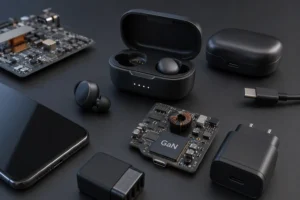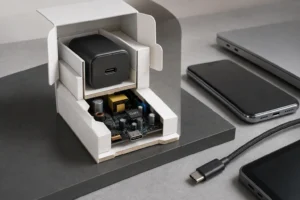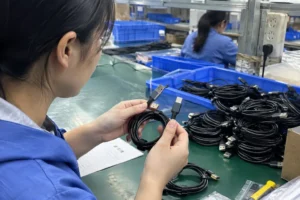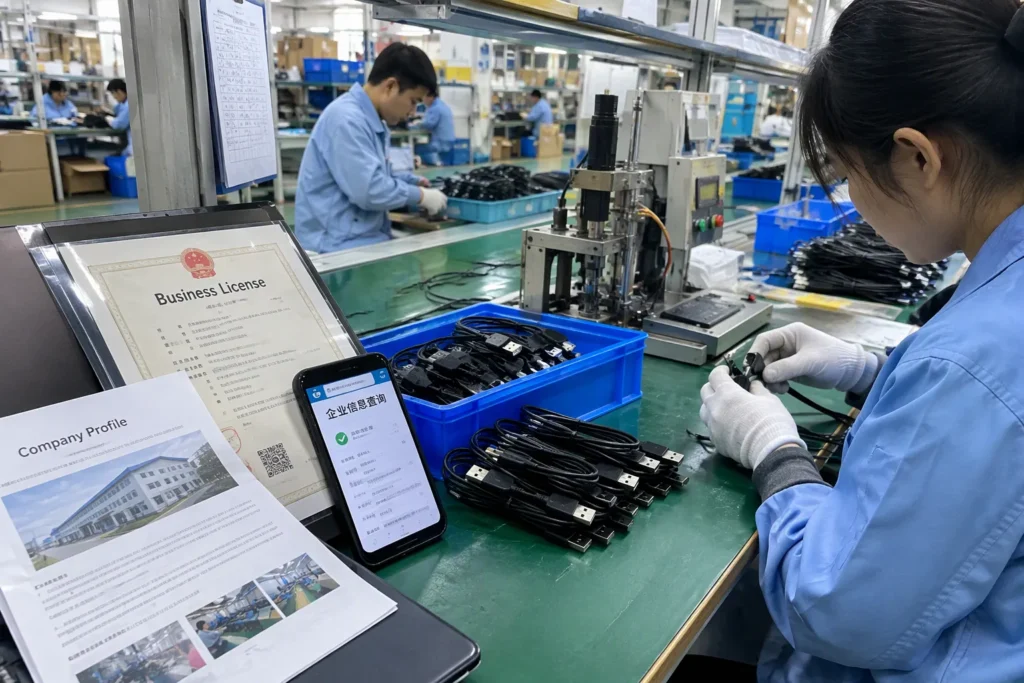
USB OEM manufacturing and supply can become costly when buyers compare only unit prices and overlook specifications, testing, and batch controls. I have seen overseas purchasing discussions focus on a low quotation before the team has defined power, data performance, materials, packaging, or acceptance standards. A clearer sourcing process helps buyers compare suppliers fairly and reduce avoidable procurement risk.
USB OEM manufacturing and supply should be evaluated as a complete risk-management process, not as a simple price comparison.[1] Buyers should define product specifications, verify compliance documents, review samples, agree on quality standards, and confirm how the supplier will manage production, inspection, delivery, and after-sales responsibility.
A USB product may look simple, but the commercial result depends on many details that are not visible in a quotation.[2] I will explain how I approach supplier comparison, specification development, quality control, and delivery coordination for international buyers.
Quick Answer
- Define the USB product before requesting comparable quotations. Include connector type, power or data requirements, construction, packaging, market, and sales channel.
- Compare total procurement risk rather than unit price alone. Check materials, testing, inspection, warranty handling, lead time, and documentation.
- Treat certification as supporting evidence, not proof of every batch’s quality. Buyers should verify documents and connect them with production controls.
- Review the OEM partner’s coordination ability. Customization, sampling, production follow-up, inspection, shipping, and after-sales support all affect supply reliability.
- Use written acceptance criteria. A clear standard gives both buyer and supplier the same reference when a batch is inspected.
What Does USB OEM Manufacturing and Supply Include?
When many buyers hear “USB OEM,” they think about printing a logo on a cable or charger. That approach can create gaps later because USB products also involve engineering choices, sourcing, testing, packaging, and delivery coordination. I treat OEM supply as a chain of connected decisions rather than one manufacturing step.
- Product selection or concept review.
- Technical specification development.
- Industrial design or structural customization.
- Material and component selection.
- Prototype and sample approval.
- Packaging development.
- Production scheduling.
- In-process and finished-product inspection.
- Export documentation and delivery coordination.
- Warranty and after-sales communication.
A supplier does not necessarily perform every activity in the same facility. Some projects involve manufacturing partners, specialist testing providers, packaging vendors, or logistics companies. For that reason, a buyer should ask who is responsible for each stage.
OEM, ODM, and private label are not identical[3]
| Model | Typical buyer input | Supplier contribution | Suitable when |
|---|---|---|---|
| OEM | Detailed product and brand requirements | Production, customization, and coordination | The buyer already has a defined design |
| ODM | General product direction and commercial requirements | Existing platform, design adaptation, and production | The buyer wants faster development |
| Private label | Brand, packaging, and selected product | Standard product with limited changes | The buyer needs a relatively simple launch |
| Custom development | Functional, structural, or electronic requirements | Engineering, prototyping, testing, and production | The product needs meaningful differentiation |
A standard private-label cable may require less development than a custom high-power charging product. However, both still need an agreed specification and inspection plan.
The supply partner’s role
I believe a capable OEM partner should make buyer expectations executable. That means translating a general request such as “premium fast-charging cable” into measurable information:
- Connector configuration and compatibility.
- Rated charging or data capability.
- Cable length and dimensional tolerance.
- Conductor and insulation requirements.
- Jacket material and appearance.
- Strain relief design.
- Branding method.
- Packaging format and labeling.
- Target market and compliance requirements.
- Inspection criteria and acceptance rules.
This translation work is where much of the practical value lies. If the supplier only forwards a catalog and asks for a logo file, the buyer may still carry most of the technical and quality risk.
How Should Buyers Define a USB OEM Product?
An unclear product request produces quotations that appear comparable but are not. One supplier may quote a basic charging cable, while another includes stronger construction, better packaging, or additional testing. I recommend writing a short product brief before asking several suppliers for prices.
USB OEM manufacturing becomes easier to compare when the brief separates required features, preferred features, and commercial limits. This approach prevents a buyer from paying for unnecessary specifications while also avoiding an underdefined product.
Start with the use case
The intended application should guide the specification. A cable for a discount retail bundle may have a different target from a cable sold under a premium electronics brand. I usually ask:
- What devices will customers connect?
- Is the product mainly for charging, data transfer, or both?
- What power level does the application require?
- Will customers use it at home, in vehicles, offices, or travel environments?
- What sales channel will carry the product?
- Does the buyer need retail packaging, bulk packaging, or both?
- Which countries or regions will receive the goods?
A buyer should avoid describing a cable only as “Type-C” or “fast charging.” These terms do not fully define performance.[4] The buyer should state the expected functions and request the supplier’s written confirmation.
Separate measurable requirements from marketing language
Terms such as “strong,” “high quality,” and “premium” are useful commercially but weak as acceptance criteria. I prefer to convert them into details that can be checked.
| Requirement area | Weak description | More useful specification |
|---|---|---|
| Length | Long cable | Nominal length and acceptable tolerance |
| Durability | Strong construction | Defined bend, pull, or visual requirements where applicable |
| Charging | Fast charging | Intended power level and compatible use case |
| Data | High-speed transfer | Required data function and test method |
| Appearance | Premium finish | Color reference, surface standard, logo position, and sample approval |
| Packaging | Retail-ready | Dimensions, materials, language, barcode, and labeling requirements |
The exact test method should match the product and market. I do not present one generic test as suitable for every USB product. Buyers should ask qualified technical professionals or laboratories to confirm application-specific requirements.
Confirm what is included in the quote
- Tooling or mold charges.
- Sample charges.
- Packaging design and printing.
- Compliance testing.
- Inspection fees.
- Export cartons and labels.
- Spare units or replacement policy.
- Shipping terms.
- Taxes, duties, or local charges.
- Warranty and claims handling.
A lower unit price may exclude several of these items.[5] The buyer may then face a higher landed cost or a slower launch. A simple quotation comparison table can expose the difference.
How Can Buyers Compare USB OEM Suppliers Beyond Price?
Price matters, especially for retailers, wholesalers, and ecommerce sellers working with strict margins. However, the lowest quotation does not automatically offer the lowest procurement cost. I often see buyers ask why two visually similar products have different prices. The answer may involve materials, testing, packaging, process controls, or the level of coordination included.
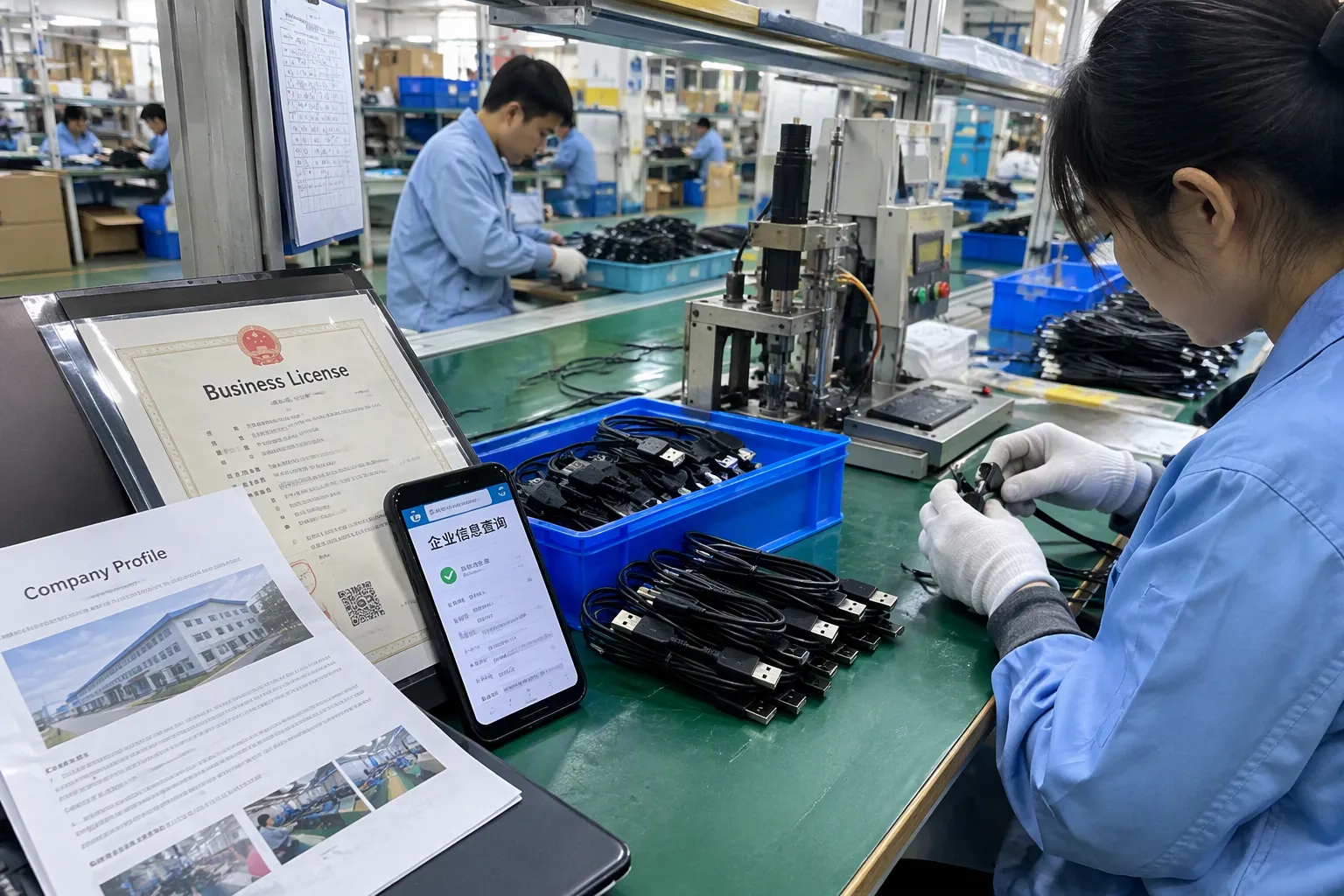
Use a total-risk comparison
| Evaluation area | Questions for the buyer |
|---|---|
| Product fit | Does the supplier understand the intended use and market? |
| Technical clarity | Are the specifications complete and written down? |
| Sample quality | Does the approved sample represent the proposed production version? |
| Manufacturing control | Who makes the product and how are changes controlled? |
| Testing | Which tests are performed, by whom, and against what standard? |
| Inspection | Is there an agreed sampling or inspection process? |
| Delivery | Can the supplier communicate schedule changes early? |
| Documentation | Are invoices, packing lists, labels, and compliance files consistent? |
| After-sales | Is there a clear process for complaints and investigation? |
| Commercial fit | Are MOQ, payment terms, packaging, and lead time workable? |
This scorecard does not need to be complicated. A buyer can give each category a simple rating and add comments. The purpose is to prevent one attractive price from dominating the decision.
Check whether the supplier asks useful questions

A supplier’s questions can reveal its level of practical understanding. A responsible partner may ask about the target market, device compatibility, expected volume, packaging, sales channel, and required delivery date. A quotation issued without clarifying basic requirements may be fast, but it may not be reliable.
- A confirmed specification and an assumption.
- A test report and a certification document.
- A production sample and a catalog sample.
- A target lead time and a guaranteed delivery date.
- A manufacturer’s responsibility and a third-party service provider’s responsibility.
Evaluate communication as an operational capability
I have found that communication quality becomes especially important when a project contains custom packaging, multiple product variants, or a tight shipping window. The supplier should be able to summarize open points, confirm decisions, and identify risks before production starts.
- How quickly does the supplier answer technical questions?
- Does the supplier answer each question directly?
- Does the supplier keep a written record of revisions?
- Does the supplier identify information that is still missing?
- Does the supplier explain what it can and cannot control?
- Does the supplier provide a realistic production and inspection schedule?
Which Quality Controls Matter in USB OEM Supply?
A certification document may be necessary for a product and market, but it does not prove that every production batch is identical.[6] I explain this distinction carefully because buyers sometimes treat a certificate as a complete quality guarantee. In practice, documentation, samples, process controls, testing, and batch inspection should support one another.
Build a quality plan around the product
The quality plan should reflect the risks of the specific product. For a cable, the plan may address connector fit, appearance, length, labeling, continuity, charging function, data function, and packaging. For a charger, it may also involve electrical performance, enclosure condition, output behavior, thermal considerations, and market-specific requirements.
- What will be inspected.
- At which production stage it will be inspected.
- What equipment or method will be used.
- What result is acceptable.
- Who records the result.
- What happens when a result is outside the requirement.
Connect documents with production evidence
Buyers should verify compliance documents directly and confirm that they apply to the actual product configuration. I recommend checking the product model, applicant or manufacturer information, test scope, date, and market relevance. Buyers should also ask whether later design or component changes affect the document.
Compliance requirements vary by product and destination.[7] Useful official starting points include the European Commission product safety and compliance information and the U.S. Consumer Product Safety Commission. These sources do not replace professional compliance advice, but they help buyers understand why market requirements must be checked carefully.
- Approved samples.
- Bill of materials or controlled component information.
- Production records.
- In-process checks.
- Finished-product testing.
- Independent or buyer-arranged inspection where appropriate.
- Batch release records.
Use acceptance criteria before production
A written acceptance standard reduces arguments after shipment.[8] It should define the difference between a critical, major, and minor issue where appropriate, although the exact classification should suit the product and buyer’s risk tolerance.
- Visual defects and color variation.
- Connector alignment and fit.
- Cable length and labeling.
- Functional test results.
- Packaging quantity and barcode accuracy.
- Carton condition and shipping marks.
- Approved artwork and language.
- Required documents accompanying the shipment.
I recommend approving a “golden sample” or controlled reference sample when appearance and construction are important. The buyer should record the version and retain the approval communication. A sample is not a substitute for production inspection, but it gives the inspection team a clear reference.
How Should USB OEM Production and Delivery Be Coordinated?
A supplier may have access to production capacity but still struggle with coordination. OEM value includes turning a confirmed order into an organized process with clear responsibilities. This matters when a buyer has several product variants, customized packaging, or a fixed retail launch.
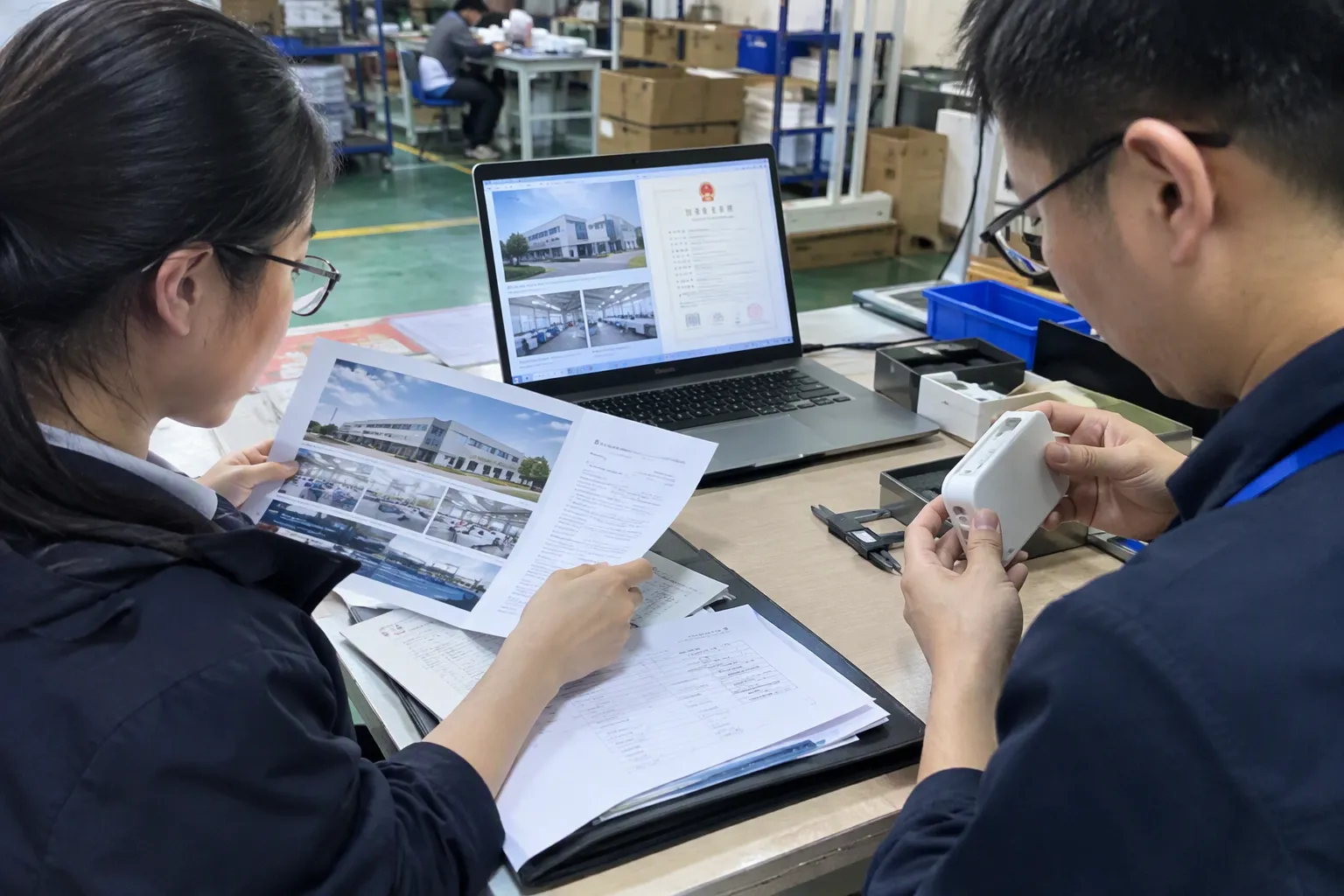
Establish milestones
- Requirement confirmation.
- Quotation and commercial approval.
- Artwork and packaging approval.
- Sample or pre-production approval.
- Purchase order and deposit confirmation.
- Material preparation.
- Production start.
- In-process review.
- Finished-product inspection.
- Packing and document review.
- Shipment release.
- After-sales follow-up.
The timing will vary by product, quantity, customization, and season. I avoid promising a fixed lead time until the specifications, materials, packaging, and order details are confirmed.
Manage changes formally
A small change can affect price, compliance, performance, or delivery. Examples include changing a connector supplier, revising the cable jacket, replacing packaging material, or altering a printed label. The buyer should ask the supplier to identify whether a change requires a new sample, additional testing, or revised documentation.
| Change item | Required record |
|---|---|
| Description | What has changed and why |
| Affected model | Which SKU or variant is involved |
| Technical effect | Possible effect on performance or compliance |
| Commercial effect | Price, MOQ, or tooling impact |
| Schedule effect | Any change to production or shipment |
| Approval | Buyer and supplier confirmation |
Prepare for delivery and after-sales questions

Delivery planning includes more than an estimated factory completion date. Buyers should confirm carton dimensions, gross weight, packing quantity, shipping marks, commercial invoice information, and the intended shipping method. The buyer should also check whether the production schedule leaves time for inspection and corrective action before the cargo must leave.
After-sales responsibility should be written in commercial terms. The agreement may explain how the buyer reports a problem, what evidence is needed, how the supplier investigates, and how replacement or credit decisions are made. I do not promise perfect quality or zero claims. I focus on creating a process that makes problems easier to identify and resolve.
What Should Buyers Ask Before Selecting a USB OEM Partner?
Supplier selection becomes more reliable when buyers ask the same core questions to every candidate. I recommend asking for evidence that relates directly to the proposed product, rather than collecting general marketing material.
Questions about product capability
- Which USB products does the supplier currently support?
- Does the supplier provide OEM, ODM, or private-label production?
- Which parts of the product can be customized?
- Who controls the design and bill of materials?
- Can the supplier provide a representative production sample?
- Which specifications can the supplier test internally?
- Which tests require an external laboratory or specialist provider?
The answers should match the buyer’s project. A supplier with strong experience in standard data cables may not be the best fit for a technically different charging product.
Questions about manufacturing and quality
- Who manufactures the product?
- Is the production site the same for every order?
- How are component substitutions controlled?
- What inspections occur before shipment?
- Can the buyer review an inspection report?
- How does the supplier handle a failed inspection?
- How are approved samples stored and referenced?
- How does the supplier investigate repeated complaints?
Questions about commercial execution
- Minimum order quantity by model and packaging.
- Sample and tooling charges.
- Normal production lead time after approval.
- Payment terms.
- Packaging options.
- Shipping terms and export support.
- Warranty or complaint process.
- Communication contact and escalation route.
I often suggest that buyers send the same request for quotation to several suppliers. The request should contain the same product brief and ask each supplier to identify exclusions. This method produces a more useful comparison than sending a short message that only says, “Please quote your best price.”
How Can a Buyer Build a Practical USB OEM Sourcing Workflow?
A sourcing workflow gives the buyer control without making the process unnecessarily slow. I use a staged approach because each stage answers a different question. The buyer first asks whether the product is defined, then whether the supplier can support it, then whether the production result is acceptable.
Stage one: Prepare the purchasing brief
- Product category and intended application.
- Required functions.
- Target market and sales channel.
- Desired customization.
- Packaging requirements.
- Expected order volume.
- Target launch or delivery window.
- Required documents.
- Quality and inspection expectations.
The brief does not need to be a long engineering document at the start. It should be clear enough for suppliers to identify assumptions and ask relevant questions.
Stage two: Screen potential partners
The buyer can shortlist suppliers based on product experience, export communication, customization ability, quality processes, and commercial fit. I recommend reviewing whether the supplier can support the whole project rather than only manufacture one component.
At this stage, buyers may also review company information, factory or partner information, previous product samples, and available compliance documentation. Certifications should be verified for the relevant product and market. Buyers should not assume that a document for one model covers another model automatically.
Stage three: Compare samples and proposals
| Area | What to compare |
|---|---|
| Function | Charging, data, fit, and compatibility claims |
| Construction | Materials, joints, strain relief, and finish |
| Appearance | Color, surface, logo, and dimensional consistency |
| Packaging | Retail presentation, labeling, and carton protection |
| Documentation | Test files, declarations, and model references |
| Commercial terms | MOQ, lead time, tooling, payment, and after-sales |
The buyer should record differences rather than relying on memory. A sample that looks attractive may still fail to match the required function or market documentation.
Stage four: Approve production controls
Before the first mass order, the buyer and supplier should agree on the production version, packaging artwork, inspection checklist, and release process. If the project is commercially important, the buyer may arrange an independent inspection or use a qualified testing provider.
I am not an independent laboratory or certification authority. For application-specific electrical, safety, or regulatory decisions, I recommend qualified professional evaluation. My role as an OEM and supply partner is to help organize the product information, production communication, quality records, and supplier coordination that buyers need.
Frequently Asked Questions
Is USB OEM manufacturing only suitable for large brands?
No. USB OEM manufacturing can support retailers, importers, wholesalers, ecommerce sellers, and emerging brands. The suitable model depends on product complexity, customization, order volume, packaging needs, and target market. A buyer should confirm MOQ and development costs early instead of assuming that every project requires a very large order.
How do I compare two USB OEM quotations fairly?
I recommend comparing the same written specification, then checking what each quotation includes. Review materials, performance requirements, packaging, testing, inspection, tooling, lead time, shipping terms, warranty handling, and documentation. A lower price may exclude services or use a different construction, so unit price alone is not a reliable comparison.
Does a USB certification prove consistent production quality?
No. A relevant and valid document may support market compliance, but it does not prove that every future batch matches the tested configuration. Buyers should verify the document, control design and component changes, approve samples, define inspection criteria, and review production evidence. Qualified professionals should evaluate application-specific compliance questions.
What should I include in a USB product specification?
Include the intended use, connector configuration, charging or data requirements, dimensions, materials, appearance, branding, packaging, target market, required documents, MOQ, delivery expectations, and acceptance criteria. If a requirement is not yet known, label it as an open question rather than allowing the supplier to make an unrecorded assumption.
Can an OEM supplier help with production coordination?
Yes, a capable OEM supply partner can coordinate product development, samples, packaging, manufacturing communication, inspection, export preparation, and after-sales follow-up. The buyer should confirm which activities are included, who performs them, and who is responsible for decisions when a problem occurs.
Conclusion
USB OEM manufacturing and supply works best when buyers treat sourcing as a controlled commercial process rather than a search for the lowest quotation. I recommend defining the product clearly, comparing total procurement risk, verifying compliance documents, approving samples, setting written acceptance criteria, and reviewing the supplier’s coordination ability. My Shenzhen-based OEM/ODM team supports product development, customization, production coordination, quality control, and wholesale delivery for overseas buyers. Contact me with your product brief so I can help assess the right supply approach, specifications, MOQ, and next steps.
Sources
- Supplier's total cost of ownership evaluation: a data ...", Research on supplier selection commonly evaluates cost together with quality, delivery performance, and supply risk, supporting a multidimensional comparison rather than a unit-price-only decision
- Conformity Assessment Basics", USB technical specifications and conformity-assessment guidance distinguish product functions, electrical characteristics, testing, and documentation, indicating that a quotation alone does not establish the complete product configuration
- Why Vietnam Is the Ideal Destination for OEM & ODM ...", Business and operations literature generally distinguishes OEM production, in which a supplier manufactures to a buyer's requirements, from ODM production and private-label arrangements, in which the supplier contributes more of the underlying product or platform
- USB Charger (USB Power Delivery)", USB-IF specifications distinguish the USB Type-C connector and cable interface from supported data rates and USB Power Delivery capabilities; consequently, the connector label alone does not specify complete performance
- Part 31 - Contract Cost Principles and Procedures", Procurement guidance commonly requires evaluation of the full cost and scope of an offer, including associated services and delivery obligations, rather than relying solely on the quoted unit price
- THE ABC's OF THE U.S. CONFORMITY ASSESSMENT ...", Conformity-assessment guidance treats evidence for a product configuration and controls maintaining conformity during production as related but distinct obligations; a test or certificate therefore does not by itself establish that every later batch is identical
- General Use Products: Certification and Testing", Official market-access guidance indicates that product-safety, labeling, conformity, and documentation obligations are determined by the applicable product category and jurisdiction rather than by a single universal requirement
- 5.5 Managing Contract Issues and Disputes", Contract and quality-management guidance supports specifying measurable acceptance requirements in advance because agreed criteria provide a common basis for inspection, nonconformance decisions, and contract administration