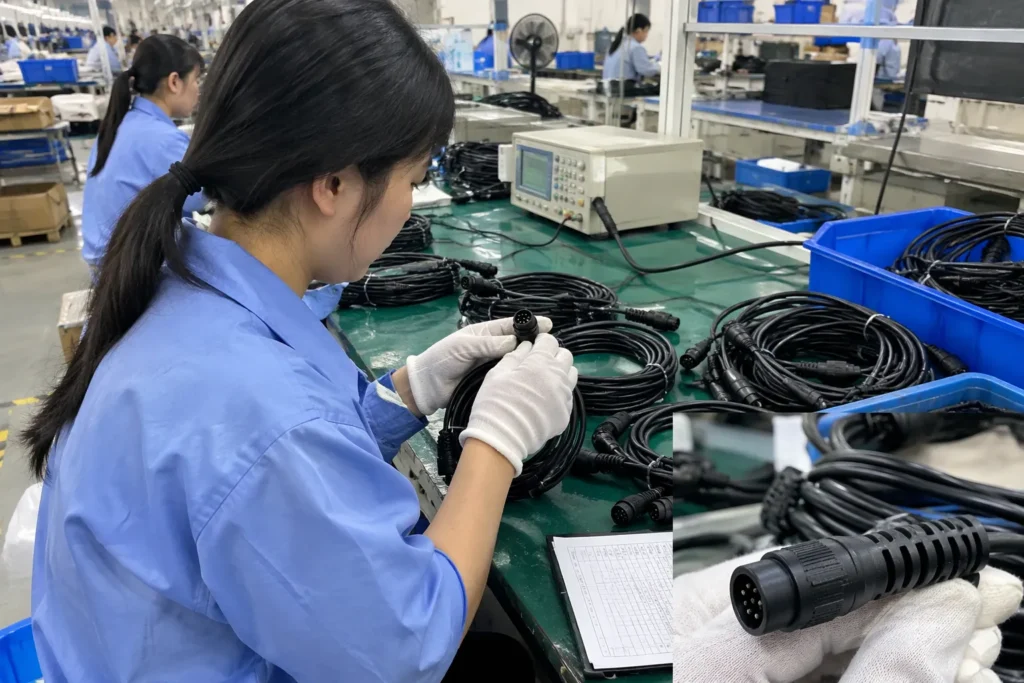
A cable assembly manufacturer can either reduce project risk or create expensive delays. I have seen buyers focus on unit price before confirming the application, connector details, cable construction, and testing needs. That approach often produces unclear samples and difficult production changes. I recommend evaluating how well a supplier converts your product requirements into a clear specification, approved sample, and repeatable production process.
Quick Answer
- Choose a cable assembly manufacturer that clarifies the application, interfaces, construction, and operating conditions before quoting.
- Review the supplier’s specification process, sample approval method, and production handoff—not only its factory price.
- Ask for a complete drawing, bill of materials, labeling details, packaging requirements, and inspection criteria.
- Use samples to confirm fit, function, appearance, and documentation before mass production.
- Verify certifications, test reports, and material declarations against your target market and product category.
A suitable cable assembly manufacturer should do more than sell standard cables at a low price. The supplier should understand the product application, turn the requirements into a workable specification, produce a representative sample, and control the same details during mass production. I recommend selecting the partner with the clearest requirement-to-production process, not automatically the lowest quotation.
The difference between a trading quotation and a dependable manufacturing partnership usually appears before production starts. In this article, I explain the questions I use when reviewing cable projects, from initial requirements through sampling, quality control, and delivery planning. My focus is practical supplier selection for brands, importers, distributors, and retailers in Europe and North America.
What Should You Expect From a Cable Assembly Manufacturer?
A low quotation can look attractive when a buyer is comparing several suppliers. However, a cable assembly includes many details that may remain invisible in a short product description. Connector construction, conductor size, shielding, overmolding, wire length, labeling, packaging, and test criteria can all affect the final result.[1]
The supplier should clarify the application
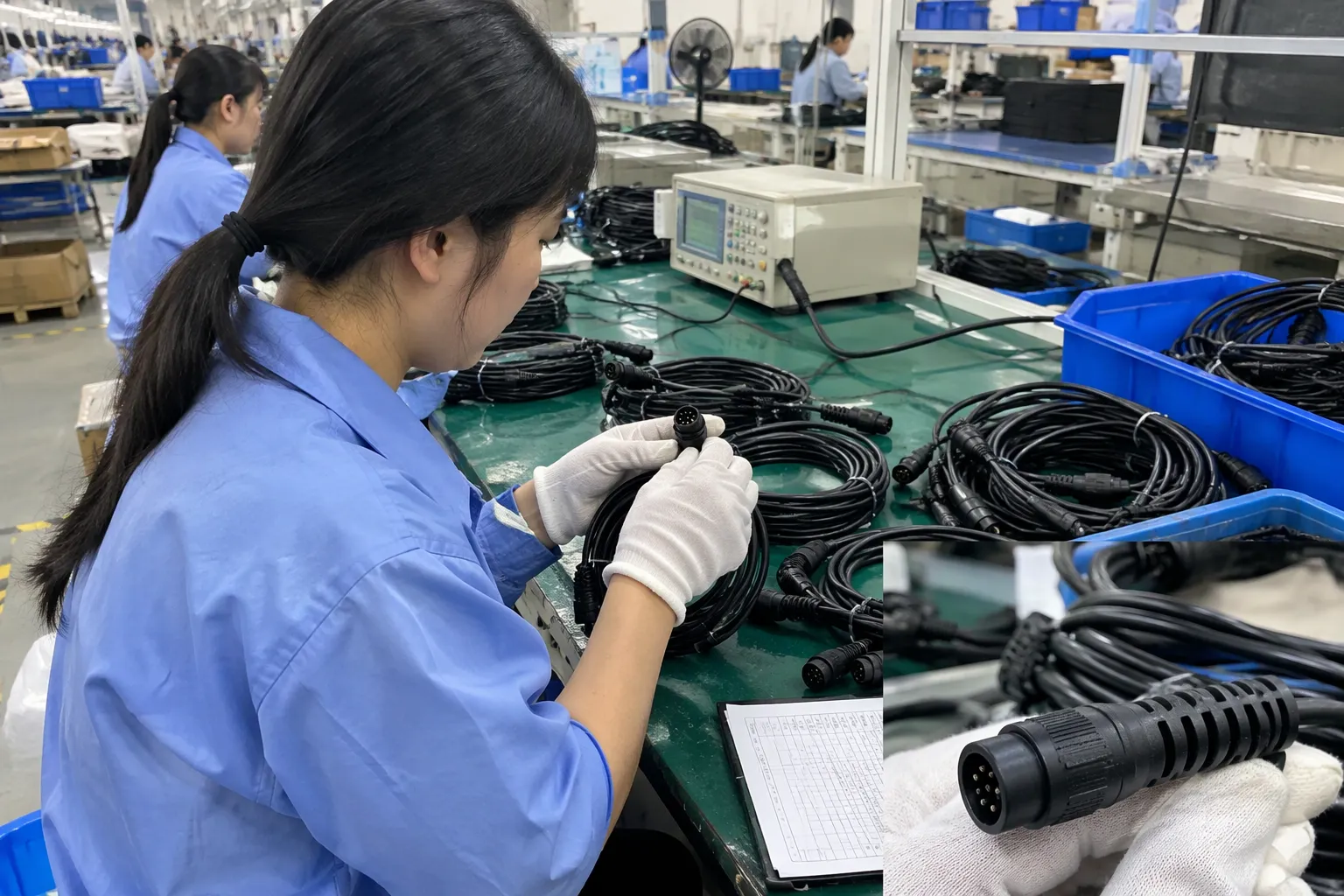
Before I discuss price, I want to know how the cable will be used. A cable for a retail charging accessory may have different priorities from a cable installed inside equipment or supplied as part of a professional system.
- What devices or interfaces will the cable connect?
- Will the cable carry power, data, audio, video, or several functions?
- Will users bend, pull, coil, or frequently reconnect it?
- Will the cable be used indoors, outdoors, or inside an enclosure?
- Does the cable need a particular length, color, jacket material, or brand mark?
- Does the customer have a target current, data rate, voltage, or environmental condition?
- Does the finished product need market-specific documentation or packaging?
The quotation should describe what is included
| Quotation item | Why it matters |
|---|---|
| Connector type and version | Similar-looking connectors may have different pin layouts or functions[2] |
| Cable length and tolerance | Length affects use, packaging, and material consumption |
| Conductor and insulation details | Construction can affect flexibility, resistance, and durability |
| Shielding or drain wire | Shielding may support signal performance in the intended application[3] |
| Overmold and strain relief | The mold affects appearance, handling, and protection near the connector |
| Logo and marking | Artwork, method, position, and approval affect brand consistency |
| Packaging | Retail packaging can affect cost, lead time, and protection in transit |
| Testing and inspection | The buyer needs to know what the supplier will check |
| Tooling or setup charges | Custom molds and fixtures can affect the project budget |
Manufacturer or standard-product seller?
A standard-product seller can be suitable when the buyer needs an existing cable with no meaningful changes. A cable assembly manufacturer becomes more valuable when the project includes customized construction, branding, packaging, connector combinations, or application-specific requirements.[4]
| Buyer requirement | Standard-product seller may be enough | Custom cable assembly partner is more suitable |
|---|---|---|
| Existing length and color | Yes | Not essential |
| Private label packaging | Sometimes | Usually |
| Non-standard connector combination | Less suitable | More suitable |
| Custom overmold or logo | Limited | Suitable if tooling is managed |
| Defined inspection plan | May be basic | Should be discussed in detail |
| Product-specific documentation | Depends on supplier | Should be agreed before production |
| Repeated revisions | Potentially difficult | Better fit for a coordinated process |
In my experience, the key distinction is not the word “factory.” The key distinction is whether the supplier can manage the path from requirement clarification to controlled production. A supplier may own equipment but still be a poor partner for a customized project. Another supplier may coordinate qualified manufacturing resources effectively if it controls the specification, sampling, and quality process.
How Do You Turn a Cable Requirement Into a Production Specification?
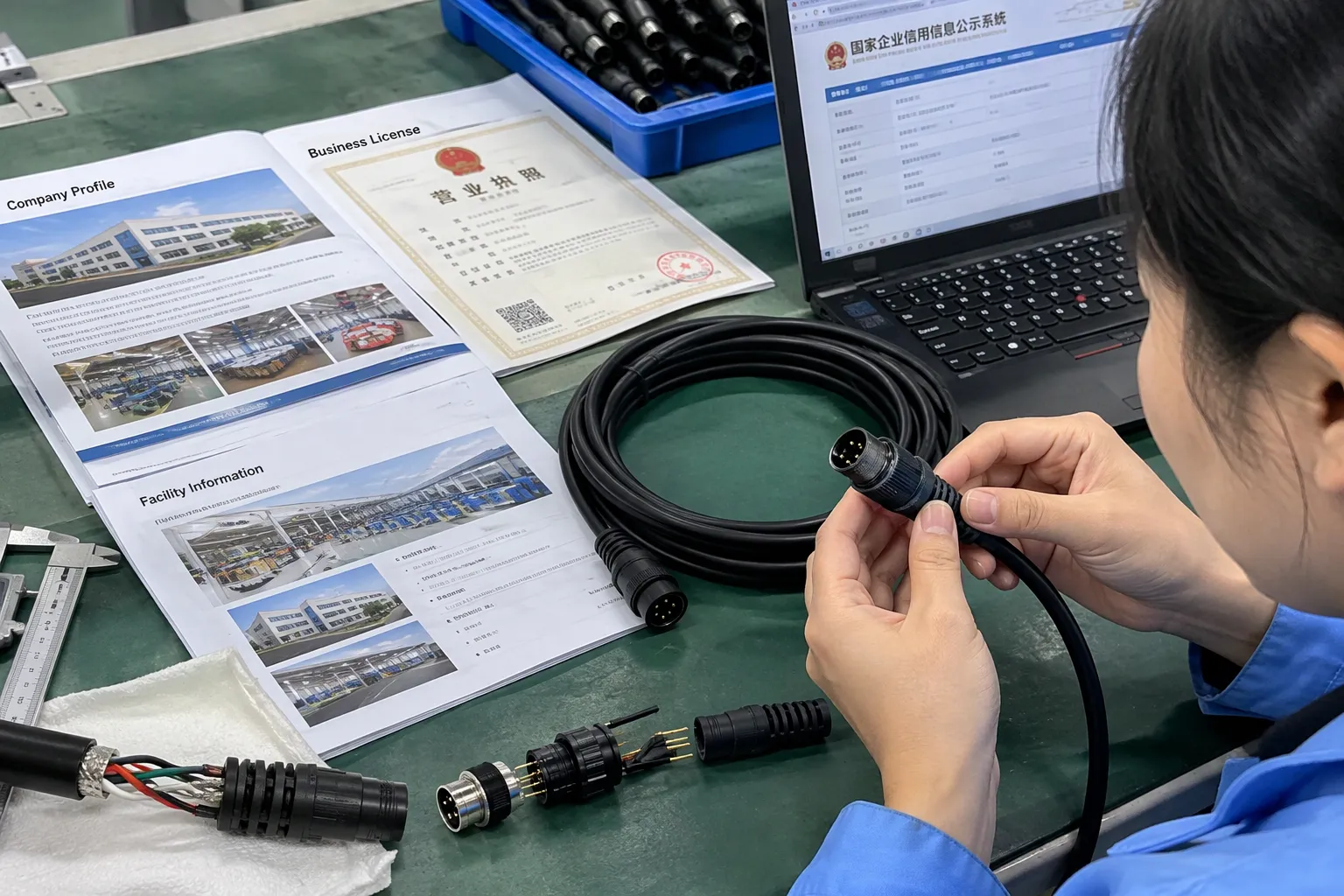
Many cable problems begin with an incomplete handoff. A buyer may send a photo, a sample, or a simple request such as “USB-C fast-charge cable,” while the production team needs much more information. The supplier must close that gap before sampling.
I recommend using a written specification that both sides can review. This document does not need to be unnecessarily complex. It needs to be specific enough that different people interpret the product in the same way.
Start with the interface and function
The first section should describe what the cable must connect and what it must do. “USB-C cable” is not a complete functional specification.[5] The required functions may include charging, data transfer, video, audio, or a combination.
- Connector type at each end.
- Plug orientation and housing requirements.
- Pin or wiring configuration where relevant.
- Power requirements and any applicable product claims.
- Data or signal requirements.
- Intended host devices and accessories.
- Whether the cable is passive, active, or includes electronic components.
- Any identification, marking, or recognition requirements.
I avoid assuming that a connector’s physical shape tells the whole story. Two cables can use similar connector shells but support different functions. The supplier should confirm the intended design with drawings, samples, or technical documents.
Define the physical construction
- Finished cable length and measurement method.
- Outer diameter and jacket material.
- Conductor construction and size.
- Insulation and filler materials.
- Shielding structure.
- Connector housing material.
- Terminal plating or other specified finish.
- Strain relief design.
- Overmold material, hardness, color, and texture.
- Bend direction or special geometry.
- Markings, barcodes, and logo location.
I ask buyers to distinguish between a target and a mandatory requirement. For example, “soft black jacket” may describe a preference, while “finished length must fall within an agreed tolerance” may be a firm acceptance condition. The supplier should record both, but the production team needs to know which details require strict control.
Use a specification matrix
| Requirement area | Buyer should provide | Supplier should confirm |
|---|---|---|
| Application | Devices, environment, user behavior | Feasible construction and open questions |
| Function | Power, data, signal, or combined use | Proposed design and limitations |
| Appearance | Color, finish, logo, packaging | Process, artwork format, and sample method |
| Dimensions | Length, diameter, connector position | Tolerances and measurement method |
| Materials | Required or restricted materials | Availability and proposed alternatives |
| Quality | Inspection points and acceptance criteria | Test method and production records |
| Compliance | Target market and required documents | Available documentation for verification |
| Delivery | Quantity, launch date, shipment plan | Component lead time and production schedule |
How Should You Evaluate Cable Assembly Samples?
A sample is not only a visual item for approval. It is a check on whether the supplier understood the specification and can coordinate the proposed production method. A sample that looks acceptable on a desk may still leave important questions unanswered.[6]
I recommend defining the approval method before sampling. The buyer and supplier should agree on which features will be inspected, who will approve the sample, and what changes will require a new sample.
Check function, fit, and appearance separately
| Review category | Typical questions |
|---|---|
| Fit | Does each connector fit the intended device or fixture correctly? |
| Function | Does the cable perform the required function in the intended system? |
| Appearance | Do length, color, molding, logo, surface, and packaging match the approved reference? |
A buyer should not approve a sample based only on appearance. A polished overmold does not prove the cable has the required electrical function. At the same time, a functional sample may not be acceptable for retail if the logo, color, or molding differs from the brand’s expectations.
Application-specific electrical or safety evaluation should be performed by qualified professionals.[7] I can help coordinate product information and production checks, but I do not treat a general sample review as a substitute for engineering validation.
Compare the sample with the written specification
- Sample version and date.
- Drawing or specification revision.
- Connector details.
- Measured length and relevant dimensions.
- Visible materials and colors.
- Marking and packaging details.
- Functional checks performed.
- Open deviations or temporary approvals.
- Required corrections before production.
Ask what will happen after approval
I pay attention to whether the supplier can explain ownership of these documents. If the sales contact has the only copy of the requirements, the production handoff may be weak. A controlled document should reach the people who purchase materials, prepare tooling, assemble the product, inspect it, and pack it.[8]
Do not ignore small deviations
A buyer may accept a minor cosmetic deviation to protect a launch date. That decision can be reasonable, but it should be documented. Otherwise, the temporary deviation may become the permanent production standard.
For example, the buyer may approve a slightly different shade for one sample while expecting the final color to follow an updated reference. The supplier needs a written record that distinguishes the temporary sample from the final requirement.
What Quality Controls Should a Cable Assembly Manufacturer Provide?
Review controls at different production stages
The correct controls depend on the design. I would not recommend adding tests simply to make a checklist look impressive. I would recommend identifying the failure modes that could affect the buyer’s product and then agreeing on practical controls.
Check whether acceptance criteria are measurable
- Finished length measured from defined reference points.
- Connector orientation confirmed against a drawing.
- Logo position checked against approved artwork.
- Continuity or wiring checked using an agreed method.
- Packaging quantity and labeling verified.
- Visible molding defects defined with examples or reference samples.
- Sampling level and defect classification agreed before production.
I also recommend distinguishing critical, major, and minor defects. A wrong wiring configuration may have a different risk from a small cosmetic mark. The buyer should agree on this classification with the supplier before the order.
Certifications and reports require verification
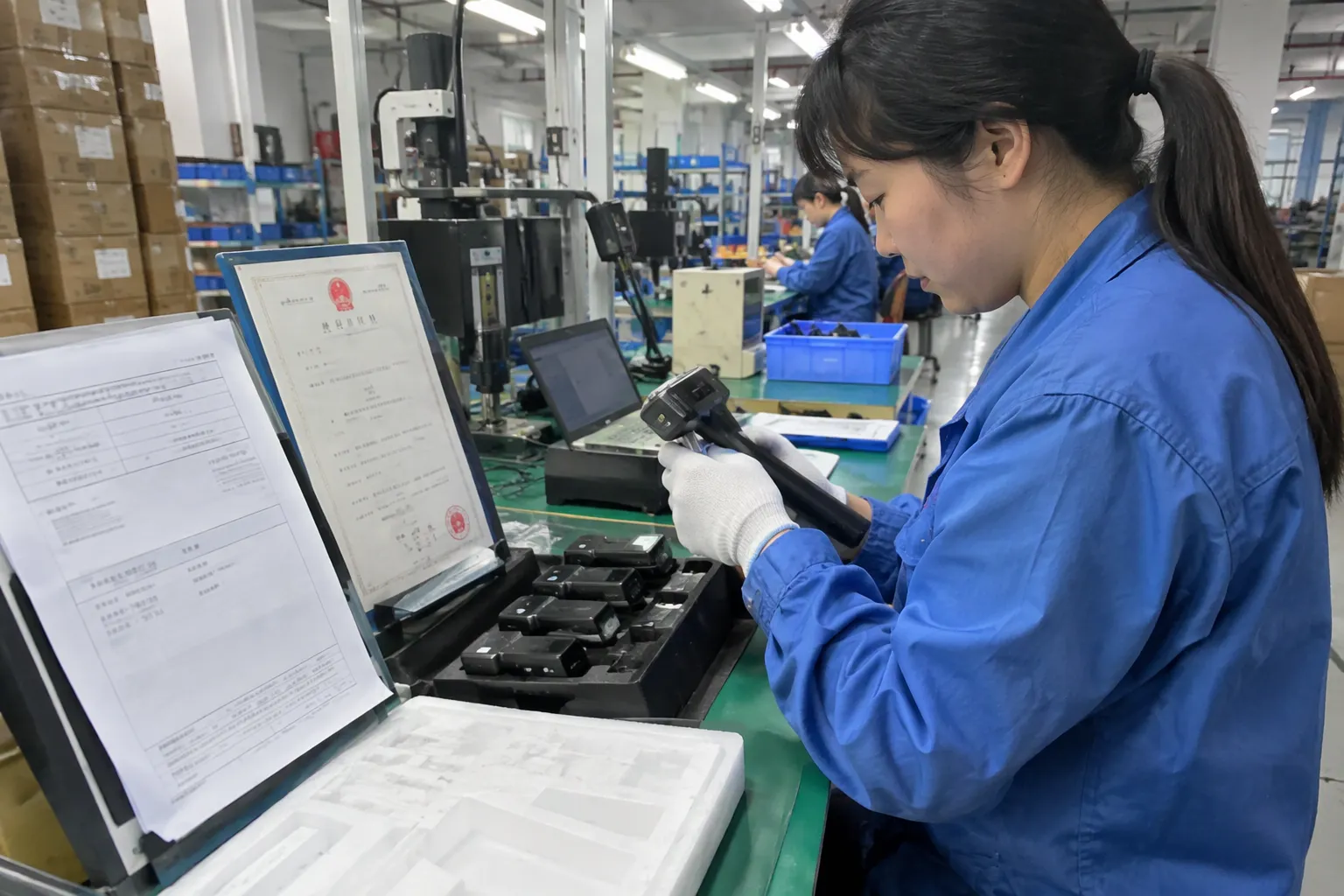
A supplier may provide certificates, declarations, or test reports. Buyers should verify the document scope, product identity, issuing organization, date, and applicable market. A document for one model or component may not cover a customized finished cable.
- Which exact product or model does the document cover?
- Does the document apply to the final configuration?
- Is the issuing body identifiable and relevant?
- Are the dates and reference numbers current?
- Does the document support the intended market claim?
- Does the buyer need an independent laboratory review?
Useful starting points include the European Commission’s guidance on CE marking and the U.S. Consumer Product Safety Commission’s business guidance. These sources do not replace product-specific professional review, but they help buyers understand why documentation should be matched to the actual product.
How Can You Compare Cable Assembly Manufacturers?
Supplier comparison becomes difficult when each company uses different assumptions. One supplier may include custom packaging and inspection. Another may quote a basic bulk-packed cable. The lower number does not necessarily represent the lower total cost.
Build a supplier scorecard
| Evaluation area | Questions to ask | Suggested evidence |
|---|---|---|
| Requirement clarification | Does the supplier identify missing information? | Written questions and specification draft |
| Technical fit | Can the proposed construction meet the intended use? | Drawings, BOM, sample plan |
| Customization | Can the supplier manage connectors, molding, marking, or packaging changes? | Similar process examples, subject to verification |
| Sampling | Is there a controlled sample revision process? | Sample approval form and revision record |
| Quality control | Are inspection and test criteria specific? | Quality plan, checklist, sample records |
| Documentation | Are certificates and reports traceable to the product? | Copies for buyer verification |
| Production coordination | Who controls changes and supplier communication? | Named contact and escalation process |
| Delivery planning | Are components, tooling, and production steps considered? | Detailed timeline and assumptions |
| Commercial clarity | Are tooling, packaging, and change costs visible? | Itemized quotation |
| After-sales response | How are defects or shortages handled? | Written claim and corrective-action process |
Look for clear communication under pressure
- Repeats requirements accurately.
- Flags a risk instead of hiding it.
- Explains an alternative clearly.
- Records decisions in writing.
- Separates confirmed facts from assumptions.
- Gives realistic timing rather than a convenient promise.
In my own work with international customers, much of the value comes from coordinating these details between the customer, product team, and manufacturing partners. A supplier that communicates clearly can often prevent a small misunderstanding from becoming a late shipment or a rejected batch.
Compare total project risk, not only unit price
- Custom tooling.
- Artwork preparation.
- Special testing.
- Packaging inserts.
- Additional inspection.
- Rework.
- Spare units.
- Freight or documentation requirements.
- Costs caused by a late design change.
| Cost or risk | Supplier A | Supplier B |
|---|---|---|
| Unit quotation | Lower | Higher |
| Tooling included | Unclear | Confirmed |
| Custom packaging | Extra | Included |
| Inspection criteria | Basic | Documented |
| Sample revisions | Limited | Defined |
| Delivery assumptions | Short but vague | Longer but itemized |
| Potential change risk | Higher | Lower |
| Expected project cost | Not yet clear | More predictable |
How Do You Manage Production and Delivery Risk?
Even an approved sample does not remove every production risk. Components can arrive late, artwork can change, packaging can be incomplete, or the buyer can request a revision after materials have been ordered.
Confirm production readiness
- The final specification revision.
- The approved sample reference.
- The final bill of materials.
- Connector and cable material availability.
- Tooling status.
- Artwork and packaging approval.
- Inspection and testing instructions.
- Planned production dates.
- Required buyer approvals.
- Shipment quantity and carton information.
This checklist helps identify a common problem: the product is approved, but one supporting item is not ready. For example, the cable may be technically complete while the retail packaging is still awaiting artwork approval.
Control changes after approval
The change may involve a connector supplier, jacket material, mold design, color, label, or packaging. I do not assume that a “similar” replacement is automatically acceptable. The supplier should disclose the change and obtain approval when it could affect fit, function, appearance, compliance, or customer expectations.
Plan for delivery in stages
- Requirement confirmation.
- Quotation and feasibility review.
- Tooling or engineering preparation.
- Sample production.
- Buyer review.
- Material purchasing.
- Mass production.
- Inspection and rework allowance.
- Packaging.
- Final release.
- Freight and export documentation.
The actual lead time depends on the product, order quantity, season, component availability, and customization level. I avoid giving a universal lead-time promise without reviewing the specification and order plan.
For European and American buyers, communication across time zones adds another practical issue. I recommend one consolidated list of questions and decisions rather than scattered messages. A shared revision number also reduces the chance that an old drawing or artwork file reaches production.
Use a pre-shipment decision
Before shipment, the buyer should know what evidence will be available. Depending on the agreed plan, this may include inspection photos, quantity confirmation, carton labels, test records, or an inspection report. The buyer should define whether shipment release depends on document review, physical inspection, or both.
I recommend connecting the pre-shipment review to the original specification. A photograph can confirm packaging appearance, but it cannot confirm every electrical or dimensional requirement. The evidence should match the risk.
What Questions Should You Ask Before Choosing a Cable Assembly Manufacturer?
Questions about technical understanding
- What information do you need before preparing a final quotation?
- Which parts of our request are still assumptions?
- Can you provide a proposed specification for our review?
- Which requirements may affect cost, tooling, or delivery?
- How will you confirm connector compatibility?
- What information do you need from our engineering or product team?
- Which application claims require independent technical validation?
Questions about sampling
- What will the sample represent?
- Will the sample use the proposed production materials and process?
- How many sample revisions are included?
- How will we record approval and open changes?
- What happens if the sample passes visually but fails a functional check?
- How will the approved sample be controlled during mass production?
Questions about quality
- Which incoming materials will you inspect?
- What in-process checks will you perform?
- Which functional tests are available or appropriate?
- What are the defect classifications?
- How will you handle non-conforming products?
- Can you provide inspection records linked to the production batch?
- Which documents can we verify for the finished configuration?
Questions about commercial and delivery control
- Which costs are included in the quotation?
- Are tooling and setup charges itemized?
- What is the minimum order quantity, and why?
- Which components have the longest procurement risk?
- What is the process for an engineering change?
- Who is responsible for production coordination?
- What is the corrective-action process if the shipment does not meet the agreed specification?
Frequently Asked Questions
What is the difference between a cable assembly manufacturer and a cable supplier?
A cable supplier may sell standard products from existing stock or a standard catalog. A cable assembly manufacturer or manufacturing partner should be able to discuss construction, customization, sampling, assembly controls, and production documentation. The exact capability still needs verification for each project.
Should I choose the cable assembly manufacturer with the lowest price?
Not automatically. A low price may reflect a simpler construction, fewer tests, bulk packaging, unlisted tooling, or different material assumptions. I recommend comparing complete specifications, sample quality, inspection controls, documentation, lead time, and change-management terms before selecting the lowest total-risk option.
What information should I send for a cable assembly quotation?
Send the application, connector details, function, cable length, construction preferences, colors, markings, packaging, target market, order quantity, delivery expectations, and any drawings or reference samples. If information is unknown, state that clearly. A good supplier should identify the remaining decisions before final pricing.
How many samples should I approve before mass production?
The number depends on the product and revision history. I recommend approving a representative sample after fit, function, appearance, and documentation have been reviewed. If the design, materials, tooling, or packaging changes materially, the supplier should provide a new or updated sample for approval.
Do cable assemblies need certification?
The answer depends on the cable’s function, market, construction, and claims. Buyers should not assume that a generic certificate covers every customized configuration. I recommend identifying the applicable requirements with a qualified professional and verifying that any report or declaration matches the exact product being purchased.
Conclusion
Selecting a cable assembly manufacturer is a specification-to-production decision, not simply a price comparison. I recommend choosing a supplier that asks useful questions, records assumptions, produces a representative sample, and carries the approved requirements into purchasing, assembly, inspection, and shipment. Buyers should also verify technical documents and use qualified professionals for application-specific evaluation. When you are comparing suppliers for a customized cable project, contact our Shenzhen-based OEM/ODM team to discuss your requirements, sampling plan, production coordination, and quality-control needs.
Sources
- Cable Overmolding and Strain Relief for Reliable ...", Engineering literature describes conductor geometry, insulation, shielding, and mechanical protection as design variables that can influence the electrical and mechanical performance of cable assemblies
- Screw-clamp terminal blocks provide a secure mechanical ...", Connector specifications distinguish mechanical interface characteristics from pin assignments and supported electrical functions, so visual similarity alone does not establish functional compatibility
- Electromagnetic Pulse Shielding Mitigations", Electromagnetic-compatibility research indicates that conductive cable shields can reduce susceptibility to external interference and emissions when their construction, termination, and grounding are appropriate to the application
- Personalized Product Architecture Design, Robustness ...", Studies of customized manufacturing associate higher product variety and engineering change requirements with a greater need for coordinated specification, supplier communication, and production control
- Frequently Asked Questions (FAQ) - USB-C Cable ...", USB Type-C specifications define a connector and interconnection system, while supported power, data-transfer, and alternate-mode capabilities depend on the applicable implementation and associated requirements
- Testing and Validation Templates & Resources - PATCO", Quality-engineering guidance distinguishes visual inspection from functional and performance testing because appearance-based examination cannot detect all electrical, dimensional, or process-related nonconformities
- Chapter 22 – Electrical Safety", Product-safety guidance assigns electrical and safety assessment to competent evaluators using tests and criteria appropriate to the product and intended use
- Configuration Management", Quality-management and configuration-control standards require documented production information to be maintained and made available where it is needed to perform and verify operational processes