Planar-Magnetic TWS can look attractive to buyers seeking a more advanced audio story, but the technology label alone does not solve procurement problems. If the driver raises cost, complicates supply, or fails to create a noticeable customer benefit, the product may become difficult to sell. I recommend evaluating the complete product, not just its driver architecture.
Quick Answer
Planar-Magnetic TWS may be suitable for premium or enthusiast-focused retail lines, but buyers should verify whole-product efficiency, measured battery life, acoustic performance, landed cost, MOQ, lead time, and after-sales support before approving an order. A planar-magnetic driver offers acoustic potential, not guaranteed sound quality or better battery life.
- Request test evidence, including battery-life conditions, frequency response, distortion, and listening evaluation.
- Compare the complete product with a well-tuned dynamic-driver TWS model at a similar retail price.
- Check commercial details such as MOQ, component availability, production capacity, spare parts, and warranty handling.
- Position the product carefully instead of using “planar-magnetic” as the only selling point.
- Use independent or qualified technical evaluation for important performance claims.
The main question is not whether planar-magnetic technology sounds impressive on a specification sheet. The better question is whether the complete product gives a retailer a defendable reason to accept additional cost and supply-chain risk. I use that commercial view when I communicate with suppliers and compare products for Western 3C buyers.
What Does Planar-Magnetic TWS Mean for Buyers?
A planar-magnetic TWS product uses a thin diaphragm with conductive traces that interact with a magnetic field to create movement and sound.[1] This differs from the more common dynamic driver, which normally uses a voice coil attached to a diaphragm. The architecture can support a different approach to diaphragm control, but the final result depends on the entire acoustic system.[2]
Planar-magnetic TWS refers to true wireless earbuds that use planar-magnetic drivers. The design may offer useful acoustic potential, but buyers must also examine tuning, DSP, amplifier matching, enclosure design, wireless performance, battery life, manufacturing consistency, and retail economics. The driver type is only one part of the product.
The technology is a system, not a standalone benefit
- The driver and diaphragm
- Magnet structure
- Acoustic chamber and sound nozzle
- Ear tips and physical fit
- Bluetooth chipset and firmware
- Digital signal processing
- Amplifier output
- Microphones and active noise cancellation
- Battery and charging case
- Mechanical assembly and quality control
A technically interesting driver can perform poorly if the acoustic chamber is unsuitable or the tuning is rushed. In contrast, a well-designed dynamic-driver earbud can provide a strong customer experience at a lower cost. That is why I treat the architecture as a product-development input rather than a final quality judgment.
Why the design attracts attention
Planar-magnetic drivers attract interest because the diaphragm can be driven across a broad surface area. Some designs may offer controlled transient behavior, low distortion under suitable conditions, or a detailed presentation.[3] However, buyers should ask suppliers to explain exactly which claims have been measured and under what conditions.
- Frequency-response curves with clear measurement conditions.
- Total harmonic distortion data at stated sound-pressure levels.
- Sensitivity or sound-pressure output at a defined input.
- Impedance and amplifier requirements.
- Battery-life results for the complete earbuds and case.
- Firmware version used during testing.
- Sample size and production-stage information.
What I would ask during the first supplier conversation
- Is the driver made in-house or purchased from a third-party supplier?
- Which production line assembles and tests the earbuds?
- How does the supplier control left-right acoustic matching?
- What is the normal production MOQ?
- Can the supplier support a pilot order?
- Are replacement drivers and charging cases available?
- Which components have the longest lead time?
- What warranty rate does the supplier track, and how is it calculated?
- Can the supplier provide samples from production rather than engineering samples?
Is Planar-Magnetic TWS More Efficient?
Efficiency is one of the most misunderstood parts of the discussion. A driver’s electrical or acoustic efficiency does not automatically prove that the complete TWS product will consume less energy or achieve longer battery life. Buyers should separate driver data from whole-device results.
Planar-Magnetic TWS should not be described as more energy efficient without product-level evidence. Battery life depends on driver demand, amplifier behavior, Bluetooth chipset, ANC operation, firmware, volume, battery capacity, charging losses, and usage conditions. Buyers should compare standardized test results instead of relying on the driver label.
Driver efficiency is not the same as battery efficiency
A supplier may provide a sensitivity figure, impedance figure, or power requirement. These specifications can help a technical team understand the driver, but they do not answer the buyer’s commercial question: How long will the product operate in normal use?
- Bluetooth codec selection
- Active noise cancellation
- Transparency mode
- Call microphone operation
- Firmware power management
- Listening volume
- Connection distance
- Temperature
- Battery aging
- Charging-case capacity
- LED and sensor behavior
A driver that needs a particular amplifier configuration may also affect system consumption.[4] A product with a larger battery may achieve longer runtime but become heavier or less comfortable. This shows why “efficient driver” and “long battery life” should not be treated as interchangeable terms.
A practical battery-life test request
| Test condition | Result to request |
|---|---|
| Music playback with ANC off | Hours per earbud |
| Music playback with ANC on | Hours per earbud |
| Call use with microphones active | Hours under stated conditions |
| Charging case total | Number of additional charges |
| Codec and volume | Clearly identified |
| Firmware version | Clearly identified |
| Sample status | Engineering or production sample |
How procurement teams should interpret efficiency claims
- Component evidence: The supplier provides driver and amplifier data.
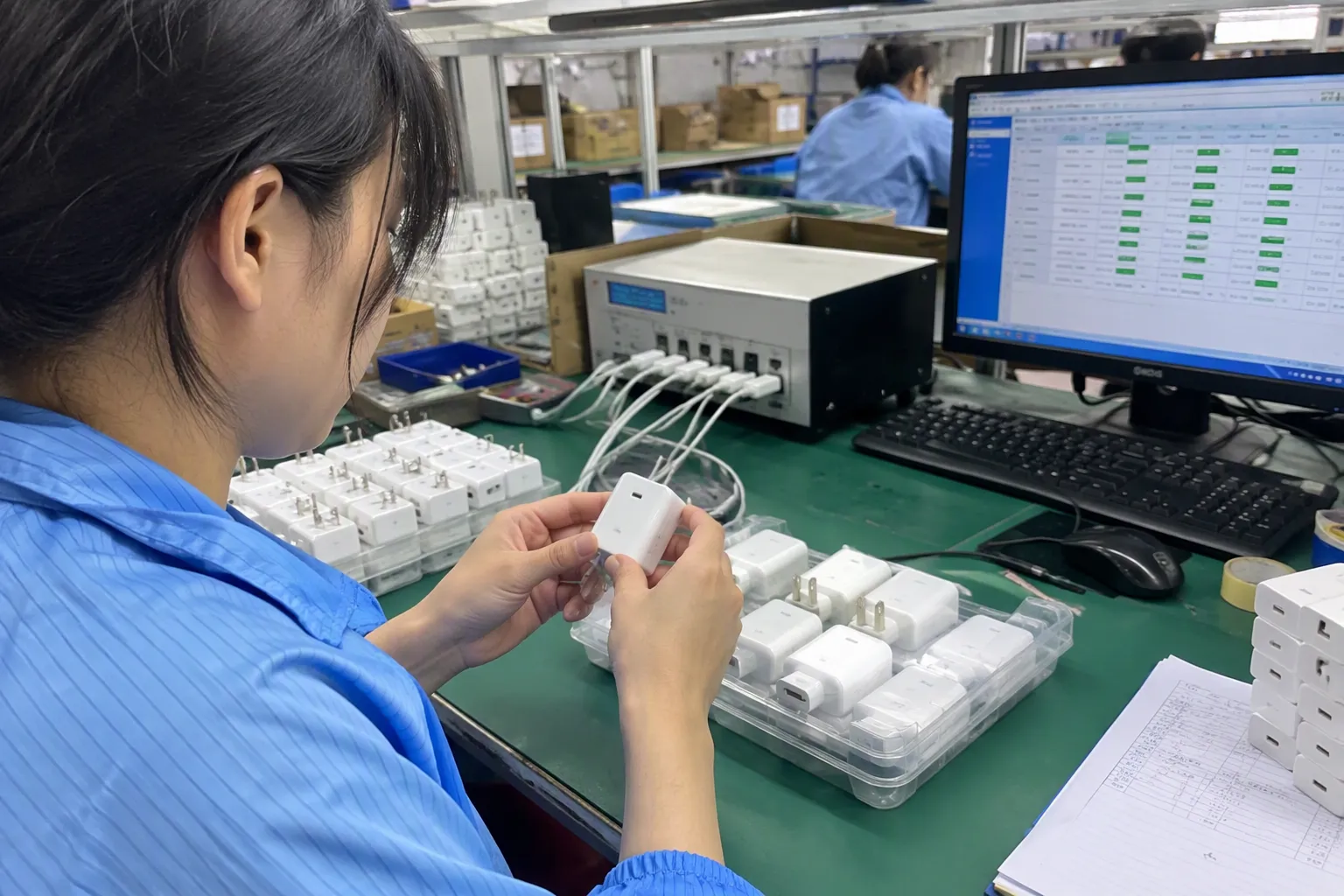
- Product evidence: The supplier provides repeatable battery and output testing for finished samples.
- Independent verification: A qualified laboratory or buyer-appointed evaluator confirms selected results.
I would not reject a planar-magnetic model simply because it does not have the longest battery life. A buyer may value detail, comfort, noise control, or premium positioning more highly. I would reject unsupported claims, however, because a battery complaint can quickly become a return, review, or warranty issue.
For regulatory and battery-safety planning, I would also ask the supplier for applicable test reports and documentation rather than assuming that a component statement covers the finished product. Buyers can review general battery guidance from organizations such as the U.S. Consumer Product Safety Commission and relevant market authorities, then obtain qualified advice for the destination market.
Does Planar-Magnetic TWS Guarantee Better Sound?
No. Planar-magnetic architecture may create acoustic opportunities, but it does not guarantee better sound than a dynamic driver. The customer hears the tuned product, not the driver category. A good comparison must include comfort, seal, bass balance, vocal clarity, treble behavior, call quality, ANC, and consistency between samples.[6]
Planar-Magnetic TWS does not automatically provide superior sound. Final performance depends on driver design, acoustic enclosure, DSP, amplifier matching, ear-tip fit, firmware tuning, and production consistency. Buyers should approve a product after structured listening and measurement, not after reading the technology name alone.
Acoustic potential has several meanings
A buyer’s listening checklist
| Evaluation area | Questions to ask |
|---|---|
| Bass | Is the low end controlled, full, and consistent at normal volume? |
| Vocals | Do speech and vocals remain clear without harshness? |
| Treble | Does detail remain comfortable during longer listening? |
| Separation | Can the listener distinguish instruments in busy passages? |
| Fit | Do different ear tips create a reliable seal? |
| Calls | Can both sides hear voices in ordinary office and street conditions? |
| ANC | Does noise reduction work without unpleasant pressure or artifacts? |
| Controls | Do Touch Controls respond consistently? |
Measurements still require context
Frequency-response graphs are helpful, but a graph does not show every part of the customer experience. The measurement fixture, ear simulator, software, smoothing, fit, and target curve all matter.[5] I would ask the supplier to identify the method and avoid comparing charts created under completely different conditions.
For more formal audio evaluation, buyers can discuss suitable methods with an accredited test laboratory. The IEC publishes international electrotechnical standards, while organizations such as UL Solutions provide testing services in relevant product areas. A buyer should confirm the exact scope rather than treating a general laboratory capability as proof of a particular TWS claim.
I also recommend comparing planar-magnetic models with good dynamic-driver alternatives. The comparison should use similar retail positioning and similar features. If the planar model sounds more appealing but costs significantly more, the buyer needs to determine whether the difference is noticeable enough for the intended customer. That decision belongs to the product strategy, not to the driver label.
Does Planar-Magnetic TWS Justify a Higher Cost?
The higher component cost of a planar-magnetic driver is only one part of the commercial calculation. The complete product may also require different acoustic development, testing, amplifier selection, tooling, inventory planning, or supplier coordination. The right question is whether customers and retailers can recognize enough value to support the final margin.
Planar-Magnetic TWS justifies a higher cost only when validated benefits support the target retail position.[7] Buyers should calculate landed cost, development expense, MOQ exposure, expected return rate, lead time, warranty cost, and sell-through potential before accepting a premium component price.
Build a total-cost view
- Product unit price
- Packaging and printing
- Tooling or mold charges
- Sample and engineering fees
- Certification and testing expenses
- Freight and insurance
- Import duties and local charges
- Payment and currency risk
- Spare parts
- Warranty replacements
- App or firmware customization
- Custom color and logo requirements
- Inventory cost caused by a high MOQ
Compare commercial models
| Commercial model | Strength | Main risk | Suitable position |
|---|---|---|---|
| Standard catalog model | Faster launch and lower development burden | Less differentiation | Test order or broad retail |
| Semi-custom model | Better branding with controlled cost | Moderate MOQ and coordination | Established online seller |
| Full custom planar model | Strong differentiation | Higher development and tooling risk | Premium or specialist line |
| Dynamic-driver alternative | Broad supplier availability | Less technology-led marketing | Value and mainstream retail |
Retail price must support the story
A retailer may use “planar-magnetic” in product content, packaging, and sales training. That message works only if the product also performs well in the areas customers notice. Many shoppers will not understand the driver technology. They may judge the product through:
Use a simple approval calculation
I would also ask the supplier whether the quoted price depends on a specific order quantity. A model that looks attractive at a large factory MOQ may be unsuitable for a retailer testing a new category. In my experience communicating with export customers, MOQ and delivery conditions often influence the decision before small specification differences do. This is a purchasing observation, not a universal market statistic, but it is a practical point for product planning.
How Do MOQ, Lead Time, and Quality Affect the Decision?
Technical performance has limited value if the supplier cannot deliver consistent goods at the required volume. Planar-magnetic TWS may involve specialized components or fewer qualified sources, so buyers should examine capacity, component continuity, production controls, and after-sales support before making a product promise to retailers.
Buyers should approve Planar-Magnetic TWS only after checking production MOQ, sample-to-mass-production consistency, component lead times, quality-control records, delivery capacity, firmware support, and warranty procedures. A technically attractive sample is not enough for a repeatable retail program.
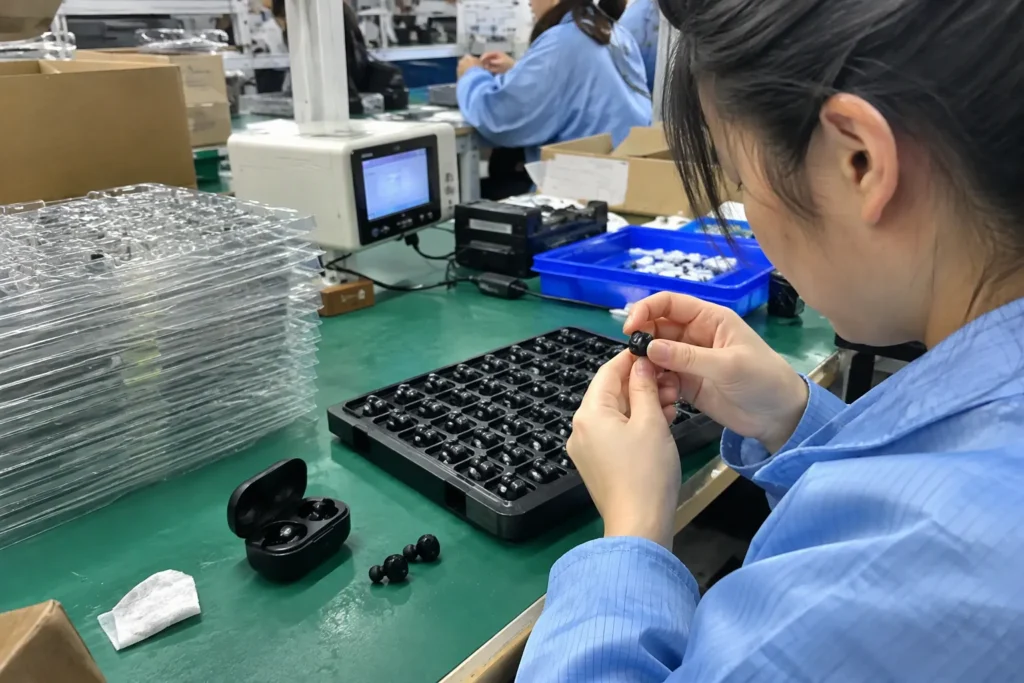
Ask how the supplier controls consistency

- Driver inspection
- Battery inspection
- Charging and protection-board testing
- Left-right acoustic matching
- Bluetooth pairing
- Microphone function
- ANC and transparency modes
- Touch-control response
- Charging-case contact reliability
- Cosmetic inspection
- Drop or mechanical tests where applicable
I would ask to see the inspection standard and sampling plan. A supplier may have a quality system, but buyers should verify the actual documents and understand what the stated inspection level means. Certifications and reports should be checked for the correct factory, model, market, and validity period.
Production sample versus engineering sample
- A production-representative sample.
- A written specification sheet.
- Approved golden samples for appearance and function.
- A pre-shipment inspection process.
- Clear defect definitions.
- A replacement or compensation procedure.
- Records for firmware and component revisions.
The buyer should document which changes require approval. A supplier might replace a battery, Bluetooth chip, driver, or microphone because of availability. Such substitutions can affect performance, certification documents, app compatibility, or user experience.
Delivery planning needs a buffer
| Planning point | Buyer question |
|---|---|
| Components | Which parts have the longest confirmed lead time? |
| Assembly | What is normal production time after deposit and artwork approval? |
| Testing | Is testing completed before or during production? |
| Packaging | Does custom packaging require a separate schedule? |
| Shipping | What happens if the preferred shipping route changes? |
| Reorders | Can the supplier reserve capacity for repeat orders? |
After-sales support is part of product quality
- Warranty period and covered defects
- DOA handling
- Replacement-unit policy
- Spare-part availability
- Firmware update responsibility
- Customer-service response time
- Defect-rate reporting
- Return analysis
- Communication process for urgent failures
How Should Buyers Compare Planar-Magnetic and Dynamic TWS?
The comparison should focus on the intended customer and the complete product offer. Dynamic-driver TWS remains a strong choice for many mainstream applications because the supply base is broad, development experience is extensive, and suppliers can offer many price levels.[8] Planar-magnetic TWS may be more suitable when the buyer has a credible premium or enthusiast proposition.
Planar-magnetic and dynamic TWS should be compared by customer benefit, validated performance, landed cost, supply risk, and retail positioning. Neither technology is automatically the better choice. The best option is the one that delivers reliable quality and a clear reason for customers to choose it.
Side-by-side procurement comparison
| Evaluation factor | Planar-magnetic TWS | Dynamic-driver TWS |
|---|---|---|
| Technology message | More specialized and premium-oriented | Familiar and easier to explain |
| Acoustic potential | May support a differentiated tuning approach | Can provide excellent results with mature tuning |
| Battery conclusion | Requires product-level verification | Also requires product-level verification |
| Supplier availability | May be narrower for certain designs | Often broad across price levels |
| MOQ | Depends strongly on supplier and customization | Often more flexible, but not always |
| Development risk | May be higher for new or unusual designs | Usually easier for established platforms |
| Retail fit | Premium, enthusiast, technology-led lines | Mainstream, value, and broad retail |
| Buyer priority | Validated differentiation | Reliable performance and cost efficiency |
This table is a starting point, not a universal rule. A strong planar-magnetic supplier may offer better support than a weak dynamic-driver supplier. The factory, design team, quality controls, and commercial terms matter more than a simple category label.
Match the product to the retail channel
A chain store may require dependable replenishment, barcode and packaging control, stable pricing, and low return rates. An online specialist seller may accept a smaller volume and a more technical product story. A general marketplace seller may need strong images, clear claims, and competitive landed cost.
- Does the channel have customers who understand or value the technology?
- Can the retailer explain the benefit without exaggeration?
- Is the target price compatible with the supplier’s MOQ?
- Can the buyer hold enough inventory for replacement and replenishment?
- Does the product meet the channel’s packaging and compliance requirements?
- Will the supplier support firmware or app issues after launch?
A practical product-selection scorecard
| Category | Weight to consider | Evidence |
|---|---|---|
| Acoustic result | High | Listening test and supplier measurement |
| Battery performance | High | Controlled whole-product test |
| Landed cost | High | Quotation and logistics calculation |
| MOQ flexibility | Medium to high | Written order terms |
| Lead-time reliability | High | Production plan and supplier record |
| Quality consistency | High | Inspection data and sample comparison |
| After-sales support | High | Warranty terms and response process |
| Retail differentiation | Medium | Customer and channel research |
| Compliance documentation | High | Correct, current reports for target market |
What Should a Buyer Request Before Placing an Order?
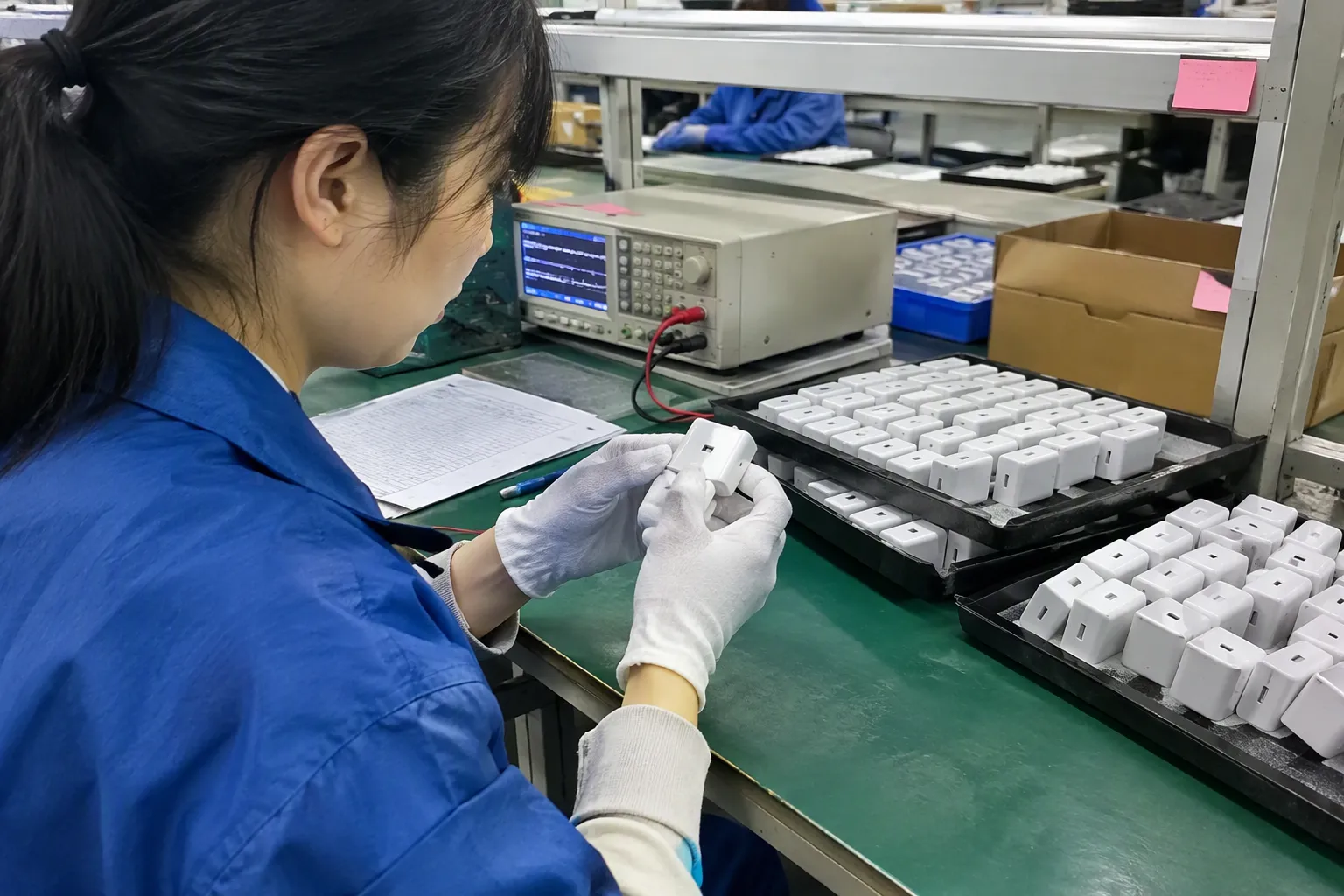
Before ordering Planar-Magnetic TWS, buyers should request representative samples, a complete specification sheet, battery and acoustic test evidence, compliance documents for the destination market, quality procedures, MOQ and lead-time terms, warranty conditions, and written confirmation of any custom requirements.
Technical and commercial document checklist
How to run a controlled sample review
- Receive at least two or three samples where possible.
- Record firmware, color, packaging, and serial information.
- Test pairing with common phones used by the target market.
- Test music, calls, ANC, transparency, and charging.
- Use several ear tips and record fit observations.
- Compare battery results under stated conditions.
- Check the charging case, hinges, contacts, and controls.
- Share one written approval document with the supplier.
Define the claim before defining the marketing
The product page should use claims that the supplier can support. For example, “planar-magnetic driver” may be appropriate if the product actually uses that architecture. Claims such as “more efficient,” “studio-grade,” or “better than dynamic drivers” require much stronger evidence and may create customer or regulatory risk.
I prefer clear wording that explains the technology without promising an automatic result. The product can be positioned around its design, tuning, comfort, and validated features. If the buyer wants a strong performance claim, the buyer should first obtain reliable test evidence and professional review.
For broader wireless-product requirements, buyers can consult authorities such as the European Commission’s Radio Equipment Directive information and the U.S. Federal Communications Commission equipment authorization resources. These resources do not replace application-specific compliance advice, but they help buyers identify the right questions for suppliers and testing professionals.
Frequently Asked Questions
Is Planar-Magnetic TWS automatically better than dynamic-driver TWS?
No. Planar-magnetic TWS may offer a different acoustic design opportunity, but final sound depends on tuning, enclosure design, DSP, amplifier matching, fit, and manufacturing quality. A well-designed dynamic-driver product may deliver better value or a better overall customer experience.
Does a planar-magnetic driver provide longer battery life?
Not automatically. Battery life depends on the complete device, including the driver, amplifier, Bluetooth chipset, firmware, ANC, microphone use, listening volume, and battery capacity. Buyers should request controlled whole-product battery tests with clear conditions.
Is Planar-Magnetic TWS suitable for mainstream retail?
It can be suitable, but the buyer should first confirm price, MOQ, supply continuity, and customer understanding. The technology may fit premium or enthusiast lines more naturally, while mainstream retail may prioritize comfort, calls, battery life, reliability, and affordable pricing.
What documents should a buyer request from a supplier?
A buyer should request a specification sheet, representative samples, battery and acoustic test information, production quality procedures, MOQ, lead time, warranty terms, change-control rules, and compliance documents relevant to the destination market. The buyer should verify that reports match the exact model.
How can a buyer reduce risk when testing a new planar-magnetic model?
The buyer can start with a controlled sample or pilot order, compare the model with a dynamic-driver alternative, define acceptance criteria, and avoid committing to a large MOQ before performance and sell-through are understood. A written quality and after-sales agreement provides additional protection.
Conclusion
Planar-Magnetic TWS deserves careful evaluation, but the technology name should not decide the purchase. I would verify whole-device battery performance, acoustic results, fit, quality consistency, MOQ, lead time, landed cost, compliance documents, and after-sales support. I would also compare the product with a well-tuned dynamic-driver alternative for the same retail position. At our Shenzhen 3C export business, I help Western retailers, wholesalers, and e-commerce sellers review these practical factors before supplier selection. Contact me to compare suitable TWS options, customization plans, MOQ, delivery schedules, and support terms for your market.
Sources
- Why does copper trace planar magnetic driver ...", An electroacoustic transducer reference describes planar-magnetic drivers as using conductive traces distributed on a diaphragm that is driven by interaction with a magnetic field
- Dispersion Influence of Electroacoustic Transducer ... - PMC", Research on headphone and electroacoustic systems indicates that transducer characteristics interact with enclosure design, acoustic coupling, and equalization in determining the resulting sound field
- What's the Difference Between Dynamic and Planar ...", A comparative electroacoustic study reports that planar-magnetic and dynamic transducers can differ in measured distortion or impulse-response behavior under specified test conditions
- An Inverse Class-E Power Amplifier for Ultrasound Transducer", Electroacoustic power analyses show that the transducer load, required output level, and amplifier efficiency influence the electrical power drawn by a headphone system
- Hearing aid coupler output level variability and ...", Headphone measurement guidance recognizes that coupler or ear-simulator characteristics, placement, fit, and data-processing conventions affect reported frequency-response curves
- Evaluating the hearing screening effectiveness of active noise ...", Human-factors and electroacoustic studies evaluate earbud performance across fit and comfort, acoustic response, speech communication, and noise-control behavior rather than by transducer type alone
- Effects of Design Aesthetics on the Perceived Value of a Product", Consumer-value research indicates that willingness to pay for a premium product depends on perceived and credible benefits relative to available alternatives
- HEADPHONES", Industry and technology analyses describe dynamic drivers as the predominant, widely manufactured transducer architecture in consumer headphones and earbuds
Related reading: