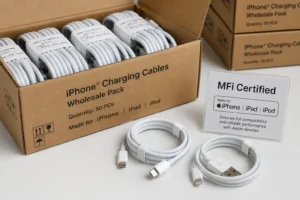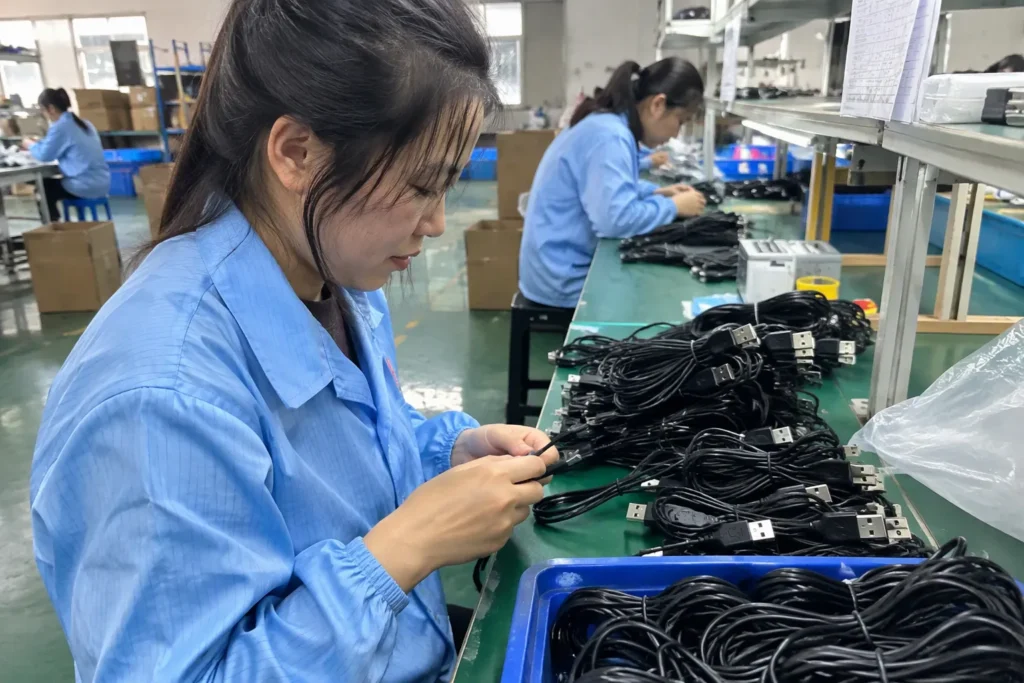
An OEM/ODM Manufacturer Factory USB Charging Cable can look attractive when a buyer needs lower costs, private labeling, or a product made for a specific retail channel. However, a low quotation may hide missing tests, unclear specifications, or weak replenishment support. I usually start with the buyer’s charging task, device compatibility, and sales plan before discussing price.
Quick Answer
- Define the target devices, charging power, data speed, connector types, length, and usage environment first.
- Treat OEM/ODM as a complete project that includes specifications, samples, branding, packaging, testing, and production control.
- Compare quotations by materials, test scope, MOQ, lead time, packaging, and after-sales support—not only unit price.
- Verify model-specific technical documents, certification scope, and sample performance before placing a production order.
- Choose a supplier that can support repeat orders and consistent batches for your European or North American sales channels.
An OEM/ODM Manufacturer Factory USB Charging Cable should be selected by matching the cable’s technical specifications, customization requirements, quality controls, and supply capability to the buyer’s application. Buyers should approve a representative sample, verify relevant documentation, compare the complete quotation, and confirm MOQ, lead time, packaging, inspection, and replenishment terms before production.
The right supplier can help a retailer launch a practical, well-presented cable with manageable risk. The wrong supplier can create returns, inconsistent batches, delayed replenishment, or products that do not perform as expected with the customer’s devices. I have found that the most useful discussions happen when buyers provide a clear product brief instead of asking only, “What is your cheapest USB cable?”
Why Should I Start With the Charging Task Instead of the Connector Name?
A connector name does not fully describe a cable.[1] A USB-C to USB-C cable may serve a basic charging purpose, support data transfer, or be designed for a higher-power application.[2] A USB-A to USB-C cable may suit one charger and fail to meet the expectations of another device. The buyer’s task must come first.
A suitable OEM/ODM Manufacturer Factory USB Charging Cable should be selected according to the target device, charging requirement, data function, length, construction, and selling environment. The connector is only one part of the product specification.
Build a basic product brief
- Source device: wall charger, laptop, power bank, car charger, or another USB port.
- Target device: smartphone, tablet, wireless earbud case, game accessory, camera, or other equipment.
- Connector combination: USB-A, USB-C, Lightning-compatible, Micro-USB, or another specified interface.
- Charging expectation: standard charging or a stated power requirement that needs model-specific confirmation.
- Data requirement: charging only, standard data transfer, or a particular protocol requirement.
- Length: common retail lengths may differ from the buyer’s actual packaging or use case.
- Exterior design: round, flat, braided, silicone, recycled-material appearance, or a private design.
- Sales environment: discount retail, electronics store, e-commerce, bundled accessory, or promotional program.
This information reduces the risk of comparing products that are not truly equivalent. Two cables may have the same connector ends but use different conductors, shielding, housings, strain relief, or internal components. They may also be intended for different performance levels.
Charging power requires careful wording
Buyers often ask for “fast charging,” but that phrase can mean different things. A cable may be suitable for a particular charging setup, yet the final result also depends on the charger, device, protocol, connector configuration, cable design, and software or power-management system.[3]
- The exact model.
- The tested configuration.
- The stated current or power conditions.
- Whether the cable is charging-only or supports data.
- Which documents or test results support the claim.
- Whether the same specification will apply to repeat production.
Why length and construction affect the use case
Longer cables can be more convenient for consumers, but the buyer should not assume that every length offers the same performance.[4] Conductor size, resistance, insulation, shielding, connector quality, and assembly method can change as the design changes.
For retail, I also consider how the cable feels in the hand. A very stiff cable may appear durable but may be difficult to use. A soft cable may improve handling but require careful review of strain relief and jacket consistency. The best choice depends on the customer’s use case rather than a general preference.
What Does OEM/ODM Mean for a USB Charging Cable Project?
Many buyers use OEM and ODM as if they mean only logo printing. In practice, a serious project may include product selection, specification changes, engineering communication, sample approval, branding, packaging, inspection, documentation, and production follow-up.
OEM/ODM for USB cables should be treated as a coordinated product-development and supply project.[5] The supplier must understand what the buyer wants to change, what must remain standard, and what evidence is needed before shipment.
OEM and ODM are not identical
| Project type | Typical buyer request | Main supplier responsibility |
|---|---|---|
| Standard product with branding | Existing cable, logo, retail packaging | Confirm available model, branding method, and packaging |
| OEM project | Buyer provides a defined specification or design | Produce according to approved requirements and samples |
| ODM project | Buyer selects or adapts a supplier design | Recommend an available design and develop agreed changes |
| Semi-custom project | Standard cable with changes to length, color, material, or packaging | Confirm which changes are practical and what MOQ applies |
A logo alone does not create a fully customized product.[6] A buyer may still need to approve the cable color, connector housing, surface finish, label, box dimensions, barcode, warning information, language, and carton marks.
A practical OEM/ODM workflow
Customization affects MOQ and lead time
A standard cable with existing materials may have a lower MOQ and shorter lead time. A special jacket material, custom connector housing, new mold, or printed package may require additional setup and purchasing. The supplier should explain these effects before the buyer approves the quotation.
This comparison allows the buyer to measure the commercial value of customization. A retailer may discover that a standard cable with improved packaging meets the market need more efficiently than a completely new design.
How Should I Compare an OEM/ODM Manufacturer Factory USB Charging Cable Quotation?
A low unit price does not prove that a quotation is better.[7] The price may exclude packaging, testing, custom printing, tooling, or certain materials. It may also describe a different cable construction from the one the buyer believes they are comparing.
What should appear in the quotation?
| Quotation item | Why it matters |
|---|---|
| Exact model or reference | Prevents confusion between similar products |
| Connector combination | Confirms the physical interface |
| Cable length and tolerance | Affects use, packaging, and consumer expectations |
| Jacket and conductor description | Helps compare construction |
| Charging and data claims | Requires model-specific verification |
| Logo method | Printing, laser marking, molding, label, or other process |
| Packaging | Polybag, paper box, blister, sleeve, or custom pack |
| MOQ | Affects inventory and cash flow |
| Sample charge | Shows development and approval cost |
| Tooling or mold charge | Important for special housing designs |
| Production lead time | Supports launch and replenishment planning |
| Payment and shipping terms | Affects landed cost |
| Inspection and defect policy | Clarifies risk after production |
| Validity period | Materials and freight conditions may change |
I also ask whether the quote includes export cartons, inner boxes, manuals, labels, barcodes, and destination-specific packaging requirements. These details can create unexpected costs when they are not discussed early.
Landed cost matters more than factory price
- Product price.
- Customization and packaging.
- Sample and tooling allocation.
- Freight and insurance.
- Import duties or taxes assessed by the buyer’s customs process.
- Inspection cost.
- Warehousing and local delivery.
- Potential replacement or return cost.
- Payment and currency expenses.
I do not calculate import obligations as a universal fixed percentage because the correct treatment depends on the product classification, destination, and current rules.[8] Buyers should confirm the applicable requirements with their customs broker or qualified trade adviser.
A supplier with a slightly higher quote may still be more competitive if the product has clearer specifications, more reliable packaging, better batch records, or stronger replenishment support. Conversely, a higher price does not automatically prove better quality. The comparison must remain evidence-based.
Use a quotation comparison table
| Evaluation area | Supplier A | Supplier B | Questions to resolve |
|---|---|---|---|
| Unit price at target quantity | Are specifications identical? | ||
| MOQ | Can the buyer test the market first? | ||
| Sample lead time | Does the sample represent bulk production? | ||
| Bulk lead time | What starts the production clock? | ||
| Packaging cost | Are artwork and cartons included? | ||
| Testing or inspection | Who performs and pays for it? | ||
| Replenishment plan | Can the supplier support repeat orders? | ||
| Defect and replacement terms | What evidence and deadlines apply? |
How Can I Evaluate Samples and Manufacturing Quality?
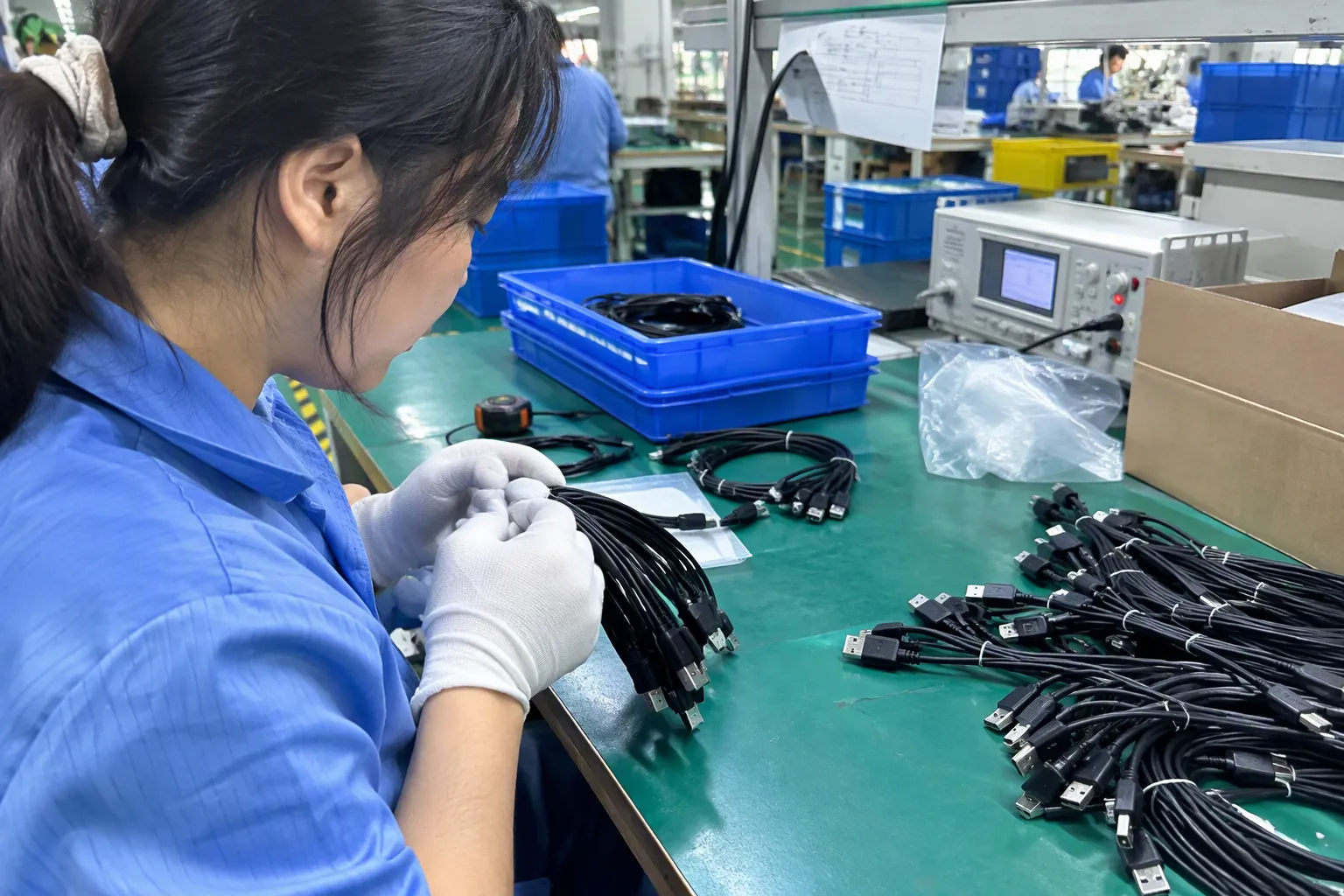
A sample is important, but one sample cannot prove every future batch will be identical. I treat the sample as a reference point for technical, visual, packaging, and communication review. I then ask how the supplier will control production consistency.
An OEM/ODM cable sample should be checked against the approved specification, and the buyer should define how bulk goods will be inspected before shipment. Certifications and test reports should be verified for the exact model and intended market.
What can buyers check themselves?
- Connector fit with the intended devices.
- Visible molding, seams, printing, and surface defects.
- Strain relief at both ends.
- Jacket flexibility and consistency.
- Cable length and package dimensions.
- Label accuracy and barcode readability.
- Packaging protection during handling.
- Basic charging and data behavior in the intended setup.
- Whether the physical sample matches the quoted model.
A buyer should record the test setup. For example, the device, charger, cable length, software state, and measurement method can affect the result. If a claim is important to the product’s positioning, the buyer should use a qualified laboratory or professional evaluator.
A sample approval record is useful
- Product model and revision.
- Cable length and color.
- Connector description.
- Approved logo and packaging artwork.
- Photos of important details.
- Test conditions and results.
- Open issues and agreed corrections.
- Approval date and responsible contacts.
The document does not need to be complicated. Its purpose is to prevent memory-based decisions. If the buyer later receives a different connector finish or package layout, the approved record provides a clearer comparison.
Quality control should cover more than final appearance
- Are incoming materials checked before assembly?
- Are connector components and cable materials identified by lot?
- Are crimping, soldering, molding, or assembly operations checked?
- Are continuity and short-circuit checks performed?
- Are charging or data tests applied when they are part of the specification?
- How are defective units separated and recorded?
- How does the supplier manage changes to materials or components?
- Can the supplier provide inspection records for the relevant batch?
The exact inspection plan should match the product and commercial risk. A basic promotional cable may need a different plan from a cable sold as a higher-performance accessory. A qualified inspection company can help the buyer define sampling and acceptance criteria.
Certifications require document verification
- The certificate or report holder.
- The exact product model.
- The testing or certification scope.
- The issuing organization.
- The issue date and validity information, where applicable.
- The relevant market and regulatory purpose.
- Whether the document covers the finished product or only a component.
- Whether the current design and materials match the tested version.
The buyer should not assume that a factory’s general certification statement covers every cable model. Requirements can differ according to product design, market, packaging, materials, and applicable rules. European buyers can consult official EU information through the European Commission’s CE marking guidance and should obtain professional compliance advice for their specific product.
For USB-related technical information, buyers can review resources from the USB Implementers Forum and confirm whether a supplier’s protocol or logo claim is properly supported. I do not treat a logo, a copied test image, or a generic declaration as complete evidence.
How Do MOQ, Lead Time, and Replenishment Affect Supplier Selection?
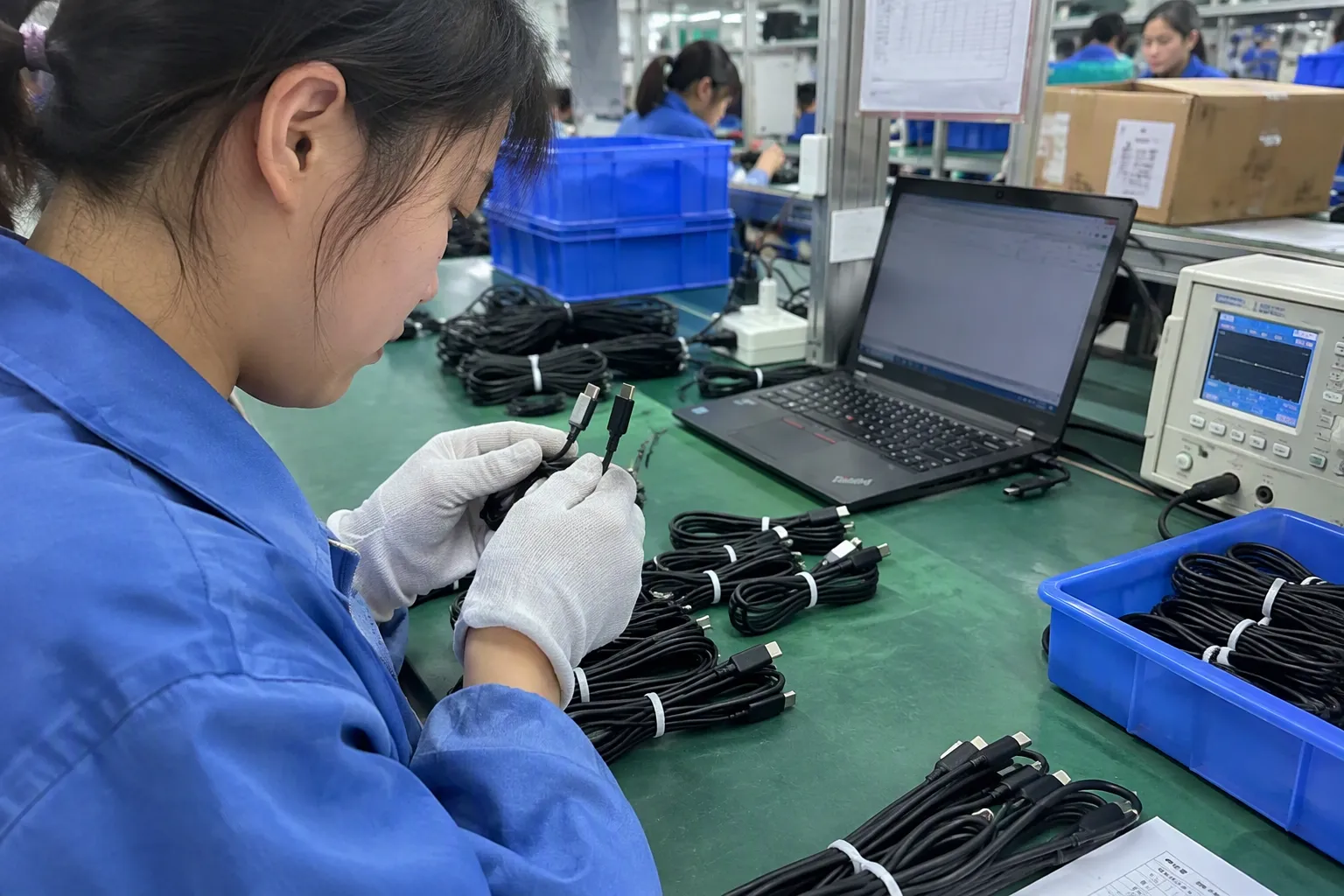
A cable project can fail commercially even when the product itself works. The buyer may order too much stock, miss a launch date, or discover that the supplier cannot repeat the same specification. MOQ, lead time, and replenishment capability deserve the same attention as product design.
MOQ is a planning decision
- Material purchasing quantities.
- Custom color or jacket production.
- Connector housing molds.
- Printing and packaging setup.
- Factory scheduling.
- Carton quantities.
- Supplier policies for private-label orders.
Lead time has several stages
- Artwork and specification confirmation.
- Sample preparation.
- Sample review and revision.
- Material or component preparation.
- Bulk production.
- Inspection and packing.
- Export documentation and shipment booking.
A practical purchase schedule should include time for revisions. If the buyer approves packaging at the last moment, the original shipment date may no longer be realistic. I prefer to discuss a target delivery window and identify the events that could change it.
Repeatability matters for private-label products
A private-label cable becomes part of the buyer’s brand. If the first batch has a soft cable jacket and the second batch has a visibly different finish, customers may notice even if both products function. If packaging dimensions change, warehouse and retail processes may also be affected.
- Approved samples and retained references.
- Model numbers and revision control.
- Material substitutions.
- Packaging artwork versions.
- Production records.
- Reorder confirmation.
- Complaint analysis and corrective action.
After-sales terms should be practical
- The time period for reporting visible defects.
- The evidence required for a technical claim.
- The treatment of confirmed defective units.
- Whether replacement goods, credit, or another remedy applies.
- How the parties investigate repeated problems.
- Who pays for an agreed replacement shipment.
How Should I Prepare an Inquiry for an OEM/ODM Manufacturer Factory USB Charging Cable?
A vague inquiry usually produces a vague quotation. When a buyer provides a structured brief, I can ask more useful questions and reduce unnecessary back-and-forth. The buyer also receives proposals that are easier to compare.
A useful inquiry template
| Information | Example of what to provide |
|---|---|
| Buyer type | Retailer, wholesaler, importer, or e-commerce seller |
| Target market | Specific European or North American destination |
| Target devices | Smartphone, tablet, power bank, earbuds, or mixed use |
| Connector types | Clearly state both ends |
| Length options | One or several lengths with tolerance |
| Main function | Charging only or charging plus data |
| Performance requirement | State the required claim for verification |
| Materials and appearance | PVC, braided, silicone, color, finish |
| Branding | Logo file, position, method, and color |
| Packaging | Box, sleeve, bag, insert, barcode, language |
| Estimated quantity | Trial order and expected repeat volume |
| Target launch date | Include sample and approval time |
| Required documents | Test reports, declarations, material information |
| Inspection expectation | Supplier inspection or independent inspection |
| Commercial terms | Destination, shipping preference, payment discussion |
I also ask buyers to identify the most important priority. For example, the priority may be low MOQ, a short launch window, custom packaging, stable repeat supply, or a particular performance requirement. A supplier may not optimize all five priorities at the same time.
Ask suppliers to separate standard and custom elements
- Standard cable construction.
- Custom cable color.
- Custom connector housing.
- Logo printing or molding.
- Custom retail box.
- New tooling.
- Special testing.
- Special documentation.
- Exclusive design or market arrangement.
Keep communication records organized
- The latest quotation.
- The approved product specification.
- The sample approval record.
- The final artwork.
- The packaging specification.
- Inspection instructions.
- Shipment documents.
- A list of open questions.
In my experience handling export inquiries and delivery coordination, this organization makes after-sales communication more efficient. It also helps both parties identify whether a problem came from the product, packaging, artwork, or shipping process.
What Supplier Questions Help Reduce OEM/ODM USB Cable Risk?
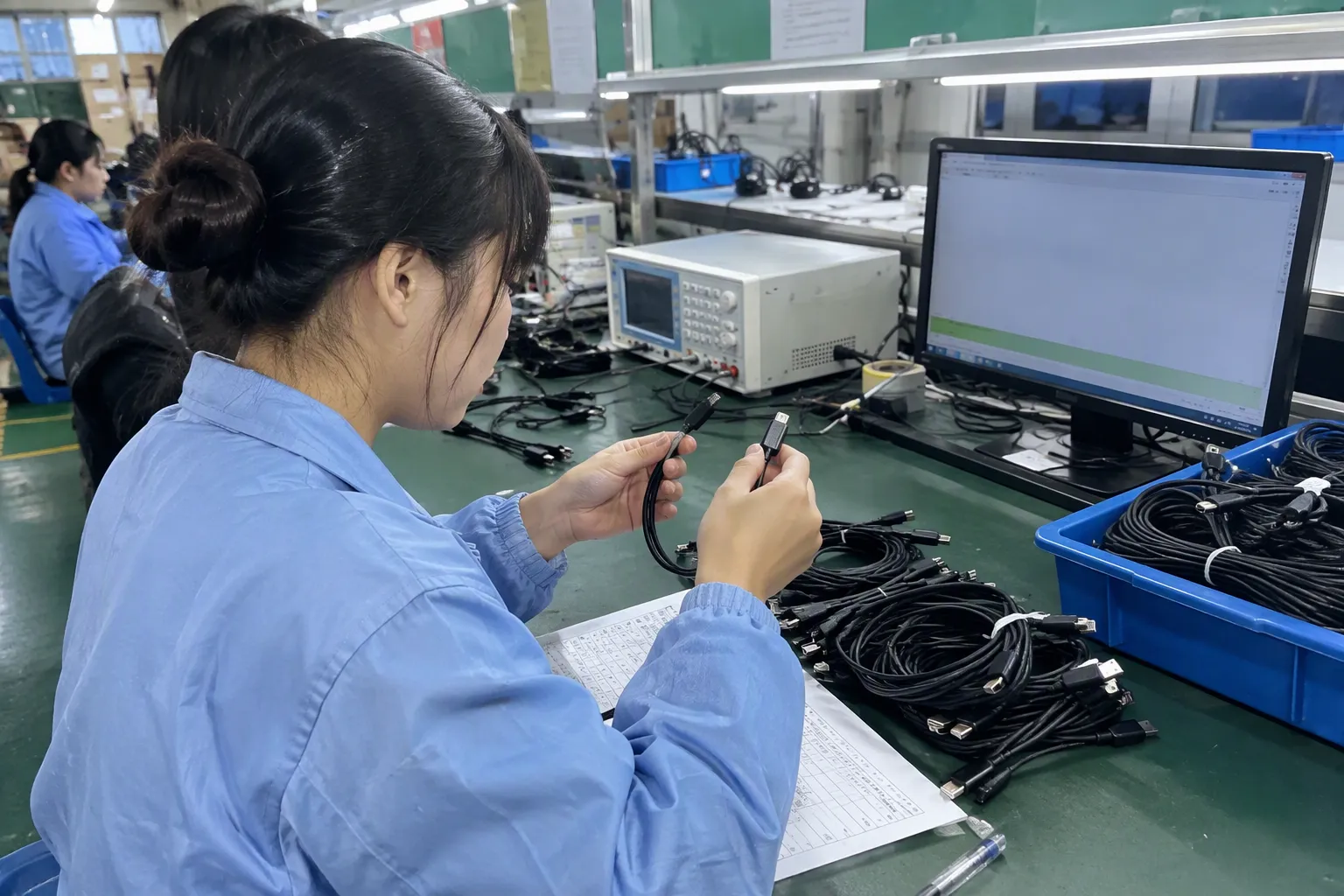
A supplier’s sales presentation can be useful, but I place more value on specific answers and supporting documents. A buyer should understand what the supplier can do directly, what it coordinates with partners, and what remains subject to confirmation.
Questions about capability
- Which USB cable models are already in regular production?
- Which parts of the requested design are standard?
- Which customizations require new tooling or special materials?
- What quantity can the supplier support per month?
- How does the supplier manage repeat orders?
- Which quality checks are performed?
- Which documents are available for the exact model?
- Can the supplier provide a representative sample before a bulk order?
- What is the process for approving material or design changes?
- Which after-sales remedies are available for confirmed defects?
Signs that require more questions
- The supplier cannot provide a clear model number.
- The quotation uses only general terms such as “fast charge.”
- The sample differs from the product photos or description.
- The supplier avoids explaining MOQ or lead-time conditions.
- Documents show a different model or company name without explanation.
- The supplier changes materials without approval.
- The supplier cannot describe how defects are recorded.
- Packaging artwork is accepted without a final proof.
- The supplier promises every certification without identifying scope.
I try to keep the evaluation fair. A small supplier may have limited presentation materials but still provide a suitable product. The important question is whether the supplier can give accurate, consistent, and verifiable information for the intended order.
Use a balanced supplier scorecard
| Area | Suggested review question |
|---|---|
| Product fit | Does the model match the actual charging and data task? |
| Customization | Can the supplier deliver the required branding and package? |
| Quality evidence | Are sample checks and documents relevant to the exact model? |
| Communication | Does the supplier answer technical and commercial questions clearly? |
| MOQ | Does the order quantity fit the sales plan? |
| Lead time | Can the supplier meet launch and replenishment timing? |
| Cost | Is the quotation complete and comparable? |
| Compliance | Can the buyer verify market-specific requirements? |
| After-sales | Are defect reporting and remedies defined? |
| Continuity | Can the supplier support future orders consistently? |
This approach supports a task-and-risk-matching decision. The best supplier for a trial e-commerce order may not be the best supplier for a chain-store rollout. The right answer depends on the buyer’s specific commercial situation.
Frequently Asked Questions
Is an OEM/ODM USB charging cable more reliable than a standard cable?
Not automatically. OEM/ODM describes the customization and supply arrangement, not a guaranteed quality level. I recommend comparing the exact model, materials, sample performance, inspection process, documentation, and supplier’s repeat-order capability before making a reliability judgment.
What information should I send when requesting an OEM/ODM cable quotation?
I suggest sending the target devices, connector combination, length, charging and data requirements, materials, color, logo, packaging, destination market, estimated quantity, launch date, and required documents. You should also state which requirements are mandatory and which are preferences.
Can I use a certificate from another USB cable model?
You should not assume that a document for another model applies to your product. Ask the supplier to identify the exact model and certification or testing scope. Buyers should verify market-specific requirements with qualified compliance professionals or the relevant official authorities.
How can I reduce the MOQ for a custom USB cable?
You may reduce MOQ by using an existing cable construction, standard colors, available connector housings, and simpler packaging. A supplier may offer a lower MOQ for a standard model with logo printing than for a fully customized cable. Ask for both options and compare the total commercial value.
Should I arrange an inspection before shipment?
An inspection can be useful when the order value, customization, or brand risk justifies it. You can agree on inspection criteria before production and use a qualified third-party inspection company when appropriate. An inspection does not replace product design review or compliance verification, but it can identify batch and packaging issues before shipment.
Conclusion
Choosing an OEM/ODM Manufacturer Factory USB Charging Cable requires more than finding a low factory quotation. I recommend starting with the charging and data task, then confirming the exact model, customization scope, sample, packaging, quality controls, documents, MOQ, lead time, and after-sales terms. Buyers should verify certifications and technical claims for the specific product rather than relying on general supplier statements. My Shenzhen-based 3C trading team can help European and North American retailers, wholesalers, importers, and e-commerce sellers organize requirements, compare suitable USB cable options, coordinate samples, and discuss practical OEM/ODM supply solutions.
Sources
- USB Charger (USB Power Delivery)", USB technical specifications distinguish the physical connector from the electrical, signaling, and power capabilities implemented by a particular cable and device combination
- Cables and Connectors", USB Type-C documentation defines cable and connector characteristics that can vary by supported power capability and USB data or alternate-mode signaling
- The Basics of USB Power Delivery Negotiations", USB Power Delivery and related charging systems negotiate operating conditions among the power source, cable, and sink device, subject to the limits implemented by each component
- USB-C Cable Voltage Drop - LTT Labs : r/UsbCHardware", Increasing cable length generally increases conductor resistance and transmission loss, making electrical performance dependent on cable construction and the applicable interface requirements
- OEM vs ODM: Key Differences, Benefits, and How to Choose", In manufacturing terminology, OEM arrangements generally produce goods to a buyer's specification, whereas ODM arrangements involve a manufacturer's existing or developed design supplied under another firm's brand
- Private Label, White Label, and Contract Manufacturing", Private labeling ordinarily changes the brand presentation of an existing product, whereas product customization changes specified design, materials, components, or manufacturing requirements
- Supplier Evaluation Process", Supplier-selection research commonly evaluates price together with quality, delivery, reliability, service, and other costs because the quoted unit price does not represent total procurement cost
- Trade Guide: Customs Valuation", Customs authorities determine applicable import treatment through tariff classification and the rules of the importing jurisdiction, with charges varying by product and destination