Quick Answer: Importers and wholesalers should source wireless lavalier microphones from China by comparing the complete system—not only the factory price. Confirm frequency requirements, transmission performance, battery and charging design, packaging, OEM capability, certifications, MOQ, sample results, QC procedures and Incoterms before placing a production order. A reliable supplier should provide a working sample, clear compliance documentation and a production timeline that matches your sales plan.
Wireless lavalier microphones are attractive products for distributors, e-commerce sellers, online educators, video creators and corporate training markets. They are compact, relatively easy to private-label and suitable for bundles with tripods, lighting kits, smartphones or video equipment. However, sourcing them successfully requires more than finding a low quotation on a Chinese B2B marketplace.
The microphone, transmitter, receiver, charging case, cables and software-free user experience all affect customer satisfaction. A weak battery, unstable connection or incompatible phone adapter can create high return rates even when the product looks good in photographs. The following process helps importers and wholesalers evaluate suppliers and build a repeatable supply program.
1. Define the product before contacting factories
Prepare a short sourcing brief before requesting quotations. This prevents suppliers from quoting different configurations and makes the comparison meaningful. Your brief should identify:
- Number of transmitters and receivers required, such as one-to-one or two-to-one.
- Target devices, including iPhone, Android phones, cameras, tablets, laptops or audio mixers.
- Connector requirements, such as USB-C, Lightning compatibility where applicable, 3.5 mm TRS or camera adapters.
- Transmission technology and intended sales regions.
- Required operating time, charging case capacity and charging interface.
- Noise reduction, mute, gain control, monitoring and other user functions.
- Retail packaging, manuals, labels, barcode requirements and language versions.
- Target order quantity, target landed cost and expected launch date.
Do not treat advertised range as the main buying criterion. Wireless performance depends on the local environment, obstacles, antenna design, firmware and the applicable radio rules. Ask the supplier to specify test conditions rather than accepting an isolated range figure.
2. Compare the specifications that affect wholesale sales
For most importer programs, a practical 2.4 GHz plug-and-play kit is easier to distribute than a complicated professional wireless system. It can usually serve mobile video and presentation users, but the exact radio configuration and permitted use still need to be checked for each destination market.
| Specification | What to verify with the supplier | Why it matters commercially |
|---|---|---|
| System configuration | One or two transmitters, receiver type, charging case and included adapters | Determines product positioning, bundle value and SKU structure |
| Wireless band | Operating frequency, regional version and coexistence performance | Affects regulatory approval and use in different countries |
| Battery | Runtime, charging time, battery capacity, cycle expectations and replacement policy | Directly affects reviews, returns and after-sales support |
| Audio performance | Microphone sensitivity, frequency response, noise-reduction behavior and latency | Influences whether the product suits speech, live streaming or video recording |
| Compatibility | Supported phones, cameras and operating systems; adapter details | Reduces customer confusion and incompatible-order returns |
| Accessories | Windshields, clips, cables, adapters, carrying pouch and spare parts | Allows clearer retail differentiation and accurate cost calculation |
| Firmware and pairing | Automatic pairing, reset process, update method and failure recovery | Important for customer onboarding and support workload |
3. Select a Chinese supplier: factory capability over listing price
Shortlist suppliers that can show a stable product platform and a documented production process. A trading company may still be suitable if it has strong engineering and QC control, but you should understand who manufactures the microphone, who owns the design and who is responsible for corrective action.
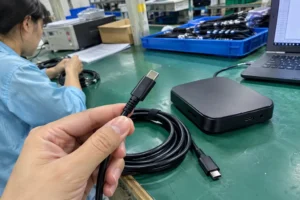
Ask each supplier for a company profile, factory address, main export markets, production capacity, available product versions and evidence of previous OEM/ODM work. A video call or factory audit can help confirm assembly, testing, aging and packing facilities. For larger orders, consider using a third-party inspection company or a sourcing representative to verify the supplier and production location.
Clarify whether the quoted product is an existing standard model or a customized design. OEM normally covers branding, packaging, labels and manuals on an existing product. ODM may involve changes to the housing, electronics, firmware, accessories or user interface. ODM projects can create stronger differentiation, but they require more engineering time, tooling decisions, testing and development budget.
Questions to ask before requesting a sample
- What is the MOQ for the standard product, custom logo and fully custom packaging?
- Can the supplier provide a neutral sample before branding?
- Which components are subject to change, and will the supplier notify you before substitution?
- Can the factory provide a bill of materials or at least identify battery and charging components?
- What are the sample fee, courier cost and sample lead time?
- What are the production lead time and payment terms at the intended order quantity?
4. Use samples to test the complete customer experience
Order samples from two or three shortlisted suppliers rather than approving the first attractive unit. Test the exact configuration you expect to sell, including the final receiver connector and supplied adapters. If possible, test a pre-production sample with your planned logo and packaging before mass production.
Run practical tests in locations similar to your customers’ use cases. Check pairing time, audio dropouts, voice clarity, background-noise reduction, latency, charging behavior and operation through walls or in a crowded wireless environment. Test both transmitters simultaneously if the kit supports two speakers. Record the microphone output and compare it with competing products in the same price segment.
Also check the details that often generate support tickets: whether the receiver is recognized by the target phone, whether the phone can charge while recording, whether the microphone works with common camera inputs, whether the case shows charging status and whether the user can recover from an accidental unpairing.
5. Confirm certification and market access
Certification is market-specific. A document supplied by a factory is not automatically valid for every destination, product variation or private-label configuration. Ask for the test reports and declarations relevant to the exact model, radio module, battery and charger supplied to you.
For European Union sales, check applicable CE requirements, including radio equipment obligations and restrictions on hazardous substances. Wireless equipment may also be affected by cybersecurity requirements under the EU Radio Equipment Directive framework. Importers should review the EU RED cybersecurity requirements guide and obtain current advice for the product category and intended sales date.
For the United States, verify the FCC requirements for the radio transmitter and the applicable authorization pathway before importation. Other markets may require local registration, labeling, importer information, battery transport documentation or additional testing. RoHS is relevant to restricted substances, but it should not be treated as a substitute for radio approval or electrical safety evaluation.
Ask the supplier to confirm:
- The exact model number and hardware revision covered by each report.
- Whether the report covers the transmitter, receiver, charging case and charger where applicable.
- Whether your logo, packaging or firmware changes could affect the documentation.
- Who will be named as manufacturer, importer or responsible economic operator.
- Which labels, user instructions and declarations must be included in each market.
6. Build a clear quotation and landed-cost model
Compare quotations on a like-for-like basis. A unit price may exclude the charging case, adapters, custom packaging, logo printing, testing, tooling, export cartons or shipping. Request a written quotation showing product configuration, packaging specification, MOQ, sample cost, production lead time, payment terms and validity period.
Your landed-cost model should include the factory price, China inland transport, export handling, freight, insurance where applicable, customs duties, import VAT or sales tax, inspection, marketplace preparation, warehousing and warranty allowance. Confirm carton dimensions, gross weight and quantity per carton because these affect freight and storage costs.
Incoterms and payment terms
Agree the Incoterm in writing and confirm the named place. EXW may leave the buyer responsible for more China-side arrangements. FOB can give the importer control of the international freight from the agreed Chinese port. DAP or DDP may simplify delivery, but you must understand who is responsible for customs clearance, duties, taxes and importer-of-record obligations. Incoterms do not replace a complete sales contract.
For initial orders, buyers commonly negotiate a deposit with the balance due after production and inspection, subject to supplier terms and commercial risk. Do not release the balance solely because cartons have been packed. Tie final payment to agreed inspection results and required documents where commercially practical.
7. Use a written QC plan before mass production
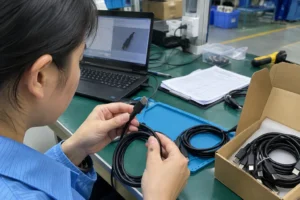
A wireless microphone QC plan should cover more than appearance. Approve a golden sample and a written specification sheet before production. Inspection points can include:
- Model, color, logo position and packaging artwork.
- Transmitter-to-receiver pairing and charging function.
- Audio output, microphone operation and noise-reduction mode.
- Connector fit and compatibility with the agreed devices.
- Battery charging, runtime sampling and abnormal-heat checks.
- Accessories, manuals, labels, serial numbers and carton marks.
- Cosmetic defects, assembly gaps, loose clips and damaged packaging.
For larger shipments, use a pre-shipment inspection based on an agreed acceptance standard. Retain production samples, carton photographs, inspection reports and shipment documents. If the product is private-labeled, confirm that the factory will not mix your packaging or accessories with another customer’s order.
8. Plan lead time, replenishment and after-sales support
Ask for separate lead times for samples, logo artwork, packaging production, assembly and final inspection. Standard models may move faster than customized products, while new molds, firmware changes or certification work can extend the schedule. Build in time for sample revisions, Chinese public holidays, freight delays and destination-market preparation.
Agree how the supplier will handle DOA units, missing accessories, battery failures, pairing faults and replacement parts. Request a spare-parts policy for clips, cables, windshields and charging cases. A short troubleshooting guide and clear pairing instructions can reduce support costs for Amazon and e-commerce sellers.
9. Choose the right product platform for your channel
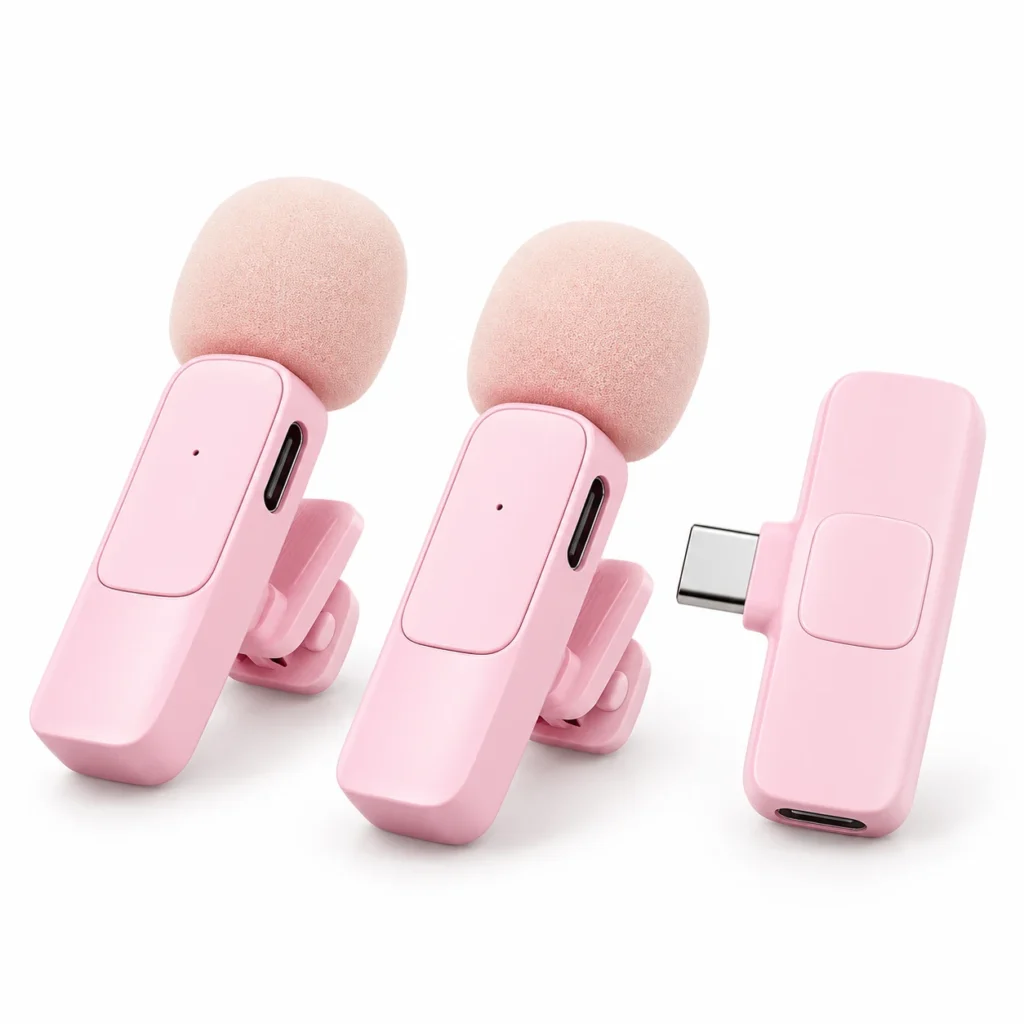
For a compact private-label program, review a ready-to-brand model such as the K9 wireless microphone and compare its configuration with your target devices, packaging and compliance needs. If your channel specifically requires a lavalier kit format, the S5 wireless lavalier microphone kit may also be relevant for comparison.
Do not approve either model—or any alternative—until the supplier confirms the exact specification, available customization, sample performance, documentation and production terms for your market. A product page is a starting point for evaluation, not a replacement for a technical quotation and sample approval.
Final sourcing checklist
- Define the target market, customer use case and device compatibility.
- Compare complete configurations and landed costs, not headline unit prices.
- Verify supplier identity, OEM/ODM capability, MOQ and production capacity.
- Test samples for audio quality, pairing, battery performance and real-world range.
- Confirm CE, FCC, RoHS and other applicable documentation for the exact model.
- Approve packaging, labeling, QC standards and a golden sample in writing.
- Agree Incoterms, payment milestones, lead time, inspection and after-sales responsibilities.
Ready to compare specifications and request a commercial quotation? View the wireless microphone product page and contact KingFuji with your target quantity, market, branding requirements and delivery terms.
Explore more options for your sourcing plan in our Microphones collection.