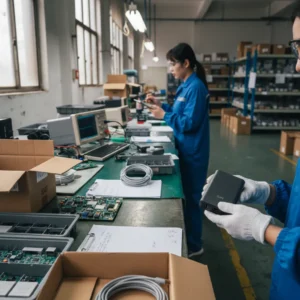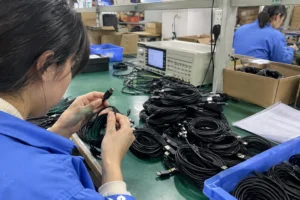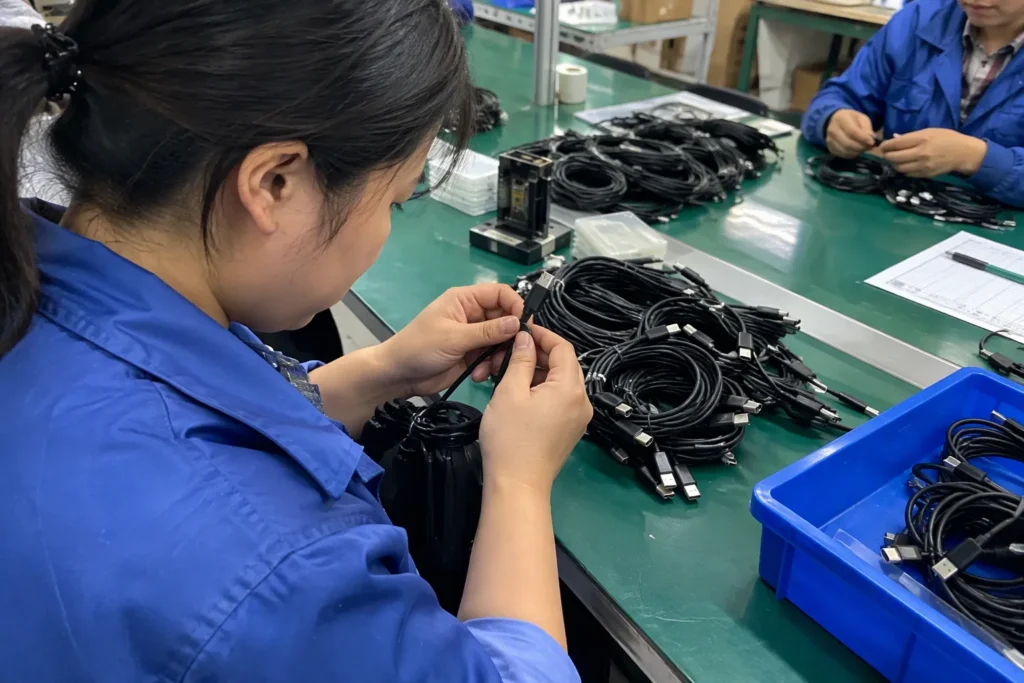
When I compare a custom USB cables manufacturer, I first look beyond the connector shape. Many buyers need a cable that charges, transfers data, fits retail packaging, and works with several devices, but unclear requirements can lead to wrong quotations, delays, and unsuitable stock. I use a structured specification and supplier review to reduce those risks.
Quick Answer
The right custom USB cables manufacturer should first understand the cable’s devices, purpose, charging and data requirements, construction, packaging, target market, and order volume. I recommend comparing suppliers through a written specification, samples, quotation details, production timeline, quality-control evidence, and batch consistency. USB-C identifies the connector form, not guaranteed performance.[1]
- Define whether the cable is mainly for charging, data transfer, or both.
- Confirm connector combinations, length, materials, appearance, and packaging.
- Ask for performance claims and supporting evidence separately.
- Approve a representative sample before mass production.
- Compare MOQ, lead time, pricing, customization, and after-sales support.
- Verify relevant certifications and declarations for the destination market.
In my experience with European and US retail buyers, the most expensive mistake usually happens before production begins. A buyer asks, “Can you make a USB-C cable?” The supplier says yes, but both sides may be imagining different products. The sections below explain how I turn a general request into a practical sourcing brief.
How Do I Evaluate a Custom Cables Manufacturer?
A supplier may offer attractive pricing and modern product photos, but those points do not prove that the supplier can deliver the exact cable consistently. I evaluate the supplier’s communication, specification control, sample process, documentation, and ability to meet commercial requirements.
I evaluate a custom cables manufacturer by checking whether the supplier can translate my use case into a clear specification, provide a relevant sample, explain the quotation, confirm production capacity and lead time, and maintain the approved standard across the batch.
I begin with the supplier’s questions
- Which devices will the cable connect?
- Is the main purpose charging, data transfer, or both?
- Which connector is required at each end?
- What length and outer diameter are needed?
- Does the cable need a braided jacket, PVC jacket, or another finish?
- Does the customer need a particular color, logo, label, or retail package?
- What quantity is expected for the first order and later replenishment?
- Which countries will receive the product?
- Does the product require special documentation for the destination market?
I pay attention to whether the supplier records the answers in a written specification. A conversation can be useful at the beginning, but it is not enough for production control. A written document gives both sides something to review when the quotation, sample, and bulk goods are compared.
I separate capability from marketing language
Words such as “premium,” “high quality,” and “fast charging” are not complete technical descriptions.[3] I ask the supplier to explain what each statement means and which document or test supports it.
For example, a supplier may describe a cable as suitable for fast charging. I still need to know the intended devices, claimed power conditions, and evidence behind the claim. I do not treat the phrase alone as a guarantee.
- Supplier claims — statements made in a quotation or product description.
- Sample observations — what I can inspect or test on the approved sample.
- Production records — documents showing how the batch was checked.
- Independent evidence — test reports, declarations, or certification records that buyers can verify.
- Applicable standards — requirements that may depend on the product and destination market.
These categories should not be mixed. A sample that looks good does not automatically prove every performance claim.[4] A certificate for one product or factory may not cover a different cable model.
I review commercial reliability
| Evaluation area | Questions I ask |
|---|---|
| MOQ | Can the supplier meet the first order quantity without creating excess inventory? |
| Lead time | Does the quoted time include materials, printing, inspection, and packaging? |
| Replenishment | Can the supplier support repeat orders with the same specification? |
| Packaging | Can the supplier provide the required barcode, language, warning, and carton details? |
| Customization | Are logo, color, mold, label, and package changes included or charged separately? |
| Quality control | What is checked before shipment, and how are defects recorded? |
| Communication | Does one person control the latest specification and approval status? |
| After-sales | What evidence is needed if the buyer reports a defect or shortage? |
I have seen quotation discussions take longer when a buyer requests packaging, logo printing, low MOQ, several colors, and a short lead time without identifying priorities. Those requirements may be possible individually, but the combination affects cost and scheduling. I therefore ask the buyer to rank the requirements as essential, preferred, or optional.
What Should I Specify Before Asking for a Quote?
A vague product request creates repeated questions and inconsistent quotations. I prepare a sourcing brief before I ask several suppliers to quote. The brief gives each supplier the same information and makes the proposals easier to compare.
Before requesting a quotation, I specify the cable’s use case, connector arrangement, length, construction, required charging and data functions, appearance, packaging, order quantity, destination market, and approval requirements.
I define the use case first
I start with the devices and the customer’s expected use. A cable for a phone charging display may have different priorities from a cable sold for laptop data transfer. A cable placed in a travel accessory range may need compact packaging and reinforced strain relief. A cable supplied with a device may need a different cost structure and labeling approach.
USB-C is a connector form, not a complete product description
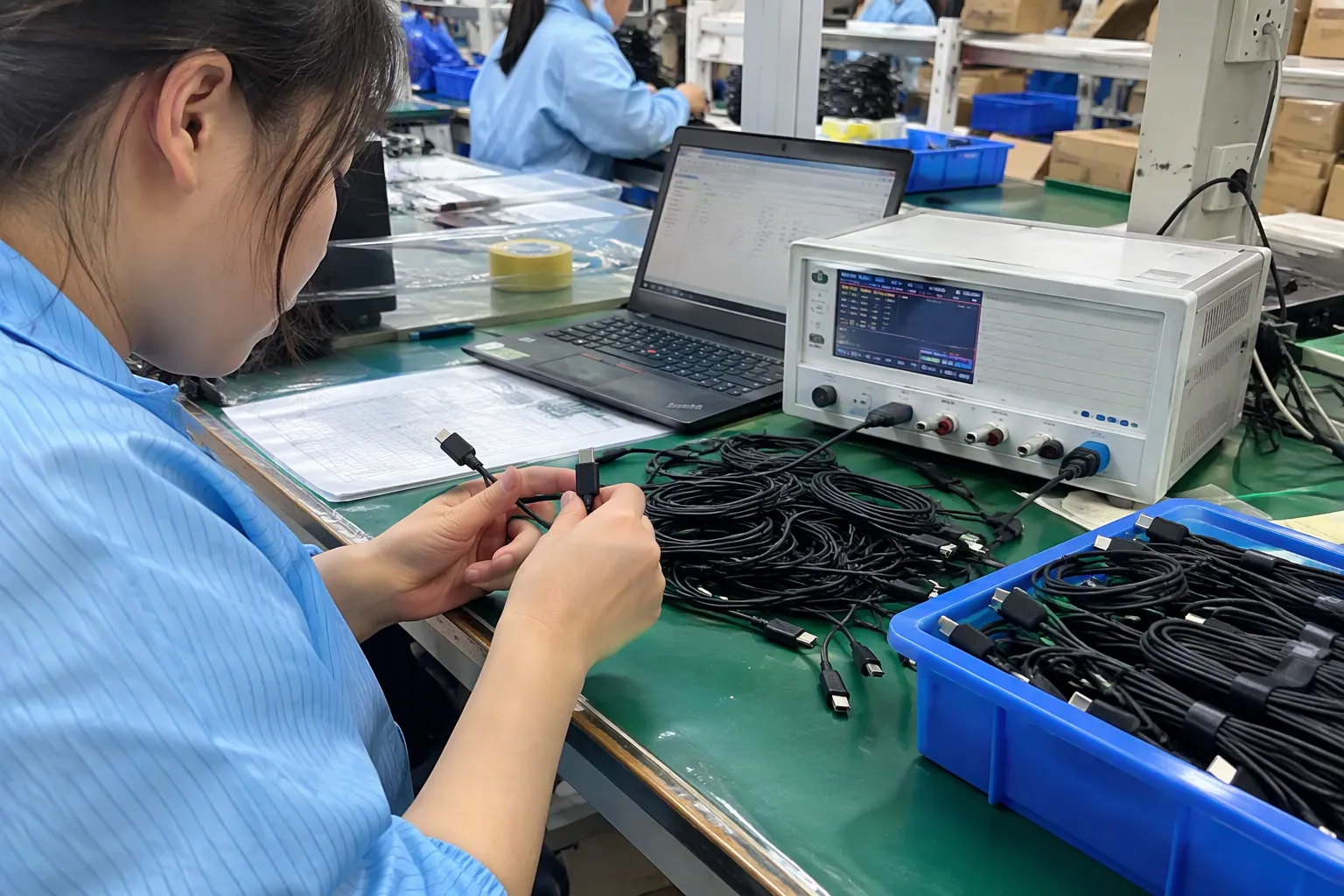
I always remind buyers that USB-C describes the physical connector family. It does not, by itself, confirm a particular charging capacity, data speed, display function, cable construction, or device compatibility.
A USB-C to USB-C cable can differ from another USB-C to USB-C cable in several important ways.[2] The same connector shape may appear on cables intended for different applications. Therefore, I ask the supplier to identify the exact intended functions and supporting evidence rather than relying on the connector name.
The USB Implementers Forum provides official information about USB technology and compliance programs. Buyers can review the organization’s resources at USB-IF. I use such sources for background verification, while I still ask the supplier to provide product-specific documents.
My basic specification checklist
Connection and size
- Connector at each end, such as USB-C to USB-C or USB-A to USB-C
- Reversible connector requirements
- Finished length and acceptable tolerance
- Cable diameter
- Bend and strain-relief preferences
- Connector housing shape and color
Materials and appearance
- PVC, braided textile, silicone, or other outer jacket
- Jacket color and weave pattern
- Metal, plastic, or other housing finish
- Logo method, position, and color
- Markings on the cable or connector
- Retail presentation and carton design
Function
- Charging as the main use
- Data transfer as the main use
- Charging and data transfer together
- Any additional function that requires separate confirmation
- Device compatibility expectations
- Whether the cable is intended for a specific accessory or product family
Commercial details
- Initial order quantity
- Expected annual or repeat quantity, if known
- Target price or price range
- Required sample date
- Target shipment date
- Destination countries
- Packaging quantity and carton requirements
- Inspection and approval process
I avoid asking for an unsupported universal claim
A request such as “USB-C cable with all functions” is not precise enough. It can cause suppliers to quote different constructions under the same product name. I prefer to ask for a defined function and then request evidence.
- “Please quote a cable intended mainly for charging between these devices.”
- “Please state which data function has been verified for this model.”
- “Please identify the conditions and documents behind the stated performance.”
- “Please confirm whether the quoted specification applies to the sample and the bulk production version.”
How Do I Compare Custom USB Cables Manufacturer Quotations?
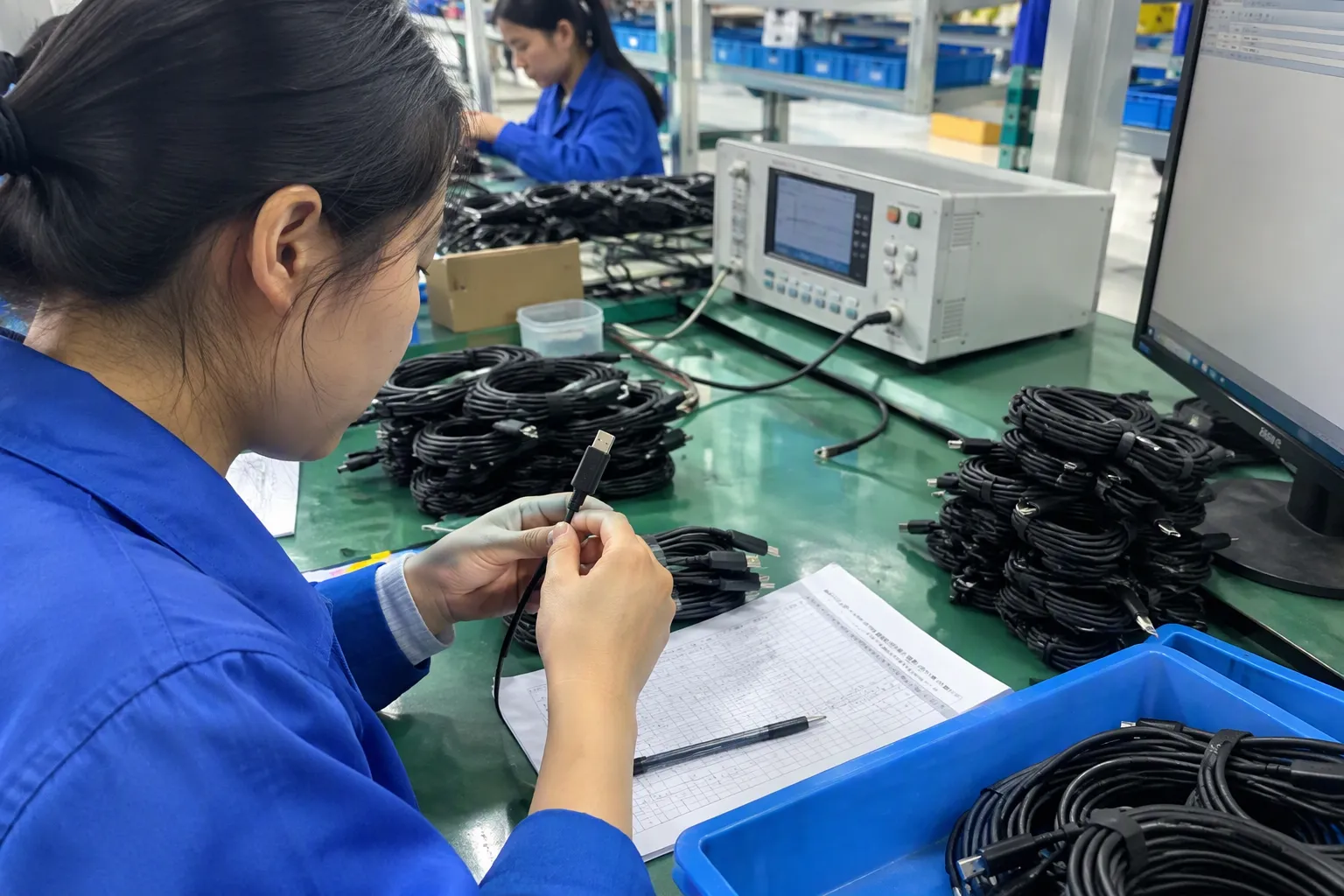
A low unit price can become expensive when it excludes packaging, tooling, testing, replacement materials, or realistic lead time. I compare quotations line by line instead of ranking suppliers by price alone.
I compare a custom USB cables manufacturer quotation by matching the exact specification, separating one-time and recurring costs, checking included packaging and documents, confirming MOQ and lead time, and identifying every assumption that could change the final price.
I request a quotation in a common format
| Quotation item | What I want confirmed |
|---|---|
| Model reference | The supplier’s model number and revision |
| Connector combination | Exact connector type at both ends |
| Cable length | Finished length and tolerance |
| Construction | Jacket, conductor description, shielding if relevant, and housing |
| Function | Charging, data, or other stated use |
| Customization | Logo, color, mold, label, and packaging |
| MOQ | Quantity per color, model, and package |
| Unit price | Currency, trade term, and price validity |
| Tooling | Mold or setup charges and ownership terms |
| Sample cost | Sample price, shipping, and whether it is refundable |
| Lead time | Sample production and bulk production separately |
| Inspection | Included checks and buyer inspection options |
| Documents | Available reports, declarations, or certificates |
| Warranty or remedy | Process for shortages, defects, and specification disputes |
I also ask whether the price is based on a particular material, packaging quantity, or order volume. A supplier may quote a low price for a standard package while the buyer expects a custom retail box. Clear assumptions prevent conflict later.
I separate one-time and recurring costs
- Sample development
- Logo setup or printing
- Connector mold or housing changes
- Special color matching
- Custom retail packaging
- Barcode or label preparation
- Testing or documentation
- Unit price
- Inner and outer carton costs
- Freight and export handling
I do not assume that a “custom cable” includes all of these items. I ask the supplier to show them separately. This method helps a buyer compare a standard product with a heavily customized product.
I review MOQ against the sales plan
MOQ is not only a supplier condition. It is also an inventory decision. A low price may require a large quantity per color or package, while a retailer may want a smaller launch order to test demand.
- The minimum sellable quantity.
- The expected sales speed.
- The number of colors or packaging versions.
- The shelf life of the design and packaging.
- The cost of holding extra inventory.
- The likely timing of the second order.
I ask whether the MOQ applies to the total order or to each variation. A supplier may accept 1,000 pieces in total but require 500 pieces per color. That distinction can change the real procurement plan.
I check lead time in stages
A short production estimate may not include sample approval or custom packaging. I prefer a simple timeline with dependencies. If a package artwork approval is late, the shipment date may also move. The buyer and supplier should identify this risk before accepting the order.
How Do Samples Reduce Custom Cable Procurement Risk?
A sample is not just a visual preview. It is the first physical reference for appearance, fit, labeling, packaging, and the agreed use. I use sample approval to find misunderstandings before the buyer commits to a full production quantity.
A sample reduces procurement risk when I compare it with the written specification, inspect construction and appearance, check the intended device use, record deviations, and require the supplier to confirm that the approved version will control bulk production.
I approve a sample against a written reference
- Supplier model and revision
- Cable length
- Connector arrangement
- Color and surface finish
- Logo size and position
- Package dimensions and printed content
- Included accessories
- Intended functions
- Visible construction details
- Any accepted deviations
If the supplier changes a material or component after approval, I ask for written confirmation and, where needed, a revised sample. A sample can lose its value if production uses a different construction.
I inspect practical details
- Connector fit with the intended devices
- Housing alignment
- Surface marks and printing quality
- Strain relief appearance
- Jacket consistency
- Braiding or molding finish
- Cable length
- Package presentation
- Label readability
- Carton quantity and packing arrangement
I do not present this visual review as laboratory testing. I treat it as a procurement check. If the buyer has application-specific electrical or safety requirements, I recommend evaluation by a qualified professional or an appropriate independent testing service.
I ask what the supplier checks in production
I ask the supplier to explain its production checks in practical terms. The answer should identify what is checked, when it is checked, and how failures are handled. I may request records or photographs where appropriate, but I do not assume that a document automatically proves the current batch meets every requirement.
The exact inspection plan depends on the cable design and the buyer’s requirements. I avoid inventing acceptance numbers when the application has not been technically assessed. For a retail program, I may recommend a documented pre-shipment inspection and a defined process for handling nonconforming goods.
I distinguish sample success from batch consistency
One working sample is encouraging, but it does not prove that every production unit is identical.[5] Batch consistency depends on materials, assembly controls, operator processes, inspection, and change management.[6]
- Will the same approved materials be used?
- Will the supplier notify the buyer before any component change?
- How will production units be sampled?
- How are rejected units isolated?
- Which records can the supplier provide?
- How will complaints be investigated?
How Should I Verify Quality, Compliance, and Documentation?
Retail buyers need more than a product photograph. They may need market-specific documentation, accurate labeling, traceability, and evidence that the supplier’s claims apply to the exact model being purchased.
I verify quality and compliance by identifying the destination-market requirements, matching documents to the exact product and supplier, checking document validity where possible, and separating certification claims from sample inspection and independent test evidence.
I identify the destination-market responsibilities
The correct documentation can depend on the product design, packaging, sales channel, destination country, importer status, and applicable regulations.[7] I do not assume that one document covers every market.[8]
For European sales, I review the product category and current obligations with the responsible importer or compliance professional. The European Commission provides general information through its Access2Markets portal, and buyers can also consult relevant national authorities.
For US sales, I ask the importer or responsible business team to confirm the applicable requirements. The US Consumer Product Safety Commission provides official consumer product information, but its resources do not replace product-specific professional compliance advice.
If a cable is supplied with a charger, power bank, electronic accessory, or retail package, the overall compliance question may be broader than the cable alone. I recommend reviewing the complete product arrangement.
I check whether a document matches the product
- Exact product model
- Connector combination
- Relevant product description
- Manufacturer or responsible company
- Test date
- Report number
- Applicable standard or test method
- Laboratory identity
- Scope and limitations
- Market or product coverage
- Consistency with the current sample and quotation
I do not treat the word “certified” as enough. Buyers should verify certifications and reports with the issuing organization where possible. They should also confirm that the document covers the exact product rather than a visually similar model.
I organize a document pack
- Approved product specification
- Final quotation
- Sample approval record
- Product photographs
- Packaging artwork approval
- Available test reports or declarations
- Material or component information where relevant
- Pre-shipment inspection record
- Packing list and shipment documents
- Corrective-action records for any approved deviation
I avoid overpromising technical performance
A supplier may know the product well, but a trading company should not present itself as a laboratory or electrical engineering authority. I can help translate the buyer’s application into a sourcing brief and request supporting evidence. I still recommend qualified technical evaluation for demanding applications.
- Charging capacity
- Data speed
- Video or display use
- Device-specific compatibility
- Safety performance
- Environmental resistance
- Long-term durability
- Compliance with a named standard
How Can I Build a Reliable Custom USB Cable Supply Program?
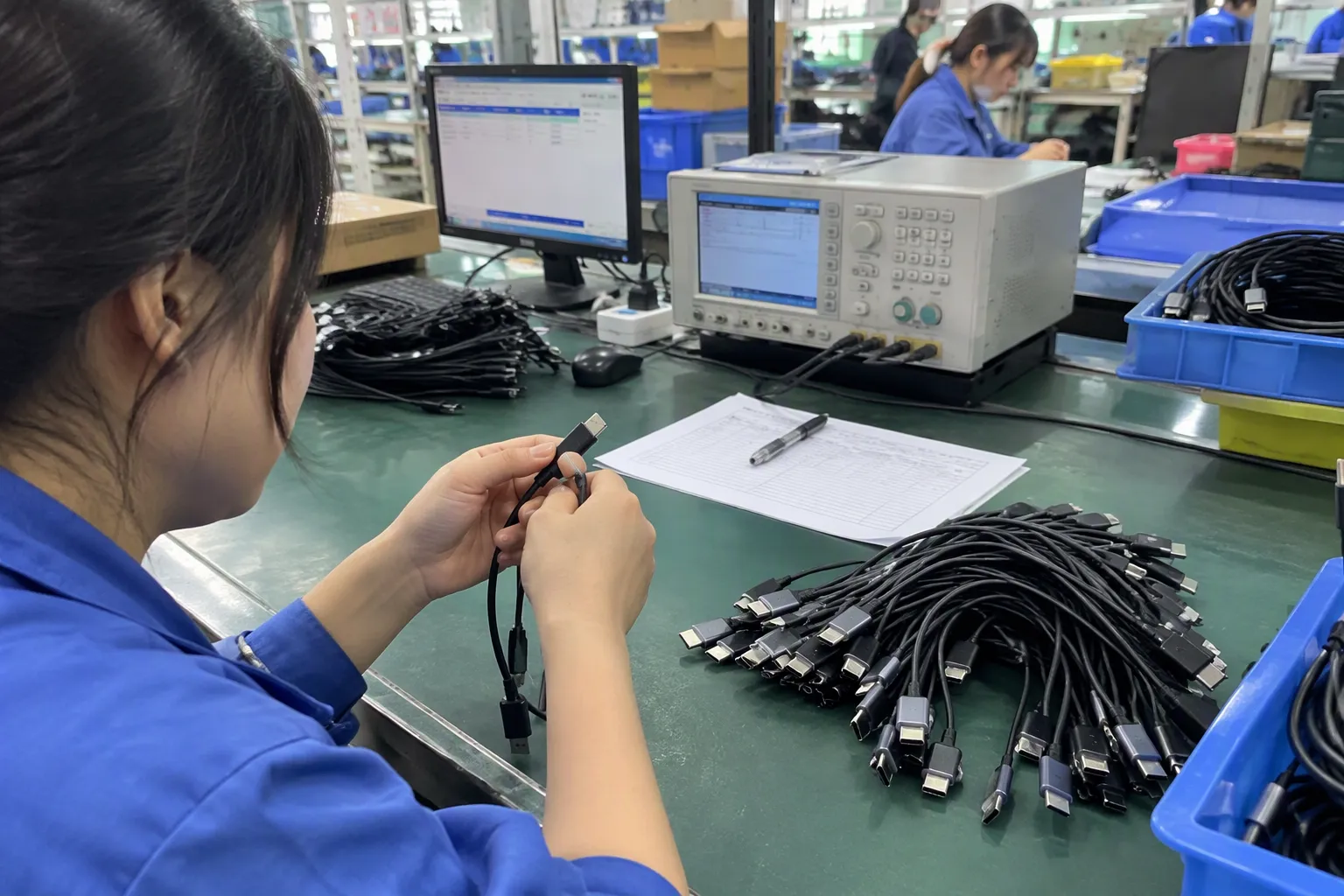
A successful first order does not automatically create a reliable supply program. Retail buyers need repeatable specifications, controlled changes, realistic forecasting, and a clear process for defects or customer complaints.
I build a reliable custom USB cable program by controlling the approved version, planning repeat orders, recording quality requirements, communicating changes in writing, and reviewing supplier performance after each shipment.
I control product revisions
- New connector housing
- Different jacket material
- Revised logo position
- New package language
- Updated barcode
- Changed carton quantity
- Different cable length
- New declared function
Without revision control, the buyer may approve one package while the supplier produces another. Even a small artwork change can affect marketplace listings, retail shelf presentation, or barcode scanning.
I plan repeat orders early
I ask the buyer to share a reasonable forecast when possible. The forecast does not need to be a firm purchase order. It helps the supplier understand whether the program is a one-time promotion or a continuing product line.
- Seasonal demand
- Retail promotion dates
- Ocean or air shipment planning
- Packaging production time
- Component availability
- Reorder quantity
- Acceptable substitute materials, if any
- Approval time for changes
I do not promise a fixed lead time without checking the actual order details. Custom packaging and special colors can affect production differently from a standard cable.
I use a supplier scorecard
| Category | Example review point |
|---|---|
| Specification accuracy | Did the supplier quote the requested model correctly? |
| Sample quality | Did the sample match the written brief? |
| Communication | Did the supplier answer questions clearly and promptly? |
| Delivery | Did the supplier meet the confirmed shipment date? |
| Batch quality | Did the goods match the approved sample? |
| Packaging | Were labels, cartons, and quantities correct? |
| Documentation | Were requested documents supplied and usable? |
| Problem solving | Did the supplier investigate issues with evidence? |
| Commercial fit | Did MOQ and pricing support the buyer’s sales plan? |
I define an after-sales process
- Required photographs or videos
- Sample quantities
- Product and carton identification
- Time limit for notification
- Technical review
- Replacement, credit, or other remedy
- Responsibility for shipping or sorting
- Corrective action for future batches
I keep customization commercially realistic
Customization can make a product more distinctive, but every extra variation adds coordination. Multiple colors, packages, connector housings, and logo positions can increase MOQ and create more opportunities for a packing error.
The buyer can expand the range after the initial products show stable demand. This approach can reduce inventory exposure and make supplier performance easier to measure.
Frequently Asked Questions
What does a custom USB cables manufacturer usually customize?
A supplier may customize cable length, color, jacket material, connector housing, logo, printing, retail packaging, labels, and carton configuration. The exact options depend on the supplier’s available materials and production process. I ask for a written confirmation of every customization because “custom” does not have one universal meaning.
Does USB-C guarantee fast charging or high-speed data?
No. USB-C describes a connector form. It does not automatically guarantee a particular charging level, data speed, display function, or compatibility result. I ask the supplier to state the intended functions separately and to provide product-specific evidence for important performance claims.
What should I include in a custom cable RFQ?
I include the device use case, connector arrangement, length, materials, appearance, main function, packaging, logo requirements, destination market, quantity, target timing, and required documents. I also ask suppliers to identify assumptions, MOQ by variation, sample cost, lead time, and any tooling or setup charges.
Should I order samples before placing a bulk order?
I strongly recommend approving a representative sample before mass production. I compare the sample with the written specification and record any accepted deviations. For important retail programs, I also ask how the supplier will ensure that bulk production matches the approved version.
How can I verify a supplier’s certifications?
I ask for the complete document, including the model, issuing organization, date, scope, and applicable standard. I then check whether the document applies to the exact cable and supplier. Buyers should verify certifications with the issuing organization where possible and obtain qualified compliance advice for their destination market.
Conclusion
Choosing a custom USB cables manufacturer requires more than comparing connector photos or the lowest unit price. I begin with the intended devices and use case, then define charging, data, construction, packaging, MOQ, lead time, and documentation requirements. I compare quotations on the same specification, approve a sample, and create a clear process for batch inspection and future changes. If you are sourcing USB cables for European or US retail, wholesale, or e-commerce sales, I can help turn your product idea into a practical quotation brief and supplier evaluation plan.
Sources
- USB Charger (USB Power Delivery)", USB Implementers Forum documentation distinguishes the USB Type-C connector and cable interface from separately defined USB transfer, power-delivery, and optional functional specifications
- USB Type-C® Cable Logo Usage Guidelines", USB-IF technical specifications describe multiple USB Type-C cable and connector capability classes, indicating that a common connector arrangement does not by itself define transmission speed or power performance
- FTC Policy Statement Regarding Advertising Substantiation", Consumer-protection guidance generally treats objective performance representations as claims that should be specific and supported by reliable evidence, whereas terms such as “premium” and “high quality” lack defined technical parameters
- Visual Inspection: A Review of the Literature", Conformity-assessment frameworks distinguish inspection, which examines observable characteristics, from testing, which determines specified properties through measurement or technical procedures
- Batch-to-Batch Quality Consistency Evaluation of Botanical ...", Statistical quality-control methods treat production output as subject to process variation and therefore use repeated measurements or representative sampling rather than a single accepted unit to assess batch conformity
- Real-Time Monitoring and Control of Additive ...", Quality-management literature identifies controlled materials and processes, verification activities, and documented change control as mechanisms for reducing variation and maintaining conformity in repeated production
- General Use Products: Certification and Testing", Official market-access and consumer-product guidance assigns compliance responsibilities and documentation requirements according to the product category, destination market, and roles of manufacturers, importers, or other responsible economic operators
- General Use Products: Certification and Testing", Conformity documentation is generally issued within a defined product, standard, and jurisdictional scope; compliance in one market does not automatically establish conformity with the requirements of another market