Quick Answer
Wireless power banks can create a costly compliance question for EU importers: does wireless charging mean the product falls under RED? The risk is that buyers may rely on a product label, a CE logo, or a generic supplier statement, then discover that the actual functions and documents do not match the SKU they plan to sell. **A wireless power bank is not automatically inside or outside RED scope simply because it offers wireless charging.
Importers should assess the exact product configuration, identify any radio communication functions such as Bluetooth, Wi‑Fi, cellular connectivity, or other transmitting and receiving features, and verify that the EU Declaration of Conformity covers the same model and functions being placed on the EU market.**
In our Shenzhen 3C export work, we often see the same question from EU buyers: “Does this wireless power bank need RED?” Our first answer is usually another question. Before we discuss documents, we need to understand what the product actually does beyond charging a phone.
Why Can’t RED Scope Be Decided From the Label “Wireless Power Bank” or the Presence of Wireless Charging?
A product name can hide important technical differences. Two wireless power banks may look identical in photos, yet one may only transfer power while another includes Bluetooth pairing, an app connection, location functions, or a wireless module. If we treat both as the same product, we may request the wrong documents.
Importers should not decide RED scope from the term “wireless power bank” or from wireless charging alone. The practical starting point is a complete function review: identify every component that sends, receives, or communicates through radio signals[2], then check whether the technical file and EU Declaration of Conformity match that exact product version.
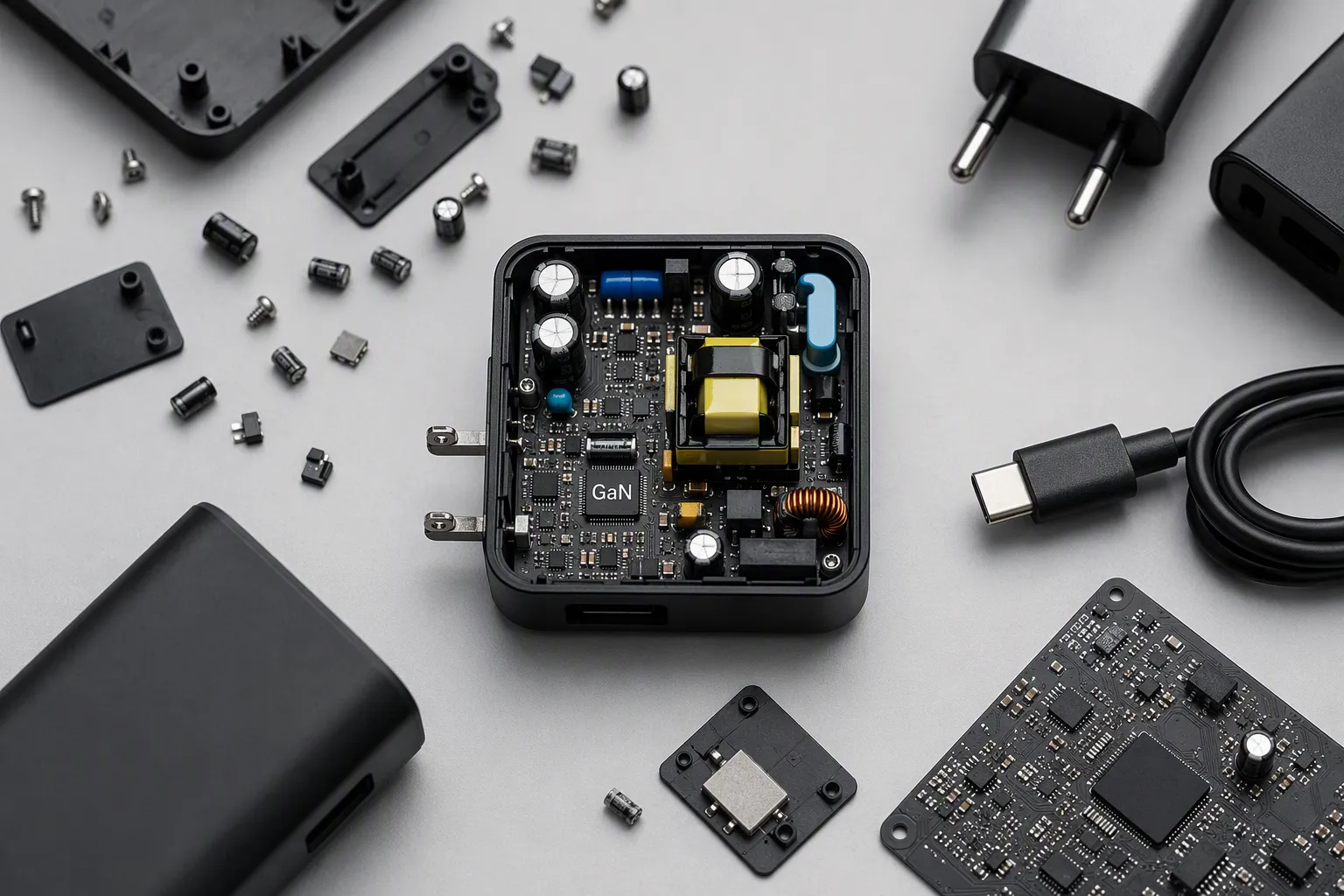
Start With the Actual Functions, Not the Sales Name
When a buyer asks us whether a wireless power bank requires RED, we do not begin with the product category. We begin with the function list.
The phrase “wireless power bank” usually describes a portable battery product that can charge a device without a cable. However, the product may include many other features. Some features are simple electrical or mechanical functions. Others may involve radio communication capabilities that need separate attention during the compliance review.
For procurement teams, this distinction matters because a retail listing or carton description may not show the full configuration. A supplier may use one marketing name for several versions of the same housing. One version may have only wired USB charging and wireless power transfer. Another version may add a Bluetooth-enabled speaker, a tracking function, a companion app, or a wireless control feature.
We have seen pre-sales discussions where the customer initially focused only on the charging function. Once we asked for the complete specification sheet, the conversation changed. The buyer learned that the factory offered optional modules under the same product family. That does not prove that any specific regulation applies. It does show why the product family name is not enough for a safe sourcing decision.
Before issuing a purchase order, we recommend that buyers request a written function list that covers the exact SKU. The list should include both visible and hidden functions.
A practical supplier questionnaire can include:
- Does the power bank support wireless charging only, or does it also exchange data or communicate with another device?
- Does the product contain Bluetooth, Wi‑Fi, NFC, cellular, GPS, RFID, or another radio-related module?
- Does the product connect to a mobile application?
- Does the product pair with a phone, earphones, speaker, smartwatch, or other accessory?
- Does the product contain a tracking, location, remote-control, or smart-device feature?
- Are there optional versions with different electronic boards or radio modules?
- Does the factory use the same model name for multiple configurations?
- Can the supplier provide a product specification that identifies the relevant module and version?
This review should include accessories when they are supplied as part of the retail product. For example, a bundled wireless earbud case, removable smart tracker, or app-connected accessory may change the compliance questions that an importer needs to ask.
Wireless Power Transfer Is Not the Same as Radio Communication
Buyers sometimes use “wireless” as one broad term. In practice, wireless charging and radio communication should not be treated as interchangeable concepts.
Wireless charging describes the transfer of power from a charger or power bank to a compatible device without a charging cable between them. Radio communication functions, by contrast, relate to a product’s ability to transmit, receive, pair, connect, or exchange information through a radio interface.
This difference is important because a buyer may see a wireless charging coil and assume that RED automatically applies. Another buyer may make the opposite assumption and conclude that a power bank cannot involve radio equipment because it is “only a battery.” Neither shortcut is reliable.
We encourage importers to document the distinction in their internal product review. This creates a clearer audit trail and gives the supplier less room to provide vague answers.
| Product feature | What an importer should ask | Why the question matters |
|---|---|---|
| Wireless charging pad | Is this function limited to power transfer, or does it include communication features? | The headline charging feature does not describe every function in the product. |
| Bluetooth connection | Does the product pair with a phone or another device? | Bluetooth is a radio communication function that requires specific documentation review.[3] |
| Wi‑Fi capability | Can the product join a network or communicate through an app? | A network connection can affect the applicable conformity assessment review. |
| NFC feature | Is NFC used only for identification, payment-related use, pairing, or another purpose? | The exact implementation should be described in the product documents. |
| Cellular module | Does the product contain a SIM, eSIM, or mobile network capability? | Cellular connectivity needs careful product-specific evaluation. |
| Optional smart accessory | Is the accessory included in the same retail package and covered by the same documents? | Bundled products may require a broader documentation check. |
A good sourcing file should not rely on verbal answers from a salesperson. We suggest that the buyer asks for the function list in writing and saves it with the quotation, purchase order, artwork approval, and compliance documents.
The key question is not “Is this called a wireless power bank?” The key question is “What functions does this exact product version perform, and which documents support those functions?”
Reframe the Question: “Which Requirements Apply to This Exact Version?”
Many importers begin with a reasonable but incomplete question: “Does it have CE?”
We understand why. CE marking is visible, familiar, and often requested by retailers, marketplaces, and customs-related teams. However, a CE mark by itself is not complete evidence that every relevant requirement has been considered for the exact product an importer will place on the market.
For wireless power banks, we encourage buyers to reframe the conversation. Instead of asking for a general “CE certificate,” ask the supplier to explain which EU requirements it believes apply to the specific model and which documents support that position.
This approach is more useful because it moves the discussion from a logo to a product-level review.
A supplier document pack may include different items, such as:
- An EU Declaration of Conformity;
- Test reports or technical assessments;
- Product specifications;
- Battery-related transport documents where relevant;
- Material or environmental declarations;
- Label artwork and packaging information;
- User instructions and safety information;
- Traceability details for the manufacturer, importer, model, batch, or production run.
Not every document proves the same thing. A test report is not automatically a complete declaration for the finished product.[4] A shipping document is not a market-compliance document. A CE logo on an image is not a substitute for a model-matched technical file.
In our daily export conversations, we try to keep this practical. Buyers do not need to become conformity specialists before they can source a product. They do need a process that helps them identify gaps before they commit to tooling, packaging, inventory, or a marketplace launch.
A useful internal review can follow this sequence:
-
Confirm the exact SKU.
Record the model number, capacity, color, charging inputs, outputs, battery type, included accessories, and all smart or radio-related features. -
Confirm the hardware configuration.
Ask whether the PCB, charging coil, firmware, radio module, antenna, or accessory differs from the version described in the documents. -
Map every declared function.
Compare the product page, instruction manual, packaging claims, quotation, and specification sheet. These materials should not describe functions that the compliance documents ignore. -
Request the EU Declaration of Conformity.
Check whether it identifies the correct manufacturer, model, and relevant product description. -
Escalate unclear cases.
If the product includes radio functions, unusual accessories, or conflicting documentation, ask a qualified compliance professional for product-specific advice before placing the goods on the EU market.
This process is especially important for private-label buyers. A buyer may change the brand name, packaging, plug configuration, bundle contents, or product description. Those changes can create a mismatch between the product being sold and the documents that were originally supplied.
Ask for an EU Declaration of Conformity That Matches the SKU
The EU Declaration of Conformity, often called the DoC, is one of the first documents we recommend buyers request.[5] However, receiving a file called “DoC” is not the end of the review.
The key issue is whether the declaration corresponds to the actual wireless power bank that will be imported, labelled, and sold.
A generic declaration may cover a broad product description without making the model relationship clear. It may show a model number that differs from the quotation. It may refer to a version without the Bluetooth or Wi‑Fi feature shown in the buyer’s sales materials. It may also be issued by an entity that does not clearly match the manufacturer or responsible party identified elsewhere in the supply chain.
Importers should compare the DoC with the actual commercial product details.
| Document-checking point | Questions for the buyer | Warning sign |
|---|---|---|
| Model number | Does the DoC show the exact SKU or a clearly traceable model family? | The model on the document does not appear on the quotation, packaging, or product label. |
| Product description | Does the description reflect the actual functions? | The document says “power bank,” but the product is marketed with Bluetooth, app, or tracking features. |
| Manufacturer details | Are the legal entity name and address consistent with supplier information? | The supplier cannot explain the relationship between the factory and the entity on the document. |
| Date and signature | Is the declaration complete and appropriately issued? | The file is unsigned, incomplete, or appears to be a marketing template. |
| Product version | Does it cover the same board, battery, firmware, and included accessories? | The supplier says, “It is basically the same,” without written technical confirmation. |
| Supporting evidence | Can the supplier provide related reports or technical information when needed? | The supplier provides only a CE image or a one-page claim. |
We also recommend that buyers ask the supplier a direct question: “Does this DoC cover every function in our final product configuration?”
This wording is more useful than asking, “Can you provide CE?” It forces a clearer answer and gives the supplier a chance to identify optional features, different boards, or excluded accessories.
A private-label brand should also check its own product claims.[6] If packaging says “Bluetooth finder,” “smart tracking,” “app-controlled,” or “wireless connected,” the brand should make sure those claims match the model documentation. Marketing teams often work from catalog wording, while compliance documents may relate to a basic version. That gap should be resolved before mass production.
Review Product Changes Before Reordering
Compliance review is not only a first-order task. It should be repeated when the product changes.
Wireless power banks often evolve during the sourcing process. A customer may request a new capacity, a different battery cell, a magnetic ring, faster wired charging, a revised display, a new PCB, or custom packaging. Some changes may be commercially minor but technically meaningful. A revised board or added wireless module, for example, can affect whether prior documentation still matches the product.[7]
We recommend a change-control process for every reorder and customized project. It does not need to be complicated. It needs to be consistent.
Before approving production, ask the supplier:
- Has the internal PCB changed since the approved sample?
- Has the battery cell supplier or battery specification changed?
- Has the wireless charging coil changed?
- Has any Bluetooth, Wi‑Fi, NFC, tracking, or app function been added, removed, or updated?
- Has the firmware changed?
- Are the user instructions still accurate?
- Does the existing DoC still apply to this configuration?
- Has the label layout changed, including model number or traceability information?
- Are bundled cables, adapters, or smart accessories different from the prior order?
A small written confirmation can reduce future confusion. We often suggest that buyers include the approved model number, version, and declared functions in the purchase order or product specification attachment. This is useful when different teams handle sales, engineering, production, and documentation.
For larger projects, buyers may want to retain a sample from the approved production run. The retained sample can support later comparison if there is a question about construction, labeling, or function.[8]
Build a Supplier Evaluation Process That Goes Beyond “Certified”
A supplier that says “our wireless power banks are certified” may be trying to help, but the statement is too broad for an importer’s decision-making process.
Buyers need evidence that is tied to the precise product. They also need a supplier that can answer questions clearly, update documents when configurations change, and coordinate between sales, engineering, and quality teams.
As a trading company with long-term experience serving EU-bound 3C buyers, we see documentation coordination as part of the pre-sales process. We can help buyers gather product information, clarify available configurations, and request documents from the relevant supply chain parties. However, we do not act as a notified body, test laboratory, or legal adviser. Final applicability and conformity should be confirmed product by product, with qualified compliance professionals where needed.
When evaluating potential suppliers, we suggest looking at the following areas.
Documentation responsiveness
A reliable supplier should be able to identify:
- The exact model number;
- The factory or manufacturer behind the product;
- Available versions and optional functions;
- The documents available for each version;
- Any limits or exclusions in the existing document pack.
A slow or unclear response does not automatically mean the product is non-compliant. It does mean the buyer should pause before making broad compliance claims or committing to a launch date.
Configuration control
The supplier should have a method for distinguishing similar products. Buyers should be cautious if the supplier uses one model number for visibly or functionally different products.
For example, a standard power bank and an app-connected version should not be treated as interchangeable simply because they share the same outer housing. The buyer needs traceability from the final SKU to the documents and approved sample.
Quality-control alignment
Compliance documents and manufacturing quality control should support each other. During pre-shipment inspection, buyers can check visible items such as model numbers, labels, packaging language, included accessories, charging ports, and claimed functions. A visual inspection cannot replace technical conformity assessment, but it can identify obvious mismatches.
For private-label projects, a practical inspection checklist may include:
- Confirm the product model matches the approved order.
- Confirm the retail box matches the approved artwork.
- Confirm the instruction manual describes the final functions.
- Confirm included accessories match the declared package contents.
- Confirm visible markings and traceability details are present as required for the product plan.
- Confirm no unapproved Bluetooth, Wi‑Fi, or smart-function claims appear on the box or listing materials.
This is where procurement, quality, and marketing teams need to communicate. A product may pass a basic functional inspection but still create a documentation issue if its retail claims describe a feature not covered by the product file.
Frequently Asked Questions
Does wireless charging automatically mean a power bank falls under RED?
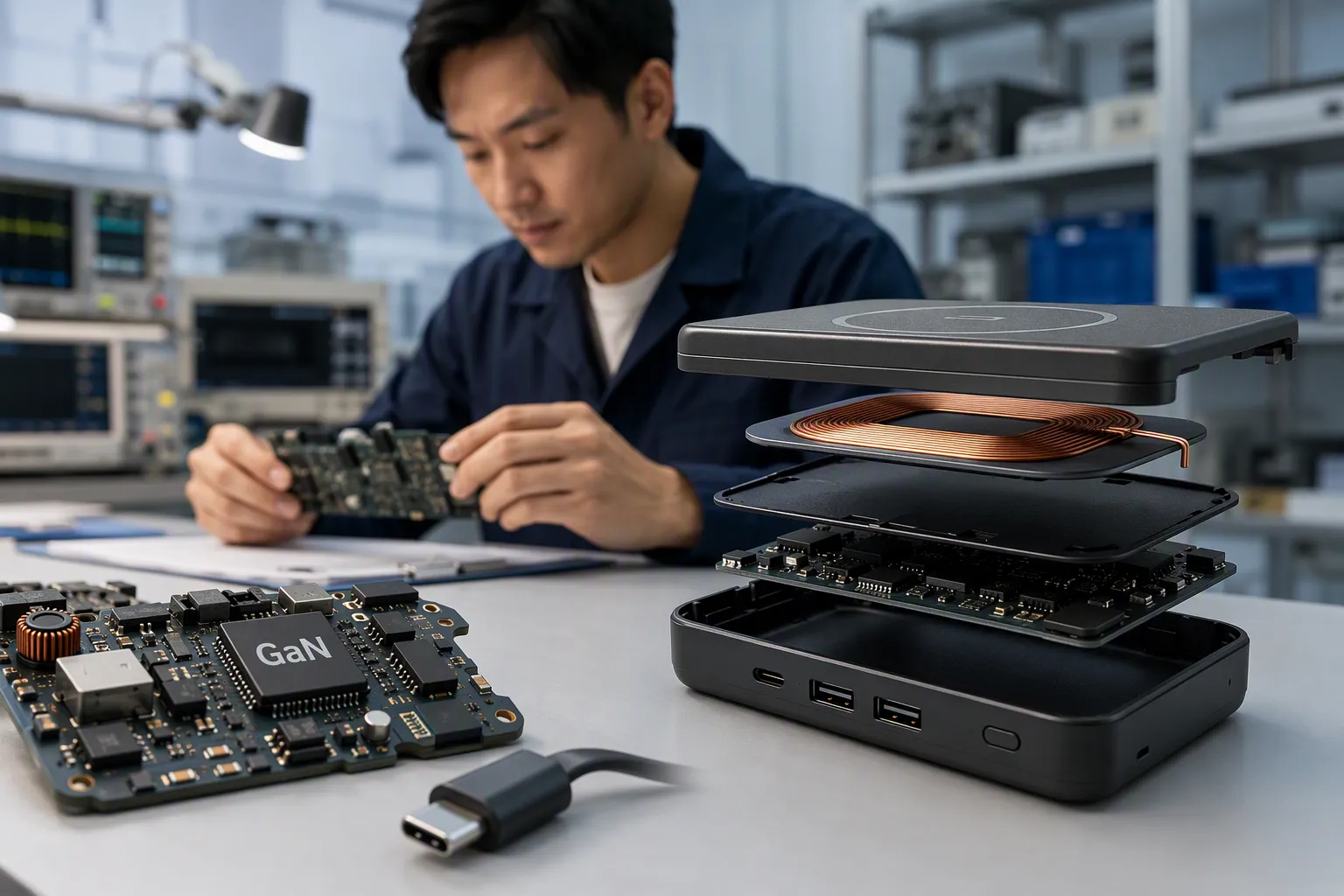
No. Wireless charging alone should not be treated as an automatic answer.[1] We recommend that importers review the exact product functions, including whether the product also has Bluetooth, Wi‑Fi, cellular, NFC, tracking, app connectivity, or another radio communication feature.
Is a CE mark enough for importing wireless power banks into the EU?
A CE mark is not standalone proof that all relevant requirements have been met for a specific product configuration. Importers should request model-matched documentation, including an EU Declaration of Conformity where applicable, and verify that the documents cover the actual functions and version being sold.
What should I ask a supplier before buying a wireless power bank?
We suggest asking for the exact SKU, complete function list, technical specification, EU Declaration of Conformity, available test documentation, packaging artwork, user instructions, and written confirmation of whether the documents cover the final version, accessories, and declared functions.
What if the supplier’s DoC shows a different model number?
The buyer should not assume it applies automatically. Ask the supplier to explain the relationship between the documented model and the product being purchased. If the connection is unclear, obtain qualified compliance advice before placing the product on the EU market.
Can private-label packaging create a compliance problem?
It can create risk if the packaging or online listing claims functions that do not match the supplied product documents. We recommend reviewing packaging, manuals, listings, and the DoC together before production so that model numbers, functions, and traceability information remain consistent.
Conclusion
For EU buyers, wireless power banks require a function-based sourcing review rather than a label-based assumption. Wireless charging does not by itself answer the RED question. Importers should identify every communication function, confirm the exact product configuration, and request documentation that matches the final SKU and its declared features. If you are sourcing wireless power banks for the EU market, we can help you clarify product configurations, coordinate supplier documents, and prepare a more structured pre-purchase review before you place an order.
Sources
- L_2014153EN.01006201.xml - EUR-Lex - European Union", Directive 2014/53/EU defines radio equipment by its intentional use of radio waves for radio communication or radiodetermination; this definition supports assessing a wireless-charging product by its functions rather than by the word “wireless” alone
- Radio Equipment Directive (RED)", The RED requires manufacturers to assess the conformity of radio equipment and prepare technical documentation before placing it on the market, supporting a function-by-function review of the actual product configuration
- List of Products Covered by the Radio Equipment Directive ...", Bluetooth is a radio-based wireless communication technology; when incorporated into a product, that functionality is relevant to assessment under the RED definition of radio equipment
- Questions on your rights in the EU? Or your obligations?", Under the RED conformity framework, test evidence may form part of technical documentation, whereas the EU Declaration of Conformity is the manufacturer's separate formal declaration that the product meets applicable requirements
- EU - Import Requirements and Documentation", Directive 2014/53/EU requires an EU Declaration of Conformity for compliant radio equipment and assigns importers responsibilities to verify that the relevant conformity-assessment process has been completed
- The Blue Guide on the implementation of the product rules ...", The RED requires radio equipment to be accompanied by required information and instructions, supporting the need to ensure that claimed functions and product information correspond to the product covered by conformity documentation
- The Blue Guide on the implementation of the product rules ...", The European Commission's Blue Guide explains that substantial modifications affecting compliance can require a new conformity assessment, supporting re-examination of documentation when a board or wireless functionality changes
- Documentation and Records: Harmonized GMP Requirements", Quality-management principles emphasize traceability and retention of objective evidence, which can make an approved production sample useful for later comparison of product construction, labeling, and declared features