Quick Answer
USB-IF certification for power banks can be difficult to evaluate because supplier claims often sound simpler than the evidence behind them. A buyer may see “USB-C[3],” “PD fast charging,” or “USB-IF tested” and assume the entire power bank is certified. We recommend separating the product claim, port function, test evidence, and permitted marketing wording before making a sourcing decision.
USB-IF certification for power banks is not a universal yes-or-no label for an entire product.[1] Buyers should ask what exact model, port, USB function, or implementation has been evaluated, which document supports the claim, and whether the supplier is authorized to use the related wording or logo. A USB-C or USB-PD feature alone does not prove USB-IF certification, logo rights, or certification status for the complete power bank.[2]
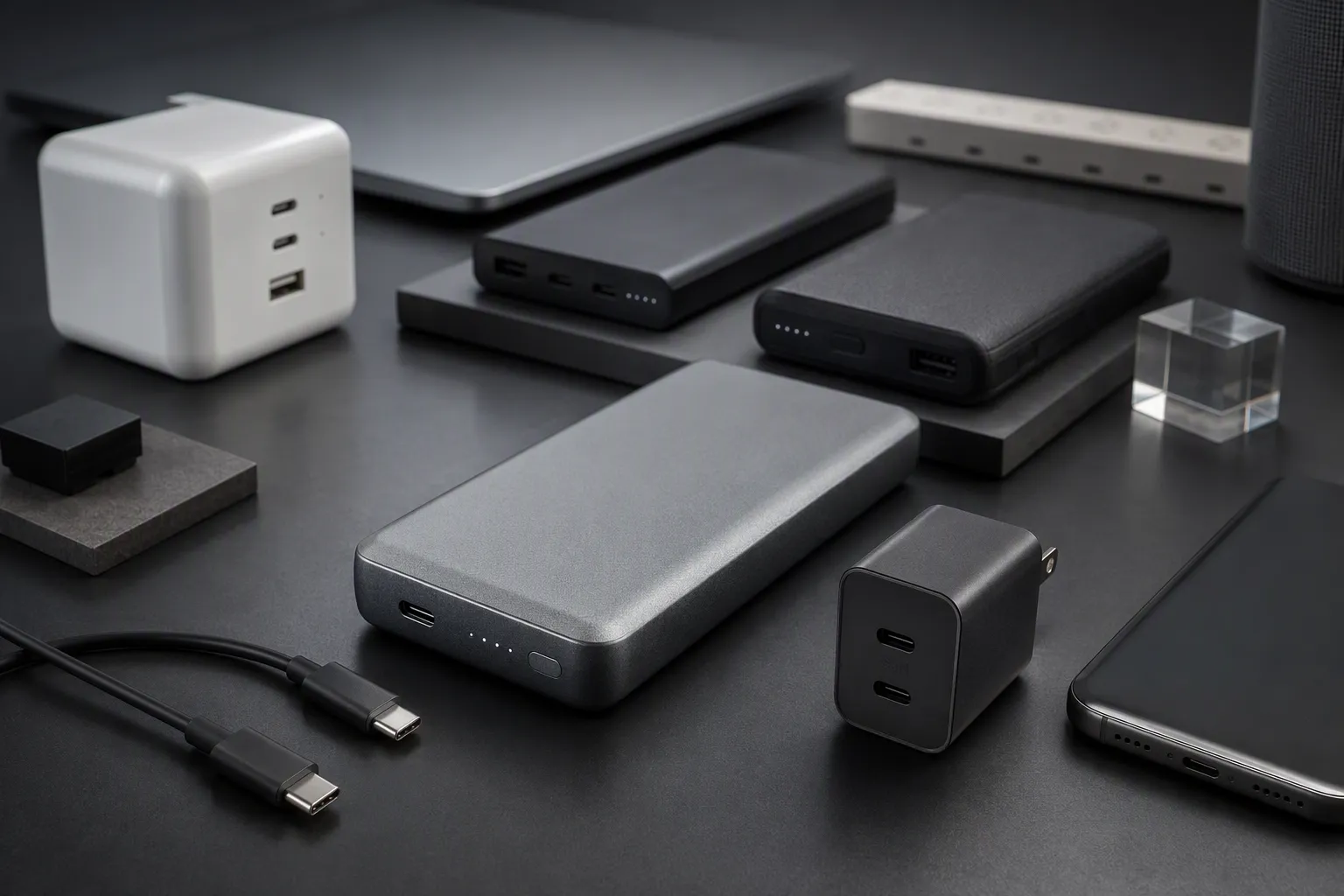
In our Shenzhen export business, we have spent 15 years discussing product documents with overseas buyers. We often find that the real sourcing risk is not whether a power bank can charge a phone. The risk is whether the supplier’s claim is specific enough to survive a retailer review, marketplace listing check, customer question, or post-purchase dispute.
For power banks, “USB-IF certified” is not a yes/no product attribute: what must buyers identify
When we hear a buyer ask, “Is this power bank USB-IF certified?” we understand the concern. The buyer wants a simple answer before placing an order or adding a product to a retail range. However, a simple answer can hide important details about the model, USB port, charging protocol, supporting evidence, and marketing claim.
Buyers should identify exactly what the USB-IF certification claim covers: the complete power bank model, a specific USB-C port, a USB Power Delivery implementation, a cable, a component, or a separate test result. They should then match that scope to the supplier’s model number, configuration, document, packaging wording, and online listing language before accepting the claim.
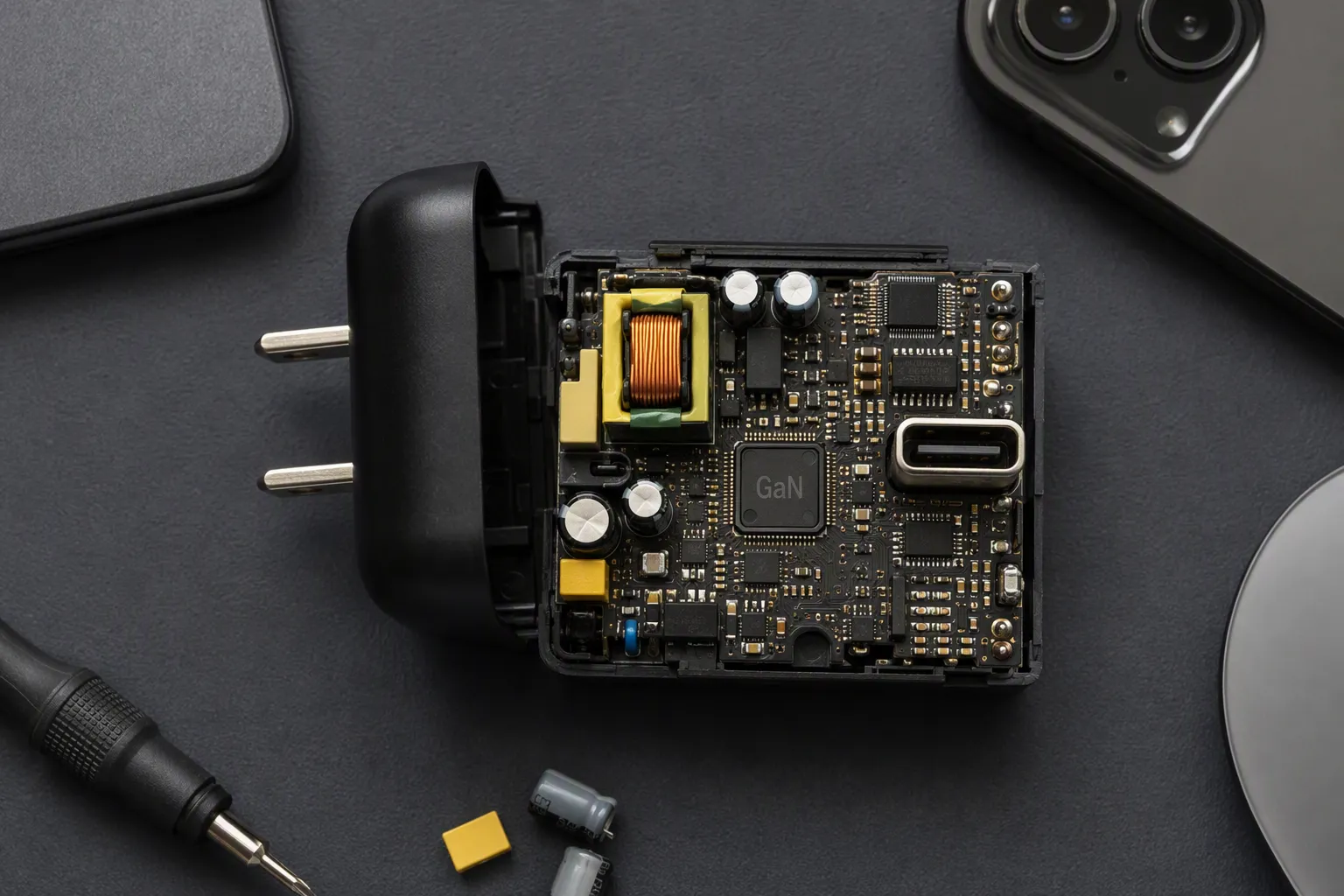
The most reliable approach is not to reject every USB-related claim. We instead recommend that buyers make each claim traceable. A supplier may have a well-functioning product and useful test evidence, yet still use wording that is too broad for the evidence provided. That gap can create unnecessary commercial risk.
Start with the right procurement question
We encourage buyers to replace this broad question:
“Is this power bank USB-IF certified?”
With a more useful set of questions:
- What exact product or function does the claim apply to?
- What is the full model number and configuration?
- Which physical port is involved?
- Does the evidence concern USB-C, USB Power Delivery, a cable, charging performance, or another function?
- What document supports the statement?
- What wording does the supplier intend to use on the product, packaging, quotation, and product page?
- Can the supplier show that the claim is appropriate for the exact sales configuration?
This is a practical change in mindset. It moves the discussion away from a general badge and toward evidence that a purchasing team can review.
In our sales conversations, buyers sometimes receive a PDF titled “USB test report” and assume that it resolves every USB-related question. We recommend more caution. A report may be useful, but its value depends on its scope. It may cover only certain test items, a specific sample, a particular port, or a defined electrical condition. It does not automatically establish broader certification status, trademark permission, or marketing rights.
USB-C, USB-PD, fast charging, and USB-IF certification are different concepts
These terms are related, but they should not be treated as interchangeable.
| Term | What it generally describes | What it does not prove by itself |
|---|---|---|
| USB-C | A connector format and related USB ecosystem terminology | That the full power bank has USB-IF certification or that every USB-C feature is supported |
| USB Power Delivery (USB-PD)[4] | A charging and power-negotiation protocol used in compatible devices | That every port, cable, charger, or complete product has the same verified status |
| Fast charging[5] | A broad commercial description of charging at higher power or through a supported protocol | A specific USB-IF certification, logo right, or compatibility outcome for every device |
| Third-party test report | Evidence from a laboratory or test provider for stated samples and test scope | Automatic USB-IF certification, logo authorization, or unrestricted marketing claims |
| USB-IF certification claim | A claim that should be evaluated against the applicable USB-IF program and evidence | A universal mandatory approval for all power banks sold in Europe or North America |
A power bank can have USB-C ports. It can support USB-PD input or output. It can provide fast charging under certain conditions. It can also have a third-party test report. Each statement may be relevant to a buyer.
However, none of those facts should be used as a shortcut to make a broader claim without checking the official basis for that claim.
For example, a power bank may offer a USB-C output port and advertise a maximum output level. That statement relates to a product feature. A buyer still needs to ask whether the supplier is presenting that feature as a USB-IF certification claim, and whether the documents support the exact wording used.
Check the complete product configuration, not only a familiar component
Power banks often have several variables that affect sourcing documentation:
- Battery cell capacity and rated energy
- USB-C input port function
- USB-C output port function
- USB-A output port function
- USB-PD profiles or other supported charging protocols
- Wireless charging function, if included
- Integrated cables
- Included retail cable
- Display, button, or firmware version
- Housing, label, packaging, and regional plug or accessory configuration
We recommend that buyers request the exact commercial model number rather than accepting a generic series name. Similar-looking power banks can have different port combinations, different maximum output ratings, or different internal configurations.[7]
A supplier may show documents for one version while quoting another. This does not necessarily mean that the supplier is acting in bad faith. Product families often evolve, and sales teams may use general descriptions. Still, the buyer should not assume document coverage transfers automatically between versions.
A useful internal rule is simple:
Build a claim-to-evidence map before approving the product listing
For retailers, importers, wholesalers, and e-commerce sellers, we recommend creating a short claim map. This can be part of supplier onboarding, product development, or listing approval.
| Supplier claim | Buyer verification question | Evidence to request | Listing risk if unclear |
|---|---|---|---|
| “USB-C power bank” | Which port is USB-C, and is it input, output, or both? | Product drawing, port specification, model photo | Customers may misunderstand functionality |
| “PD power bank” | Which port supports USB-PD, and under which stated conditions? | Technical specification, port table, applicable test evidence | Broad claims may exceed the product’s actual function |
| “Fast charging” | What charging protocol and output conditions support this claim? | Product specification and qualified technical review | Vague performance language can lead to returns |
| “USB-IF certified” | What exact program, product scope, and model does this refer to? | Supplier explanation and official-source verification | Channel, trademark, and buyer-trust issues |
| “USB tested” | What test was performed, by whom, and on which sample? | Full report, not only the cover page | A limited report may be presented as broad approval[6] |
| USB-related logo on packaging | Is the logo or wording permitted for this product and use? | Written basis and official-source review | Packaging rework or listing takedown risk |
This table does not replace legal, technical, or compliance advice. It gives a purchasing team a practical starting point. For application-specific decisions, we recommend qualified professional evaluation and direct verification with official USB-IF resources.
Review the document itself, not only the certificate title
A document title can be misleading when it is reviewed without context. We recommend asking for the full document set where commercially appropriate, while respecting legitimate confidentiality concerns.
A buyer should look for basic matching points:
- Applicant or manufacturer name
- Factory name and address, where relevant
- Model number or clear product identification
- Port configuration
- Issue date and validity information, if applicable
- Test standard or program reference
- Sample description
- Scope and limitations
- Laboratory or issuing organization
- Any statement about what the report does and does not cover
We also suggest that buyers compare the document against the physical product and quotation:
- Does the document show the same USB-C port count?
- Does the rated output match the quoted specification?
- Does the sample description match the capacity version being purchased?
- Does the document refer to an integrated cable that the quoted product does not include?
- Does the retail packaging use claims that are broader than the supplier’s evidence?
These checks are not difficult, but they are often skipped when a buyer is under pressure to launch a product quickly.
In our experience, early clarification is much less expensive than revising packaging after printing, editing hundreds of marketplace listings, or explaining inconsistent claims to a retail customer.
Treat logos and certification language as controlled commercial claims
A product can be technically capable and still present claim-management issues. This distinction matters because packaging and online listings are commercial communications, not merely technical documents.
We recommend that buyers review all customer-facing language, including:
- Front and back packaging panels
- Instruction manuals
- Amazon, Walmart, Shopify, and other marketplace listings
- Product images and infographics
- Catalogue pages
- Sales presentations
- Distributor specification sheets
- Retailer data feeds
- Social media advertisements
Words such as “certified,” “compliant,” “approved,” “tested,” and “compatible” should not be used casually. Each word may suggest a different level of evidence to a customer, retailer, or channel reviewer.
For USB-IF certification for power banks, we suggest that the buyer asks the supplier to provide the proposed wording, not only the underlying document. A quotation may say “USB-C PD power bank,” while a packaging draft says “USB-IF Certified.” Those are not automatically equivalent statements.
We do not present ourselves as a USB-IF laboratory, certification body, or trademark authority. We instead recommend that buyers verify current program requirements, logo rules, certification status, and permitted claims directly through official USB-IF sources. Rules, programs, databases, and trademark conditions can change, so buyers should avoid relying on old screenshots, informal statements, or documents from unrelated models.
Why vague claims create commercial risk even when the product works
Many disputes begin with wording, not with a complete product failure.
A power bank may charge a smartphone successfully, and its USB-C port may work as described in normal use. Yet the supplier’s broad “USB-IF certified” claim may still create problems if the buyer cannot show what was certified, what product version was involved, or whether the claim applies to the exact retail configuration.
The commercial consequences may include:
- Retailer compliance teams delaying approval
- Marketplace reviewers requesting additional evidence
- Packaging changes after production
- Customer-service questions about compatibility
- Product-page corrections
- Distributor disagreements over specifications
- Loss of buyer confidence
- Return or dispute arguments when customer expectations differ from actual performance
For importers and chain retailers, this issue is especially important because product data moves through many people. A factory may provide a short claim. A trading company may repeat it in a quotation. A buyer may put it into a product information management system. A retailer may shorten it again for a shelf label. By the time the customer sees the claim, the original scope may be lost.
We recommend controlling that chain from the beginning. A clear statement such as “USB-C output with specified USB-PD support on the listed port” is often more useful than a vague certification phrase that the supplier cannot map to evidence.
Use a practical supplier verification workflow
We recommend a five-step workflow for USB-related power bank claims.
1. Freeze the product identity
Ask for a product identification sheet that includes:
- Model number
- Capacity version
- Port layout
- Input and output ratings
- Supported charging functions
- Included cable or accessory details
- Packaging version
- Product photos or drawings
This first step prevents the common mistake of reviewing documents for a similar but different model.
2. List every customer-facing claim
Create a list of all statements planned for:
- Packaging
- Online listings
- Sales quotations
- Catalogues
- Product manuals
- Retailer data sheets
We recommend including claims that seem obvious, such as “USB-C,” “PD,” “fast charge,” and “certified.”
3. Ask the supplier to map each claim to evidence
For each claim, ask the supplier to provide:
- The exact claim wording
- The relevant model or configuration
- The affected port or function
- The document supporting the statement
- Any limitation that should appear in the listing
- Confirmation of whether logo use or certification wording requires separate verification
This process is simple enough to use during quotation, but it is much more effective than asking for “all certificates.”
4. Review gaps before production
If the supplier cannot map a claim clearly, the buyer has several options:
- Remove the claim
- Narrow the wording
- Request more evidence
- Use a different model
- Ask for qualified technical or legal review
- Delay the claim until official verification is complete
We believe that a narrower accurate claim is better than a broad claim that creates doubt.
5. Keep a sourcing file for future questions
A basic supplier file should contain:
- Approved specification sheet
- Product photos
- Claim-to-evidence map
- Supplier documents
- Packaging artwork approval
- Listing copy approval
- Revision history
- Communication notes on unresolved points
This file can help a buyer answer questions months later, especially when a retailer changes its compliance process or an online platform asks for supporting information.
Frequently Asked Questions
Is USB-IF certification mandatory for selling power banks in Europe or North America?
We do not describe USB-IF certification as a universal mandatory certification for selling power banks in Europe or North America. Product obligations can depend on the market, product design, battery system, transport route, labeling, and sales channel. We recommend qualified compliance review for the intended application and destination market.
Does a USB-C port mean that a power bank is USB-IF certified?
No. A USB-C port describes a connector and related product function. It does not, by itself, prove USB-IF certification for the complete power bank, its individual port implementation, its cable, or its packaging claim. We recommend asking suppliers for model-specific evidence and checking current official USB-IF information.
Does a USB-PD test report give a supplier the right to claim USB-IF certification?
No. A test report may provide useful evidence for the stated sample and test scope, but it does not automatically grant USB-IF certification status, trademark rights, logo use, or permission for broader marketing claims. Buyers should review the report scope and verify current rules with official USB-IF sources.
What documents should we request from a power bank supplier?
We recommend requesting a model-specific specification sheet, product photos, port and output details, relevant test documents, packaging artwork, and a written map showing which document supports each claim. Buyers should also ask whether the quoted model, capacity, port layout, and accessories match the documents provided.
Can a power bank support fast charging without being marketed as USB-IF certified?

Yes. Fast charging is a broad product-performance description, while USB-IF certification is a separate claim that requires its own scope and evidence review. We recommend describing supported functions accurately and avoiding language that implies certification or logo authorization without verified support.
Conclusion
USB-IF certification for power banks should be treated as a claim that needs a clear scope, not as a simple product checkbox. We recommend that buyers identify the exact model, port, USB function, supporting document, and proposed marketing language before accepting supplier statements. USB-C, USB-PD, fast charging, and third-party test reports can all be relevant, but they do not mean the same thing. If you are sourcing power banks for retail, wholesale, or e-commerce, we can help you organize product specifications, supplier documents, and claim wording before you move forward with a quotation or product launch.
Sources
- Policies - USB-IF Compliance Updates", USB-IF program documentation describes certification in relation to defined USB specifications, products, and test requirements, rather than as an undifferentiated approval of every feature of a finished power bank
- [PDF] USB Type-C® Cable Logo Usage Guidelines", USB-IF documentation distinguishes implementation of USB Type-C or USB Power Delivery functionality from certification and from authorization to use USB-IF trademarks and logos
- Universal Serial Bus Type-C Cable and Connector ...", USB-IF technical documentation identifies USB Type-C as a USB connector and cable system specified for the USB ecosystem
- USB Power Delivery", The USB Power Delivery specification provides a mechanism through which compatible USB devices communicate and negotiate power roles and power delivery parameters
- [PDF] Developing Extreme Fast Charge Battery Protocols - OSTI", Technical literature describes rapid or fast charging as a general outcome of higher-power charging systems and control protocols, whose implementation details vary among devices and standards
- Impact of ISO/IEC 17025 laboratory accreditation in sub ... - PMC", Laboratory-accreditation guidance treats test results as applying to the identified sample, methods, and scope stated in the report; such a report does not by itself establish unrelated approvals or certifications
- An Engineer's Guide to USB Type-C®", Portable USB battery-system designs may use different connector configurations, power-management circuitry, and supported output profiles, so outwardly similar products can have materially different electrical characteristics
- Global market and supply chain implications of the European Union ...", Conformity-assessment guidance generally requires manufacturers to consider whether product changes affect compliance and whether technical documentation or assessment must be updated accordingly