Quick Answer
Smartwatch refurbishment can look straightforward when a device powers on, charges, and has a clean screen. That is where many B2B buyers get caught out. A cosmetic grade does not explain battery condition, sealing performance after opening, or whether a previous user’s account and data risks have been cleared.[1] We recommend treating each area as a separate sourcing decision.
A refurbished smartwatch should be purchased only when the supplier can define and support its battery checks, post-repair sealing claim, and account/data-clearance process. A successful startup, a clean case, or a factory reset may be useful inspection points, but none proves full battery health, original water resistance, or complete privacy readiness. Buyers should request records, define claim boundaries, and price unverified risk accordingly.
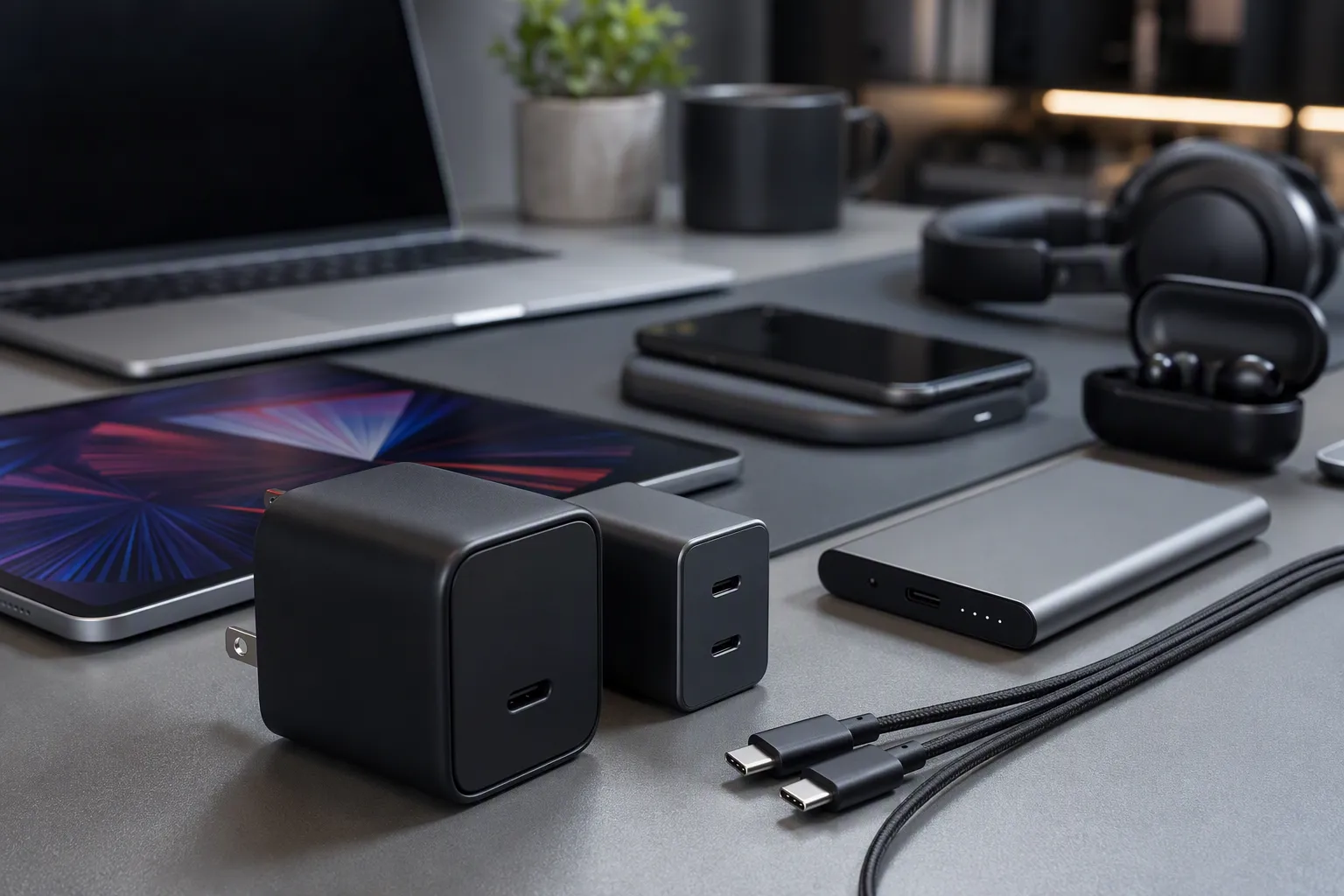
In our Shenzhen 3C export work, we have seen that smartwatch returns often start with a simple complaint: “It will not charge,” “It drains too fast,” or “It is still linked to another account.” These complaints may appear after arrival, not during a short pre-shipment power-on check. That is why a practical smartwatch refurbishment checklist needs to focus on resale risk, not appearance alone.
Why Should Smartwatch Refurbishment Not Be Judged by Cosmetic Condition or Power-On Status Alone?
A clean-looking watch can still create expensive after-sales issues. Buyers may assume that a polished housing, new strap, and successful boot screen indicate a resale-ready device. That assumption can lead to return claims, privacy disputes, and warranty costs that exceed the apparent saving on the lot.
A sound smartwatch refurbishment evaluation separates cosmetic grading from functional grading, sealing claims, and data-clearance status. We suggest that buyers ask the supplier what was tested, under what conditions, and what is excluded. If the supplier cannot provide clear answers or records, the buyer should reduce the commercial claim, adjust the purchase price, or exclude the lot.
Cosmetic grade is a selling description, not a technical test
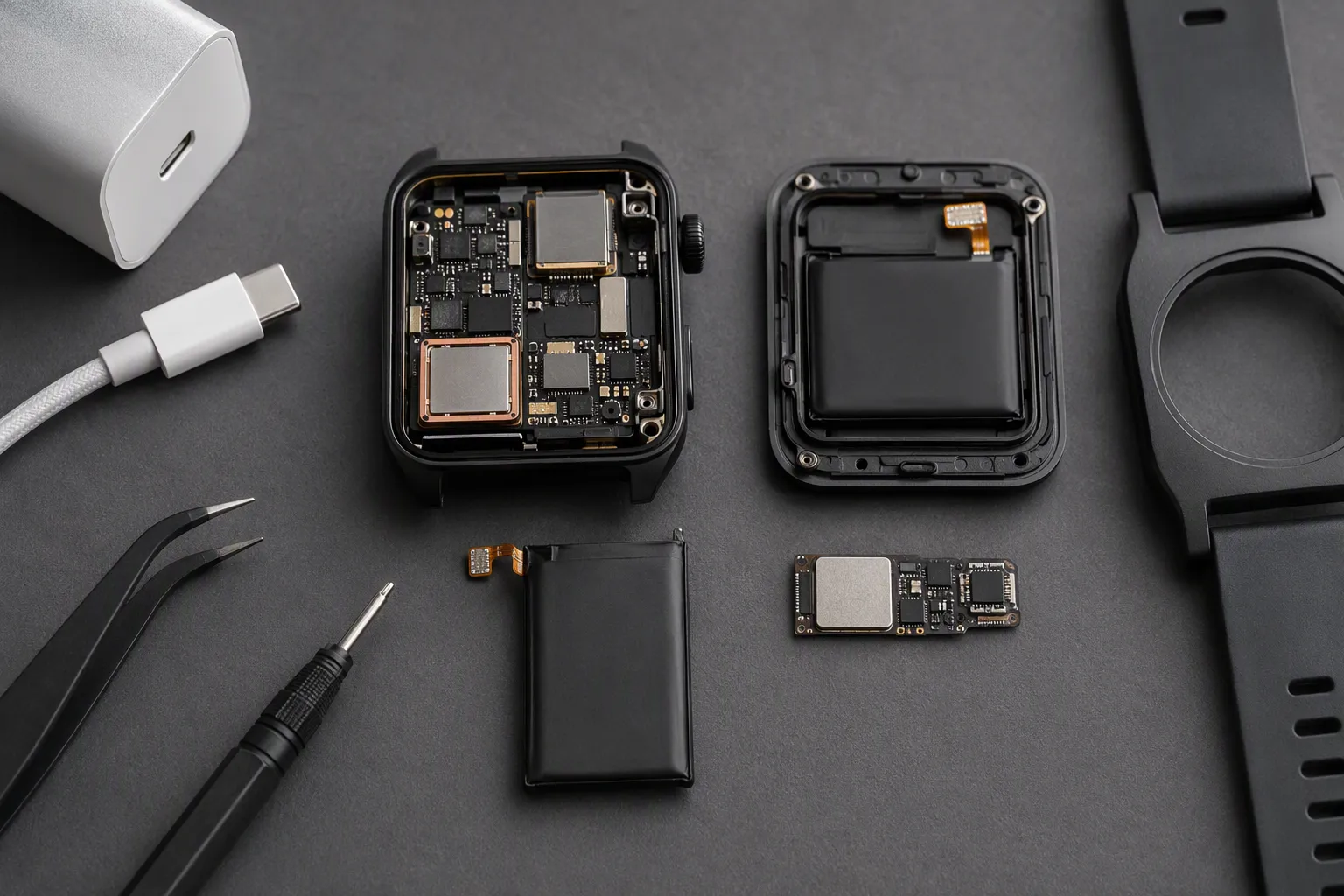
Cosmetic grading is useful, especially for retailers and e-commerce sellers who need to match product condition with listing photos and price tiers. However, cosmetic grading normally describes visible wear. It may cover scratches, dents, housing marks, screen condition, strap wear, or packaging condition. It does not automatically confirm that the smartwatch has passed a complete functional inspection.
In our experience screening smartwatch suppliers, the strongest sourcing discussions begin when buyers stop using one broad word such as “tested.” That word can mean very different things across suppliers. One supplier may mean the device turns on. Another may mean the display, touchscreen, charging function, buttons, Bluetooth connection, speaker, vibration motor, and sensors were sampled or checked individually.
For procurement purposes, we recommend separating at least four categories:
| Procurement category | What it may cover | What it does not prove by itself |
|---|---|---|
| Cosmetic grade | Screen scratches, case wear, strap condition, visible marks | Battery condition, internal repair history, sealing, account release |
| Startup status | Device powers on and reaches the operating system | Battery runtime, stable charging, sensor operation, user-account clearance |
| Functional test | Defined checks for selected functions | Original water resistance unless separately tested |
| Data-clearance status | Reset or account-removal confirmation | A verified brand-specific data-erasure method unless documented |
A buyer should also avoid treating a “Grade A” label as a universal standard. Grade A from one refurbishment source may not match Grade A from another source. The grading criteria should be written into the quotation, purchase order, inspection standard, or approved sample record.
A short power-on test can miss the problems that cause returns[2]
A smartwatch can boot successfully and still have a weak battery, unstable charging behavior, intermittent touchscreen response, or software/account restrictions. Many of these issues only become visible after the device has been used for longer than a few minutes.
We do not present ourselves as repair engineers or laboratory testers. Still, through supplier-document review and buyer feedback, we have seen why a basic startup check is too narrow for commercial purchasing. A buyer should ask what the supplier’s “functional check” actually includes.
Useful questions include:
-
Was charging verified, and how was it verified?
Ask whether the unit was connected to a compatible charger, whether charging status appeared, and whether a charging fault was excluded under the supplier’s own test process. -
Was battery discharge behavior checked?
Ask whether the supplier performed any runtime, discharge, or battery-diagnostic check. The buyer should request the test scope rather than assume a specific battery-health percentage. -
Were key user functions checked?
Depending on the model, this may include touchscreen response, crown or side button operation, display, speaker, microphone, vibration, Bluetooth or cellular function, heart-rate or motion sensors, and GPS-related features. The exact list should match the model and resale claim. -
Was the unit checked after charging or rebooting?
Some startup and charging issues appear after a restart or after the device has been connected to power. A single initial boot does not always show these conditions. -
Was the inspection 100% or sample-based?
This is a commercial question. A supplier may inspect every unit, inspect selected functions on every unit, or perform a sampling plan for part of the lot. The buyer needs to know which approach applies.
In B2B sourcing, an undocumented test is not necessarily a failed test. It is an unverified risk. We advise buyers to price it that way.
Battery condition needs its own smartwatch refurbishment checklist
Battery risk is one of the most important areas in smartwatch refurbishment because it directly affects customer satisfaction.[3] A buyer may receive a watch that starts normally, pairs with a phone, and looks excellent, yet the end user may later report rapid battery drain, slow charging, heat during charging, unexpected shutdown, or inconsistent charging contact[4].
A supplier should not be expected to make vague promises such as “battery is good” without defining what that means. At the same time, buyers should avoid demanding unsupported or model-independent battery claims. Different smartwatch models use different battery-management systems, diagnostic access levels, charging designs, and software reporting methods.
Instead, we recommend defining the commercial boundary clearly.
Ask for the battery test scope
A practical supplier questionnaire can include the following points:
- Was the battery replaced, retained, or treated as an original used component?
- Does the supplier have a stated battery grading standard?
- Was the unit checked for startup, charging indication, and basic discharge behavior?
- Are swollen batteries, charging failures, rapid-drain symptoms, or unexpected shutdown symptoms excluded from shipment?
- Is any battery-health reading available from the device or diagnostic system?
- If a reading is available, which model versions support it and who verifies it?
- What battery-related warranty applies to the lot?
- Does the warranty begin from shipment date, arrival date, or end-customer sale date?
- Are battery claims handled through credit, replacement, repair allowance, or return authorization?
The supplier may not be able to provide every answer for every model. That does not automatically make the lot unacceptable. It does mean the buyer should describe and price the lot carefully.
For example, a retailer may choose to sell a device as a “tested refurbished smartwatch” only if the supplier can document charging and functional checks. A wholesaler may accept a lower-grade lot with limited battery evidence, but should avoid a strong battery-runtime claim and should negotiate a lower unit price or higher spare-unit allowance.
Avoid unsupported battery-health thresholds
Buyers sometimes ask for a fixed battery-health threshold across all models. That can be useful only when the measurement method, model compatibility, and acceptance process are agreed in advance. A number on a supplier spreadsheet does not have much value if neither side can explain where it came from or whether it reflects actual in-use performance.[5]
We recommend that buyers verify any battery-health threshold with the relevant brand, model documentation, qualified technical evaluator, and local resale obligations. The supplier should state whether the figure comes from a device display, a diagnostic tool, a manual assessment, or another process. The buyer should also define what happens when the reading is unavailable.
A realistic purchase-order rule might be:
- Units must power on and accept charging under the agreed check.
- Units with visible swelling, known charging failure, or identified rapid-drain symptoms are excluded.
- Any battery-health percentage claim applies only where the supplier can provide the agreed supporting record.
- Devices without the agreed evidence must be graded, priced, or marketed without that claim.
This structure is more defensible than a broad statement that every battery is “like new.”
Reassembly does not prove original sealing performance
The sealing issue is often misunderstood in smartwatch refurbishment. When a case has been opened for screen work, battery work, internal cleaning, or other repair activity, the original assembly condition may no longer apply.[6] A new adhesive strip, gasket, back cover, or visual inspection may be part of a supplier’s process, but none should automatically be presented as proof of original water resistance.[7]
For buyers selling into Europe or North America, this matters because end customers may reasonably assume that a smartwatch can handle rain, sweat, hand washing, showering, swimming, or other moisture exposure. Those are not identical use conditions. A broad “waterproof” statement can create a much wider commercial expectation than the supplier’s actual process supports.[8]
We advise buyers to define the claim boundary before the goods are listed.
Ask the supplier for the sealing evidence
A responsible sealing discussion should cover:
| Question for the supplier | Why it matters commercially |
|---|---|
| Was the device opened during refurbishment? | Opening can affect seals, adhesives, and case alignment |
| Which parts were replaced or reassembled? | Screen, back cover, battery, buttons, and charging areas may have different risks |
| Was a seal, gasket, or adhesive replaced? | This describes process, but does not alone prove performance |
| Was any sealing or pressure test performed? | The buyer needs the test type, scope, pass criteria, and lot coverage |
| Was the test performed on every unit or samples? | Sampling does not establish an individual-unit claim |
| What moisture-related warranty or exclusion applies? | The buyer needs a clear after-sales boundary |
| Can the original water-resistance rating still be claimed? | This should be verified with the brand, model documentation, and qualified advice |
The term “waterproof” is especially risky because it sounds absolute. We suggest that buyers use restrained language unless they hold model-specific, documented support for a defined claim. If the supplier only confirms that the case was reassembled, the safer commercial description may be that the device has been refurbished and tested according to the stated functional scope, with no water-resistance claim.
Match the product listing to the evidence
The product listing, carton insert, wholesale specification sheet, and customer-service script should all match the evidence level. If a retailer sells a refurbished watch with an original-looking rating symbol but cannot show what post-refurbishment testing supports that claim, the retailer may face avoidable disputes.
A practical evidence-based approach could look like this:
- No sealing record: Do not make a water-resistance claim. State that the device should be kept away from water if that is appropriate to the resale policy.
- Process-only record: The supplier confirms reassembly materials or visual checks, but no defined performance test. Do not present this as confirmed water resistance.
- Defined test record: The supplier provides a test description, conditions, pass/fail criteria, coverage, date, and lot reference. The buyer can assess whether the evidence supports a limited, carefully worded claim.
- Brand-approved or independently verified process: This may support stronger claims, but buyers should still verify the documents, model scope, and commercial responsibility.
We have found that clear claim boundaries reduce arguments later. The goal is not to make the product sound weaker than it is. The goal is to ensure that the advertised condition matches what the buyer can support.
Factory reset is not automatically complete data erasure or account release
Data and account risk is the third major control point in smartwatch refurbishment. A factory reset may remove visible user content, but it does not automatically prove that all previous-user data is unrecoverable, that activation locks are cleared, or that the device can be activated by a new customer without restriction.
The exact process depends on the brand, operating system, model, device-management status, and prior account configuration. We do not claim authority over brand-specific account-release or data-erasure systems. For that reason, buyers should ask the supplier for documented confirmation of its process and should verify relevant platform requirements with the brand or qualified specialist.
Separate reset status from resale readiness
A buyer should ask the supplier to distinguish these points:
- The device was reset to its initial setup state.
- The previous user account was removed.
- Activation or device locks were checked and cleared.
- The device can proceed through setup with a new account.
- The supplier followed a documented data-clearing process.
- The supplier retains a lot-level or unit-level record, where commercially and legally appropriate.
These are not always the same thing. A watch can display a welcome screen and still create problems during setup. A watch may also have organization-management restrictions or account-linked restrictions that are not obvious during a quick visual inspection.
For larger-volume purchases, we recommend adding a written representation to the supplier agreement. The wording should be reviewed for the buyer’s jurisdiction and business model, but the commercial purpose is clear: the supplier should confirm that it has the right to sell the devices and that, according to its documented process, previous-user account or activation restrictions have been addressed.
Build account checks into incoming inspection
Buyers should not rely only on a supplier declaration when the resale channel carries meaningful privacy or activation-lock exposure. The buyer’s own incoming inspection can include a reasonable sample or 100% check, depending on the lot value, model risk, supplier history, and contractual terms.
A basic receiving workflow may include:
- Confirm the model, serial or identifier process, and lot reference.
- Power on the device and review the setup status.
- Follow the agreed setup-stage check without adding unnecessary buyer data.
- Identify visible activation, account, or management restrictions.
- Record exceptions by unit or batch.
- Quarantine failed units instead of mixing them with cleared inventory.
- Notify the supplier within the agreed claim window.
The buyer should also consider how much personal information is collected during receiving inspection. Internal staff should use a controlled process. A compliance or privacy professional can advise on data handling requirements for the relevant market.
Missing records should change the deal, not disappear from the discussion
The most useful rule in smartwatch refurbishment is simple: missing evidence should not be converted into assumed compliance. We have seen buyers lose time when commercial teams accept broad assurances while quality teams later discover that the supplier has no inspection record, no test scope, and no clear warranty boundary.
A missing record does not prove poor quality. It means the buyer cannot confidently make the same claim as a buyer holding verifiable evidence. That distinction should affect grading, pricing, inspection planning, and resale language.
Here is a practical decision framework:
| Evidence level | Recommended buyer action |
|---|---|
| Clear records with defined test scope and lot reference | Verify documents, inspect incoming goods, and align claims to the documented scope |
| Partial records or unclear test coverage | Request clarification, narrow the claim, add inspection, or negotiate price protection |
| Supplier assurance without records | Treat as unverified risk; avoid strong performance or sealing claims |
| Conflicting documents or failed checks | Quarantine, seek corrective action, reject affected units, or exclude the supplier from the program |
For a first order, we often suggest starting with a controlled trial lot rather than committing immediately to a large volume. The buyer can review actual defect patterns, packing quality, charging consistency, account-clearance outcomes, and supplier response speed. This does not replace technical validation, but it gives the purchasing team practical evidence before scaling.
A strong supplier relationship should support this process. The supplier should be willing to explain its grading standard, provide available records, clarify exclusions, and agree on claim handling. If a supplier resists basic questions about battery checks, sealing scope, or account status, the buyer should consider that response part of the supplier evaluation.
Frequently Asked Questions
What should buyers ask about a refurbished smartwatch battery?
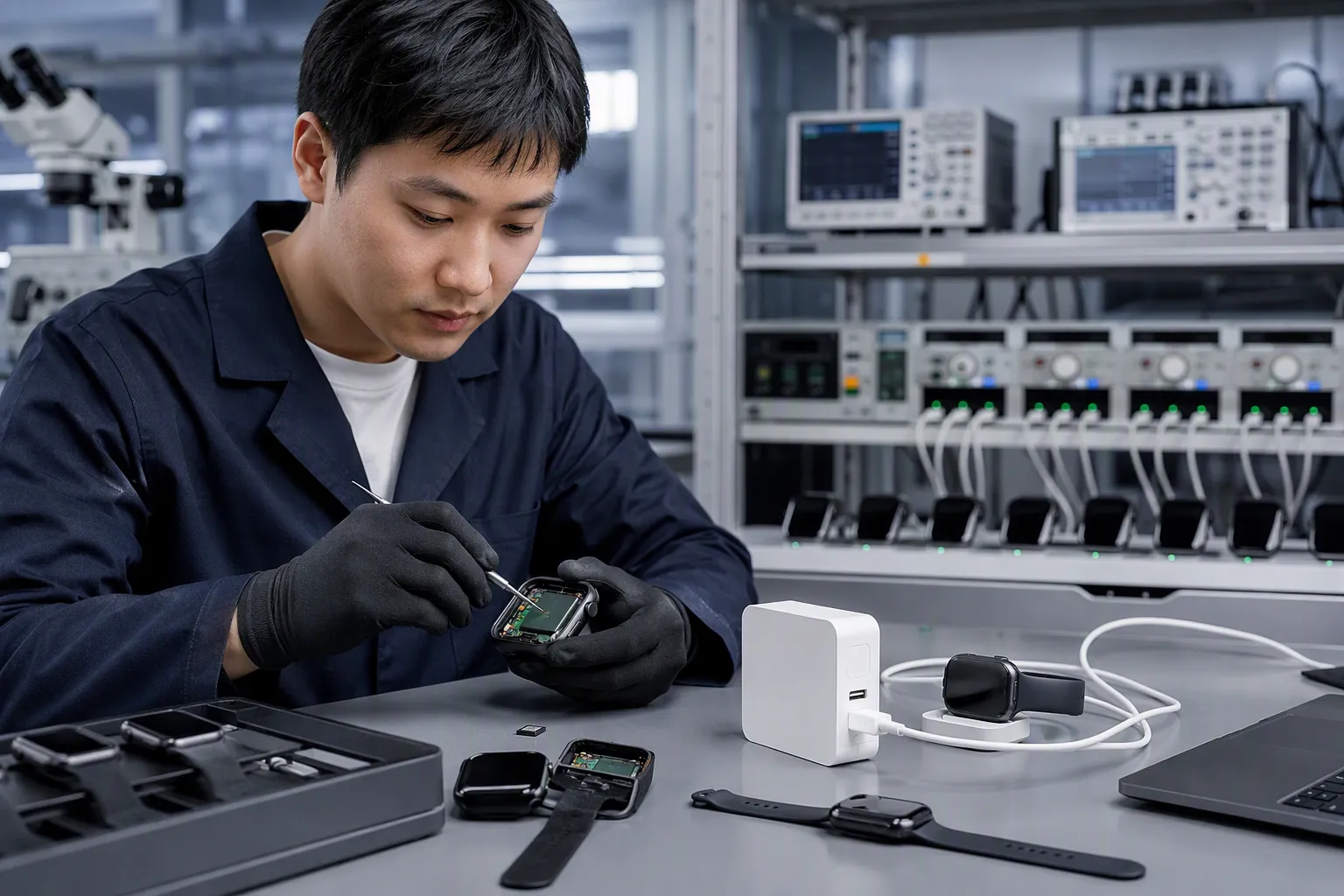
Buyers should ask what charging and functional checks were performed, which battery-related symptoms are excluded, whether any diagnostic reading is available, and what warranty applies. A successful boot-up alone is not enough evidence of stable battery performance or reliable charging behavior.
Can we advertise a refurbished smartwatch as waterproof?
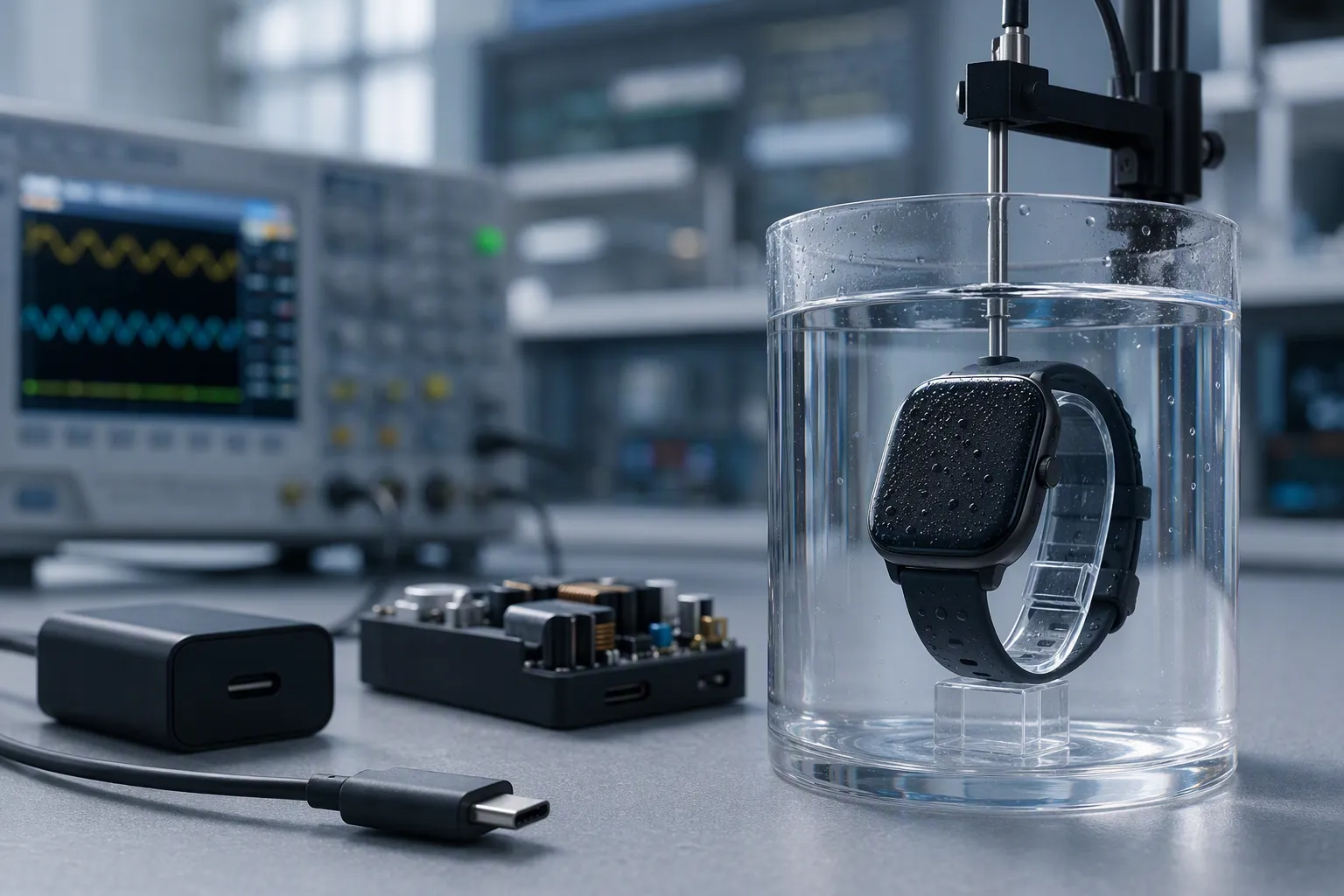
We recommend avoiding “waterproof” claims unless the supplier provides model-specific, verifiable evidence showing the post-refurbishment test conditions, scope, pass criteria, and coverage. Reassembly or replacement adhesive does not automatically restore an original water-resistance rating. Buyers should verify claims with relevant brand documentation and qualified advice.
Is a factory reset enough before reselling a smartwatch?
A factory reset may be part of the process, but it does not automatically prove complete data erasure or account release. Buyers should request confirmation that activation locks, previous-user accounts, and visible setup restrictions were addressed under the supplier’s documented process.
How should we handle a lot with incomplete refurbishment records?
Treat incomplete records as unverified risk. Buyers can narrow the product claim, increase incoming inspection, negotiate a lower price, require additional supporting documents, or exclude the lot. The correct choice depends on the model, channel, warranty exposure, and supplier’s willingness to stand behind the goods.
Should cosmetic grade and functional grade be listed separately?
Yes. Cosmetic grade helps buyers describe visible condition, while functional grade should describe the agreed test scope and exclusions. Separating them reduces confusion and helps retailers, wholesalers, and e-commerce sellers set more accurate product descriptions and warranty expectations.
Conclusion
Smartwatch refurbishment is not a single pass-or-fail label. For B2B buyers, battery condition, post-repair sealing claims, and account/data clearance are separate procurement risks that need separate evidence. We recommend asking the supplier for records, defining exactly what the product claim covers, and treating missing documentation as a pricing or acceptance issue. If you are sourcing refurbished smartwatches for resale, contact us to discuss inspection expectations, grading boundaries, MOQ, delivery planning, and a practical supplier evaluation process.
Sources
- Cybersecurity - FDA", Cosmetic grading concerns externally visible wear and condition; it does not, by itself, constitute a test of internal battery performance, sealing integrity, or data-removal status
- [PDF] Testing Digital Systems I - CDNC/KIT", Reliability testing literature recognizes that intermittent and use-dependent faults may not appear during a short power-on inspection and can require operational or cycling tests to detect
- Understanding Smartwatch Battery Utilization in the Wild - PMC", Studies of wearable-device usability identify battery life and charging burden as important determinants of user experience and continued device use
- An intelligent fault detection (IFD) system for lithium-ion battery using ...", Battery-safety and diagnostic guidance identifies abnormal heating, irregular charging, rapid capacity loss, and unexpected shutdown as potential indicators of battery or power-management problems
- [PDF] Battery State-of-Health Estimation: A Step towards ... - UPCommons", Battery state-of-health is an estimated metric whose meaning depends on the measurement method and operating conditions; a reported value alone may not fully predict in-use performance
- Evaluation of IEC 60529 as a standard for liquid protection ...", Ingress-protection performance depends on the integrity of an enclosure’s seals, joints, and assembly; disassembly and reassembly can therefore alter the conditions under which the original protection rating was established
- Ingress Protection (IP) ratings", Ingress-protection classifications are assigned through defined test procedures and conditions; the presence of replacement adhesive, gaskets, or a visually aligned enclosure is not itself a performance test
- Advertising and Marketing | Federal Trade Commission", Consumer-protection guidance requires advertisers to possess a reasonable basis for objective performance claims; an unqualified term such as “waterproof” may convey a broader durability claim than limited process evidence can substantiate