When I receive a Request a FREE cable sample, I often find that the buyer needs more than a low-cost product trial. The real problem is uncertainty about specifications, quality, pricing, and supplier reliability. A structured sample request helps both sides confirm product fit before a retailer, wholesaler, or e-commerce seller considers a bulk order.
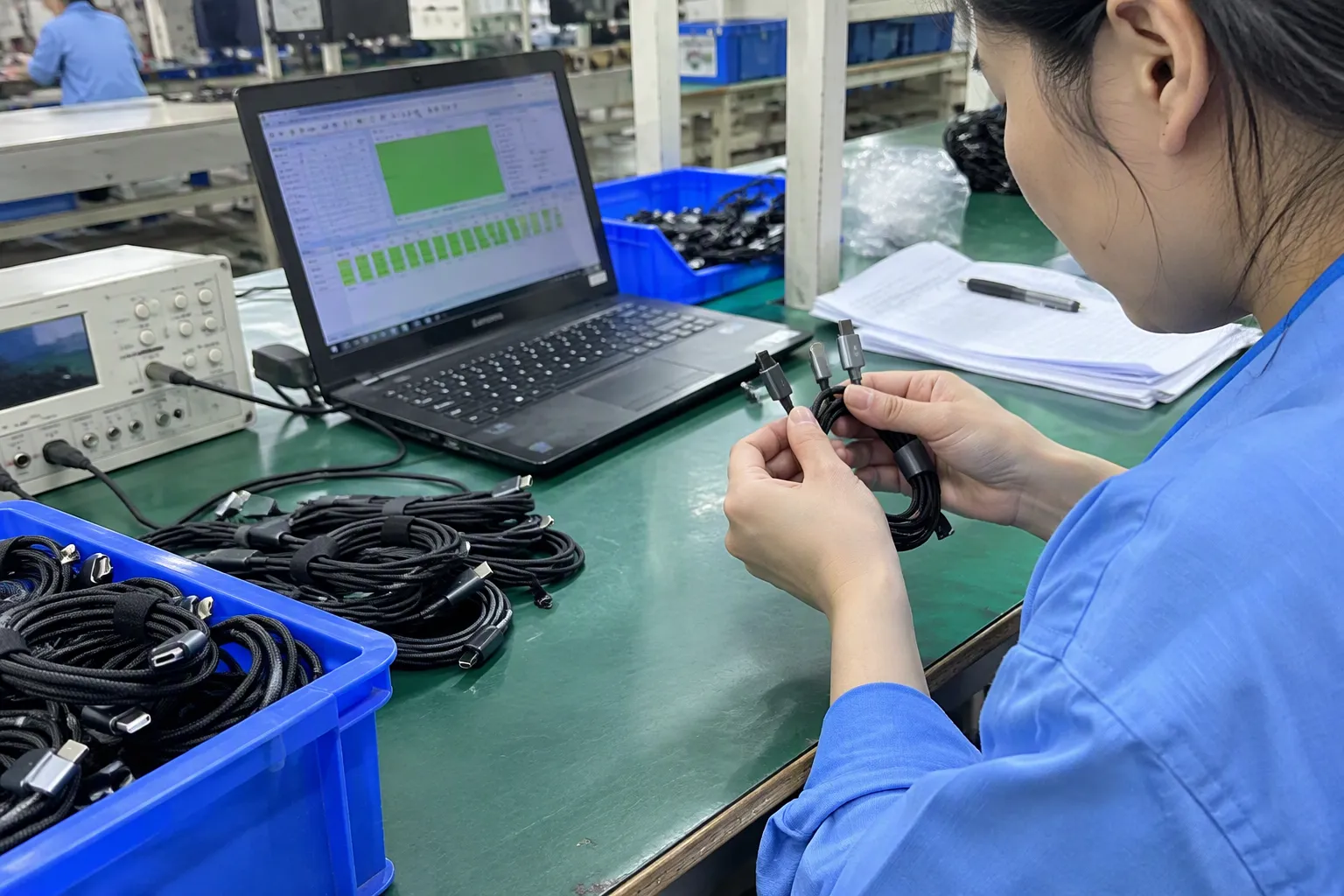
A cable sample request should be treated as the first step in a procurement evaluation, not as an unconditional free-gift offer. Buyers should provide cable specifications, application details, target quantity, and destination market. Suppliers should confirm whether the sample itself is free and whether shipping, customization, or special packaging costs apply. Buyers can inspect materials, connectors, workmanship, and communication quality, but one sample cannot guarantee perfect consistency across a future production batch[2].
Quick Answer
- I recommend including the cable type, connector combination, length, color, function, and intended application in every request.
- Buyers should ask whether “free” covers the sample only or also includes shipping, customization, packaging, and taxes.
- A sample helps assess visible workmanship and product suitability, but it does not replace production quality control.[3]
- I also recommend discussing MOQ, quotation, lead time, packaging, certifications, and after-sales support at the same time.
- Qualified buyers can compare USB cable types before requesting the most relevant sample.
A sample becomes useful when it answers a purchasing question. Does the cable match the application? Does the finish suit the target market? Can the supplier communicate clearly and explain quality controls? In my experience handling export inquiries, vague requests usually create unnecessary back-and-forth. Specific requests usually produce a more useful evaluation.
Why should “Request a FREE cable sample” be framed carefully?
“Free cable sample” sounds simple, but the phrase can create incorrect expectations. Buyers may assume that every sample, shipping charge, custom logo, and special specification is included without cost. Suppliers may also receive requests from people who have not yet defined a product or purchasing plan.
I believe better wording protects both parties. The offer should explain the conditions clearly while still making it easy for qualified buyers to start a conversation.
What does “free” usually mean?
- Courier or freight charges
- Import duties, VAT, or local taxes
- Custom logo or color development
- Special cable length or connector design
- Retail packaging or printed inserts
- Testing, tooling, or engineering charges
- Payment or refund terms for sample delivery
The exact arrangement depends on the supplier, product, destination, and request. I should not describe a sample as unconditionally free unless I have confirmed the complete terms.
A clearer sample offer
“Standard samples may be available at no product charge for qualified buyers. Shipping, customization, special packaging, taxes, and other related costs must be confirmed before dispatch.”
This wording is more honest than using “free” as a broad promise. It also helps a serious buyer understand what information I need before I can confirm the request.
| Sample request wording | Likely buyer expectation | Better practice |
|---|---|---|
| “Free sample for everyone” | All costs are covered | Avoid unless every condition is truly covered |
| “Free standard sample” | The standard item may be free | Explain shipping and other possible charges |
| “Sample available for qualified buyers” | Some screening applies | State the qualification information required |
| “Sample cost credited against bulk order” | Initial cost may be recoverable | Confirm credit amount and order conditions |
I have found that clear terms do not reduce serious inquiries. They usually improve them. A retailer or importer wants to know the real landed cost, not only the sample price. A clear supplier can begin that conversation early.
What information should buyers include in a cable sample request?
A short message such as “Please send free USB cables” does not give me enough information to recommend the correct item. USB cables differ in connector type, data function, charging capability, construction, packaging, and intended use.[1] A sample can only be useful when it represents the product the buyer may actually purchase.
Core technical information
-
Connector combination
Examples include USB-A to USB-C, USB-C to USB-C, USB-A to Lightning-compatible device connector, or another required configuration. -
Primary function
The cable may be intended for charging, data transfer, synchronization, vehicle use, travel, gaming, point-of-sale equipment, or general retail sale. -
Construction preference
The buyer may need PVC, braided textile, reinforced connectors, flexible construction, or a more economical standard design. -
Target devices
The supplier needs to understand whether the cable will support smartphones, tablets, power banks, laptops, accessories, or other equipment.
A buyer does not need to know every engineering detail before contacting a supplier. However, the buyer should explain the commercial purpose. I can then ask focused questions instead of guessing.
Application and purchasing information
The use case matters because a cable selected for a discount retail shelf may not be the best option for professional equipment or frequent travel. I also need basic purchasing information to prepare a realistic recommendation:
- Target sales market or destination country
- Expected first order quantity
- Estimated repeat-order volume
- Required delivery window
- Target price range, if available
- Branding or private-label plans
- Required product documents
- Preferred shipping method
- Whether the buyer needs several comparable samples
A practical request template
Hello, I am sourcing USB-C charging cables for retail sale in [market]. Please recommend standard samples with [connector type], [length], [color], and [required function]. Our estimated first order is [quantity], with possible repeat orders. Please confirm sample availability, sample terms, shipping cost, MOQ, indicative price, packaging options, production lead time, and available compliance documents.
How can buyers evaluate a cable sample properly?
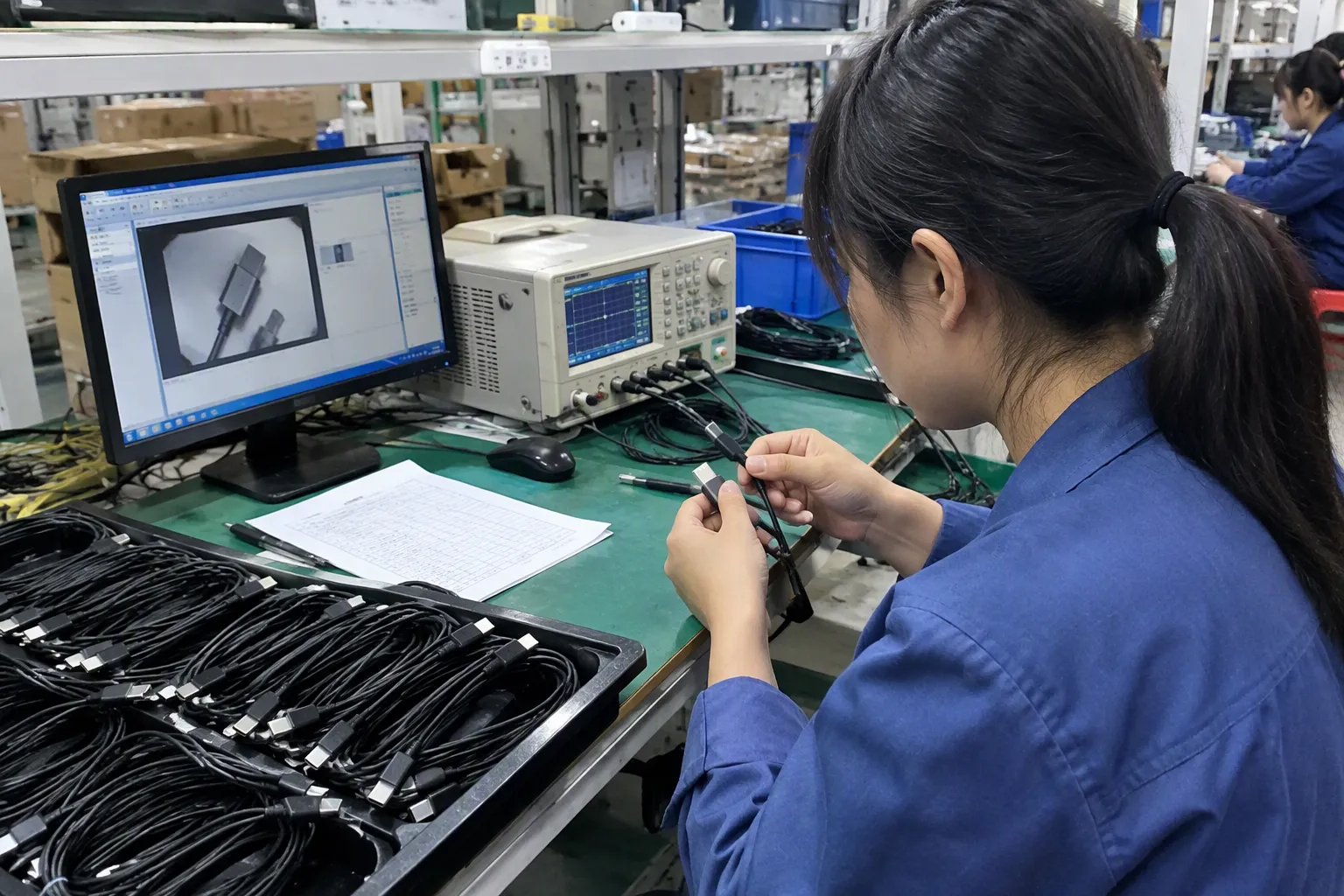
A cable sample can reveal important information, but I recommend evaluating it in several stages. Buyers should not focus only on color, weight, or packaging. They should connect the physical inspection to the product specification and intended application.
Stage 1: Check identity and documentation
- Supplier name and product reference
- Connector types
- Stated length
- Color and visible design
- Packaging description
- Date received
- Any markings or model numbers
- Documents supplied with the sample
The buyer should compare the sample with the quotation or written description. If the supplier sent a substitute, the supplier should explain why. A different item may not provide a valid basis for approval.
Buyers should also request relevant declarations, test reports, or certification documents where applicable. I recommend verifying the scope, validity, issuing organization, product model, and test standard. A document should not automatically be treated as proof that every cable variant has the same status.[7]
For general information, buyers can review USB-IF’s official USB specifications and compliance resources at usb.org. Buyers should also review applicable market requirements with their own compliance adviser. Requirements can vary by product design, destination, and sales channel.[8]
Stage 2: Inspect materials and workmanship
- Connector alignment
- Housing fit
- Strain relief at both ends
- Surface scratches or gaps
- Braiding consistency
- Jacket finish
- Markings and labels
- Flexibility appropriate to the application
- Plug insertion and removal feel
- Visible damage after normal handling
I would avoid making a technical performance conclusion from appearance alone. A heavier cable is not automatically better[4], and a braided jacket does not automatically prove stronger conductors[5]. Visual inspection is one part of a wider evaluation.[6]
Stage 3: Test according to the application
The buyer should define practical checks based on the intended sale. For example, a retailer may check compatibility with representative devices, while an importer may arrange independent testing for electrical or regulatory requirements.
- Charging function with intended equipment
- Data transfer, if data capability is required
- Connector fit across representative devices
- Repeated connection and disconnection
- Basic flexibility and handling
- Packaging and barcode review
- Label and instruction accuracy
I recommend qualified technical evaluation for application-specific decisions. I should not present an informal sample check as a laboratory test or as evidence of guaranteed long-term performance.
A sample evaluation record
| Evaluation area | Buyer question | Evidence to record |
|---|---|---|
| Product identity | Is this the requested model? | Model, photos, specification sheet |
| Connectors | Are both ends correct and compatible? | Connector type and device checks |
| Workmanship | Are housing and strain relief consistent? | Inspection notes and photos |
| Function | Does it perform the required basic function? | Equipment used and test result |
| Packaging | Does it fit the sales channel? | Packaging dimensions and photos |
| Documents | Are relevant documents available and applicable? | Document title, model, date, scope |
| Communication | Does the supplier answer questions clearly? | Response time and written answers |
One important point is that a sample represents a particular item at a particular time. It can help me and the buyer identify obvious problems. It cannot prove that an entire future shipment will be perfectly identical.
What does a cable sample reveal about supplier reliability?
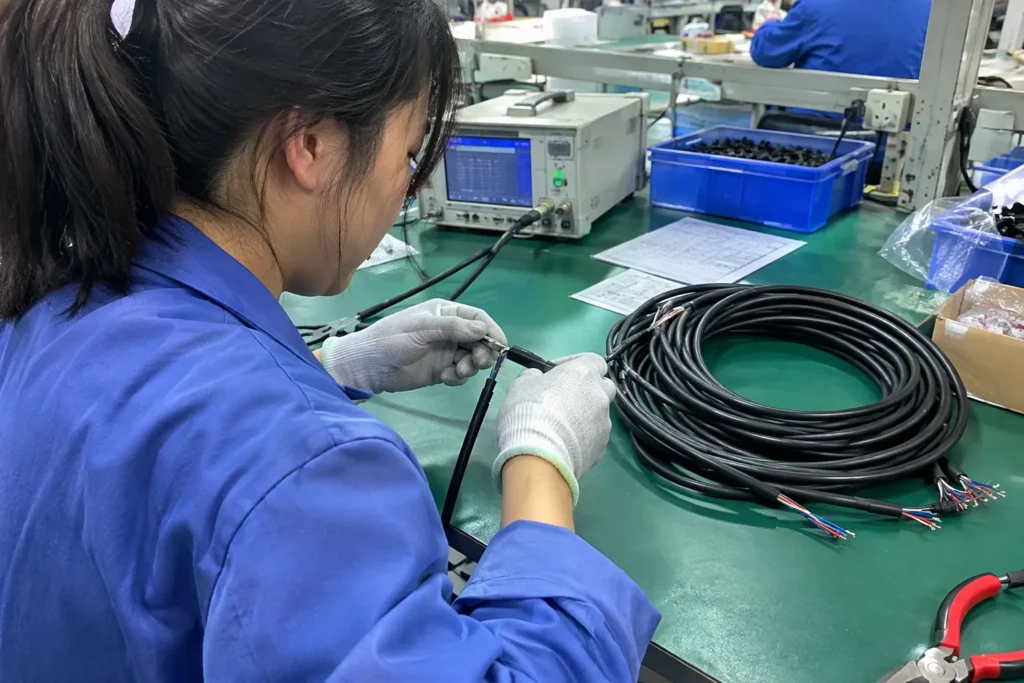
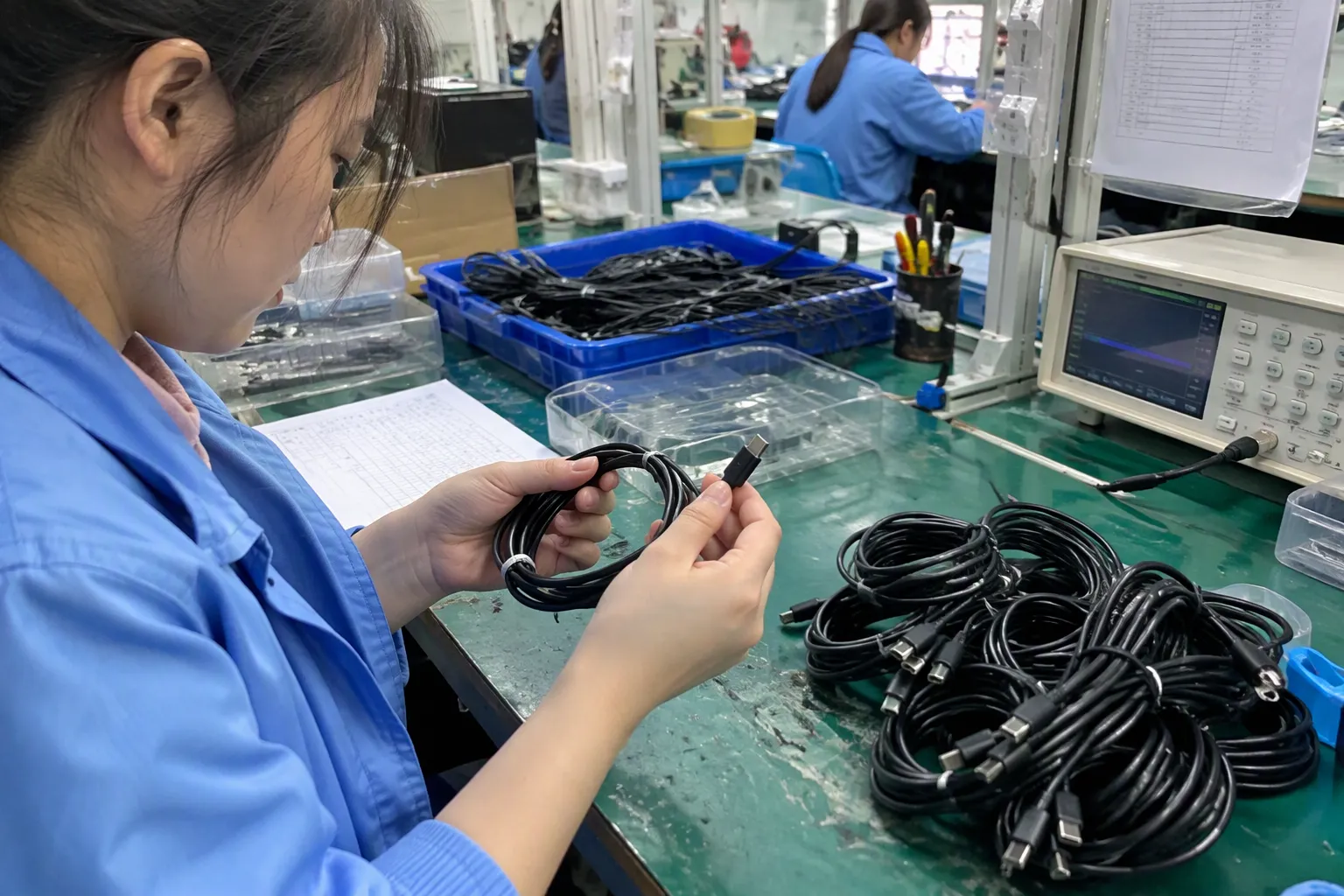
A sample request also evaluates the supplier’s working process. I often learn as much from the communication around the sample as from the cable itself. A reliable supplier should ask sensible questions, clarify limitations, and connect the sample to the next procurement steps.
Communication signals worth observing
- Confirms the requested specifications
- Explains sample availability accurately
- Separates product cost from shipping and other charges
- Provides a written quotation or indicative range
- Answers technical questions without unsupported promises
- Identifies unavailable features instead of hiding them
- Shares realistic MOQ and packaging information
- Explains what documents can be provided
- Follows up after the buyer receives the sample
Questions about production quality
- How does the factory control incoming materials?
- Which specifications are checked during production?
- What final inspection records are available?
- How are approved samples linked to production instructions?
- How does the supplier manage changes to materials or components?
- What happens if a buyer identifies a nonconformity?
- Can the supplier provide batch or shipment identification?
The answers should match the supplier’s actual process. Buyers should request supporting records where they are important. A supplier’s quality statement is useful, but it is not the same as independently verified evidence.
Certificates and reports need verification
- Which product model does the document cover?
- Who issued the document?
- Is the document current?
- Does it cover the exact market and requirement?
- Does it apply to the cable, packaging, charger, or another product?
- Are the materials and construction the same as the sample?
- Can the supplier provide a declaration or test report for review?
I have seen buyers receive a document that relates to a similar product rather than the exact requested model. That issue is avoidable when the model number and document scope are checked together.
For European sales, buyers should consult official sources such as the European Commission’s RoHS policy information and confirm their responsibilities with a qualified compliance professional. The buyer remains responsible for checking requirements applicable to the final product and market.
Reliability is a process, not a single impression
| Procurement stage | What I would review |
|---|---|
| Initial inquiry | Product understanding and response quality |
| Sample preparation | Accuracy, transparency, and speed of clarification |
| Sample evaluation | Willingness to discuss issues and changes |
| Quotation | MOQ, price basis, packaging, and validity |
| Pre-production | Approval process and written specifications |
| Production | Quality-control communication and updates |
| Shipment | Documentation and packing information |
| After-sales | Response to defects, shortages, or disputes |
How should buyers connect the sample to a bulk-order decision?
A sample should not be the end of the conversation. I treat it as a checkpoint before a more complete procurement review. The buyer needs to understand whether the product can be sourced repeatedly at an acceptable commercial and quality level.
Move from sample to quotation
- Exact product description
- Unit price and currency
- MOQ
- Price basis, such as EXW, FOB, or another agreed term
- Packaging configuration
- Carton quantity and dimensions
- Sample or tooling charges
- Production lead time
- Payment terms
- Quotation validity
- Available customization
- Shipping options
- Relevant documents
The buyer should ensure that the quotation describes the same product as the sample. A lower quotation for a different cable design does not create a fair comparison.
Discuss consistency without making unrealistic assumptions
I cannot responsibly say that one approved sample guarantees every production cable will match it perfectly. Buyers should instead ask how the supplier controls consistency. Useful questions include:
- Will the approved sample become the reference sample?
- Which materials and components must remain unchanged?
- Does the supplier notify buyers about design or material changes?
- What inspection takes place before shipment?
- Can the buyer approve a pre-production or production sample?
- What records accompany the shipment?
- How are defects classified and handled?
The buyer may also define measurable acceptance criteria in the purchase agreement. These criteria should be reviewed by qualified personnel when the application carries technical, safety, or regulatory risk.
Review commercial fit
A sample can be technically acceptable but commercially unsuitable. For example, packaging may not fit the retail channel, MOQ may be too high, or the delivery schedule may not match a promotion.
| Factor | Questions for the buyer |
|---|---|
| Product fit | Does the cable meet the actual use case? |
| Quality evidence | Can the supplier explain and support its controls? |
| Price | Is the cost competitive at the expected volume? |
| MOQ | Does the minimum order suit the sales plan? |
| Lead time | Can the supplier meet the required schedule? |
| Customization | Can branding and packaging be managed accurately? |
| Communication | Are answers clear and consistent? |
| After-sales | Are complaint and replacement procedures defined? |
I have handled inquiries that moved from a sample discussion to a quotation because the buyer explained the expected volume and market early. I have also seen requests stop because the sample was not matched to the actual retail requirement. The difference usually comes from the quality of the initial information.
How can buyers write a more effective sample request?
A good request should be concise enough for a supplier to read quickly and complete enough to support a useful answer. I recommend avoiding both extremes: a one-line request with no specifications and a long document that hides the main requirements.
Use a simple request structure
1. Introduce the buying purpose
State whether you are a retailer, importer, wholesaler, distributor, or e-commerce seller. You do not need to disclose confidential information. The purpose is to show the commercial context.
2. Describe the product
Include connector types, length, material preference, color, function, and packaging needs. If you have a reference image or existing sample, attach it.
3. Explain the market
State the destination country or region and intended sales channel. The market can affect documentation, labeling, packaging, and product positioning.
4. Share purchasing information
Provide an estimated first order quantity, possible annual demand, target launch date, and customization needs. Estimates are acceptable when the project is still under review.
5. Ask for complete sample terms
Request confirmation of sample availability, shipping cost, sample lead time, MOQ, indicative price, packaging, documents, and after-sales process.
Example email for a qualified buyer
Hello,
I am sourcing USB-C cables for retail distribution in [country or region]. I would like to evaluate a standard sample with [connector type], [length], [color], and [charging or data requirement].
Our estimated first order is [quantity], and we may require private-label packaging. Please confirm whether a standard sample is available and clarify the sample product cost, shipping cost, customization charges, and any other applicable terms.
Please also provide the MOQ, indicative bulk price, packaging options, estimated production lead time, available product documents, and your after-sales process.
Thank you.
Avoid these common mistakes
- Asking for “the best cable” without defining the application
- Requesting a sample without stating the destination market
- Assuming “free” includes courier delivery
- Comparing a customized sample with a standard bulk quotation
- Selecting a supplier only because the sample looks attractive
- Treating a certificate for one model as proof for every model
- Placing a large order before confirming written specifications
- Ignoring packaging, labeling, and carton requirements
- Expecting one sample to establish full production consistency
- Ending communication immediately after sample delivery
What should buyers expect from an experienced cable supplier?
I work with buyers who need a practical balance of quality, price, MOQ, lead time, customization, and service. A supplier should not push a buyer toward a sample that does not match the application. The supplier should first understand the request and then recommend a suitable option.
The role of supplier experience
Export experience can help with communication, documentation, packaging, and shipment coordination. It does not remove the buyer’s responsibility to evaluate the product. Buyers should still confirm the exact model, commercial terms, and market requirements.
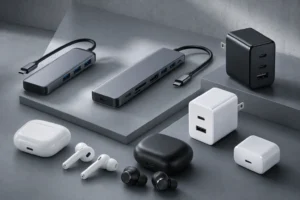
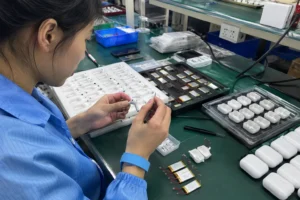
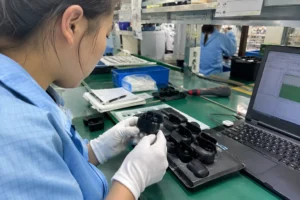
Our company is based in Shenzhen, and we have handled 3C product exports for many years. Our product scope includes USB cables, chargers, GaN chargers, TWS earbuds, and smartwatches. We mainly work with buyers serving European and North American markets. In cable inquiries, I focus first on product matching and purchasing information rather than sending an unsuitable item simply because it is available.
What I can help clarify
- Suitable cable models for the described application
- Connector and length options
- Standard versus customized designs
- Packaging alternatives
- MOQ and estimated order quantities
- Quotation structure
- Sample and shipping terms
- Available certification or compliance documents for verification
- Expected production workflow
- After-sales communication
Buyers should verify all specifications and documents before making a final decision. I also recommend professional evaluation where the cable will be used in a safety-critical, regulated, or technically demanding application.
A responsible next step
- Confirm the sample specification.
- Receive and inspect the sample.
- Record questions and nonconformities.
- Request clarification or a revised sample if necessary.
- Compare the quotation and commercial terms.
- Confirm production specifications in writing.
- Agree on inspection and after-sales arrangements.
- Decide whether a trial order is appropriate.
This approach keeps the sample in its proper role. It is evidence for a decision, not a substitute for supplier qualification or quality control.
Frequently Asked Questions
Is the cable sample completely free?
Not necessarily. A supplier may provide a standard sample without charging for the product, while the buyer pays shipping, taxes, customization, special packaging, or other costs. I recommend asking for a written breakdown before dispatch so both sides understand the exact sample terms.
What details should I include when requesting a USB cable sample?
I recommend including connector types, length, color, construction preference, charging or data function, target devices, destination market, packaging needs, estimated order quantity, and required delivery window. These details help the supplier select a relevant sample instead of sending a generic cable.
Can one cable sample guarantee the quality of a bulk order?
No. A sample can help buyers inspect product fit, materials, connectors, workmanship, and basic function. It cannot guarantee perfect consistency across a future production batch. Buyers should also review specifications, production controls, inspection procedures, and written acceptance criteria.
Should I request a quotation together with the sample?
Yes. A quotation helps you judge whether the sample represents a commercially realistic product. Ask about MOQ, unit price, packaging, lead time, payment terms, customization, shipping basis, and available documents. The quotation should clearly refer to the same model as the sample.
What should I do if the sample does not match my requirements?
Record the differences with photographs and written notes. Then ask the supplier whether the sample was sent in error, whether the requested specification is available, or whether a revised sample is needed. I recommend resolving the difference before discussing a bulk order.
Conclusion
A Request a FREE cable sample should begin a structured supplier evaluation. I recommend that buyers provide clear specifications, application details, target quantities, and market information before asking for a sample. Buyers should also confirm what “free” covers and separate the sample from shipping, customization, and other possible costs. The sample can reveal product fit and communication quality, but it cannot guarantee future batch consistency. If you are evaluating USB cables for retail, wholesale, or e-commerce distribution, contact me with your requirements so I can help clarify suitable options, sample terms, MOQ, packaging, and the next procurement steps.
Sources
- USB Charger (USB Power Delivery)", USB Implementers Forum specifications distinguish USB cable and connector capabilities by physical interface, signaling or data-transfer performance, and power-delivery characteristics
- 1C. Quality Assurance vs. Quality Control", Statistical quality-control guidance treats an individual inspection sample as limited evidence about a production lot and relies on specified sampling plans and process controls to assess conformity
- 6.2.1. What is Acceptance Sampling?", Quality-assurance literature distinguishes product inspection, which evaluates observed units, from process control, which is used to maintain conformity across ongoing production
- Estimating the insulation health index of XLPE cables using ...", Electrical-cable performance is determined by design variables such as conductor resistance, insulation, shielding, connector construction, and signaling requirements; mass alone is therefore not a sufficient quality measure
- Correlation of Electrical Cable Failure with Mechanical ...", Cable construction literature treats the outer jacket and internal conductors as distinct components whose mechanical and electrical properties must be evaluated separately
- Visual Inspection Protocol", Inspection guidance distinguishes visual examination from functional and laboratory testing, with each method addressing different classes of product attributes and defects
- General Use Products: Certification and Testing", Conformity-assessment guidance requires technical documentation and test evidence to be relevant to the specific product configuration and legal requirement being assessed
- A Guide to United States Electrical and Electronic ...", Product-compliance frameworks generally assign obligations according to the product’s characteristics, intended market, and applicable legislation rather than treating all variants and sales contexts as equivalent