Quick Answer: Importers should source Linux retro handheld consoles by comparing the chipset, display, battery, emulator performance, firmware, included accessories and supplier controls—not just the game count or unit price. Request samples before placing a production order, confirm OEM/ODM and packaging options, and verify CE, FCC, RoHS, battery and wireless documentation for the destination market. A realistic sourcing plan should also define MOQ, lead time, inspection standards, Incoterms and responsibility for software and intellectual-property compliance.
Why Linux Retro Handheld Consoles Are Attractive to Importers
Linux-based retro handhelds occupy a practical middle ground between low-cost plug-and-play products and higher-priced Android gaming devices. They are generally designed around efficient ARM hardware, dedicated emulation software and a simple menu interface. For wholesalers and e-commerce sellers, this can support a focused product range with manageable hardware specifications, straightforward packaging and several opportunities for private labeling.
However, the category is not automatically simple to source. Two consoles may use similar external shells while differing substantially in screen quality, controls, battery safety, firmware stability and emulation performance. Some suppliers also advertise large game libraries without clearly explaining the source or licensing status of the included ROM files. A professional buyer must evaluate the complete product and supply chain rather than relying on a marketplace listing.
Define the Product Specification Before Contacting Factories
Prepare a written product brief before requesting quotations. This gives factories the same specification to price and makes sample comparisons meaningful. At minimum, define the following:
- Operating system and interface: Confirm the Linux distribution or firmware family, boot behavior, language options, menu structure and whether the firmware can be customized.
- Processor and memory: Ask for the exact chipset, RAM capacity and storage type. Avoid accepting only a broad claim such as “high-performance CPU.”
- Display: Specify screen size, resolution, viewing angle, brightness, aspect ratio and whether the panel is IPS or another type.
- Controls: Check the D-pad, analog sticks, shoulder buttons, trigger travel, button durability and whether the layout suits the target market.
- Battery and charging: Confirm rated capacity, charging input, protection circuit, battery cell documentation and expected operating time under a defined test condition.
- Connectivity: State whether you need USB-C charging, wired or wireless controllers, Wi-Fi, Bluetooth, HDMI output, a headphone jack or expandable storage.
- Accessories and packaging: List the charger, cable, screen protector, carrying case, user manual, retail box and carton requirements.
- Software content: Specify whether the console is supplied without games, with buyer-provided content, or with content for which the supplier can demonstrate appropriate rights.
If HDMI output is important for your channel, compare a handheld model with a separate HDMI retro game stick option. The two products serve different use cases, but comparing their hardware, packaging and accessory requirements can help you build a more coherent retro-gaming range.
Choose the Right China Supplier Model
Factory-direct OEM/ODM
A factory or established OEM/ODM supplier is usually the better route for importers seeking repeat orders, private labeling or product improvements. Ask whether the supplier controls assembly, firmware loading, testing and packaging in-house or subcontracts these steps. A factory-direct quotation should identify the standard configuration, customization charges, MOQ, tooling requirements and production schedule.
OEM normally means applying your brand, logo, packaging or selected configuration to an existing platform. ODM may involve changes to the enclosure, interface, firmware, accessories or electronics. Do not assume that a logo change qualifies as a full ODM project; confirm exactly what engineering work and ownership rights are included.
Trading company or marketplace supplier
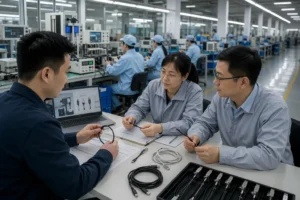
A trading company can provide access to multiple models and may be useful for small trial orders. The trade-off is reduced visibility into the actual production line and component changes. If you use this route, request the manufacturer’s name, factory audit information, product test records and a clear process for handling defects. Verify that the legal entity on the quotation, bank account and export documents is consistent.
MOQ, Sampling and Commercial Terms
MOQ varies by product configuration. Standard stock units may be available at a relatively low quantity, while custom color, printed packaging, firmware changes or unique accessories can raise the MOQ. Ask for separate quantities and prices for:
- standard product with neutral packaging;
- branded product using existing hardware;
- custom retail packaging and manuals;
- custom color or enclosure changes; and
- repeat-order pricing at several volume tiers.
Buy at least one evaluation sample, and preferably samples from different production lots when the order is significant. Test startup time, menu translation, save states, sleep and wake behavior, charging, battery runtime, button response, display defects, speaker output and controller compatibility. Keep an approved “golden sample” signed or documented by both parties. This becomes the physical reference for mass production.
Clarify payment terms, usually a deposit followed by the balance before shipment, and define what evidence is required before balance payment. For larger orders, consider a pre-shipment inspection and a retained sample from the production lot.
Compare Key Specifications Systematically
A comparison sheet helps prevent a low-priced quotation from hiding weaker components. The following framework is useful when evaluating several Chinese suppliers:
| Buying area | Questions to ask | Why it matters |
|---|---|---|
| Performance | What exact chipset, RAM and supported emulator systems are used? | Determines actual playability and reduces vague marketing claims. |
| Display | What are the resolution, panel type, brightness and dead-pixel policy? | Affects perceived quality, returns and product reviews. |
| Battery | What is the tested capacity, cell source and charging protection? | Supports safety review, transport planning and honest runtime claims. |
| Firmware | Can the interface, language, logo and boot screen be customized? | Creates differentiation for private-label sellers. |
| Storage | Is storage internal or removable, and what brand or grade is used? | Low-grade cards can cause corruption, boot failures and customer complaints. |
| Quality control | What tests are performed, at what sampling level and against which limits? | Turns general quality promises into measurable acceptance criteria. |
| Supply continuity | Are key chips, screens and batteries subject to substitutions? | Prevents unapproved changes between purchase orders. |
Compliance and Documentation for Importers
Compliance depends on the destination market, product configuration and claims made on the packaging. Ask the supplier for test reports and declarations that match the exact model, PCB revision, battery and wireless functions—not documents for a visually similar product.
- European Union: Depending on the applicable directives and regulations, a console may require assessment for electrical safety, electromagnetic compatibility, RoHS, battery obligations and radio equipment requirements if it includes Wi-Fi or Bluetooth. The CE mark is the manufacturer’s declaration of conformity, not a universal quality mark.
- United States: Digital electronics may require FCC compliance, particularly for unintentional radiators and wireless transmitters. Ask for the relevant FCC test evidence or identification details and check that the tested configuration matches the shipped product.
- Other markets: Confirm local rules before purchase, including labeling, importer details, plug requirements, recycling obligations, battery registration and language requirements.
For wireless models sold into Europe, review the product’s radio and cybersecurity implications early rather than after production. This EU RED cybersecurity guide for wireless electronics importers is a useful starting point, but your compliance consultant or conformity-assessment partner should confirm the obligations for the exact product and sales date.
Request a Declaration of Conformity, applicable test reports, material declarations, battery documents and user-manual artwork. If the console contains a lithium battery, also ask about transport documentation such as UN 38.3 test evidence and the information required by your freight provider. Do not print certification logos or compliance statements until the responsible party has verified the claim.
Firmware, Game Content and Intellectual Property
Firmware is a commercial and legal issue, not just a technical detail. Confirm who owns or maintains the Linux build, whether source-code obligations apply to modified open-source components, and how updates will be delivered. Ask the supplier to disclose any third-party software included in the image.
Be especially careful with preloaded game ROMs, artwork, trademarks and claims such as “thousands of built-in games.” Rights vary by territory, and an importer can face listing removal, customs problems or intellectual-property complaints even when the supplier supplied the files. A safer product strategy may be to sell the hardware with lawful open-source or buyer-supplied content, subject to professional legal review.
Production Lead Time and Quality Control
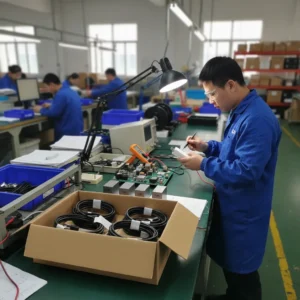
Separate lead time into sample preparation, material procurement, assembly, firmware loading, aging or functional testing, packaging and export preparation. Stock availability does not always mean the exact branded configuration is ready. Ask the supplier to provide a production schedule tied to deposit receipt, artwork approval and final sample approval.
A practical inspection plan can include:
- incoming checks for screens, batteries, storage cards and housings;
- assembly checks for buttons, ports, screws, shell gaps and cosmetic defects;
- 100% power-on and basic functional testing;
- sample-based testing of charging, battery operation, HDMI or wireless functions, save data and firmware;
- carton, label, accessory and barcode verification; and
- pre-shipment inspection against agreed acceptance limits.
Put defect definitions in writing. For example, distinguish critical safety defects, major functional failures and minor cosmetic issues, then agree an acceptable quality limit or corrective-action process. A third-party inspection company can perform pre-shipment checks, but inspection does not replace a strong specification or supplier process control.
Shipping, Incoterms and Landed Cost
Compare quotations on a landed-cost basis. Include unit price, custom packaging, tooling, sample charges, inspection, inland transport, export documents, freight, insurance, duties, VAT or sales tax, destination handling, platform prep and warranty replacements.
State the required Incoterm in every quotation request. EXW may leave the buyer responsible for more origin logistics; FOB generally places export clearance and delivery to the named port with the seller, while the buyer handles the main carriage and import side. DDP can simplify delivery but requires careful confirmation of who is legally importing, paying taxes and providing compliant documentation. Use the current ICC Incoterms rules and obtain advice for your shipment structure.
How to Shortlist a Supplier
Score suppliers against evidence rather than presentation quality. A shortlist should include companies that can provide:
- a complete model specification and clear component disclosure;
- repeatable sample quality and documented QC procedures;
- consistent compliance and battery documentation;
- responsive technical communication in English;
- transparent MOQ, lead time, payment and warranty terms; and
- an acceptable process for firmware, component substitutions and corrective action.
Before committing to a container-scale order, verify the company registration and export capability, inspect the facility directly or through a qualified audit provider, and place a controlled pilot order. Track defect rates, packaging damage, customer returns and firmware issues before increasing volume.
Practical Next Steps for Importers
Start with a one-page specification and ask three to five qualified suppliers for comparable quotations. Evaluate samples using the same test checklist, confirm the required market documents, approve the firmware and packaging artwork, and negotiate written terms for substitutions and defects. Then calculate landed cost and margin using a conservative warranty and returns allowance.
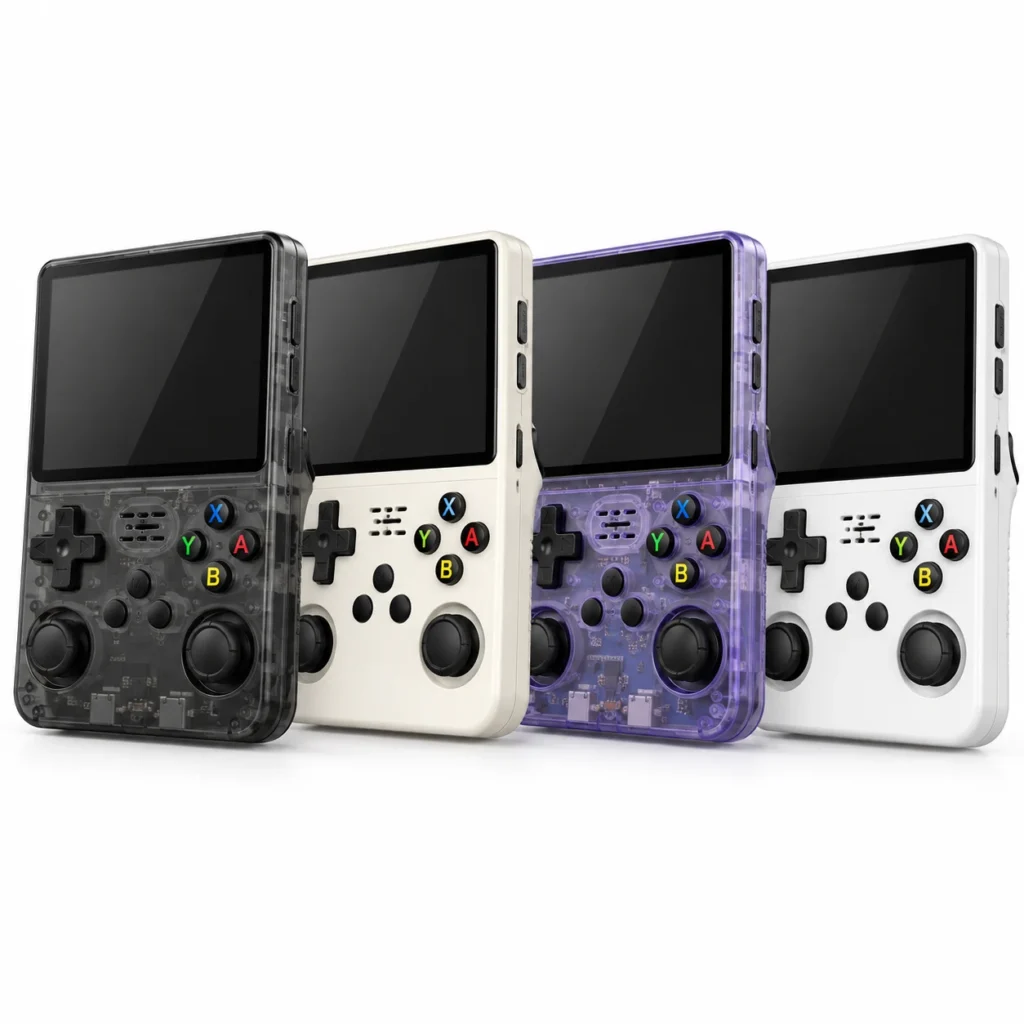
For a ready product reference, review KingFuji’s Linux retro handheld console product page and use the specification as a starting point for an OEM/ODM discussion. Request a quotation with your target quantity, destination market, branding requirements, packaging needs and compliance expectations.
Ready to compare a Linux handheld for your market? View the product and request a quote from KingFuji.
Explore more options for your sourcing plan in our Gaming Devices collection.