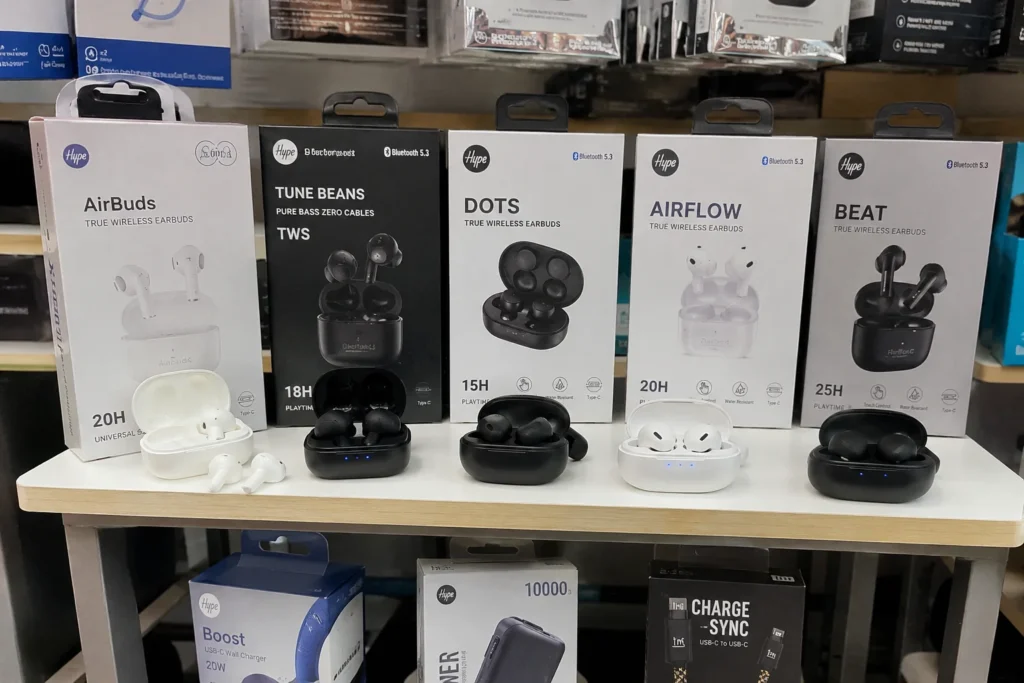
Your earbuds might be great, but they are sitting on the shelf. The packaging looks cheap and confusing, so customers just walk right past them to your competitors.
The best private label earbud packaging is your silent salesperson.1 It clearly and honestly communicates key features like true battery life, specific sound benefits, and compatibility. This builds customer trust on crowded retail shelves, helping them make a quick, confident purchase decision over competitors.
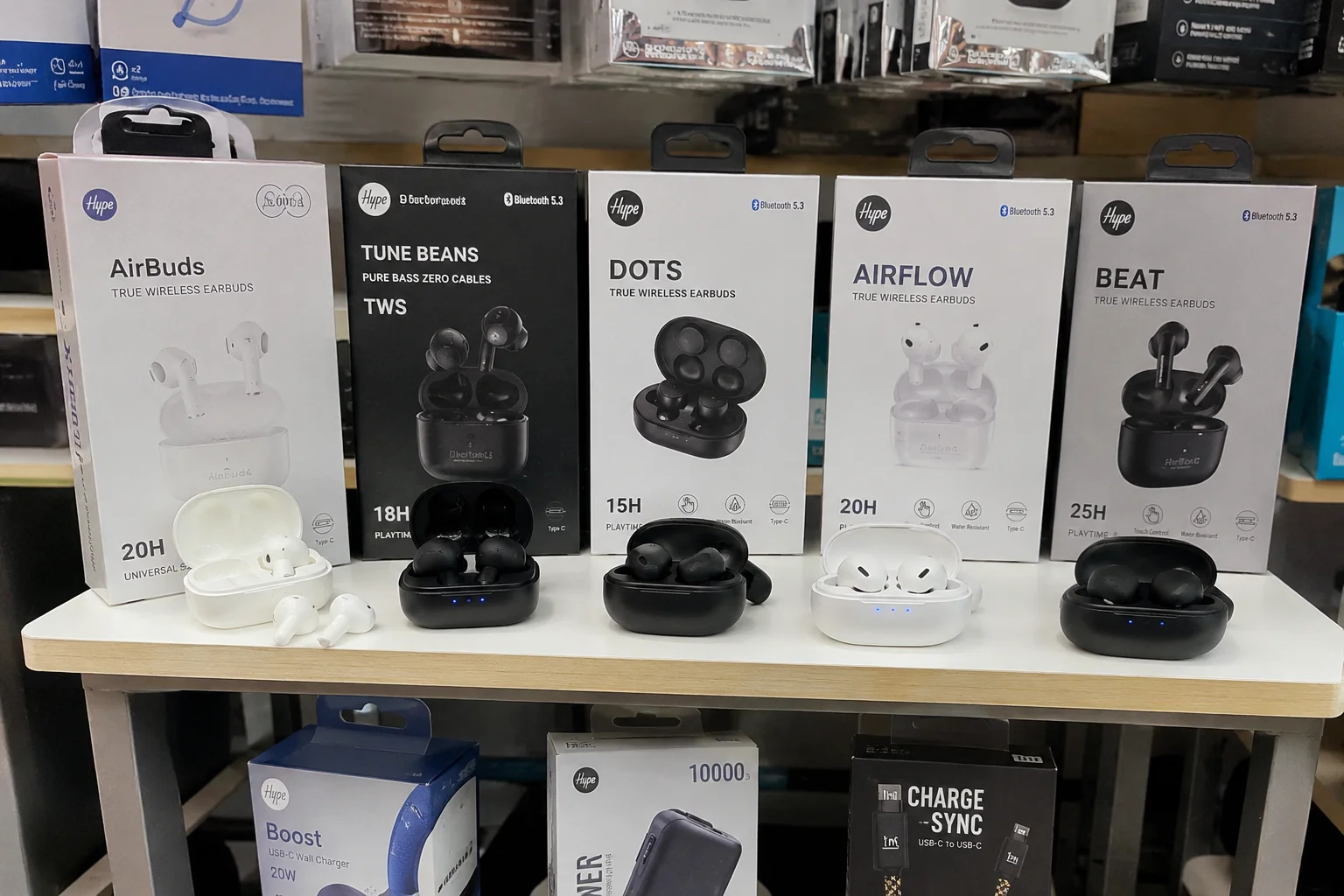
A box is not just a box; it is the first handshake with your customer. Over my 15 years in this business, I've seen fantastic products fail because of poor packaging. It sets the wrong expectations, creates confusion, and ultimately leads to returns. On the other hand, the right packaging can make a good product fly off the shelves. It tells a story of quality and reliability before the customer even touches the product. Let's break down how to make your packaging work hard for your business.
Why Does Private Label Earbuds Packaging Matter for Wholesale Buyers?
Thinking your packaging is just an extra cost? This thinking can kill your product's potential. Bad packaging leads to customer confusion, lost sales, and costly returns that hurt your profits.2
For wholesale buyers, good packaging is your most important marketing tool in a retail store. It communicates value, builds instant trust, and helps customers make a purchase decision in seconds. Great packaging also reduces returns by setting the right expectations from the start.
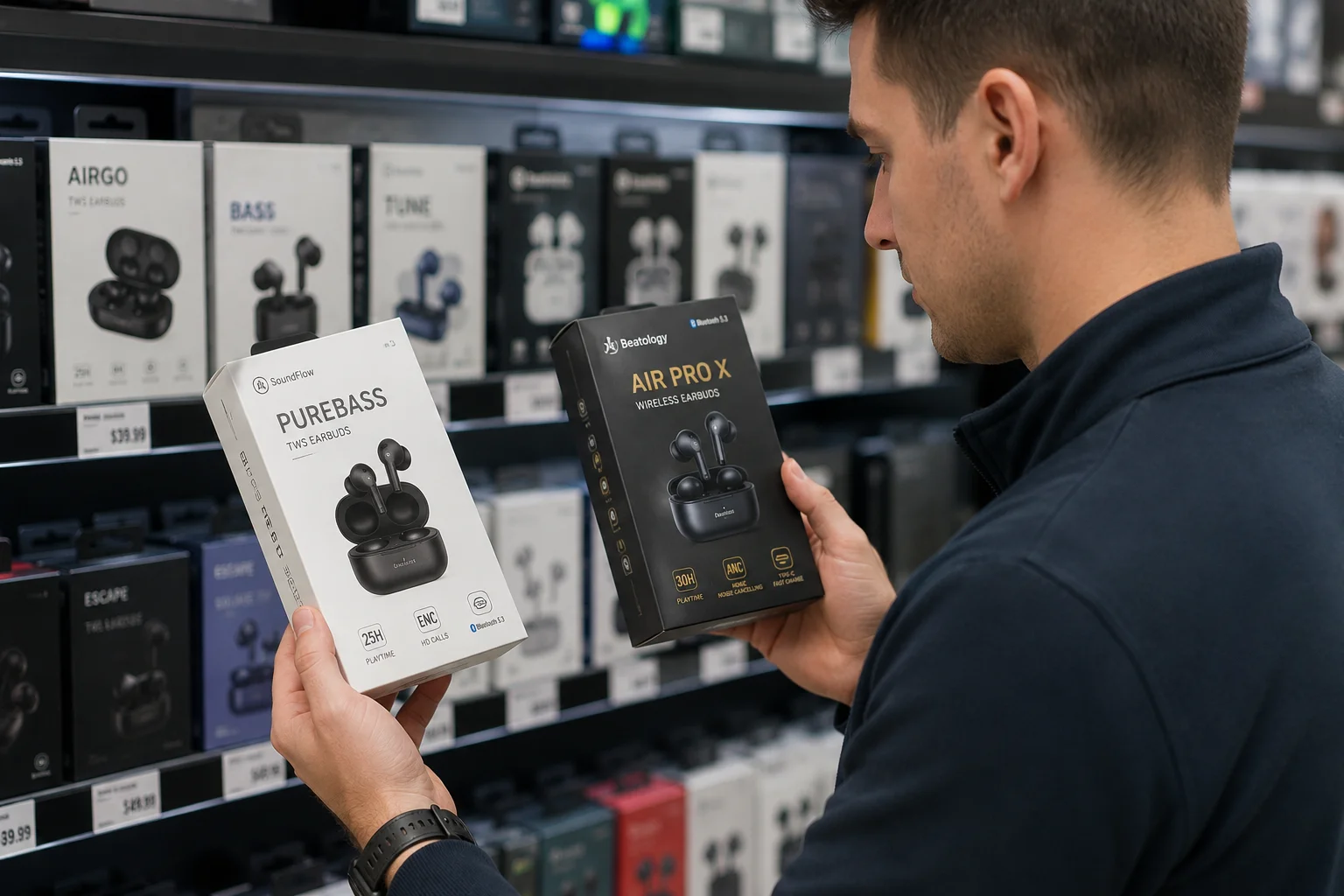
In my experience dealing with European and American retailers, the conversation always comes back to how the product presents itself. TWS earbuds are not simple products like USB cables. They have complex features like Bluetooth chips, batteries, microphones, and noise cancellation. If your box doesn't explain these things clearly, the customer gets confused or, worse, feels misled. This is a direct path to a bad review or a product return.
The Retail Shelf Is a Battlefield
Imagine your product on a shelf next to ten others. A customer walks by and glances for maybe three seconds.3 What does your box tell them in that time?
- A cheap, generic box says: "I'm a low-quality, risky purchase."
- A clean, clear, professional box says: "I'm a reliable product worth your money."
Good packaging isn't an expense; it's an investment that justifies your price. It helps the customer understand why your product might be a few dollars more than the one next to it. For you, the buyer, the goal isn't just to find a cheap supplier. The real goal is to find a partner who helps you sell successfully with fewer problems. And that process starts with the box.
What Should the Front of the Box Communicate First?
A cluttered box full of icons and text confuses customers.4 They don't know what your product is or why they should care. A confused customer will never buy your product.
The front of your box must instantly show three things: a clear image of the product, your brand name, and the single most important feature. For example, "Active Noise Cancelling" or "30-Hour Playtime." This helps customers understand and evaluate your product in seconds.
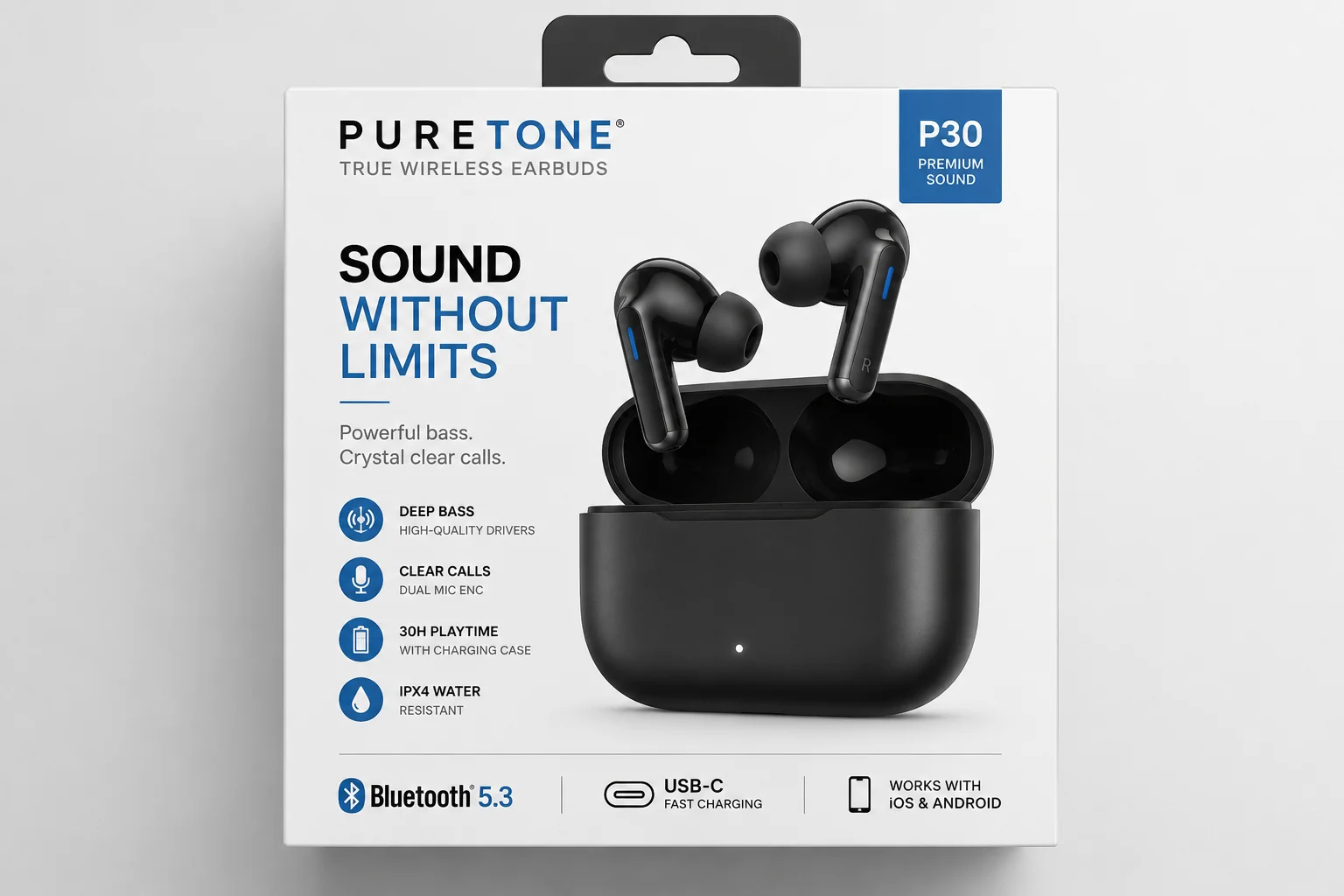
When I work with clients on their first private label order, we spend a lot of time on the front of the box. It’s the most valuable real estate you have. Many buyers make the mistake of trying to list every single feature on the front. This is a classic error. When you try to say everything, you end up saying nothing at all.
The 3-Second Rule Hierarchy
Your design must follow a clear visual priority to be effective in a retail setting. Think of it as a simple hierarchy that a customer's eye will follow naturally.
- Product Image: A large, clean, high-quality picture of the earbuds and case. Customers need to see exactly what they are buying.
- Brand Logo: Your brand name, placed clearly but not overwhelmingly. This builds brand recognition over time.
- Key Selling Point (KSP): The ONE biggest reason to buy your product. Are you competing on battery? On noise cancellation? On comfort? Pick one and make it the hero.
Here's how this plays out in practice:
| Good Front-of-Box | Bad Front-of-Box |
|---|---|
| Large, clean product image | Small or no product image |
| Clear, prominent brand logo | Logo is tiny or hard to read |
| One main feature in large font (e.g., "40dB ANC") | Ten small icons for every feature |
| Clean, uncluttered background | Busy background with distracting graphics |
Choosing that one KSP is crucial. It forces you to understand your target customer. If you’re selling to commuters, "Active Noise Cancelling" is powerful. If you’re selling to students on a budget, maybe "30-Hour Playtime" is the better message.
How Can Packaging Make Sound Quality Easy to Understand?
"Good sound" or "High-Fidelity Audio" are meaningless phrases on a box.5 Customers can't hear the product before they buy it, so these vague claims make your product feel generic and untrustworthy.
Instead of using empty words, use specific terms that describe a benefit. Phrases like "Deep, Powerful Bass" or "Crisp, Clear Vocals" help customers imagine the experience. Showing a technical detail like "10mm Graphene Drivers" also adds a tangible reason to believe the sound is good.
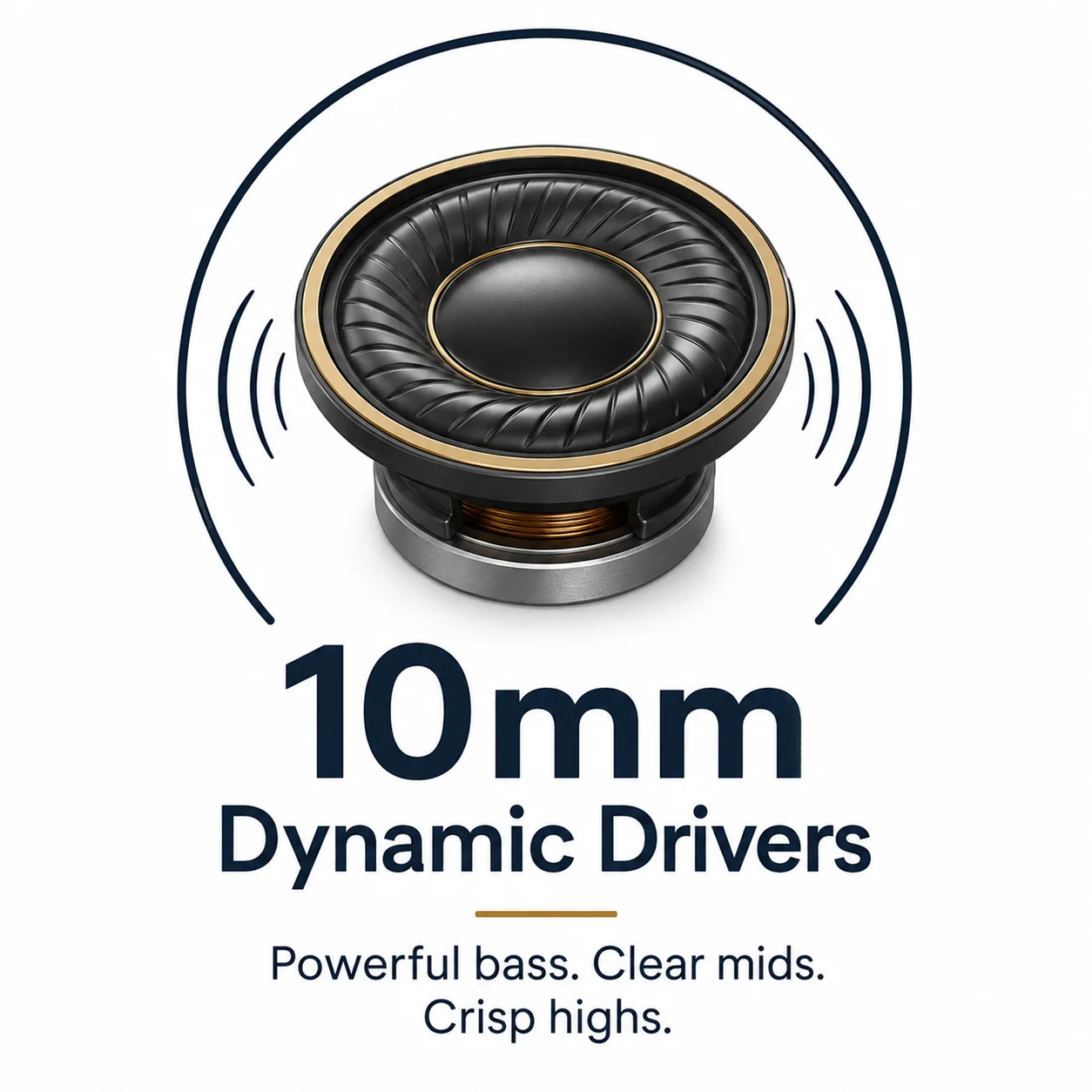
A common question from buyers is, "How can I prove the sound is good on the box?" You can't prove it, but you can make it believable. Consumers are smart; they've seen "Premium Sound Quality" on hundreds of cheap products. You need to be more specific to earn their trust. This is about translating the technical specs from the factory into a benefit the end-user can understand.
Translating Specs into Benefits
Work with your supplier to understand the key hardware components and then turn them into marketing messages. If your earbuds have a special feature for calls, highlight it! So many brands forget that people use earbuds for phone calls all day.
Here’s a simple table I use to help clients with this translation:
| Technical Spec | Vague Marketing Copy | Better Packaging Copy |
|---|---|---|
| 10mm Dynamic Driver | "HD Sound" | "Feel the Powerful Bass" or "10mm Drivers for Rich Audio" |
| Dual Microphones with ENC | "Noise Reduction" | "Clear Calls, Even in Noise" or "Dual Mics for Voice Clarity" |
| AAC Codec Support | "Great for Music" | "Optimized for High-Quality iPhone Audio" |
| Low Latency Mode | "Gaming Mode" | "Zero-Lag Gaming & Video" |
Notice how the "Better" column gives the customer a concrete idea of what to expect. It's specific, benefit-focused, and sounds more credible. Don't just sell a feature; sell the experience that feature creates.
What Battery Life Claims Should Be Shown Clearly?
Your box says "30 hours," but a customer finds it only lasts 4 hours on a single charge. This creates bad reviews and returns. You must prevent this with clear communication.
The solution is to be honest and specific. You must clearly separate "Single Charge Playtime" (e.g., 6 Hours) from "Total Playtime with Case" (e.g., 30 Hours). Using simple icons for the earbud and the case with their respective times is the clearest method.
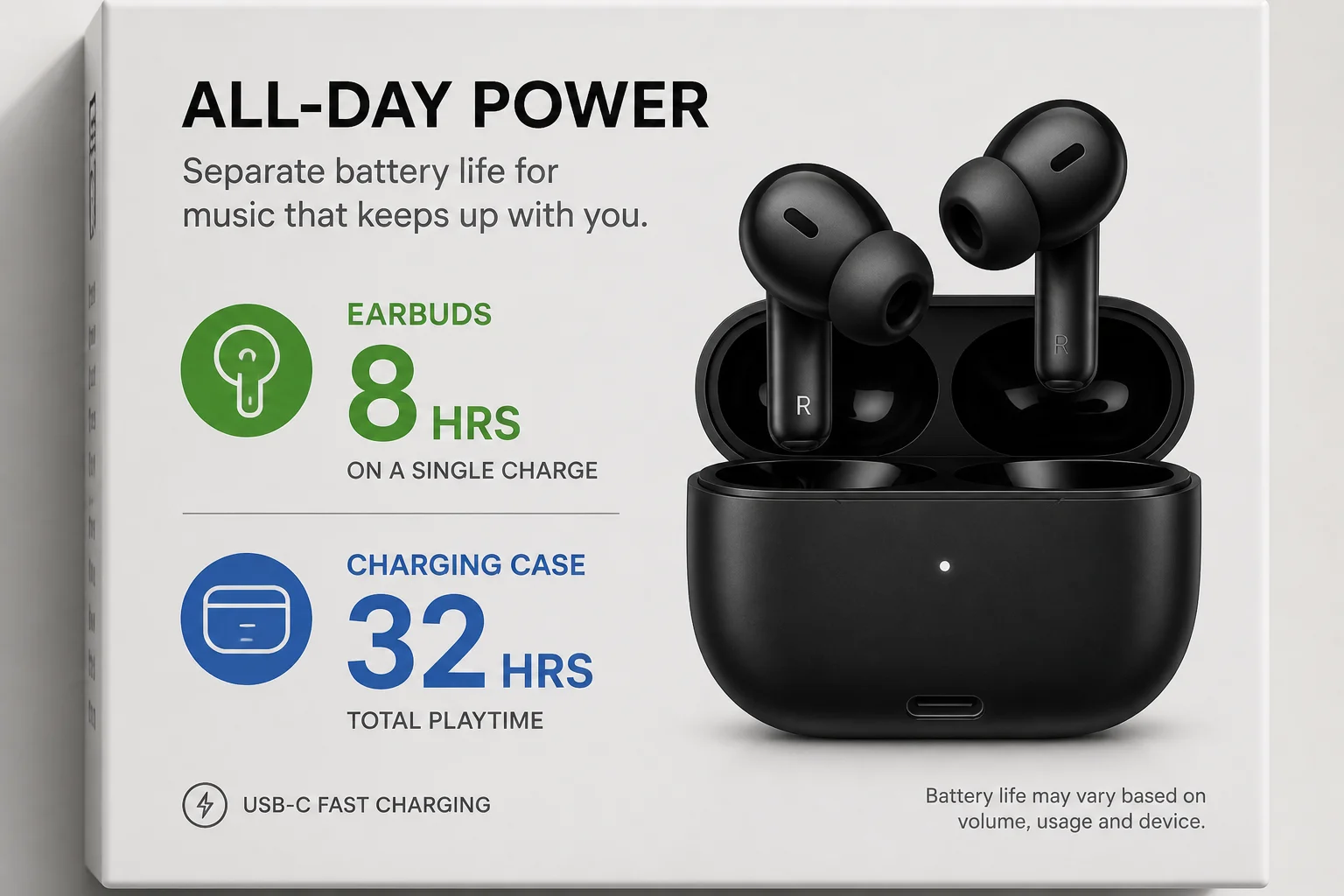
This is probably the #1 source of customer complaints I see from my clients’ buyers.6 The industry has created a lot of confusion by promoting only the large "total playtime" number. While technically not a lie, it feels misleading to a customer who expected 30 hours of continuous listening. Setting the right expectation on the box is your best defense against negative reviews. An unhappy customer will always be louder than a happy one.7
Breaking Down Battery Specs on the Box
I always advise my clients to dedicate a small section on the back or side of the box to a clear battery breakdown. This shows you are transparent and builds trust. A simple graphic works best.
Here is the information you must separate and display clearly:
| Claim on Packaging | What It Really Means for the Customer | Recommended Icon/Text |
|---|---|---|
| Playtime Per Charge | How long the earbuds last on their own before needing the case. | 6 HRS (Icon of a single earbud) |
| Total Playtime | The total listening time you get by recharging with the case. | 30 HRS TOTAL (Icon of earbud + case) |
| Fast Charging | How much playtime you get from a short charge. | 10 MIN CHARGE = 1 HR PLAYTIME |
| Case Recharges | How many full recharges the case can provide to the earbuds. | Provides 4 Full Charges |
By presenting the information this way, you are being honest. You turn a potentially negative experience ("It only lasted 6 hours!") into a positive one ("Wow, just like the box said, and I can recharge it 4 more times!"). This simple act of clarity can dramatically reduce your return rate.
How Can Certifications and Compatibility Build Trust?
Customers often hesitate before buying. They worry if the product is safe or if it will even work with their phone. This last-minute hesitation can cost you the sale.
Displaying official logos like CE, FCC, RoHS, and the Bluetooth symbol on your packaging instantly builds trust and signals quality. Also, clearly stating "Works with iOS & Android" removes a major purchase barrier, assuring customers of broad compatibility.
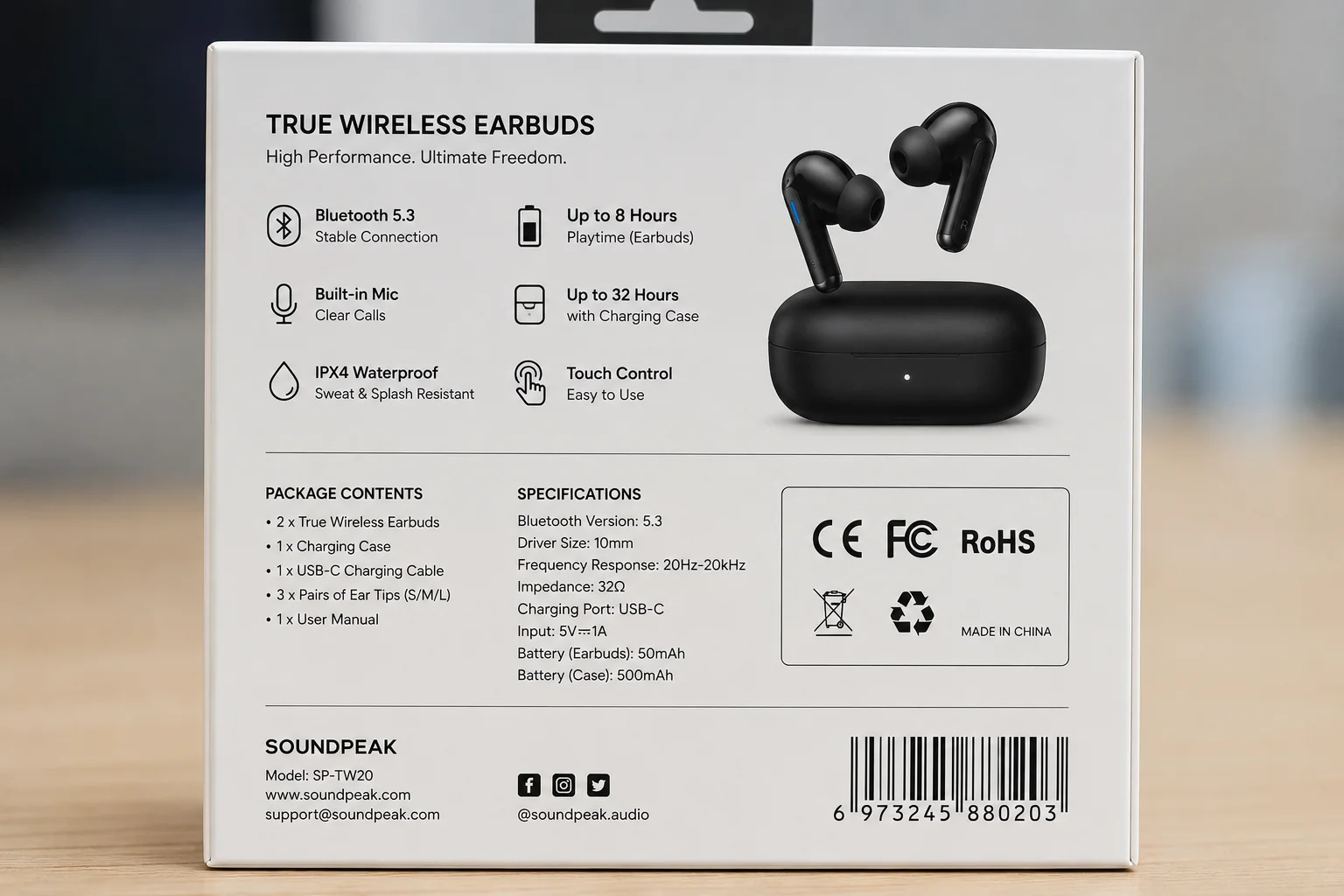
Many of my new B2B customers think these certification marks are just for clearing customs. They are, but they are also powerful marketing tools. When a consumer is standing in a store, holding your product and a competitor's, these small logos can be the tipping point. They act as a third-party endorsement of your product's safety and quality.8 They silently say, "This product is legitimate and has been tested to meet standards."
The Silent Trust-Builders
Don't hide these logos in tiny print. Give them a clean, organized space on the back of your box. Here are the most common ones and what they signal to a customer:
- CE Mark: This product meets the safety, health, and environmental protection standards for sale within the European Economic Area. It's a must-have for the EU market and a strong trust signal elsewhere.
- FCC Mark: This product's electronic emissions are within the limits approved by the Federal Communications Commission in the USA. It's essential for the US market.
- RoHS Logo: This stands for "Restriction of Hazardous Substances." It tells the customer the product is made without certain hazardous materials, making it safer for them and the environment.
- Bluetooth Logo: This shows you have paid the license fees and your product has been certified by the Bluetooth SIG. It guarantees better compatibility and performance.
Including a simple line like "Compatible with iPhone, Android, and other Bluetooth devices" also removes any guesswork for the customer. Never assume a customer knows your product will work with their device. State it clearly.
What Packaging Details Help Retailers Display and Sell Faster?
Your beautifully designed product arrives at the retailer's warehouse, but it's missing a barcode or a hang tab. It gets stuck in the back room, never making it to the shelf.
Always include essential retailer-friendly features on your packaging. This means a standard barcode (UPC or EAN), a hang tab for peg hooks, and a box shape that is easy to stack. This makes it simple for retailers to stock, display, and sell your product.
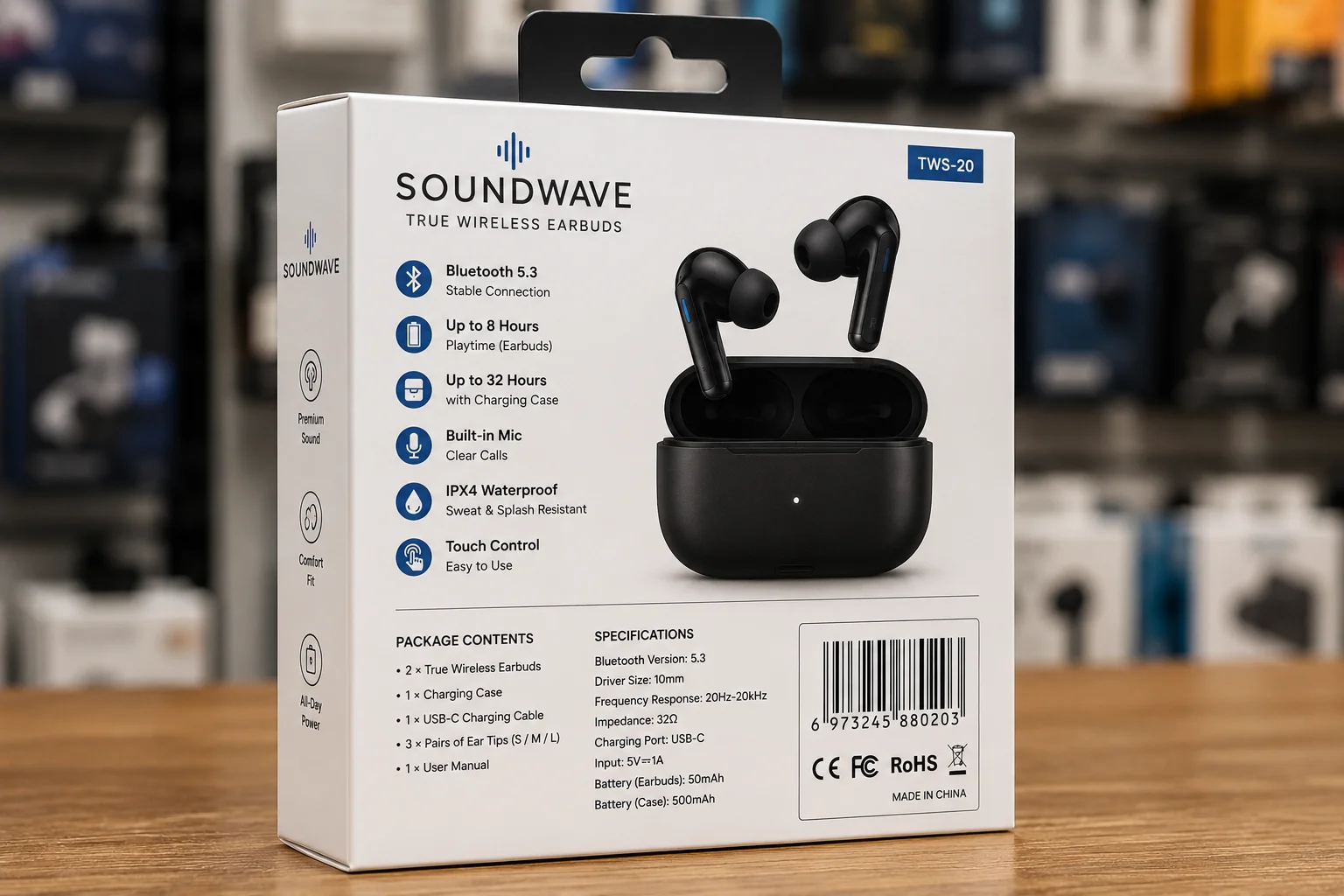
I often have to remind my wholesale buyers that their first customer isn't the end-user; it's the retailer. If you make the retailer's job difficult, your product will fail. Chain stores and even small shops have systems. Your packaging needs to fit into their system, not the other way around. A product that is hard to stock is a product they will not re-order.
Making Your Product "Retail Ready"
Before you approve your packaging design, run through this simple checklist from a retailer's point of view.
| Feature | Why It Matters for the Retailer |
|---|---|
| Hang Tab | Absolutely essential for displaying products on pegboard walls, which are common in electronics and accessory aisles. A box without one has limited display options.9 |
| Barcode (EAN/UPC) | Non-negotiable. It's required for inventory control and for the checkout scanner. No barcode means no sale in most modern retail environments. |
| Stackable Shape | A simple, rectangular box is much easier to stack on a shelf and in the stockroom than an oddly shaped or cylindrical package. Maximize that shelf space! |
| Clear Model Name | Helps the retail staff easily identify the product for stock checks and customer questions. Don't make them guess. |
| Durable Material | The box needs to withstand shipping and handling and still look good on the shelf. A crushed or dented box will not sell. |
Thinking about these details shows that you are a professional partner, not just another factory seller. It demonstrates that you understand the entire business cycle, from the warehouse to the customer's hands.
How Can Custom Branding Look Premium Without Raising Costs Too Much?
You want your private label product to have a premium look, but you have a tight budget. You assume any custom finish is too expensive, so your brand gets held back.
You can achieve a premium feel very cost-effectively by focusing on great design and small, strategic touches. Use a clean, minimalist layout, choose one special finish like a spot UV logo or a matte lamination, and ensure your text is sharp and easy to read.
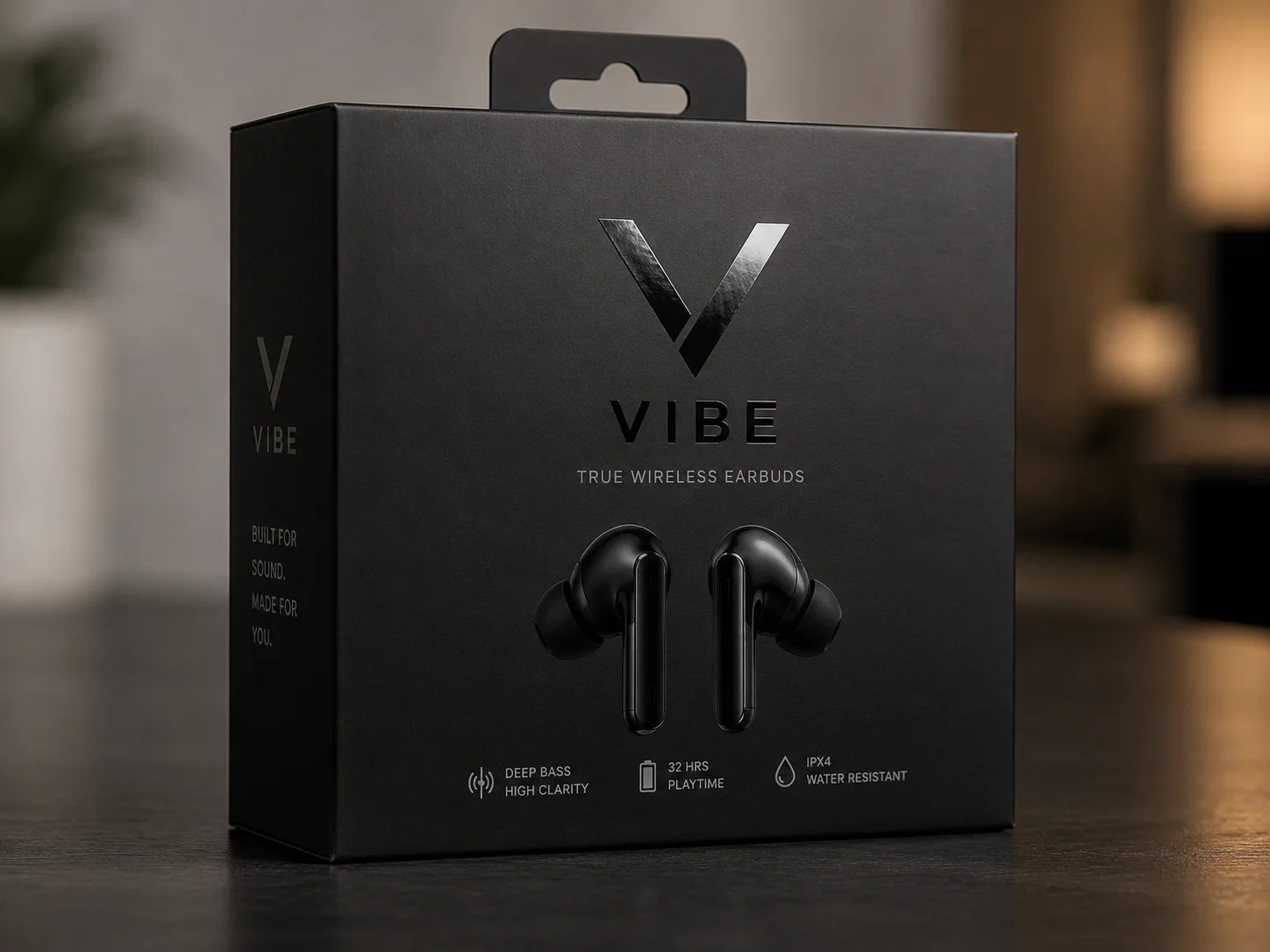
A frequent request I get is, "Can you make it look like a premium brand, but for cheap?" The secret is that a premium look doesn't have to be expensive. It's about making smart choices, not just throwing money at the problem. A simple, well-thought-out design will always look more premium than a cheap box loaded with bad graphics and tacky gold foil. The goal is to increase the perceived value.
Smart, Budget-Friendly Upgrades for Your Box
Instead of asking for everything, pick one or two finishes that will have the most impact on your design.
| Upgrade Finish | The Effect It Creates | Typical Cost Impact |
|---|---|---|
| Matte Lamination | A smooth, non-glare finish that feels soft to the touch. It instantly elevates the feel and resists fingerprints. | Low |
| Spot UV | A glossy coating applied to specific areas, like your logo or product image. It creates a nice contrast with a matte background. | Low-Medium |
| Embossing | Pressing a design into the box from behind to create a raised, 3D effect on your logo or brand name. | Medium |
| Foil Stamping | Applying a thin layer of metallic foil (e.g., silver or gold) to certain areas. Use it sparingly for a touch of luxury. | Medium |
| High-Quality Insert | A well-designed tray that holds the product securely makes the unboxing experience feel special. This can be done well even with molded paper pulp. | Varies |
My advice is always to start with a great graphic design and a matte lamination. That alone will put you ahead of 80% of the competition.10 From there, adding just one more element, like a Spot UV logo, can provide that "wow" factor without breaking the bank.
What Final Packaging Checklist Should Buyers Confirm Before Production?
You approved the design file, but the final printed boxes are all wrong. The colors are off, there's a typo, and the barcode doesn't scan. Now you're stuck with 5,000 useless boxes.
Before you approve mass production, you must demand a final, physical sample of the complete package. Check this "golden sample" for color accuracy, typos, barcode scannability, and the correct placement of all logos and legal text. Sign off on this physical sample only.
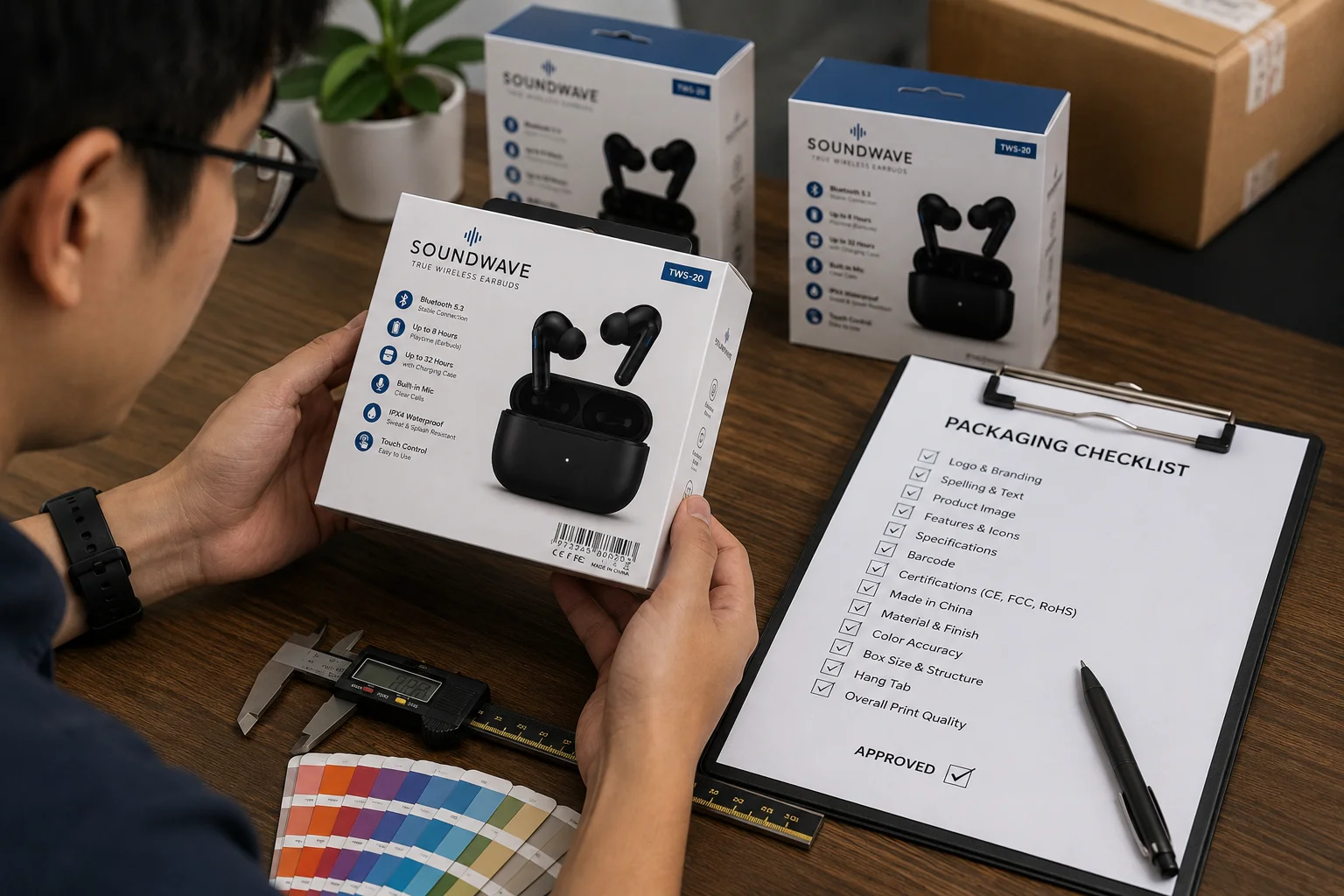
This is the most critical step in the entire process. I cannot stress this enough. After 15 years, I've seen more money wasted from skipping this step than anywhere else. A digital PDF on your computer screen does not look the same as a printed box.11 Colors will vary, and you can't test the feel or the barcode. Approving production based on a digital file is a huge gamble.
Your Pre-Production "Golden Sample" Checklist
When that final sample arrives from your supplier, do not rush your approval. Go through it with a fine-tooth comb. This sample is the standard that your entire production run will be measured against.
Here is the checklist I give to all my clients:
- ☐ Color Accuracy: Do the colors on the box exactly match the Pantone color codes you specified in your design files? Hold it under different lights.
- ☐ All Text: Read every single word. Check for spelling mistakes, grammar errors, and awkward phrasing. Have a native speaker of the target language review it.
- ☐ Barcode Scan: Use a barcode scanner app on your phone. Does it scan instantly? Does it pull up the correct number you assigned?
- ☐ Physical Fit: Place the earbuds, case, charging cable, and extra ear tips into the packaging insert. Do they fit securely? Does anything rattle around?
- ☐ Finishes & Coatings: Is the matte lamination smooth? Is the spot UV in the correct place? Is the foil stamping clean?
- ☐ Glue & Assembly: Is the box glued together properly? Does it feel sturdy, or is it flimsy?
- ☐ Legal & Compliance: Are all the required certification logos (CE, FCC) and your company address present and correct?
Only after you have checked every single one of these points should you sign the sample, take a picture of your signature on it, and send that approval to the factory. This physical sample is your insurance policy.
Conclusion
Smart packaging is not an expense, but a crucial investment. It builds trust, sets correct customer expectations, and directly drives sales while reducing costly returns for your wholesale business.
"Psychology Of Product Packaging, How It Plays Into Profitability", https://www.forbes.com/sites/cherylrobinson/2024/02/28/psychology-of-product-packaging-how-it-plays-into-profitability/. A source could provide research findings on the role of packaging as a marketing vehicle, showing how elements like design, color, and information clarity can impact consumer trust and drive sales at the point of purchase. Evidence role: general_support; source type: paper. Supports: The claim that packaging significantly influences a consumer's perception and purchase decision in a retail setting.. ↩
"Sustainable Paper-Based Packaging: A Consumer's Perspective", https://pmc.ncbi.nlm.nih.gov/articles/PMC8151435/. A source could offer data or analysis from market research or consumer studies that correlates high product return rates with packaging that fails to set clear and accurate customer expectations. Evidence role: statistic; source type: research. Supports: The claim that unclear or misleading packaging is a significant driver of product returns and customer dissatisfaction.. ↩
"Exploring Shopper's Browsing Behavior and Attention Level with an ...", https://pmc.ncbi.nlm.nih.gov/articles/PMC6895988/. A source could provide research on in-store shopper behavior, such as eye-tracking studies, that measures the average time a consumer's attention is held by a single product on a crowded shelf. This would substantiate the general principle of needing to capture attention within seconds. Evidence role: statistic; source type: paper. Supports: The claim that shoppers make extremely quick initial judgments about products on a shelf.. ↩
"[PDF] Incorporating Choice Paralysis into the Multinomial Logit Model", https://www.stern.nyu.edu/sites/default/files/assets/documents/Anisha%20Patel_Thesis_Honors%202014.pdf. A source could discuss the psychological principle of cognitive load, explaining how packaging with excessive information or visual clutter can hinder a consumer's ability to process key information, leading to decision fatigue and a lower likelihood of purchase. Evidence role: mechanism; source type: paper. Supports: The claim that overly complex packaging can overwhelm and confuse potential buyers.. ↩
"[PDF] Puffery in Advertisements: The Effects of Media Context ...", https://carlsonschool.umn.edu/sites/carlsonschool.umn.edu/files/2018-10/JCR_Xu%20and%20Wyer%202010_Puffery%20in%20Ads.pdf. A source could provide research on consumer attitudes toward advertising, indicating that shoppers often discount or ignore vague, unsubstantiated claims ('puffery') in favor of specific, verifiable features or benefits. Evidence role: general_support; source type: research. Supports: The claim that consumers are often skeptical of vague, subjective marketing claims.. ↩
"Durability of smartphones: A technical analysis of reliability and ...", https://pmc.ncbi.nlm.nih.gov/articles/PMC7871336/. A source, such as a market research report or an analysis of a large dataset of customer reviews, could provide data showing that discrepancies between advertised and actual battery life are a leading cause of negative reviews and complaints for true wireless earbuds. Evidence role: statistic; source type: research. Supports: The claim that battery life is a major point of dissatisfaction for earbud users.. ↩
"Unveiling the Negative Customer Experience in Diagnostic Centers", https://pmc.ncbi.nlm.nih.gov/articles/PMC11012628/. A source could cite consumer behavior research indicating that individuals are significantly more motivated to post reviews or share their experience via word-of-mouth after a negative interaction with a product or company than after a positive one. Evidence role: statistic; source type: paper. Supports: The claim that negative experiences are more likely to be shared by customers than positive ones.. ↩
"The Impact of Visual Elements of Packaging Design on Purchase ...", https://pmc.ncbi.nlm.nih.gov/articles/PMC11851823/. A source could provide survey data or consumer behavior research on the extent to which shoppers recognize and are positively influenced by regulatory and safety certification marks (e.g., CE, FCC) on electronics packaging. Evidence role: general_support; source type: research. Supports: The claim that certification marks on packaging can act as trust signals for consumers.. ↩
"Hanging Tags and Consumer Behavior | Land-Grant Press", https://lgpress.clemson.edu/publication/hanging-tags-and-consumer-behavior/. A source from a retail or packaging industry association could describe common merchandising practices, explaining the widespread use of pegboard and slatwall systems in categories like consumer electronics, which makes a hang tab a vital feature for securing product placement. Evidence role: general_support; source type: institution. Supports: The claim that hang tabs are a critical feature for packaging in many retail environments.. ↩
""Consumer Perception of Tactile Packaging: A Research Study on ...", https://repository.rit.edu/japr/vol7/iss1/1/. A source could provide research on sensory marketing, showing how tactile elements in packaging, such as a smooth matte finish, can positively influence consumer perception of product quality and brand prestige. Evidence role: general_support; source type: research. Supports: The claim that using tactile finishes like matte lamination can improve a product's competitive appeal.. Scope note: The source would support the general principle that quality finishes enhance appeal, but it is unlikely to validate the specific '80%' figure. ↩
"RGB vs CMYK: What's the Difference? | VistaPrint US", https://www.vistaprint.com/hub/correct-file-formats-rgb-and-cmyk?srsltid=AfmBOoqKucELMN_QzwkB-O9Y5v5tWw7qS2xagsyA2dY_iM-x-MqO0WH1. A source could provide a technical explanation of the fundamental differences between the additive RGB (Red, Green, Blue) color model used for digital displays and the subtractive CMYK (Cyan, Magenta, Yellow, Key/Black) color model required for physical printing, which accounts for the color shifts. Evidence role: mechanism; source type: education. Supports: The claim that digital screen colors differ from printed colors.. ↩