Quick Answer
Planar transformers in GaN chargers can look like a clear product upgrade, especially when buyers want compact, modern charging products. However, a planar transformer label alone does not prove better efficiency, safety, reliability, or thermal performance. We recommend evaluating the complete charger design, model-specific documents, sample results, and supplier production consistency before adding a model to your range.
Planar transformers in GaN chargers may support a compact internal layout and give designers more flexibility, but they are not an automatic quality upgrade. Buyers should verify the charger’s rated output, port behavior, temperature performance, protection design, compliance documents, and mass-production consistency for the exact model being purchased.
In our conversations with European and U.S. buyers, we often hear a similar question: “Does a planar transformer make this GaN charger better?” The useful answer is more practical than a marketing claim. Buyers need to understand what the component may contribute, what it cannot guarantee, and which supplier questions reduce risk before an order is placed.
Is a Planar Transformer an Automatic Quality Upgrade in a GaN Charger?
A planar transformer in a GaN charger may sound like a premium feature, but buyers can face problems when product descriptions stop at the component name. A charger can still have weak thermal control, unclear protection behavior, inconsistent assembly, or unsupported output claims. We suggest treating the planar design as one point in a wider product evaluation.
A planar transformer is not automatically a quality upgrade in a GaN charger. It may offer layout and design advantages in some applications[3], but final charger quality depends on the full circuit design, components, housing, heat management, protection functions, manufacturing control, and verified performance of the specific model.
What Is a Planar Transformer?
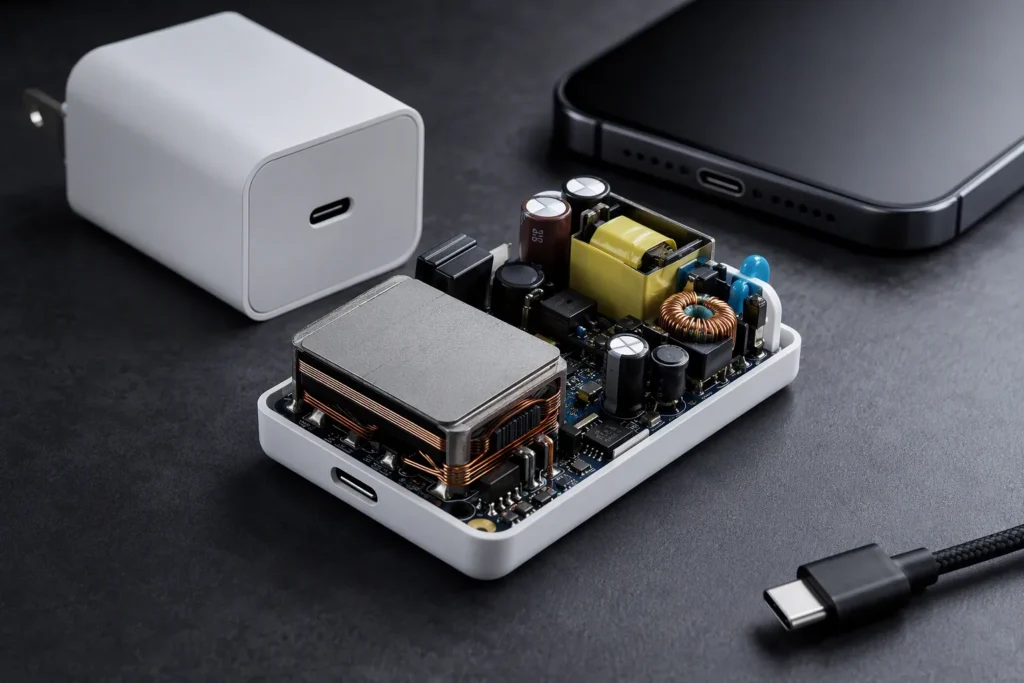
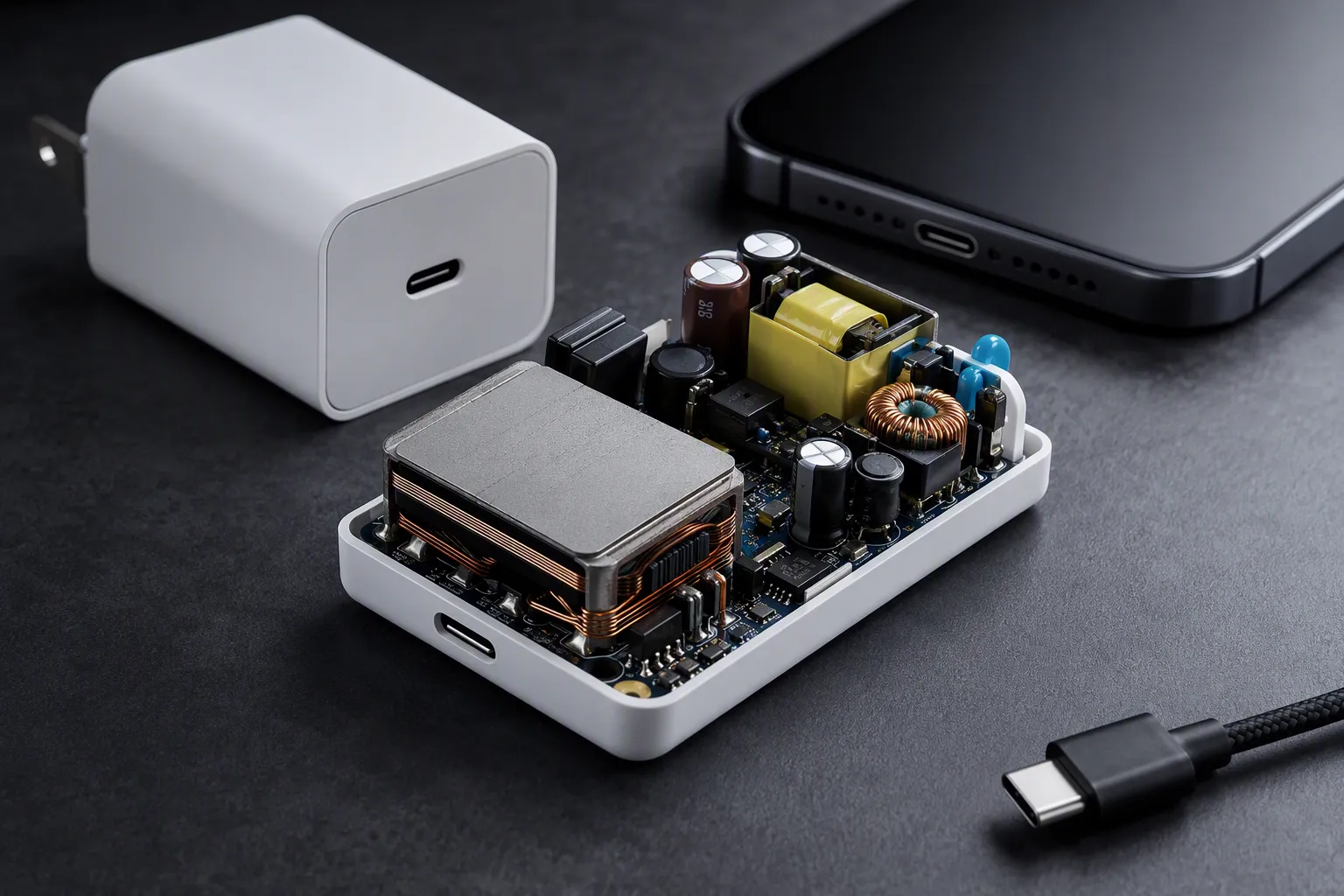
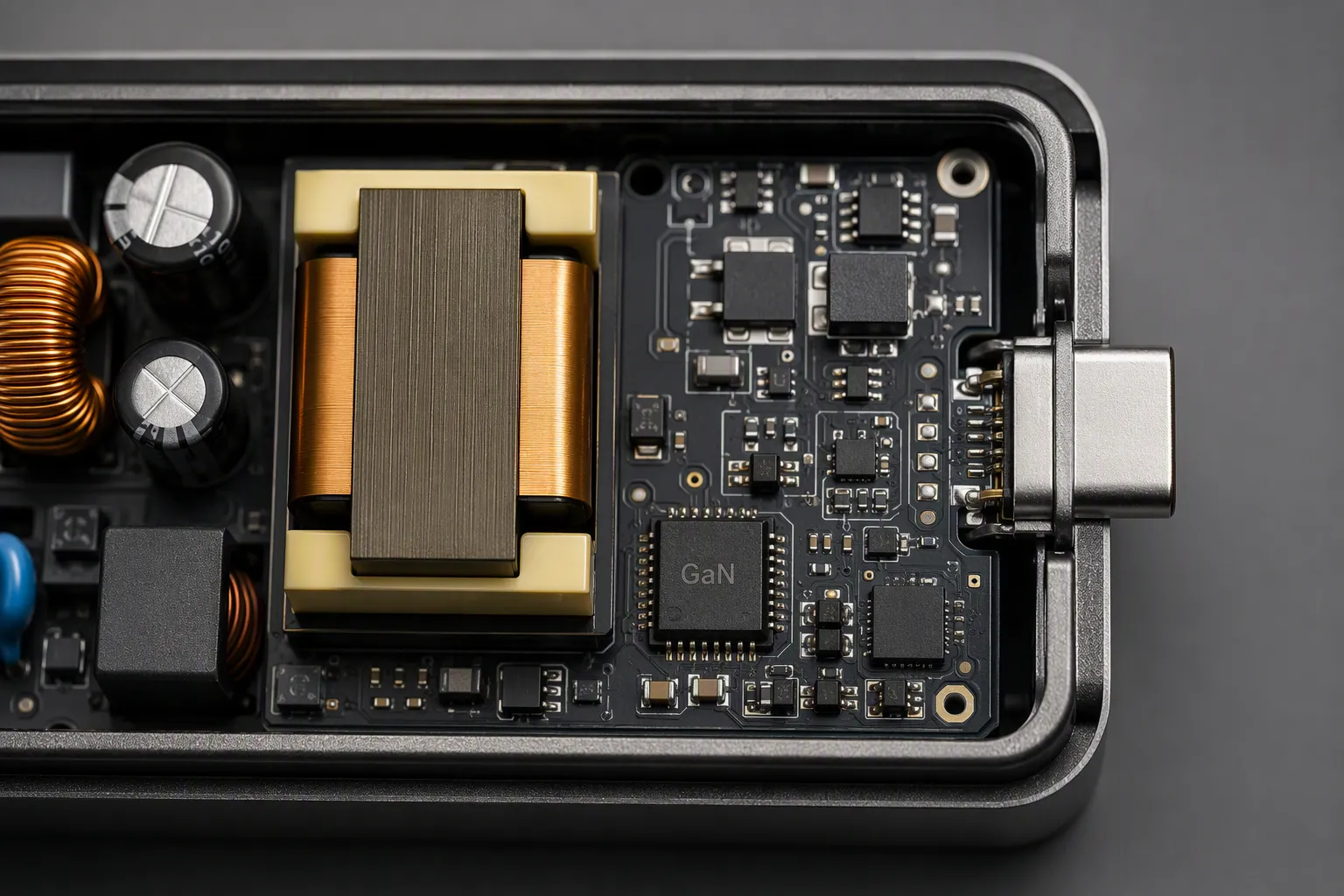
A conventional transformer typically uses wound copper wire around a magnetic core.[1] A planar transformer uses a flatter construction, often with conductive layers and a planar core arrangement.[2] In compact power electronics, this format can give engineers different options for arranging magnetic components inside limited space.
For a buyer, the most important point is simple: a planar transformer is one component within the power-conversion system. It does not operate separately from the GaN devices, control circuitry, capacitors, cooling strategy, PCB layout, enclosure, USB-C port configuration, and firmware or protocol implementation where applicable.
A supplier may describe a product as a “planar transformer GaN charger” because the combination sounds advanced. That description may be accurate, but it still leaves important questions unanswered:
- Which exact charger model uses the planar transformer?
- What is the rated wattage at each port?
- Does the charger support single-port and multi-port output as stated?
- What test conditions support the efficiency or temperature claims?
- Is the design used across all versions of the product?
- Does the approved sample match the planned production configuration?
- Which compliance documents apply to this exact model and plug version?
We encourage buyers to keep these questions separate from the marketing language. A product can use a planar transformer and still require the same disciplined evaluation as any other USB-C charger or GaN wall charger.
Why Planar Transformers in GaN Chargers Attract Buyer Interest
Planar transformers in GaN chargers attract attention because they can fit naturally into the story of compact, high-power charging. GaN technology is often associated with smaller and more efficient charger designs[4], while planar magnetic components may support a flatter or more controlled internal arrangement in some designs.
That potential can be relevant for retailers and brands that want products with:
- Compact travel-friendly dimensions
- Clean industrial design
- Higher power ratings in a smaller retail package
- USB-C PD charging options for phones, tablets, and laptops
- Multi-port charger formats
- A premium-looking product story for online listings or store displays
However, buyers should avoid turning potential design benefits into universal conclusions. A planar transformer does not always make a charger smaller or lighter. The final dimensions can be influenced by many other factors, including:
| Buyer Evaluation Area | Why It Matters Beyond the Planar Transformer |
|---|---|
| Housing dimensions | Plug type, port count, safety spacing, heat management, and structural requirements affect overall size. |
| Charger weight | The enclosure, AC plug construction, capacitors, shielding, cables, and other components also affect weight. |
| Efficiency | Efficiency depends on the complete power design and the specific load and input conditions used for testing.[5] |
| Surface temperature[6] | Housing materials, airflow, internal layout, power level, ambient temperature, and operating duration all matter. |
| Output stability | Control design, cable quality, port negotiation, and load behavior can influence real-world charging use. |
| Product reliability | Material selection, protection design, assembly quality, incoming inspection, and production control remain critical. |
From our sourcing perspective, a buyer should view the planar transformer as a design feature worth asking about, not as a shortcut for approving a charger.
Why “GaN + Planar Transformer” Needs Model-Specific Context
The phrase “GaN + planar transformer” can be meaningful only when it is connected to a specific product configuration. A 30W single-port charger, a 65W two-port charger, and a 140W desktop charger face very different design requirements. The same broad component description cannot prove the same results across every power class.
For example, buyers should ask the supplier to clarify:
- Model number: Which exact SKU uses the claimed planar transformer design?
- Rated output: What are the supported output profiles for each port?
- Port-sharing behavior: How does total power change when two or more ports are used?
- Target devices: Is the model positioned for phones, tablets, laptops, or mixed-device charging?
- Input version: Does the claim apply to the EU plug, U.S. plug, UK plug, or desktop version?
- Test basis: Are efficiency, temperature, and output statements based on internal data, third-party testing, or a certification report?
- Production status: Is the submitted sample from the same configuration planned for mass production?
This level of detail matters because e-commerce sellers and retail buyers must describe products accurately. A listing that says “smaller, cooler, safer, and more efficient due to planar transformer technology” can create avoidable risk if the supplier cannot support each statement for the actual model.
We recommend using careful wording in product pages unless evidence is available. For example, buyers may say that a model “uses a planar transformer design” if the supplier confirms this in writing. Buyers should not extend that into broad performance claims without model-specific supporting information.
In our experience supporting charger sourcing conversations, the best supplier discussion starts with the SKU, not the slogan.
Does a Planar Transformer Prove Better Reliability or Safety?
No. A planar transformer does not by itself prove that a GaN charger is safer, more durable, or more reliable. Reliability and safety are system-level outcomes.[7] They depend on product design, component selection, insulation strategy, protective functions, assembly control, testing scope, and consistency from one production batch to the next.
This distinction is important for chain stores, importers, and online sellers. A buyer may receive an attractive sample that charges normally for a short period. That observation is useful, but it does not independently confirm long-term behavior, production consistency, or suitability for every end-user condition.
For a responsible sourcing review, we suggest looking at several areas together.
Protection Design and Product Behavior
A supplier should be able to clarify the intended protection features for the relevant model. Depending on charger design, product materials may refer to protections related to over-current, over-voltage, short circuit, or over-temperature.[8] Buyers should ask what is included, what standard or document covers the model, and whether the statements apply to all ports and operating modes.
The presence of a protection term in a catalog does not by itself prove how a charger performs in every situation. Buyers should request documentation and, where the application risk is high, seek qualified professional evaluation appropriate to the market and product category.
Materials and Mechanical Construction
The charger enclosure, plug pins, USB-C connectors, internal spacing, PCB quality, soldering quality, and strain-related design can all affect product quality. These factors are not replaced by a planar transformer.
For example, a retail buyer may care about:
- The feel and fit of the plug pins
- USB-C port alignment and insertion quality
- Housing seam consistency
- Printed markings and traceability
- Packaging protection during shipping
- Whether the charger remains stable when a cable is inserted
- Whether the product appearance matches approved artwork
These are practical quality-control points. They affect customer satisfaction even when the internal power design is technically advanced.
Manufacturing Control and Batch Consistency
For us, the production question is often the most important one. Buyers should ask whether the supplier has a clear process for ensuring that the mass-production unit matches the approved sample. This does not require buyers to accept vague factory claims. It requires a defined approval process.
A practical approach may include:
- Approving a pre-production sample
- Locking the model number and key configuration
- Confirming plug, port, color, logo, packaging, and cable requirements
- Reviewing the bill of materials or key-component declaration where commercially appropriate
- Agreeing on acceptable quality limits or inspection criteria
- Conducting pre-shipment inspection through a qualified party when needed
- Keeping approved samples and packaging references for comparison
A planar transformer can be part of a stable charger design, but it cannot replace these controls.
What Should Buyers Verify Before Sourcing Planar Transformers in GaN Chargers?
Buyers should verify the exact model, output configuration, compliance evidence, product markings, sample performance, and production controls before sourcing planar transformers in GaN chargers. The goal is not to reject the feature. The goal is to understand whether the complete product fits the buyer’s market, customer expectations, and channel risk.
We normally recommend separating the sourcing review into four practical layers: commercial fit, technical claims, compliance evidence, and production consistency.
1. Confirm the Commercial Fit First
A technically interesting charger may still be the wrong product for a channel. Before spending too much time on the planar transformer claim, buyers should confirm the basics:
| Sourcing Question | Why Buyers Should Ask |
|---|---|
| What is the MOQ? | MOQ affects cash flow, assortment testing, and private-label planning. |
| What is the lead time? | Retail launch dates and replenishment needs depend on realistic production timing. |
| What plug options are available? | U.S., EU, UK, and other versions may require separate tooling, documents, or packaging. |
| What is the port configuration? | A single USB-C port serves a different customer need than USB-C + USB-A or multi-C designs. |
| Can the supplier support branding? | Logo printing, retail packaging, manuals, labels, and barcode placement should be confirmed early. |
| What after-sales support is offered? | Buyers should clarify defect handling, spare units, replacement policies, and communication procedures. |
For many e-commerce sellers, a 65W or 100W charger may have more commercial value when it has clear port allocation information than when it has an advanced-sounding internal component description. Customers want to know whether the charger works with their laptop, phone, cable, and daily charging habits.
2. Request Model-Matched Compliance Documents
We export 3C products to European and U.S. markets, so we understand why buyers focus on certification and compliance documentation. Still, buyers should verify that documents match the actual product being ordered.
A document review should include questions such as:
- Does the report or certificate identify the exact model number?
- Does it cover the same plug type and input configuration?
- Does it cover the planned power rating and port version?
- Does the manufacturer name match the supplier relationship?
- Are the product photos and labels consistent with the supplied sample?
- Is the document current and relevant to the intended market?
- Does the planned private-label version require additional review?
Certifications and reports are important procurement documents, but they should not be treated as automatic proof of real-world thermal behavior, long-term durability, or batch-to-batch consistency. Buyers should verify the scope and seek qualified compliance guidance for their specific market obligations.
3. Compare Samples Against Written Specifications
A charger sample is not only for checking appearance. It is an opportunity to compare the delivered product against the supplier’s own stated specifications.
Buyers can create a simple sample review sheet covering:
- Model number and revision
- Input rating shown on the label
- Output profiles shown on the label
- Number and type of ports
- Plug type
- Housing color and finish
- Dimensions and weight, if claimed
- Included cable or accessories
- Packaging contents
- Manual language and warning labels
- Branding placement
- Basic charging behavior with intended devices
For performance claims that need technical evidence, buyers should request the supplier’s test basis and consider independent or qualified testing where appropriate. We do not recommend assuming that a charger meets every claimed performance point simply because it uses GaN components or a planar transformer.
4. Confirm Mass-Production Configuration
One common sourcing risk is configuration drift. A buyer approves one sample, but the order later uses a different port module, enclosure material, plug structure, component arrangement, or packaging version. Not every variation creates a problem, but uncontrolled changes can affect quality, claims, and compliance relevance.
We suggest that purchase orders and approval records clearly state:
- The exact model number and version.
- The rated output and port allocation.
- The plug type and market destination.
- The approved housing color and finish.
- The logo, label, and packaging artwork.
- The applicable document references.
- Any agreed sample retention or inspection process.
- The procedure for approving material or design changes.
This is especially useful when sourcing a private-label GaN charger. A buyer should not rely on a general statement such as “same as sample.” The written specification should define what “same” means.
How Should Retailers Present Planar Transformer GaN Chargers to Customers?
Retailers should present planar transformer GaN chargers accurately and conservatively. They can describe confirmed product features, such as rated wattage, port count, plug type, supported charging protocols where documented, and compact dimensions where measured. They should avoid broad claims about safety, cooling, efficiency, or reliability unless those claims are supported for the exact model.
For online listings, clear product information usually performs better than technical buzzwords alone. A shopper deciding between chargers often wants direct answers:
- How many devices can I charge?
- What is the maximum output from one USB-C port?
- What happens when I use two ports?
- Is this charger suitable for a laptop?
- Which cable should I use?
- Does it include a cable?
- Which wall socket or plug format does it use?
- What is included in the box?
A planar transformer may be a useful secondary feature in the description. It may help differentiate a product range when the supplier can clearly confirm the design. However, the main selling message should remain relevant to the user’s actual charging need.
For example, a careful listing approach could be:
“This GaN charger uses a planar transformer design in the supplier-confirmed model configuration. Please refer to the rated output table for single-port and multi-port charging capability.”
That wording is more responsible than claiming that the charger is universally cooler, safer, or more reliable. It also gives buyers room to support their claims with documents and testing as their product program develops.
Frequently Asked Questions
Are planar transformers better than traditional transformers in GaN chargers?
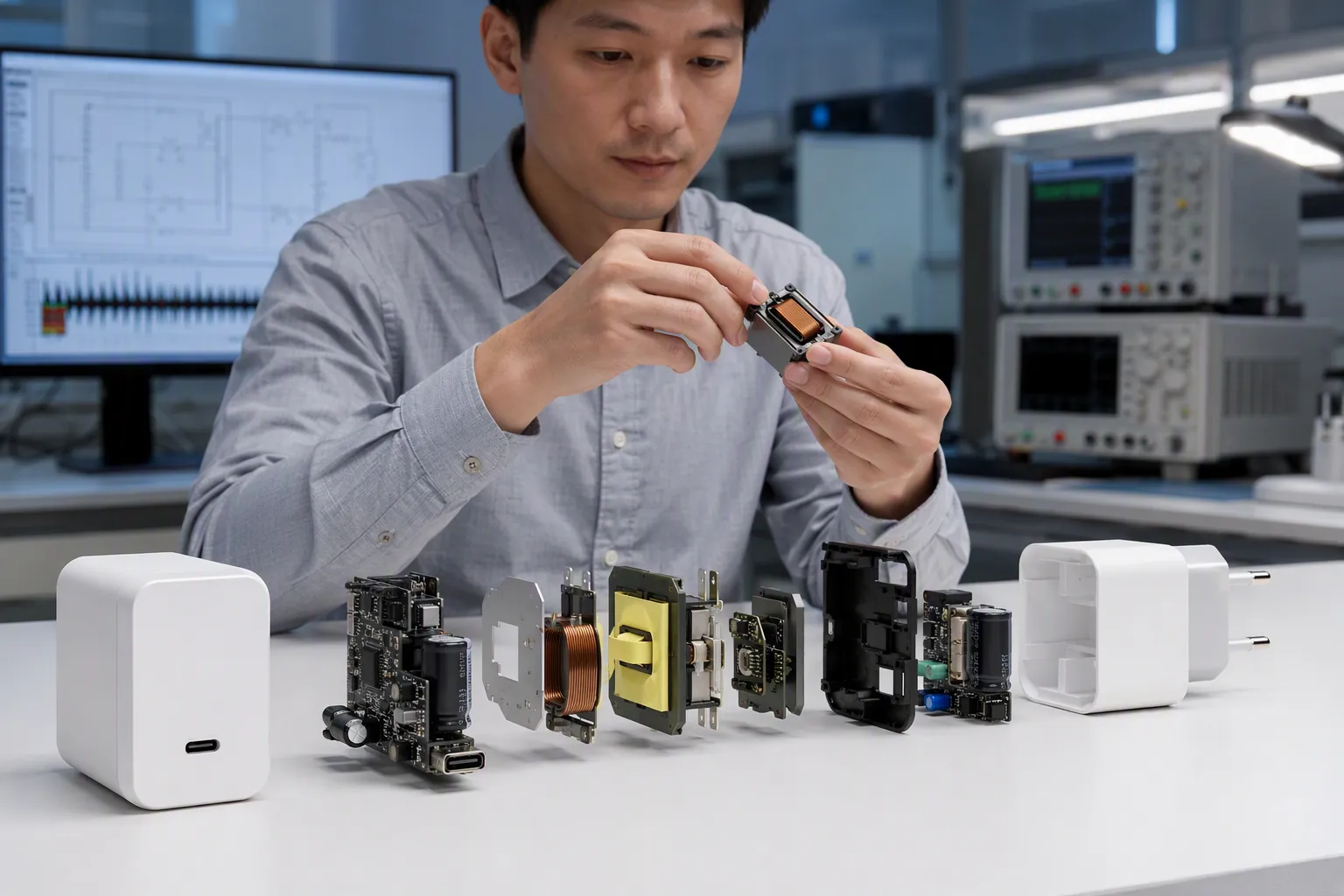
Planar transformers may offer design flexibility and compact-layout potential in some GaN chargers. However, they are not automatically better in every product. Buyers should assess the complete charger design, output rating, temperature behavior, protection features, compliance evidence, and manufacturing consistency for the specific model.
Do planar transformers make GaN chargers smaller?
A planar transformer may support a compact internal layout, but it does not automatically make a GaN charger smaller. Final size depends on the full design, including power rating, ports, plug type, safety spacing, housing, cooling strategy, and other internal components.
Is a planar transformer GaN charger safer?
A planar transformer alone does not prove charger safety. Buyers should verify model-matched compliance documents, product labels, protection design information, sample configuration, and supplier quality controls. Application-specific safety and regulatory decisions should be reviewed by qualified professionals where needed.
What documents should I request for a GaN charger?
Buyers should request documents that match the exact model, rated output, plug version, and intended market. They should also compare product photos, labels, manufacturer details, and report scope. Documentation should be verified rather than accepted only as a general catalog claim.
Can I private label a planar transformer GaN charger?
Many suppliers may offer private-label options such as logos, packaging, colors, and manuals. Buyers should confirm whether branding changes affect labeling, documentation, MOQ, lead time, or compliance responsibilities. The approved branded sample should match the mass-production configuration.
Conclusion
Planar transformers in GaN chargers can be relevant design features, but they should not be treated as automatic proof of premium quality. We recommend that buyers evaluate the complete charger: model-specific output claims, port behavior, thermal considerations, protection information, compliance evidence, sample comparison, and production consistency. For European and U.S. retail, wholesale, and e-commerce programs, our team can help you compare GaN charger options, clarify MOQ and customization details, and build a more practical supplier-verification checklist before ordering.
Sources
- Lecture 12: Magnetics, Part 4 | Power Electronics", Electrical-engineering references describe conventional transformers as magnetic components that transfer energy through windings coupled by a magnetic core
- [PDF] Design, Simulation, and Testing of Planar Transformer for Smart ...", Power-electronics literature characterizes planar transformers by their low-profile magnetic structures and planar windings, commonly implemented with PCB conductors or flat conductive layers
- Compact High Efficiency GaN-based PPU - NASA TechPort - Project", Reviews of planar magnetics report that planar winding structures can support low-profile construction and high integration in power converters, with performance dependent on the specific magnetic, thermal, and electrical design
- Ultra-dense Power Converters - ARPA-E", Government and technical power-electronics sources report that gallium-nitride devices can enable higher switching frequencies and higher power density in power converters, which may reduce the size of associated passive components and improve system efficiency
- Energy Conservation Program: Test Procedure for External ...", External power-supply test procedures define efficiency using measured input and output power under specified loading and input conditions, demonstrating that reported efficiency depends on the tested operating point and complete product design
- Designing Cool Components | NASA Spinoff", Thermal-management guidance for electronic equipment explains that component and enclosure temperatures are determined by dissipated power, conduction paths, convection or airflow, ambient temperature, and transient operating duration
- [PDF] A Study on Hazard Analysis in - High Integrity Software", Systems engineering and reliability guidance treats safety and reliability as properties of the complete system, shaped by component selection, design integration, manufacturing processes, verification, and operating conditions
- Apple USB-C Power Adapter Safety Protections", Electrical-product safety references discuss protective circuits and safeguards for abnormal conditions, including excessive current, voltage-related faults, short circuits, and excessive temperatures, as applicable to the equipment design