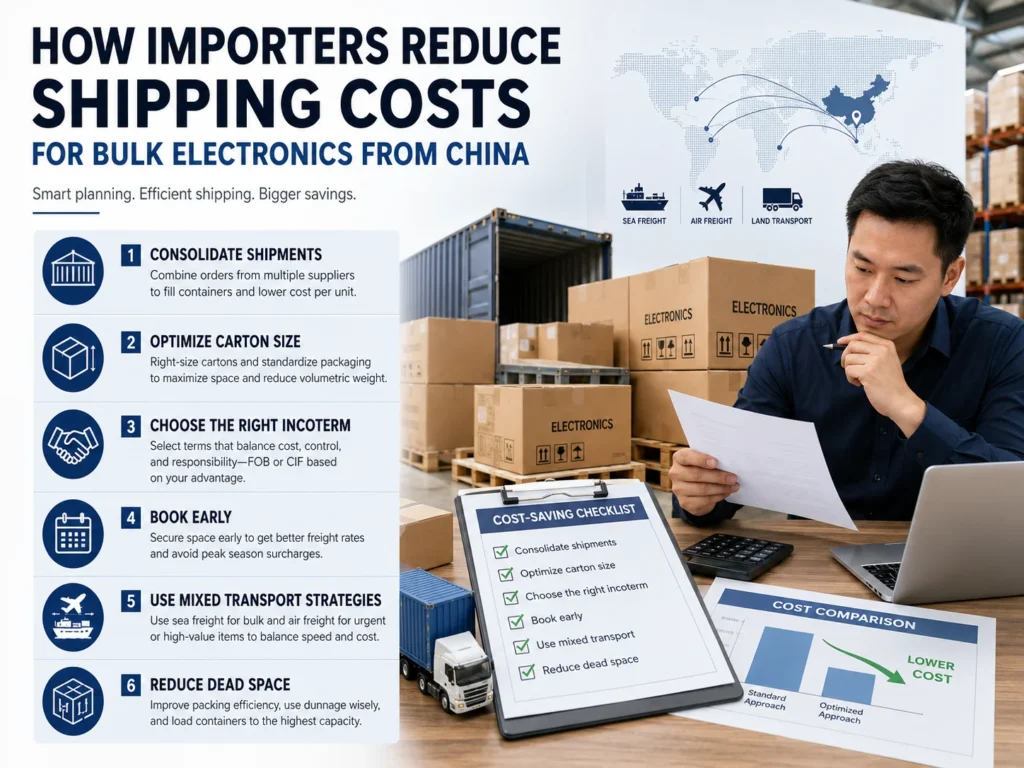
Shipping costs for bulk electronics from China can quickly eat into your margin when carton sizes, battery rules, freight mode, and destination charges are not planned early. A low freight quote may look attractive, but it can lead to stockouts, surprise fees, or expensive delivery delays. I recommend comparing total landed cost before you place the order.
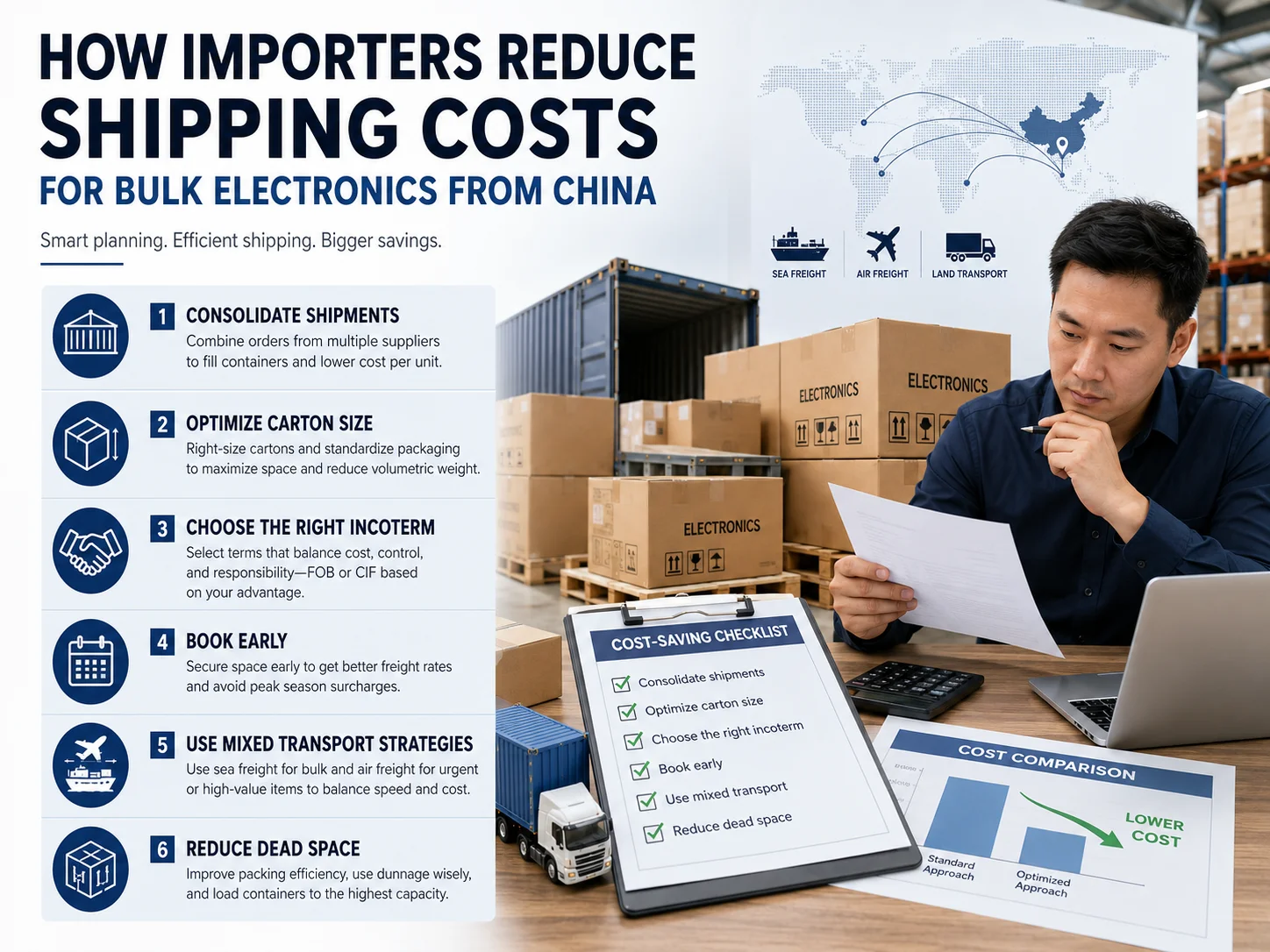
Importers can reduce shipping costs for bulk electronics from China by confirming carton data early, comparing transport methods using identical shipment details, consolidating compatible products, and choosing a delivery timeline that matches inventory demand. The best option is usually the plan with the lowest total landed cost—not simply the lowest freight rate per kilogram or cubic meter.
At our Shenzhen factory, I have seen many buyers focus on the unit price first and freight second. In practice, those two numbers must work together. A well-planned shipment can protect your margin, improve stock availability, and make your next reorder easier to forecast.
1. Quick Answer: How Can Importers Reduce Electronics Shipping Costs from China?
Importers can reduce electronics shipping costs from China by using accurate carton dimensions, optimizing packaging, choosing freight based on replenishment urgency, consolidating products into fewer shipments, and requesting comparable quotes based on the same volume, weight, destination, and delivery terms. Buyers should also calculate duties, taxes, and destination charges as part of total landed cost.
The biggest problem is that freight comparisons often start too late. A buyer may receive a product quotation, then ask for shipping only after production is finished. At that point, carton design and shipment timing are harder to change.
Start With Shipment Facts, Not a Headline Rate
In our export quotation discussions, we first confirm the information that a forwarder will need:
- Product model and quantity
- Carton dimensions
- Gross weight per carton
- Units per master carton
- Total cartons
- Total cubic meters (CBM)
- Battery type and battery capacity
- Delivery country, city, and postal code
- Required delivery date
- Preferred Incoterm
A USD 3.50-per-kilogram quote is not automatically cheaper than a USD 4.20 quote. The lower quote may exclude customs handling, remote-area delivery, peak-season surcharges, or destination terminal charges.1 It may also use a slower route that leaves your Amazon, Shopify, retail, or wholesale inventory empty.
I normally suggest that buyers compare at least two options using exactly the same shipment facts. For example, compare a DDP air option with an FOB sea-freight option only after you understand what each quote includes.
The best freight plan is the one that supports your sales velocity, cash flow, and margin at the same time.
2. What Makes Bulk Electronics Shipping More Expensive?
Bulk electronics shipping becomes more expensive when goods are lightweight but bulky, contain lithium batteries, require urgent transport, ship during peak seasons, or incur destination handling charges. Poor carton efficiency and fragmented orders can also raise chargeable volume and make a seemingly competitive product price less profitable after delivery.
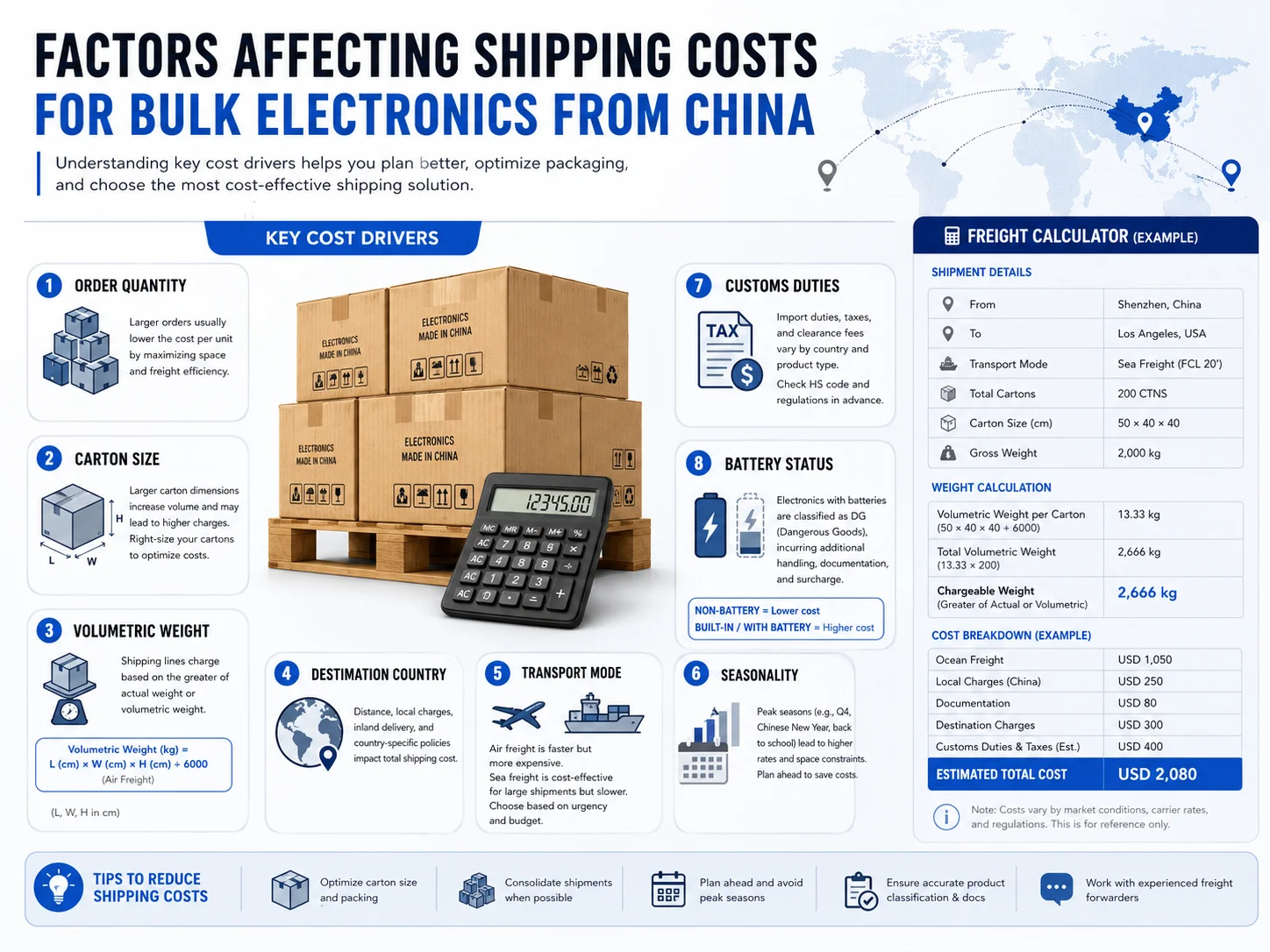
Freight cost is rarely based on product weight alone. Consumer electronics often create a mismatch between actual weight and chargeable weight. USB cables may be compact and dense, while TWS earbuds, smart watches, chargers, and retail-ready gift boxes can take up far more space.
Common Cost Drivers
| Cost driver | Why it increases cost | What I recommend |
|---|---|---|
| Volumetric weight | Air carriers charge for space occupied2 | Review carton dimensions before production |
| Lithium batteries | Battery shipments need special handling3 | Confirm UN38.3 and transport requirements |
| [Peak season demand | Capacity becomes tight](https://unctad.org/news/maritime-trade-under-pressure-growth-set-stall-2025)%%%FOOTNOTE_REF_4%%% | Place replenishment orders earlier |
| Small shipment volume | Less efficiency than consolidated freight | Combine compatible SKUs where possible |
| Remote delivery address | Last-mile carriers may add fees | Provide a precise postal code early |
| Urgent delivery | Express and air freight cost more | Use urgent shipping only for fast-moving stock |
| Poor packaging | Larger cartons increase CBM | Optimize inserts, inner boxes, and master cartons |
In our factory-side experience, packaging is often the hidden issue. A buyer may select premium retail packaging for a charger or smart watch. That choice can make sense for shelf presentation. However, if the gift box leaves too much empty space inside the master carton, freight cost rises across every shipment.
I have also noticed that mixed orders need extra attention. Combining cables, chargers, GaN charging heads, earbuds, and watches can improve container usage. Yet mixed cartons can also complicate labeling, battery declarations, and warehouse receiving. The right solution depends on your fulfillment process.
3. Comparison Table: Express, Air Freight, Sea Freight, Rail, and DDP Shipping?
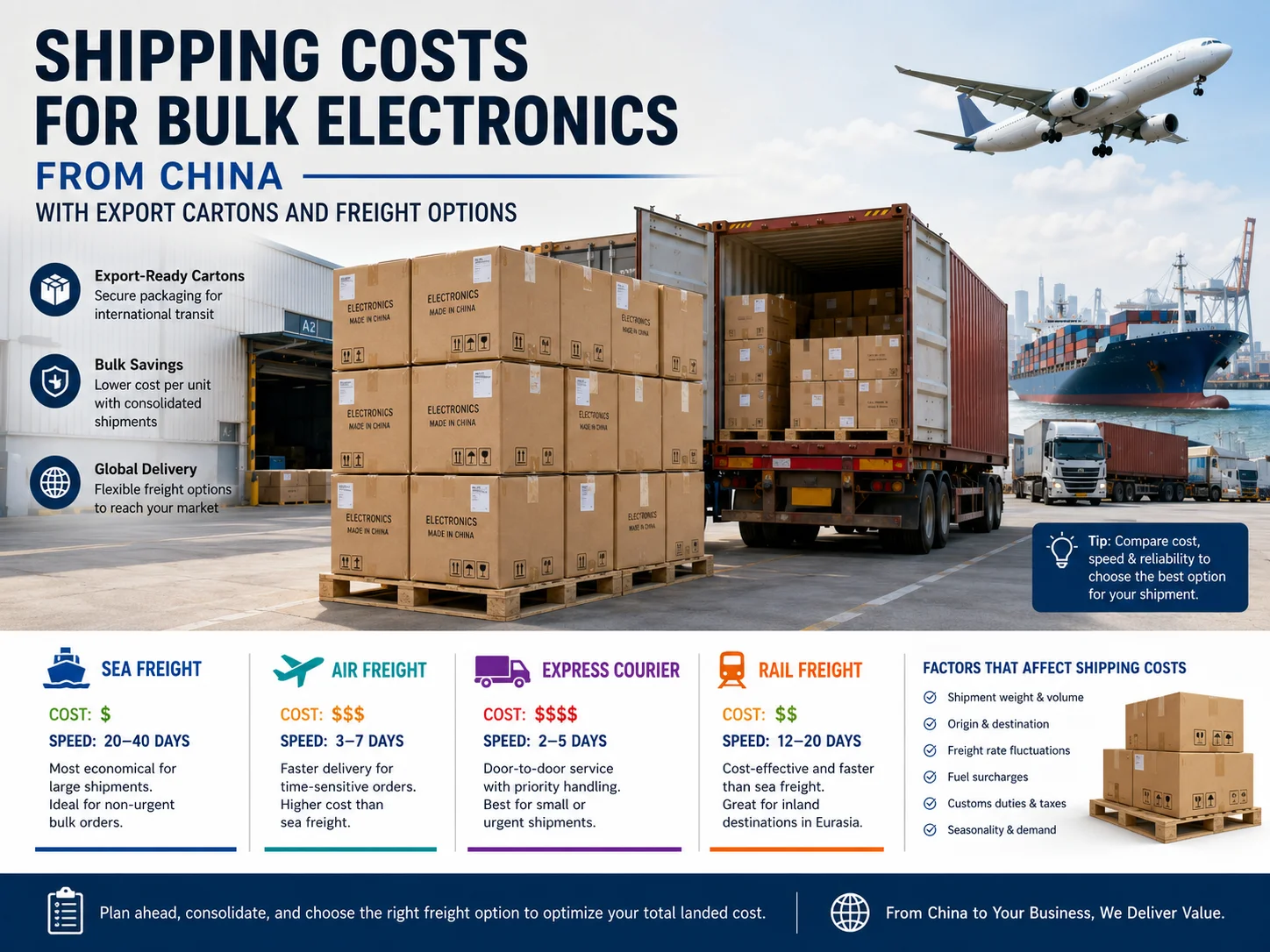
Importers should compare shipping costs for bulk electronics from China by matching each transport method to shipment size, battery status, urgency, and destination. Express suits urgent small parcels, air freight suits faster replenishment, sea freight suits larger volumes, rail may fit selected European routes5, and DDP can simplify delivery when its scope is clearly confirmed.

No shipping method is always best. I see buyers make costly decisions when they choose a mode only because a forwarder calls it “cheap.” The practical question is whether that mode protects inventory and avoids unexpected costs.
| Shipping method | Best for | Typical cost position | Typical speed position | Key point |
|---|---|---|---|---|
| Express courier | Samples, urgent small orders | Highest | Fastest | Chargeable weight matters greatly |
| Air freight | Time-sensitive replenishment | High | Fast | Airport and local delivery charges vary |
| Sea freight LCL | Smaller ocean shipments | Moderate | Slow | Destination fees can be significant |
| Sea freight FCL | Large, stable-volume orders | Often efficient per CBM | Slow | Requires good container planning |
| Rail freight | Some Europe-bound cargo | Mid-range | Medium | Route availability changes by shipment |
| DDP service | Buyers wanting a delivered quote | Varies | Varies | Confirm what is included in writing |
Use Freight Mode as an Inventory Decision
For a fast-selling USB-C charger, air freight may be more profitable if your warehouse will otherwise run out of stock. For a planned seasonal order of cables or accessory bundles, sea freight may better support your margin.
I recommend splitting some orders when appropriate:
- Send a small urgent quantity by express or air.
- Send the main quantity by sea or another lower-cost service.
- Use actual sales data to decide whether the urgent portion was justified.
This approach is not always necessary, but it can reduce stockout risk without sending the entire order by expensive transport. Live route availability, battery acceptance, and pricing must always be checked with a qualified logistics partner.
4. How Carton Dimensions, Volumetric Weight, and Packaging Design Affect Freight Cost?
Carton dimensions directly affect shipping costs for bulk electronics from China because carriers often charge by volumetric weight or cubic meters rather than actual weight. Buyers can lower chargeable volume by confirming units per carton, reducing empty space, selecting efficient retail boxes, and using master cartons that stack safely without unnecessary air gaps.
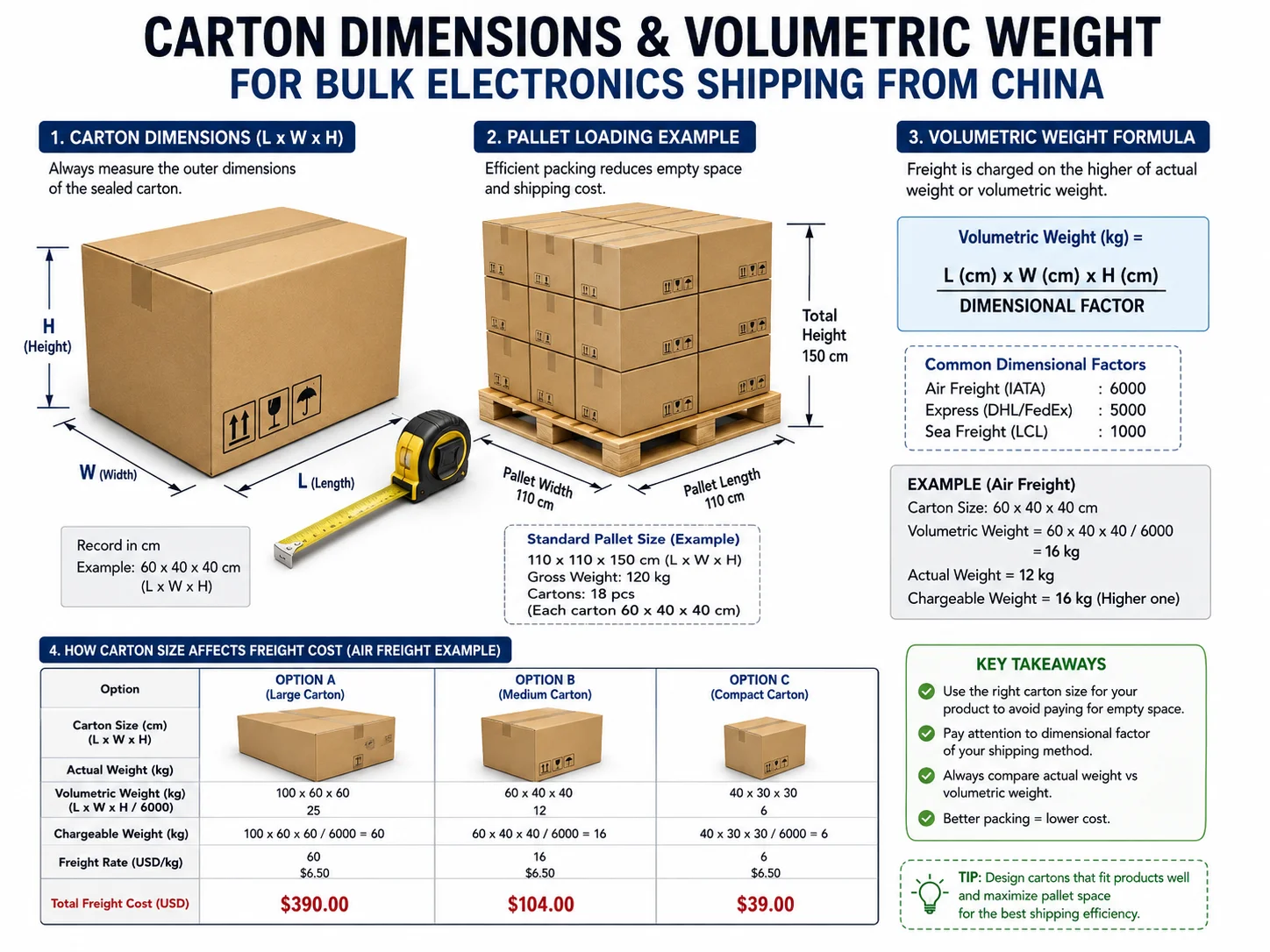
A product can be small in your hand but expensive to ship. This happens often with electronics that use display-ready retail boxes, molded trays, thick foam, or oversized accessories compartments.
How Volumetric Weight Works
Air shipments commonly use a dimensional formula. The exact divisor varies by carrier and route6, but the basic idea is simple:
Length × Width × Height ÷ carrier divisor = volumetric weight
The carrier usually charges whichever figure is higher:
- Actual gross weight
- Volumetric or dimensional weight
For sea freight, the focus is often total CBM. A carton that is only 10% larger may not seem important. However, that extra volume repeats across hundreds or thousands of cartons.
Packaging Questions I Raise Before Quoting
At our factory, I usually discuss these details before we finalize production:
- Can we increase units per master carton safely?
- Does the retail box need to be this tall or this wide?
- Can the insert be redesigned without reducing product protection?
- Can accessories be packed more efficiently?
- Does the carton pass drop-test and stacking requirements?
- Will the customer’s warehouse accept mixed cartons?
A smaller carton is not automatically better if it leads to damaged goods. Damaged chargers, earphones, or smart watches create replacement costs, customer-service work, and negative reviews. The goal is efficient protective packaging, not minimal packaging at any cost.
5. What Lithium Battery Restrictions Apply to Electronics Shipping?
Lithium battery restrictions apply to many electronics shipments because TWS earbuds, smart watches, and other rechargeable devices may be regulated as lithium-ion battery cargo. Importers should confirm battery configuration, watt-hour rating, UN38.3 test documentation, labeling, packing instructions, and carrier acceptance before selecting a shipping method.
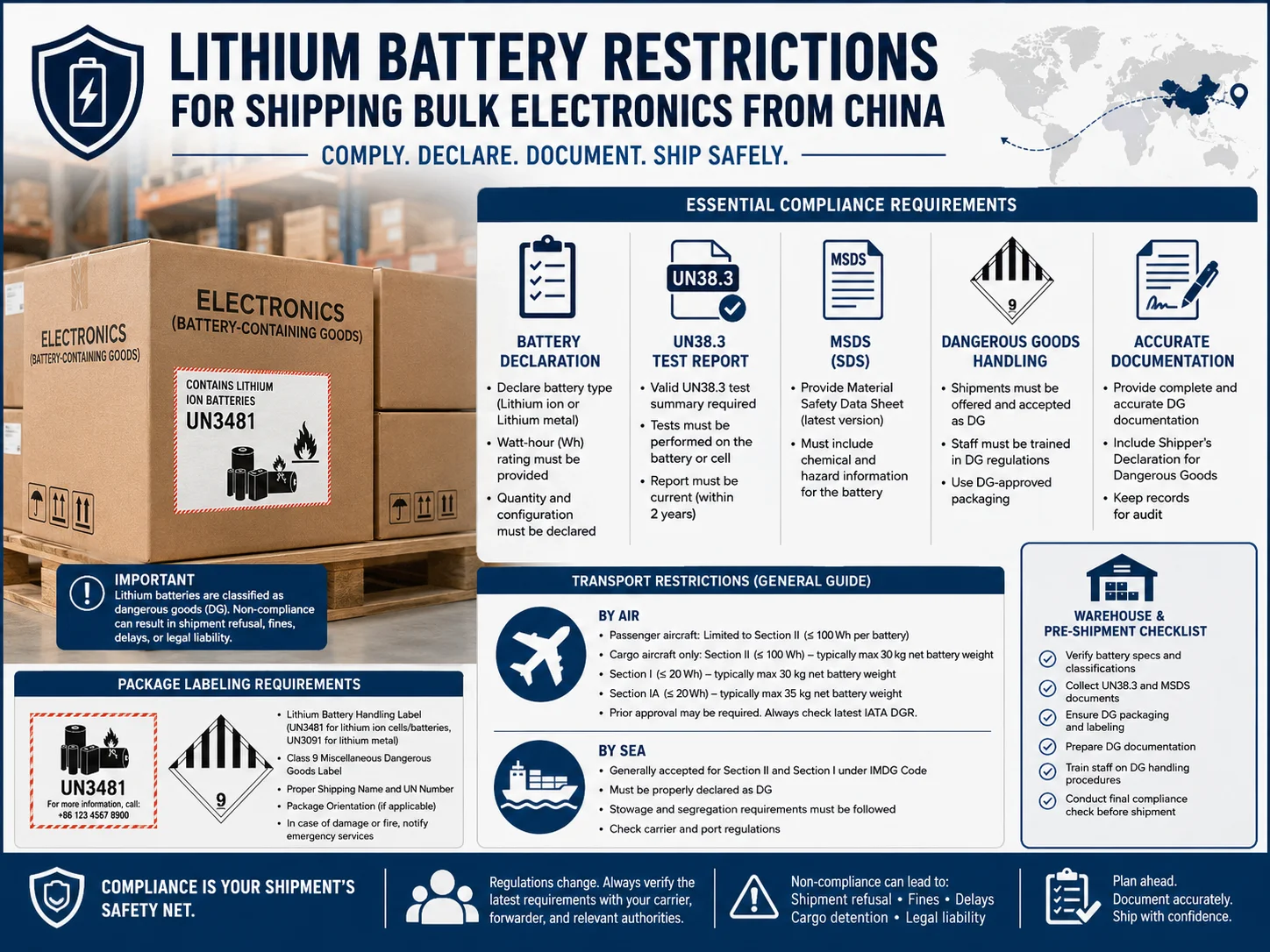
Battery shipping can become confusing because rules depend on how the battery is packed and transported. A battery contained in equipment may be handled differently from a battery packed with equipment or shipped by itself.7
I am not a carrier, customs broker, or dangerous-goods authority. However, from the factory side, I know that battery details must be confirmed early. A missing document or incorrect declaration can delay the shipment before it even leaves China.
Information Buyers Should Prepare
For battery-powered products, logistics partners may request:
- Product name and model number
- Battery chemistry, such as lithium-ion
- Battery capacity in mAh
- Watt-hour (Wh) rating
- Number of cells
- Whether batteries are installed in the product
- UN38.3 test summary8
- MSDS, where requested
- Outer-carton labels and marks
- Transport mode and destination
For example, TWS earbuds have relatively small batteries, but they still require proper transport treatment. Smart watches may also include lithium batteries and wireless functions. These details can affect carrier acceptance and lead time.
Do Not Assume One Route Fits Every Battery Product
A forwarder may accept one battery product on a route but reject another product with a different battery specification. Airlines, courier services, and destination handling partners can apply their own restrictions within the broader regulatory framework.
I recommend that buyers share complete product and battery data before requesting a quote. This gives logistics partners a better chance to quote the correct service instead of changing the price or route later.
6. What Is the Cheapest Practical Way to Ship Electronics with Batteries?
The cheapest practical way to ship electronics with batteries is usually the option that delivers compliant cargo within the required replenishment window at the lowest total landed cost. For larger, non-urgent orders, sea freight or an appropriate consolidated service may be practical; for urgent stock, air freight can be justified despite a higher freight charge.
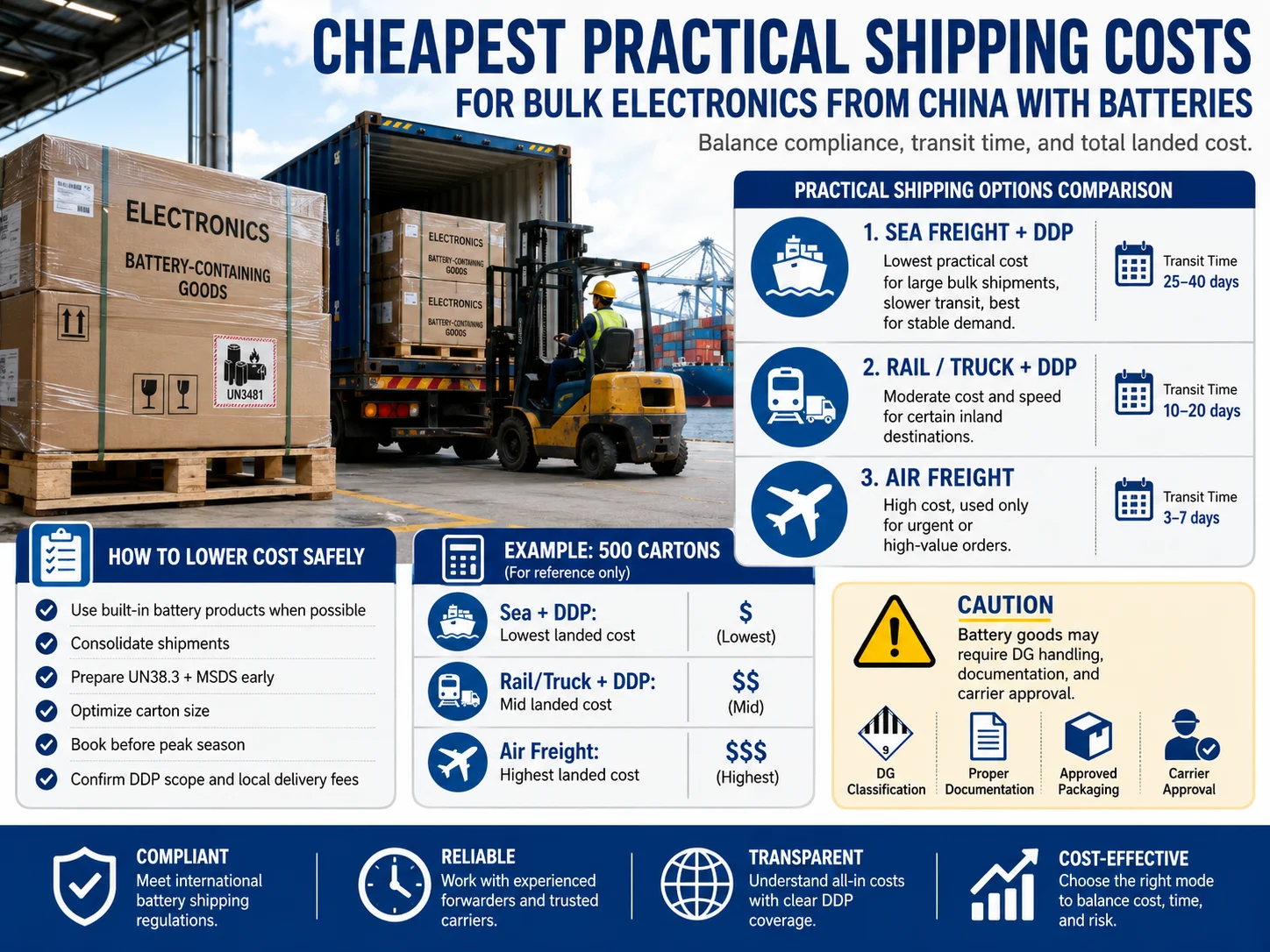
The lowest quoted route can become expensive when it causes an inventory gap. This is especially true for e-commerce sellers whose rankings, ad performance, and repeat sales depend on staying in stock.
Build a Practical Shipment Plan
I suggest using three questions:
- How quickly will current inventory run out?
- What is the real cost of being out of stock?
- Can the order be split into urgent and regular quantities?
For a stable bulk order of charging cables, a slower method may be sensible because cables usually have fewer battery-related constraints and predictable demand. For TWS earbuds or smart watches, shipping choices may be narrower because of battery requirements.
A practical approach can look like this:
| Order situation | Possible approach |
|---|---|
| New product launch with uncertain demand | Send a smaller test order first |
| Fast-selling item with low warehouse stock | Send a limited urgent replenishment by air |
| Large confirmed retailer order | Plan production and ocean freight earlier |
| Mixed accessories and battery products | Quote separately and compare consolidation options |
| Seasonal promotion | Book earlier and allow buffer time |
I would not call any route the “cheapest” without shipment-specific facts. Freight availability, battery acceptance, port congestion, duties, and destination costs can change. Your qualified freight forwarder should confirm live service details for each shipment.
7. EXW, FOB, CIF, DAP, and DDP: Which Incoterm Gives Buyers Better Cost Control?
FOB often gives experienced importers better cost control9 because buyers can select their own forwarder after goods clear export formalities at the China port. EXW can offer more control but adds factory pickup responsibilities, while CIF, DAP, and DDP can be convenient when buyers clearly understand the included services and destination charges.
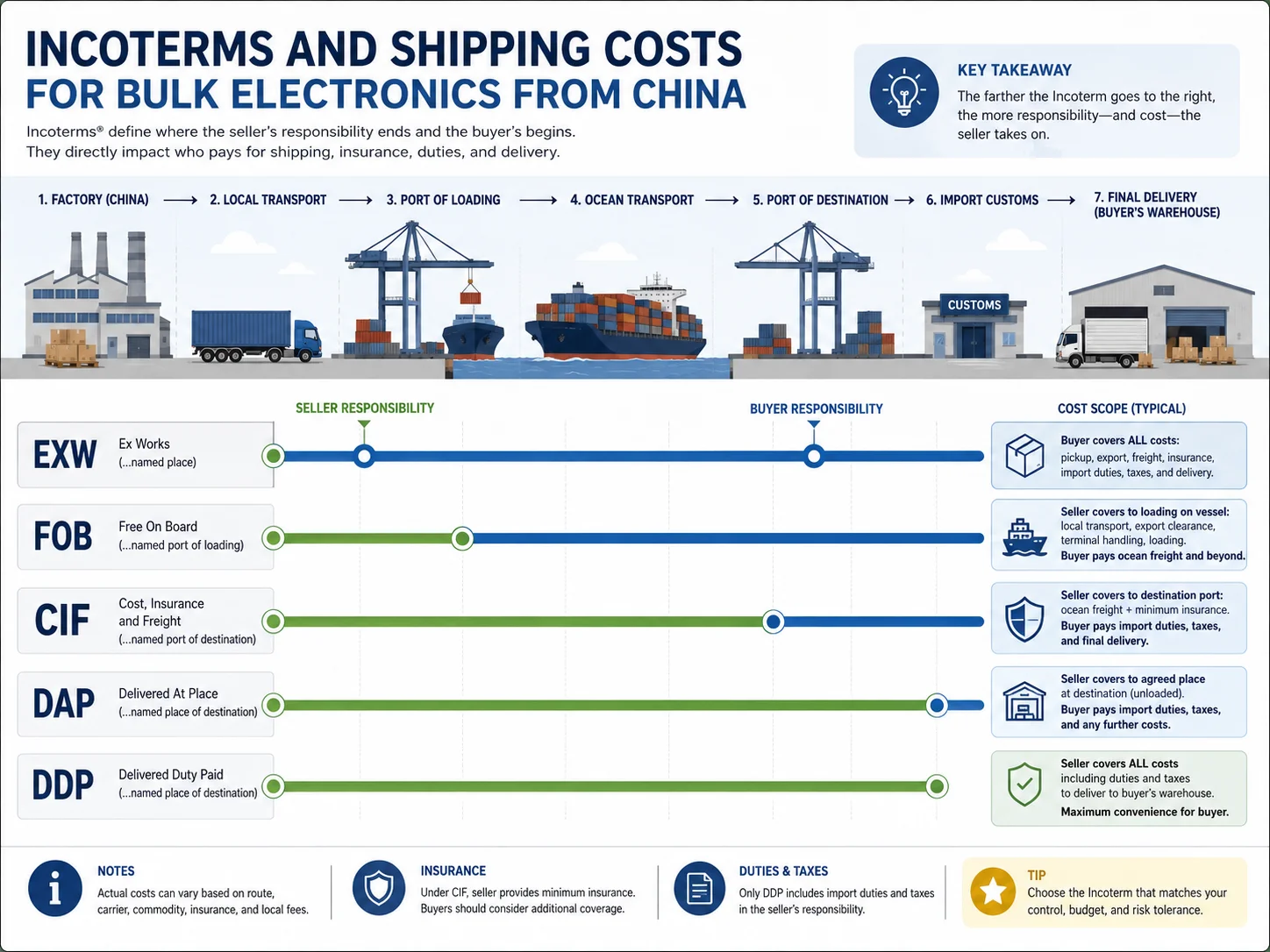
Incoterms are not just abbreviations on a quotation. They determine where responsibilities, risk, and cost allocation change between seller and buyer. Buyers should choose terms based on their logistics capability, not just the unit price.
| Incoterm | General buyer responsibility | Cost-control potential |
|---|---|---|
| EXW | Pickup from factory onward | High, but operationally demanding |
| FOB | Main freight from port onward | Often strong for experienced importers |
| CIF | Destination-side handling and import onward | Moderate |
| DAP | Import duties and taxes, unless otherwise agreed | Convenient but requires clear review |
| DDP | Usually fewer buyer logistics tasks | Convenient, but scope must be verified |
Choose Based on Your Team and Supply Chain
For many established US and European importers, FOB works well because they already have freight-forwarder relationships. They can compare ocean, air, and rail options independently. They can also combine goods from multiple Chinese suppliers.
EXW may look attractive because the factory price is lower. However, buyers need to arrange pickup, export procedures, and coordination from the factory gate. For smaller buyers, this can create unnecessary complexity.
DDP can be useful for buyers who want a delivered solution. Still, I always recommend asking for written clarification. You should understand the delivery address, duty treatment, tax treatment, customs process, excluded services, and possible extra charges before you confirm the order.
8. Does DDP Shipping Include Duties, Taxes, Customs Clearance, and Delivery?
DDP shipping generally means that the seller or arranged logistics provider takes responsibility for delivering goods to the named destination, including import clearance and applicable duties or taxes10 where the service is legitimately structured to include them. However, buyers must confirm the exact scope, importer requirements, tax treatment, exclusions, and delivery conditions shipment by shipment.
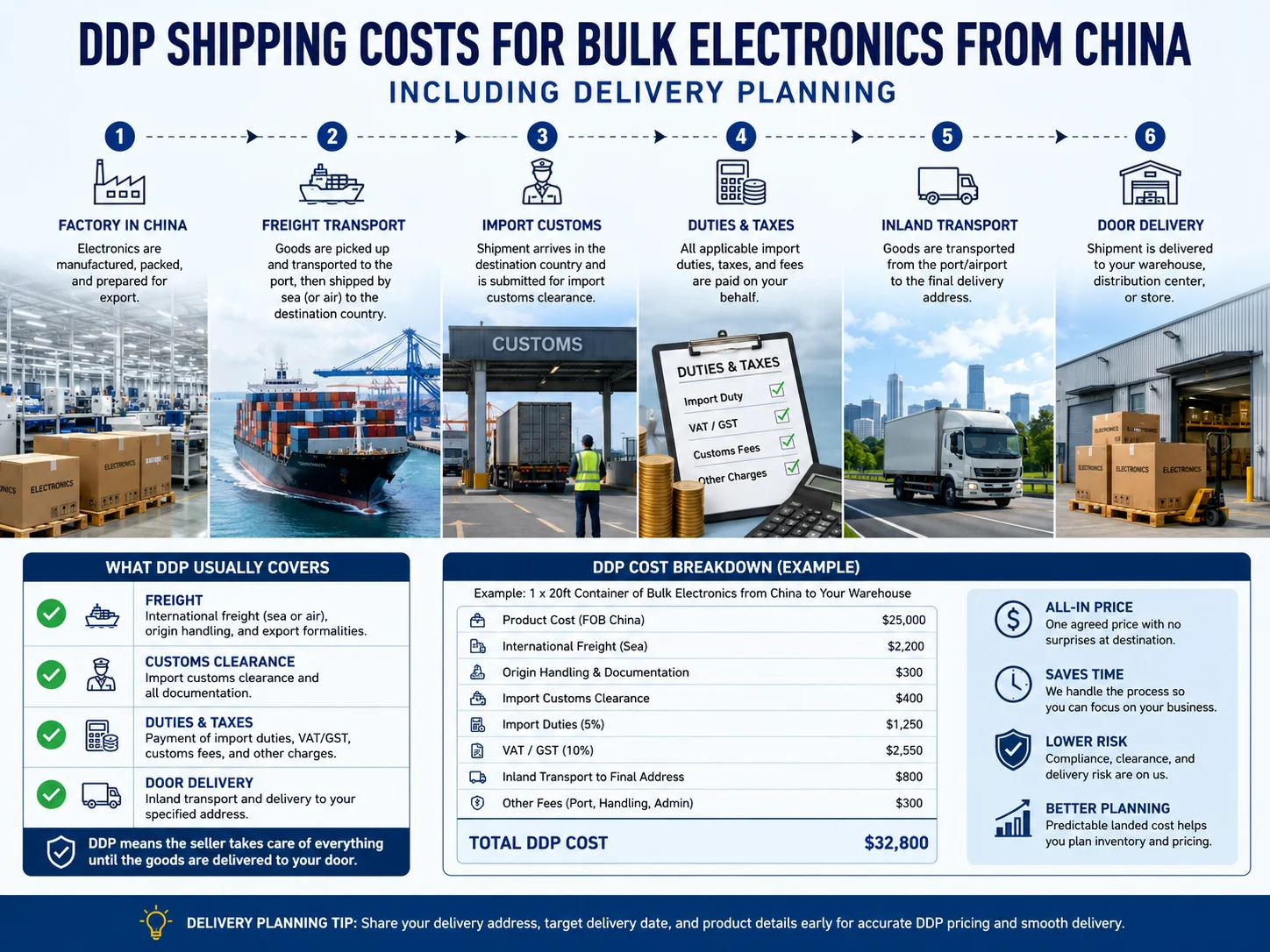
DDP sounds simple, which is why many first-time importers prefer it. The risk is assuming that every DDP quote includes exactly the same services. It does not.
Questions I Suggest Asking Before Accepting a DDP Quote
- Is customs clearance included?
- Are import duties included?
- Are VAT, sales tax, or similar taxes included?
- Who acts as importer of record where required?
- Is delivery to a residential address, warehouse, or Amazon prep center included?
- Are appointments, liftgate service, remote-area fees, or storage fees excluded?
- What happens if customs requests additional documents?
- Does the quote cover battery-powered products?
For our customers, I encourage direct communication with qualified logistics and tax partners. Requirements can differ between the United States, the European Union, the United Kingdom, and individual local jurisdictions.
DDP can reduce administrative work for some buyers. Yet FOB or DAP may offer more transparency for established importers with their own customs and tax arrangements. The right answer depends on your business structure, product category, and destination.
I do not treat DDP as a shortcut around compliance. Proper product documentation, truthful declarations, appropriate certifications, and correct import procedures remain essential.
9. How to Reduce Damage, Delays, Hidden Fees, and Customs Risks?
Importers can reduce damage, delays, hidden fees, and customs risks by using strong export packaging, sharing complete shipment information, verifying battery documents, reviewing quote inclusions, allowing realistic lead time, and preparing product paperwork before cargo pickup. Clear communication between factory, buyer, and logistics provider prevents many avoidable problems.
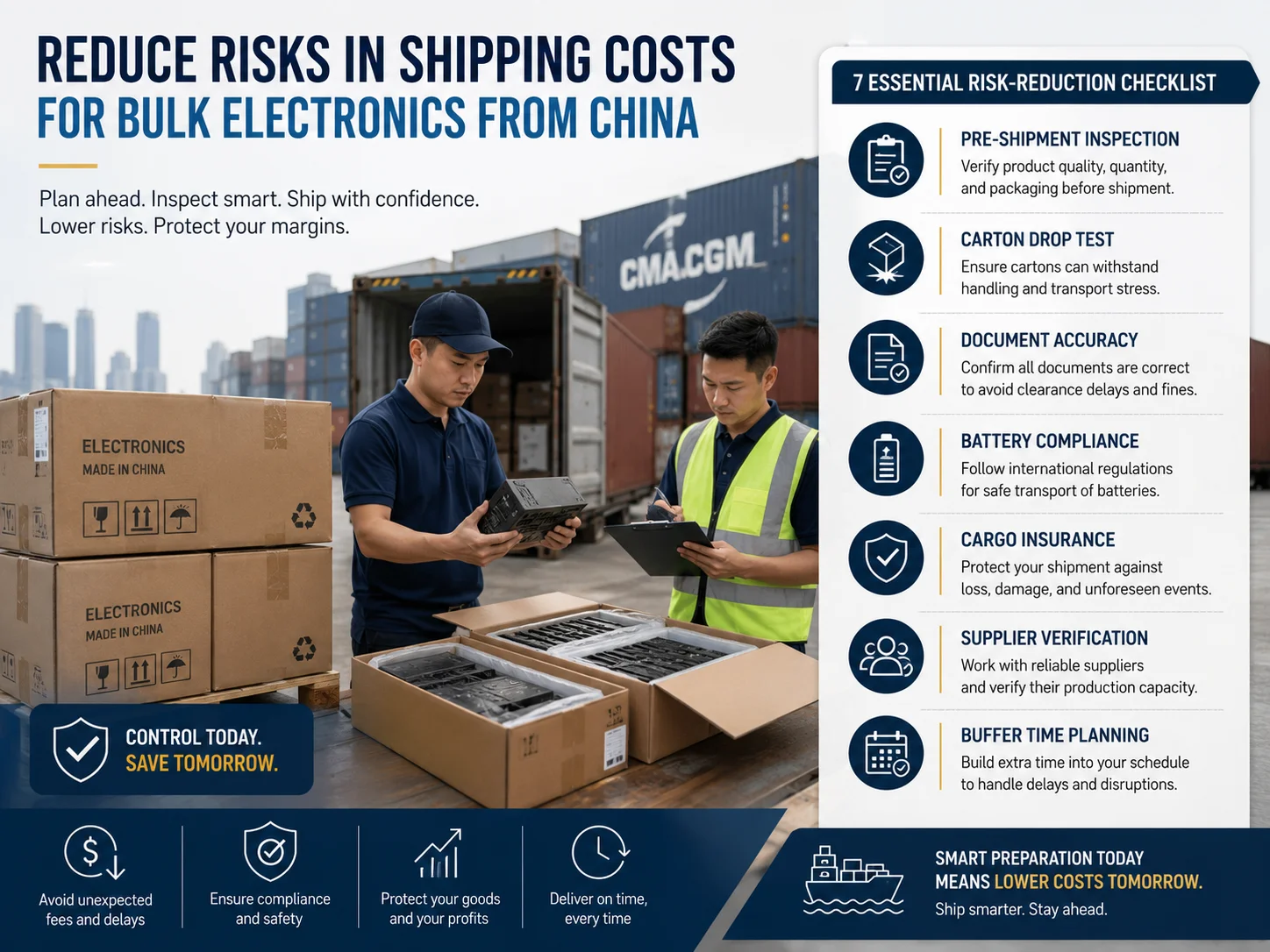
Freight cost control is also risk control. A shipment that arrives damaged, delayed, or held for missing information is rarely a low-cost shipment in the end.11
My Pre-Shipment Checklist
Before cargo collection, I recommend checking:
- Final product quantity and carton count
- Carton dimensions and gross weight
- Shipping marks and carton labels
- Commercial invoice and packing list
- Product model names and accurate descriptions
- Battery documentation, if applicable
- Required certifications for the destination market
- Delivery address and contact information
- Pallet requirements for the receiving warehouse
- Insurance options, where appropriate
Avoid Vague Freight Instructions
A phrase like “send it by the cheapest way” can lead to misunderstandings. I prefer buyers to say something more useful:
“Please quote a delivered option and an FOB option for 80 cartons. We need delivery to this warehouse by this target date. The shipment includes chargers and TWS earbuds with installed lithium batteries.”
That instruction gives the factory and forwarder something concrete to work with.
In repeated export discussions, I have found that early carton confirmation prevents many later surprises. Buyers should also allow buffer time for production, inspections, booking, export handling, transport, and delivery. No one can guarantee that every route will move exactly on schedule in 2026.
10. How Kingfuji Helps Buyers Calculate Landed Cost and Arrange Global Electronics Shipping?
Kingfuji helps buyers evaluate shipping costs for bulk electronics from China by providing clear product, carton, packing, and battery information for freight quotations. We support buyers with shipment preparation and option comparison, while qualified freight forwarders, customs brokers, and tax professionals confirm live rates, clearance requirements, duties, and destination-side services.
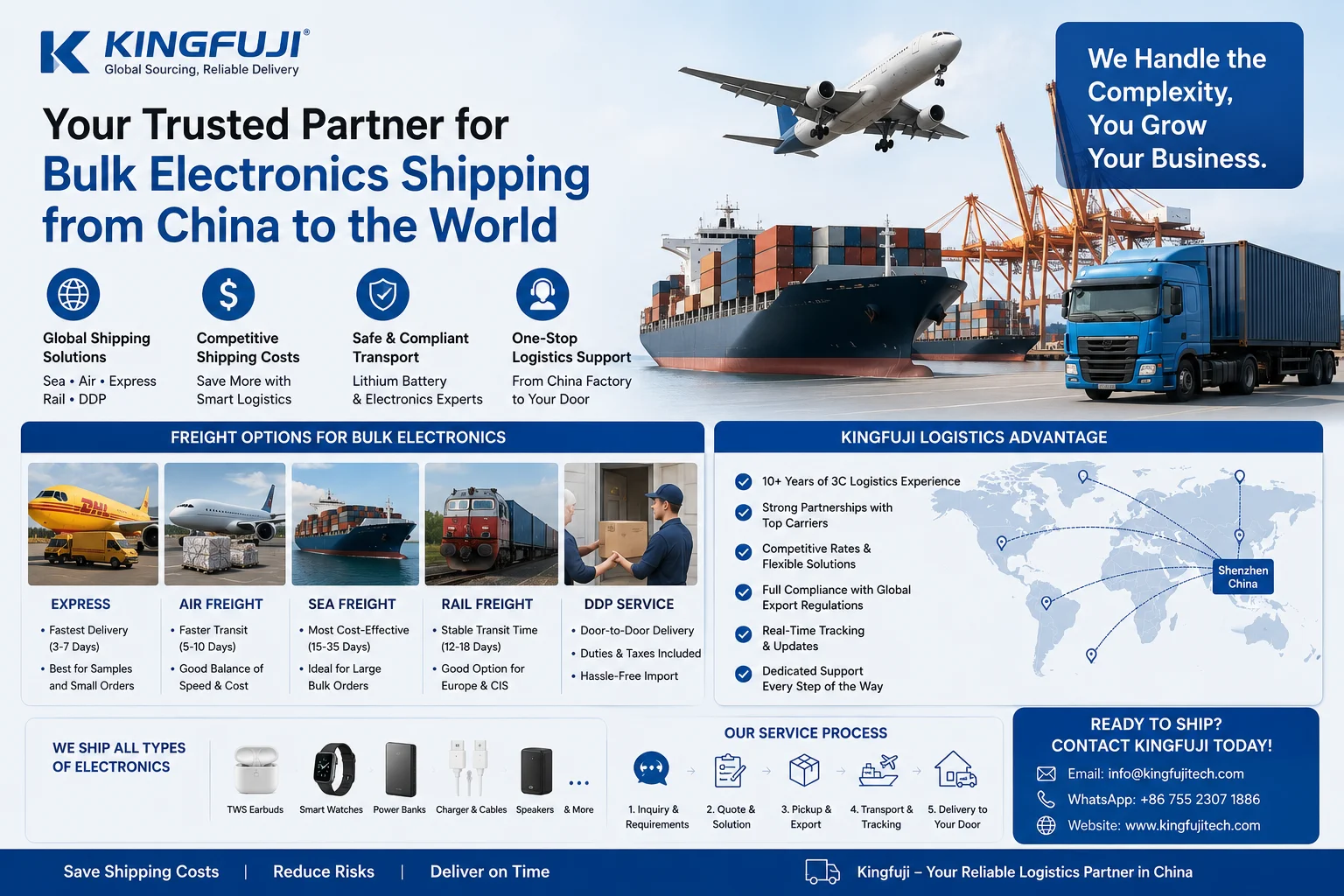
As a Shenzhen 3C manufacturer with 15 years of export experience, we understand that product sourcing and freight planning cannot be separated. Our customers sell into competitive markets, so every carton matters.
What We Can Help You Prepare
We can provide practical factory-side information, including:
- Product specifications
- Packaging options
- Units per carton
- Carton dimensions and gross weight
- Total estimated CBM
- Product photos and labels
- Battery details for applicable products
- Export-ready packing lists and commercial invoice information
- Order consolidation discussions for compatible products
We can also discuss whether a revised carton design could improve shipment efficiency. For example, a buyer may want custom branding, a retail display box, and protective inserts. We can review how those choices affect packing quantity and outer-carton volume before mass production.
Landed Cost Is a Team Calculation
A realistic landed-cost calculation usually includes:
- Product cost
- Packaging and customization cost
- Inspection or testing cost, if used
- Freight and insurance
- Export and destination-side handling
- Duties, taxes, and customs-related costs
- Warehouse receiving and local delivery
We do not present ourselves as a customs or tax authority. Instead, we help you prepare accurate shipment facts so that your chosen logistics and tax partners can give you a more useful quote. That is how we support more reliable decisions for USB cables, chargers, GaN adapters, TWS earphones, smart watches, and other consumer electronics.
Frequently Asked Questions
How early should I request a freight quote for bulk electronics from China?
I recommend requesting an initial freight estimate during product quotation and a live quote before cargo is ready. Early estimates help you compare packaging options, while final quotes should use confirmed carton dimensions, weights, battery details, destination address, and required delivery date.
Is sea freight always cheaper for bulk electronics?
Sea freight can be economical for larger and less urgent shipments, but it is not always the lowest total-cost option. LCL destination fees, long transit times, inventory gaps, and local delivery charges can change the calculation.12 Buyers should compare total landed cost, not only ocean freight.
Can I ship chargers and TWS earbuds together?
You may be able to ship chargers and TWS earbuds together, but the battery status of the earbuds requires careful review. Your logistics provider should confirm carrier acceptance, battery documentation, labels, and applicable packing requirements before booking the shipment.
Why is my air freight charge higher than the actual weight suggests?
Your charge may be based on volumetric weight. Air carriers calculate the space your cartons occupy, then charge the higher of actual weight or dimensional weight. Oversized retail boxes, loose inner packing, and low units per carton can all increase chargeable weight.
Should I choose FOB or DDP for electronics imports?
FOB can give experienced buyers more visibility and control over freight arrangements. DDP can offer convenience for buyers who prefer a delivered service. Your best choice depends on your logistics experience, importer setup, tax obligations, destination, and the clarity of the written quote.
Conclusion
Reducing shipping costs for bulk electronics from China requires more than negotiating a lower freight rate. I recommend starting with carton dimensions, packing quantity, battery information, and a realistic delivery deadline. Then compare at least two shipping options using the same shipment facts and full landed-cost view. At Kingfuji, we can help you prepare accurate product and packing data for your next USB cable, charger, GaN adapter, TWS earbud, or smart-watch order. Contact us to discuss your MOQ, customization, packaging,and shipment planning needs.
"Import Tariffs & Fees Overview and Resources", https://www.trade.gov/import-tariffs-fees-overview-and-resources. International trade guidance notes that the total cost of shipping may include freight as well as terminal, documentation, customs-related, inland-delivery, and other service charges that should be identified in the quotation. Evidence role: general_support; source type: government. Supports: Official trade guidance explaining that international shipping costs can include freight, terminal, documentation, customs, inland-delivery, and other charges beyond a headline rate.. Scope note: The precise charges, applicability, and amount depend on the carrier, route, contract, cargo, and destination. ↩
"Air Cargo Tariffs and Rules: What You Need to Know", https://www.iata.org/en/publications/newsletters/iata-knowledge-hub/air-cargo-tariffs-and-rules-what-you-need-to-know/. Air-cargo rating practice uses chargeable weight, which may be calculated from a shipment's volume when that dimensional weight exceeds its actual weight. Evidence role: mechanism; source type: institution. Supports: IATA material explaining the use of chargeable weight and volumetric weight in air cargo rating.. Scope note: The dimensional divisor and final chargeable-weight calculation may vary by carrier, service, and route. ↩
"ICAO Training on Lithium Batteries", https://www.icao.int/sites/default/files/sp-files/SAM/Documents/2015-LITHIUM/2015-July%20ICAO%20Training%20Lithium%20Batteries%20Lima.pdf. International dangerous-goods guidance classifies lithium batteries as regulated cargo and prescribes packaging, marking, documentation, and handling requirements for their transport. Evidence role: general_support; source type: institution. Supports: International dangerous-goods guidance establishing special transport provisions for lithium batteries.. Scope note: Requirements differ by battery type, configuration, state of charge, transport mode, and applicable carrier procedures. ↩
"Maritime trade under pressure – growth set to stall in 2025", https://unctad.org/news/maritime-trade-under-pressure-growth-set-stall-2025. Transport-market analyses describe how periods of elevated cargo demand can constrain available capacity and contribute to changes in freight rates and service reliability. Evidence role: mechanism; source type: institution. Supports: Transport-sector analysis showing that elevated seasonal demand can affect available capacity and freight-market conditions.. Scope note: The magnitude and timing of peak-season effects differ across trade lanes, transport modes, and market conditions. ↩
"Fathoming Shipping Costs: An Exploration", https://documents1.worldbank.org/curated/en/099436104042241280/pdf/IDU0c20d2ae90046304ca009ab508217e50747bd.pdf. Transport literature generally characterizes air freight as faster but more costly, maritime freight as suited to high-volume international cargo, and rail as a route-dependent alternative on connected land corridors. Evidence role: general_support; source type: institution. Supports: Neutral transport literature comparing the typical speed, capacity, and use cases of air, maritime, and rail freight.. Scope note: This broad comparison does not determine the best mode for a particular shipment, whose cost and feasibility depend on the route, cargo, and service terms. ↩
"Air cargo chargeable weight calculation explained", https://www.maersk.com/logistics-explained/transportation-and-freight/2025/03/10/air-cargo-chargeable-weight. Air-cargo and carrier guidance uses dimensional-weight conversion factors to translate volume into chargeable weight, and those factors may differ by operator or service. Evidence role: mechanism; source type: institution. Supports: Carrier or air-cargo guidance documenting that dimensional-weight conversion factors may differ among services or operators.. Scope note: A carrier's published divisor is operational guidance and may change; the applicable divisor must be confirmed for the booked service. ↩
"ICAO Training on Lithium Batteries", https://www.icao.int/sites/default/files/sp-files/SAM/Documents/2015-LITHIUM/2015-July%20ICAO%20Training%20Lithium%20Batteries%20Lima.pdf. International dangerous-goods instructions distinguish lithium batteries contained in equipment, lithium batteries packed with equipment, and batteries shipped separately, with different applicable packing instructions and conditions. Evidence role: definition; source type: institution. Supports: Dangerous-goods instructions distinguishing lithium batteries contained in equipment, packed with equipment, and shipped as batteries alone.. Scope note: The applicable instruction also depends on battery chemistry, watt-hour rating, cell count, transport mode, and whether the shipment qualifies for an exception. ↩
"Lithium Battery Test Summaries (TS) | PHMSA", https://www.phmsa.dot.gov/training/hazmat/new-un-requirement-test-summaries. The United Nations Manual of Tests and Criteria provides for a lithium battery test summary containing specified information on UN 38.3 testing to be made available by manufacturers and subsequent distributors. Evidence role: definition; source type: institution. Supports: UN dangerous-goods guidance requiring lithium-cell and battery manufacturers and subsequent distributors to make a UN 38.3 test summary available.. Scope note: Availability of a test summary does not alone establish that a shipment meets every applicable packaging, marking, documentation, or carrier-acceptance requirement. ↩
"Know Your Incoterms", https://www.trade.gov/know-your-incoterms. FOB allocates delivery to the seller when goods are placed on board the vessel at the named port of shipment, after which the buyer ordinarily arranges and bears the main carriage. Evidence role: definition; source type: government. Supports: Authoritative Incoterms guidance explaining that under FOB the seller delivers goods on board at the named port of shipment and the buyer arranges the main carriage.. Scope note: This allocation can provide operational choice to an experienced buyer, but it does not by itself prove lower total cost or greater control in every transaction. ↩
"Know Your Incoterms", https://www.trade.gov/know-your-incoterms. Under Incoterms® DDP, the seller delivers goods at the named destination ready for unloading and is responsible for export and import clearance and for duties and taxes, subject to the agreed contract and applicable law. Evidence role: definition; source type: institution. Supports: ICC Incoterms guidance defining DDP seller obligations for delivery, export and import formalities, duties, and taxes.. Scope note: Practical use of DDP may be constrained by local importer-of-record, tax-registration, product-compliance, and customs-law requirements. ↩
"Good Practice in Trade Facilitation : Lessons from Tunisia", https://openknowledge.worldbank.org/entities/publication/ad792da1-4b66-58cf-9e20-89a4f64d227b. Trade-facilitation guidance identifies incomplete documentation and logistics disruptions as sources of border delays, additional handling or storage costs, and broader supply-chain risk. Evidence role: general_support; source type: government. Supports: Trade-facilitation guidance linking incomplete documentation and logistics disruptions to delays, additional costs, and supply-chain risk.. Scope note: The resulting cost to an individual importer depends on contractual terms, insurance, inventory exposure, and the reason and duration of the disruption. ↩
"Know Your Incoterms", https://www.trade.gov/know-your-incoterms. Supply-chain research treats transport selection as a total-logistics-cost decision that can include freight, handling and delivery charges, transit time, and inventory carrying or stockout consequences. Evidence role: general_support; source type: research. Supports: Supply-chain research showing that transport-mode decisions should consider transit time, inventory carrying costs, and origin-to-destination logistics charges in addition to line-haul freight rates.. Scope note: The research supports the decision framework rather than establishing that sea freight is uneconomical for any specific LCL shipment. ↩