Quick Answer
A USB cable can affect fast charging when buyers treat it as an afterthought. A powerful charger may still deliver disappointing results, create customer complaints, or fail to meet advertised claims if the cable cannot support the required current, power level, or protocol. The practical solution is to evaluate the complete charging chain.
Yes, a USB cable can affect fast charging because it may limit the current, power rating, or communication needed between a charger and device[1]. However, the cable is only one part of the result. Fast charging depends on the device, charger, charging protocol, connector type, and USB cable all being compatible with one another.[2]

For retailers, wholesalers, and e-commerce sellers, this distinction matters. In our 15 years of exporting 3C accessories from Shenzhen, we have seen that many buyer questions start with a simple request for a “fast-charging cable.” The better question is what the cable can reliably support in a specific product assortment.
Yes, a USB Cable Can Affect Fast Charging, but Should It Be Evaluated as One Part of the Charging Chain
A USB cable can become a bottleneck when its design, rated capacity, or internal components do not match the charger and device. Buyers often focus on the charger’s advertised output, yet the final charging performance can only reach the level supported by the weakest compatible component in the chain[3].
A USB cable should be evaluated as one part of a complete charging system. The device must request a compatible charging mode, the charger must provide it, and the cable must safely carry the required power and communication signals. A high-wattage charger alone does not prove that every connected cable or device will charge quickly.
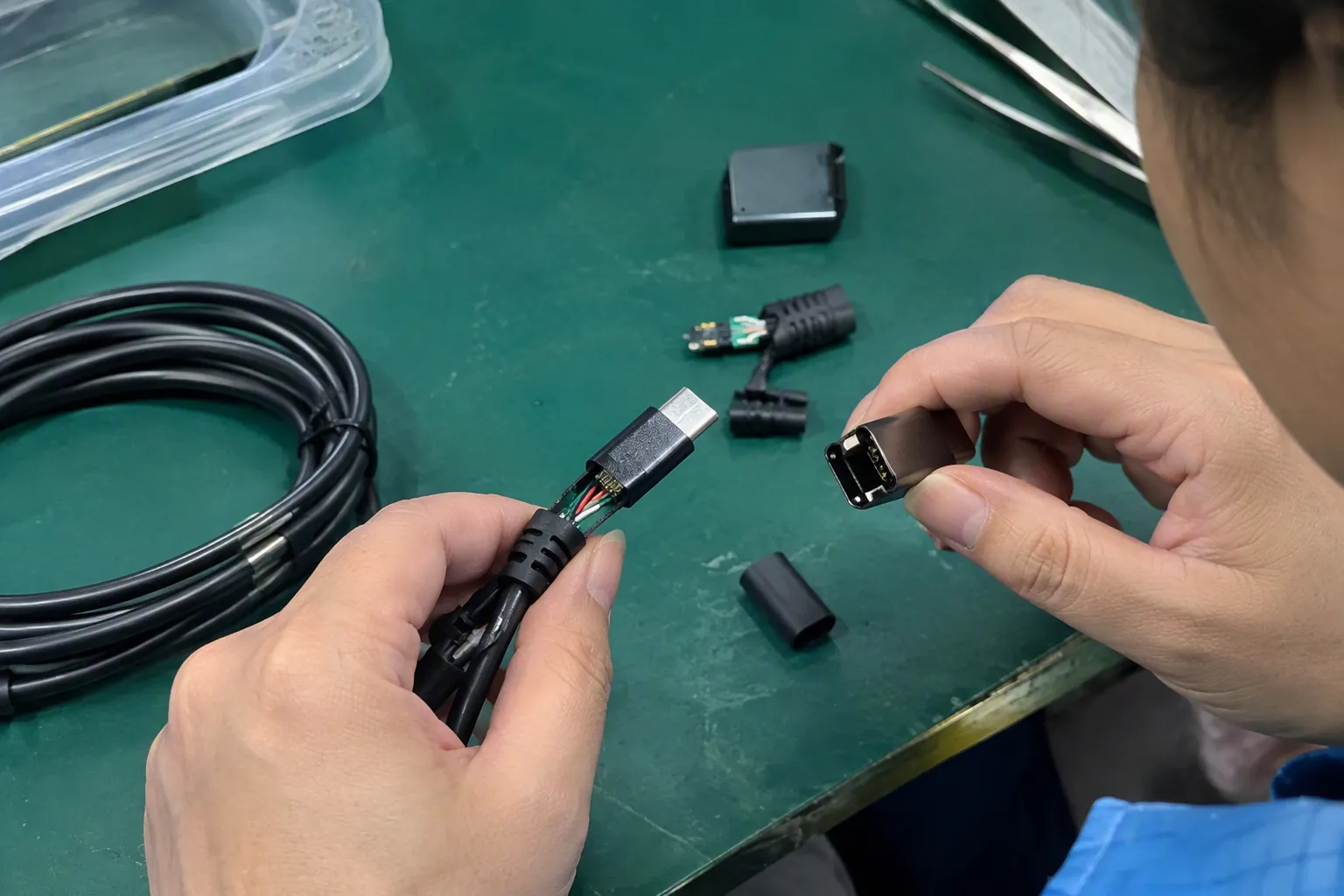
The next step is to look beyond connector appearance and marketing language. A cable that looks similar to another cable may serve a very different commercial purpose. This is especially important when you build a product range for European or US retail channels, where customers expect product claims to match real-world compatibility.
The Charging Chain Starts With the Device
The device controls more of the charging process than many consumers realize. A smartphone, tablet, laptop, wireless-earbud case, or smartwatch may have its own charging limits and supported protocols. Even when a customer uses a capable charger and a suitable USB cable, the device may only accept the charging level it was designed to receive.
In practical sourcing discussions, I encourage buyers to separate two questions:
- What can the device accept?
- What can the charger and cable provide safely and compatibly?
If either answer is unclear, a broad “fast charging” claim can create unnecessary risk.
For example, a retailer may sell one cable alongside phones, tablets, power banks, and compact laptops. Those products may use the same USB-C connector, but they may not share the same charging requirements. A USB-C port identifies the physical connector format. It does not automatically confirm charging power, supported protocol, data capability, or device behavior.[4]
A matching connector is not the same as a matching charging specification.
This is why a product page should avoid implying universal performance simply because a cable has USB-C connectors. A more accurate description explains the cable’s rated charging capability and tells customers to confirm compatibility with their device and charger.
The Charger Must Offer a Compatible Output
The charger is the second major part of the charging chain. Its label may show one or several output profiles, depending on its design and supported charging protocols. However, a charger cannot force a device to accept its highest stated output.
A compatible connection normally depends on communication between the device and charger. In many modern charging systems, the device and charger negotiate an acceptable power level[5]. The cable may also need to support the required current and communication pathway.
For B2B buyers, the useful procurement question is not simply, “What is the maximum wattage printed on the charger?” It is:
- Which output profiles are documented?
- Which charging protocols does the charger support?
- Which devices are likely to be sold with this item?
- Which cable specification is appropriate for those use cases?
- Can the supplier provide product specifications that support the advertised claim?
We recommend reviewing the charger documentation and cable documentation together before creating a bundled offer. This is particularly relevant for multi-port chargers. A charger may have a stated total output, while the available output per port can change when several devices are connected[6]. The final user experience depends on the complete usage scenario, not only one number on the package.
The USB Cable Can Limit Current, Power, and Communication
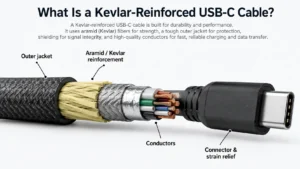
A USB cable is not merely a passive accessory from a commercial perspective. Its conductor design, connector construction, internal configuration, length, and intended rating can influence whether it is suitable for a particular charging application.[7]
Some cables are designed for basic charging needs. Others are made for higher-current or higher-power use cases. Some cable constructions include features intended to support specific USB-C power configurations, while others may not be suitable for those requirements. The appearance can be nearly identical, especially in online listings where the customer sees only a connector photo and a short headline.
When we discuss cable sourcing with buyers, we normally focus on what the supplier can document rather than what the product name suggests. A “fast charging” label is a general marketing statement. It does not, by itself, establish[8]:
- The cable’s rated current or power capability
- The charging protocols relevant to the intended devices
- Whether the cable has the required internal configuration for a stated use case
- The supported connector combinations
- Performance under the buyer’s own charger and device mix
- Long-term quality consistency across production batches
A cable may also charge a device successfully while still not enabling the highest charging mode that the customer expects. That difference often leads to negative reviews rather than an obvious product failure.
Why USB-C Appearance Can Mislead Buyers
USB-C has simplified many product designs, but it has also made sourcing more complicated. Two USB-C to USB-C cables can look almost identical while serving different charging and data requirements.
This is one of the most common areas where sellers should be careful. It is easy to assume that a USB-C connector means a cable supports the same charging performance as another USB-C cable. That assumption can be inaccurate.
| Buyer assumption | What should be verified instead |
|---|---|
| Both ends are USB-C, so the cables are equivalent | Confirm the cable’s stated charging rating and intended application |
| A cable supports fast charging because the package says so | Ask for relevant specifications, test records where available, and clear product documentation |
| A high-output charger guarantees high charging performance | Check the device capability, protocol compatibility, and cable suitability |
| A thicker cable is always better | Review documented construction, rating, quality control, and sample performance |
| One cable works with every USB-C device | Define the actual device categories and supported use cases |
The same point applies to USB-A to USB-C, USB-A to Lightning, USB-C to Lightning, and other connector combinations. Each combination can serve a different market need. A retailer should select a USB cable based on its target devices, charger range, retail positioning, and claim strategy.
For example, a value-oriented cable assortment for low-power accessories may require different specifications from a range intended for tablets, laptops, or higher-output charging adapters. Neither category is automatically better. They simply need accurate positioning.
Protocol Compatibility Matters, but Claims Need Care
Charging protocols are another reason why the question is more complex than “Does the cable support fast charging?” Different device brands and charger models may use different charging methods. Some devices may support USB Power Delivery, while others may depend on other proprietary or brand-specific approaches. Some chargers support several protocols, and some support only selected ones.
A USB cable may be suitable for a given power level but still not create the expected result if the charger and device do not share a compatible charging method. Likewise, a compatible charger and device may not reach their intended charging mode if the cable is not appropriate for that configuration.
For sellers, the safest approach is to describe compatibility in a controlled and documented way. Instead of using sweeping language such as “works with all fast chargers,” consider language based on verifiable specifications:
- “Designed for charging compatible USB-C devices.”
- “Rated for the stated charging capacity under compatible conditions.”
- “Charging performance depends on the device, charger, protocol, and cable combination.”
- “Please verify your device and adapter specifications before purchase.”
This language may sound less dramatic than a broad promise, but it helps manage buyer expectations. It can also reduce disputes when customers use a cable with an older charger, an unsupported device, or a power source that does not offer the expected protocol.
Cable Length and Build Quality Are Commercial Factors
Cable length is not only a convenience feature. Longer cables may be useful for bedside, office, vehicle, or retail-display applications, but they can also require careful quality control. The buyer should not assume that all lengths perform identically simply because they carry the same connector type and package design.
The internal conductor materials, insulation, shielding, strain relief, connector molding, soldering quality, and quality-control process all matter. These factors can affect durability, connection stability, and consistency between production batches.
As an export trader, I do not present our sourcing experience as laboratory testing. However, I have learned that quality conversations are usually more productive when buyers move beyond one headline specification. A meaningful supplier discussion should include the actual product construction and the planned sales channel.
A Practical USB Cable Evaluation Checklist for Buyers
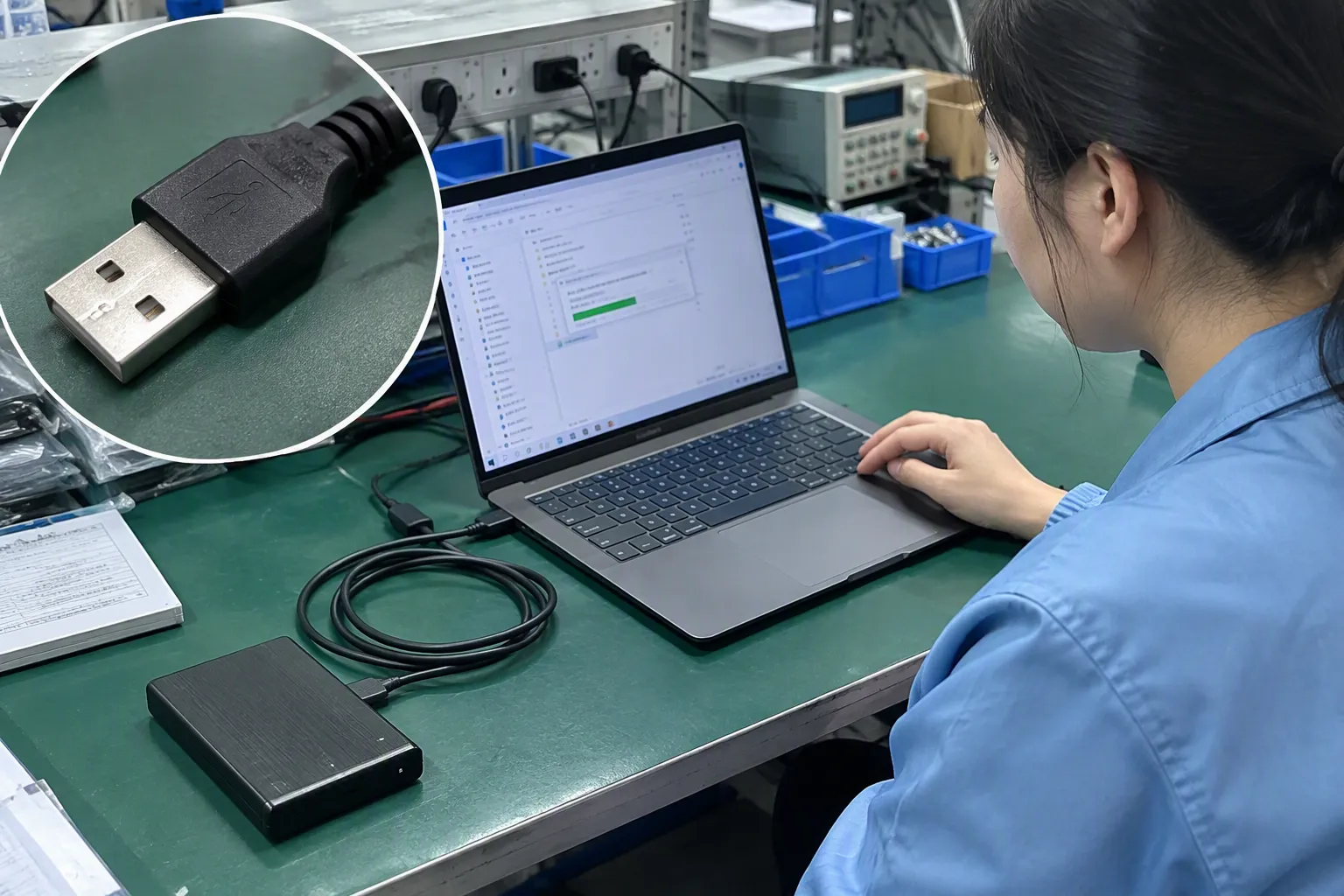
For a retailer, importer, or e-commerce seller, the most useful goal is not to find a cable with the strongest possible label. The goal is to choose a USB cable that matches the intended product category and can be described accurately.
Use this checklist before confirming an order.
1. Define the target devices
Start with the devices your customers are most likely to use:
- Smartphones
- Tablets
- Laptops
- Power banks
- Wireless earbud cases
- Smartwatches
- Bluetooth speakers
- Vehicle charging accessories
- Other low-power USB devices
A cable aimed at smartphone charging may not be the right product for laptop charging. A cable suited to basic accessories may not fit a premium charging-adapter assortment.
2. Confirm the connector combination
Check both ends of the cable and the common charger ports in your market.
| Connector combination | Typical buyer question |
|---|---|
| USB-A to USB-C | Does it fit the installed base of USB-A chargers and current USB-C devices? |
| USB-C to USB-C | What charging capability and use case does the cable support? |
| USB-C to Lightning | Is it appropriate for the intended compatible device ecosystem and charger range? |
| USB-A to Lightning | Does it match the customer’s existing adapter base and product positioning? |
| USB-C to Micro-USB | Is there still demand in the target market for legacy devices? |
Connector selection should reflect real customer demand, not only the newest product trend.
3. Request clear specification documents
Ask suppliers for the information needed to support your listing and packaging. Depending on the product and market, this may include:
- Stated cable length
- Connector types
- Intended charging rating
- Supported data function, if applicable
- Material and jacket information
- Product drawings or photos
- Packaging details
- Available color and branding options
- Batch quality-control process
- Relevant compliance documents for your market
Buyers should review certifications and compliance documents as documents to verify, not as automatic proof that a product will meet every commercial claim. Requirements vary by market, product type, packaging, and intended use. Qualified compliance professionals can help with application-specific decisions.
4. Test samples in your own selling scenario
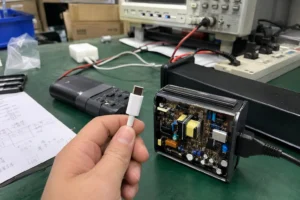
Sample evaluation is valuable because your customer base may use a specific mix of devices and chargers. A supplier’s sample can help you assess physical fit, packaging quality, handling, and basic compatibility with your planned assortment.
Your internal review can include:
- Checking connector fit across representative devices
- Reviewing cable flexibility and strain-relief design
- Confirming labeling matches supplier documentation
- Testing with the charger types you plan to sell or recommend
- Recording any limitations before approving product-page claims
- Comparing several samples from the same supplier when possible
Where performance claims are commercially important, buyers should consider appropriate independent testing or qualified technical evaluation. This is especially important when the product will be sold with high-power chargers, laptops, or premium devices.
5. Align your product claims with evidence
A good listing is specific enough to guide customers and careful enough to avoid overpromising. The best product claims connect directly to the verified product documentation.
| Claim approach | Commercial risk | Better approach |
|---|---|---|
| “Universal fast charging cable” | High; it may imply unsupported compatibility | State connector type, rated capacity, and compatibility conditions |
| “Charges every USB-C device at maximum speed” | High; devices and chargers vary | Explain that performance depends on the full charging setup |
| “Premium quality” | Vague and difficult to assess | Describe materials, construction features, and warranty terms if applicable |
| “High-power cable” | Can be unclear without context | Use documented ratings and intended use cases |
| “Compatible with all chargers” | Broad and potentially misleading | Identify compatible connector and protocol conditions where verified |
Supplier Selection Helps Protect Your Brand
The cable itself matters, but supplier consistency matters just as much. An approved sample does not automatically guarantee that every future batch will match it. Wholesale buyers should establish a repeatable approval process before scaling an order.
When sourcing a USB cable, I suggest asking suppliers practical questions that reveal whether they understand your market requirements:
- Can the supplier explain the cable’s intended charging application clearly?
- Can the supplier distinguish connector type from charging capability?
- Can the supplier provide consistent specifications for each SKU?
- Can the supplier support private-label packaging or retail labeling accurately?
- What is the MOQ for each cable length, color, and connector version?
- What is the standard production lead time?
- How does the supplier manage incoming materials and finished-product inspection?
- Can the supplier provide pre-shipment photos, inspection support, or agreed quality checks?
- How are warranty claims or quality issues handled after delivery?
For our business, stable quality and clear communication are often more valuable than making the biggest possible claim on a package. A lower return rate, fewer compatibility complaints, and a clearer customer experience can protect margin over time.
Build an Assortment Instead of Chasing One “Best” Cable
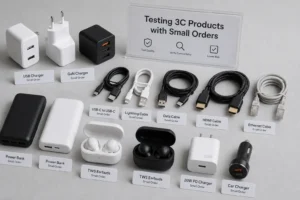
There is rarely one USB cable that is best for every customer. Retailers usually benefit from a structured assortment with clear tiers and use cases.
A simple range might include:
- Everyday charging cables for common smartphones and accessories
- Durable braided cables for customers who prioritize daily-use strength
- Longer cables for home, office, and travel convenience
- USB-C to USB-C cables for modern USB-C charger ecosystems
- Cable options matched to selected charger ranges
- Private-label cables with packaging designed for a specific retail channel
Each item should have a distinct role. This makes staff training, product-page writing, and customer choice easier.
For e-commerce sellers, the product images and bullet points should also make the role of each cable obvious. Customers should be able to see connector types, cable length, intended use, and any stated charging limitations before purchase. Clear information is one of the simplest ways to reduce avoidable returns.
Frequently Asked Questions
Can a USB cable make charging slower?
Yes. A USB cable can contribute to slower charging if it is not suitable for the current, power, or communication requirements of the device and charger. However, slow charging can also result from the device’s own limit, the charger output, protocol compatibility, battery condition, or multiple devices sharing one charger.
Does every USB-C cable support fast charging?
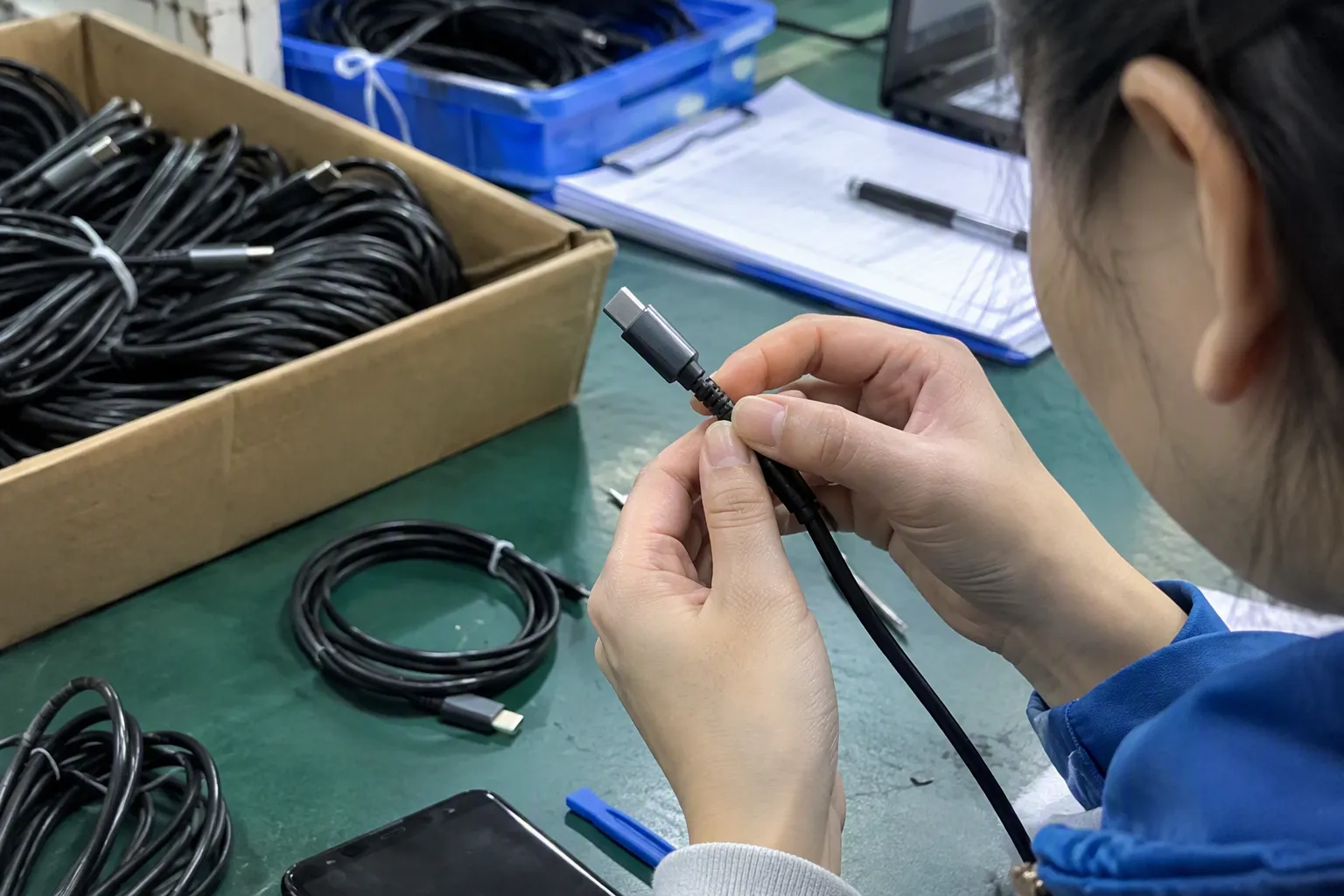
No. USB-C describes a connector format, not a guaranteed charging capability. Different USB-C cables may have different intended ratings, internal configurations, and supported functions. Buyers should verify the cable specification and match it with the charger and device rather than relying on connector appearance alone.
Is a high-wattage charger enough for fast charging?
No. A high-wattage charger is only one component. The device must support a compatible charging mode, and the USB cable must be suitable for the required charging setup. The final result depends on the full charging chain, not on the charger label alone.
What should retailers ask a USB cable supplier?
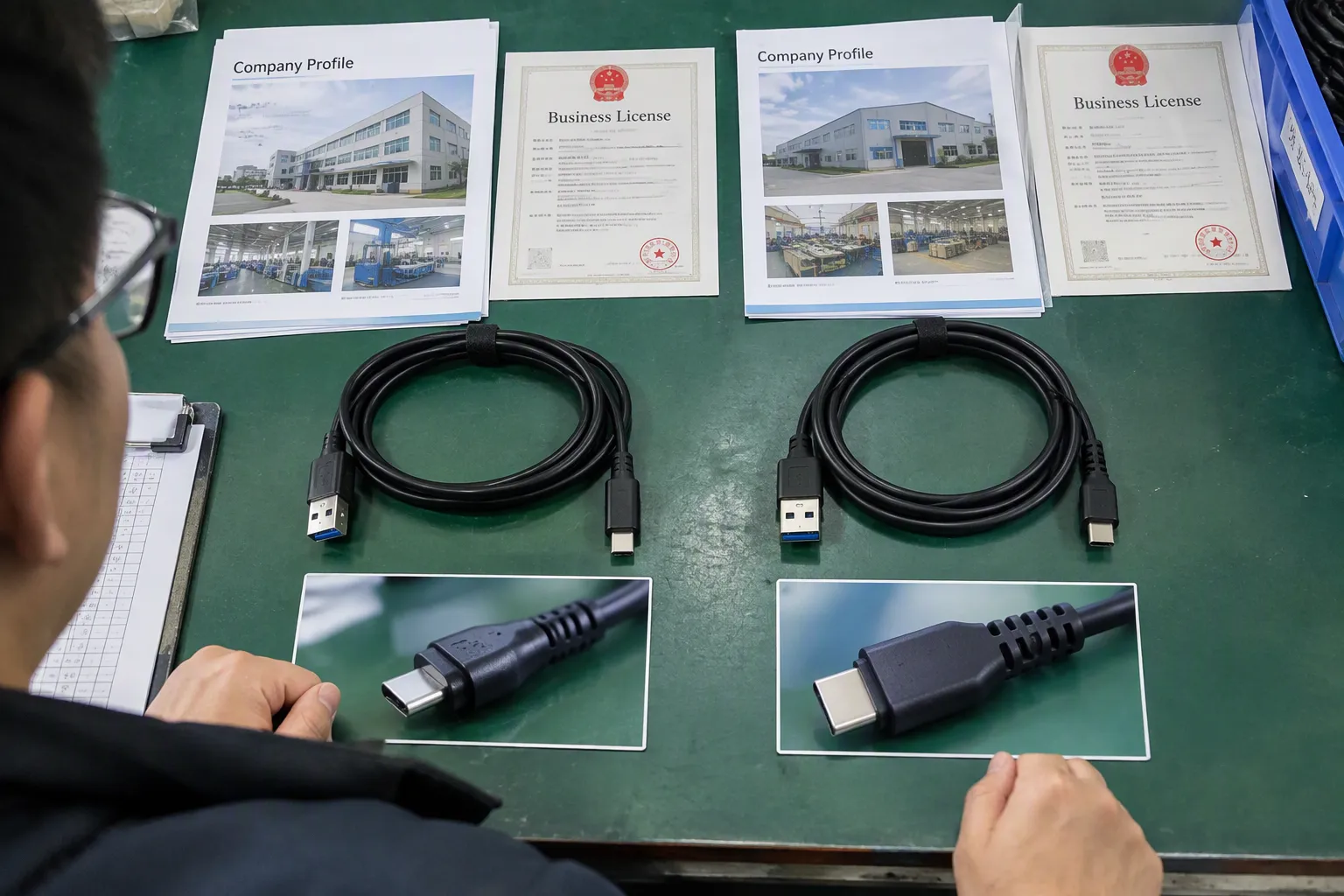
Retailers should ask for the connector configuration, stated charging rating, intended device use, available lengths, packaging options, MOQ, lead time, quality-control process, and relevant compliance documents. They should also request samples and confirm that listing claims match the supplier’s documented specifications.
Should sellers use “fast charging” in cable listings?
Sellers can use the term carefully when they have supporting product information and define the conditions. The listing should explain that charging performance depends on a compatible device, charger, protocol, and USB cable. Broad claims such as “maximum speed for every device” should be avoided unless independently verified.
Conclusion
A USB cable can affect fast charging, but it should never be judged in isolation. The device capability, charger output, supported protocol, connector configuration, and cable-rated capacity must work together. For B2B buyers, accurate specifications are more useful than broad “fast charging” labels. We help retailers, wholesalers, and e-commerce sellers source USB cables and charging accessories with practical product information, stable quality control, flexible customization options, and export-focused support for European and US markets.
Sources
- USB Charger (USB Power Delivery)", USB Type-C and USB Power Delivery specifications describe cable-current capabilities and communication mechanisms that can constrain the power contract available between a source and sink
- USB Charger (USB Power Delivery)", USB Power Delivery defines charging as a negotiated source–sink arrangement in which the capabilities of the device, power source, and interconnecting cable determine the supported power configuration
- The Basics of USB Power Delivery Negotiations", USB Power Delivery establishes a power contract from the mutually supported capabilities of the source and sink, with cable capability relevant to configurations that require it
- USB Charger (USB Power Delivery)", USB Type-C specifies a reversible connector system, while charging modes such as USB Power Delivery and particular data-transfer capabilities depend on separately implemented features and supported specifications
- USB-PD Auto Negotiate Sink Configurability", Under USB Power Delivery, the power source advertises available capabilities and the sink requests a supported operating profile, producing a negotiated power contract
- USB Charger (USB Power Delivery)", Technical analyses of multi-port USB charging describe shared power budgets in which the power available to an individual port can be reduced or renegotiated when additional loads are connected
- USB-C Cable Voltage Drop - LTT Labs : r/UsbCHardware", Electrical engineering literature shows that conductor resistance produces voltage drop that increases with current and cable length, while USB Type-C specifications define cable capabilities relevant to permitted power operation
- FTC Policy Statement Regarding Advertising Substantiation", Consumer-protection guidance states that objective advertising claims must be supported by appropriate evidence, so a broad performance label alone is not substantiation for specific power, protocol, or compatibility capabilities