Quick Answer
A charge-only USB cable can look like a simple product, yet a vague specification can create expensive problems for retailers and importers. Customers may expect reliable charging, no data transfer, fast-charge support, or stronger security. I recommend defining the real use case before a supplier quotes, samples, or produces the cable.
A charge-only USB cable should be developed as a specified charging accessory, not as a generic cable with “data removed.” Buyers should confirm the connector types, target devices, charging expectation, cable length, conductor design, labeling, and security objective. Sample testing is essential because charging behavior depends on the device, charger, USB protocol, and cable construction[1].
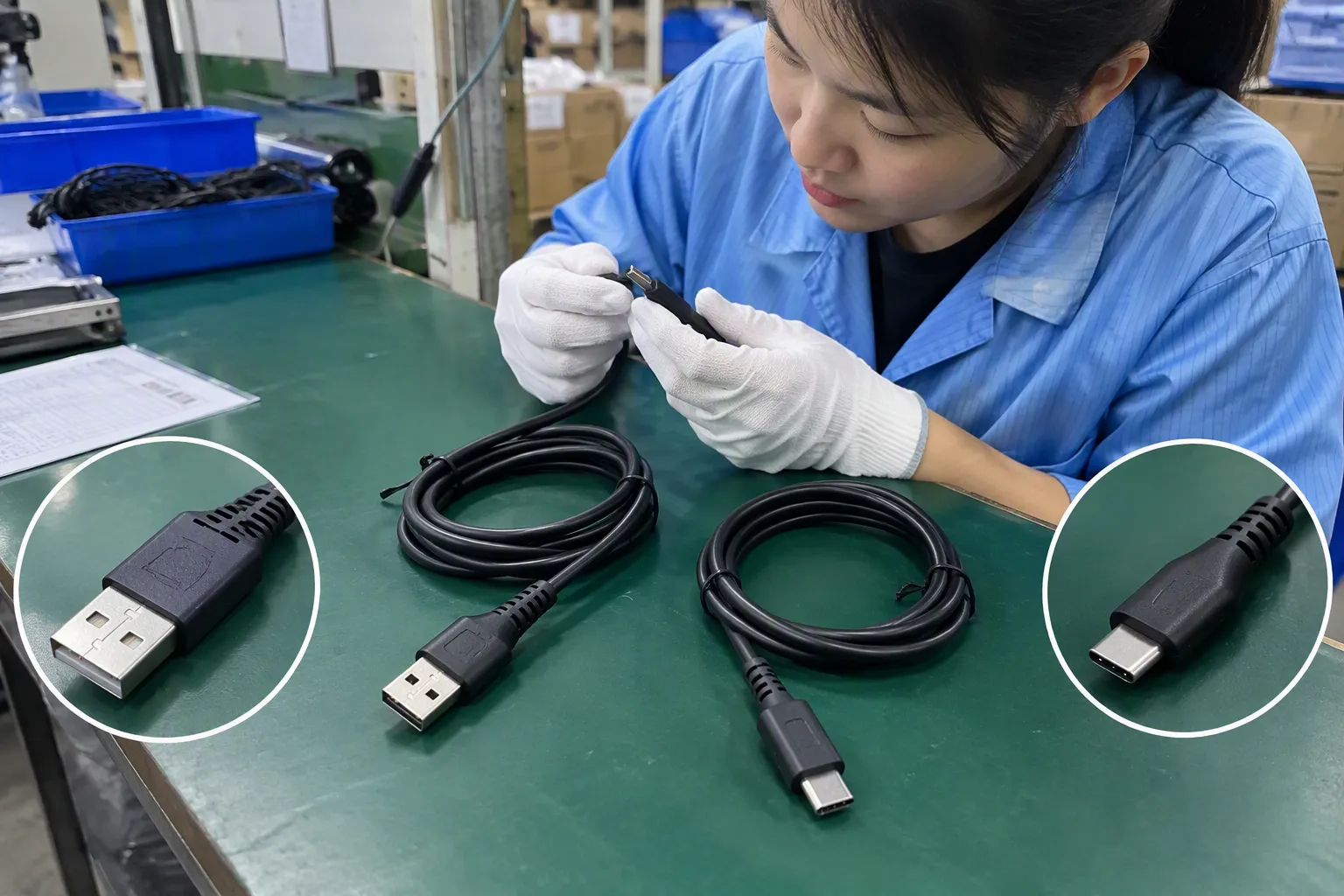
When I discuss customized USB cables with buyers, I usually find that the word “charge-only” means different things to different teams. One buyer may want a basic 5V charging lead for promotional products. Another may need a cable for public charging environments. A third may expect USB-C fast charging. Those are very different sourcing projects.
Is a Charge-Only USB Cable Simply a Cable With Data Wires Removed?
A charge-only USB cable is often treated as a low-risk, low-cost item. That assumption can lead to inconsistent charging, unclear product listings, and unnecessary return rates. A cable may stop data transfer in one expected scenario while still failing to charge certain devices or support a buyer’s intended charging setup.
A charge-only USB cable is not simply defined by the absence of data transfer. Its performance depends on the connector configuration, power conductors, cable length, voltage drop, charging protocol, device behavior, and intended environment. Buyers should specify charging and security expectations separately, then validate the finished sample with relevant devices and chargers.
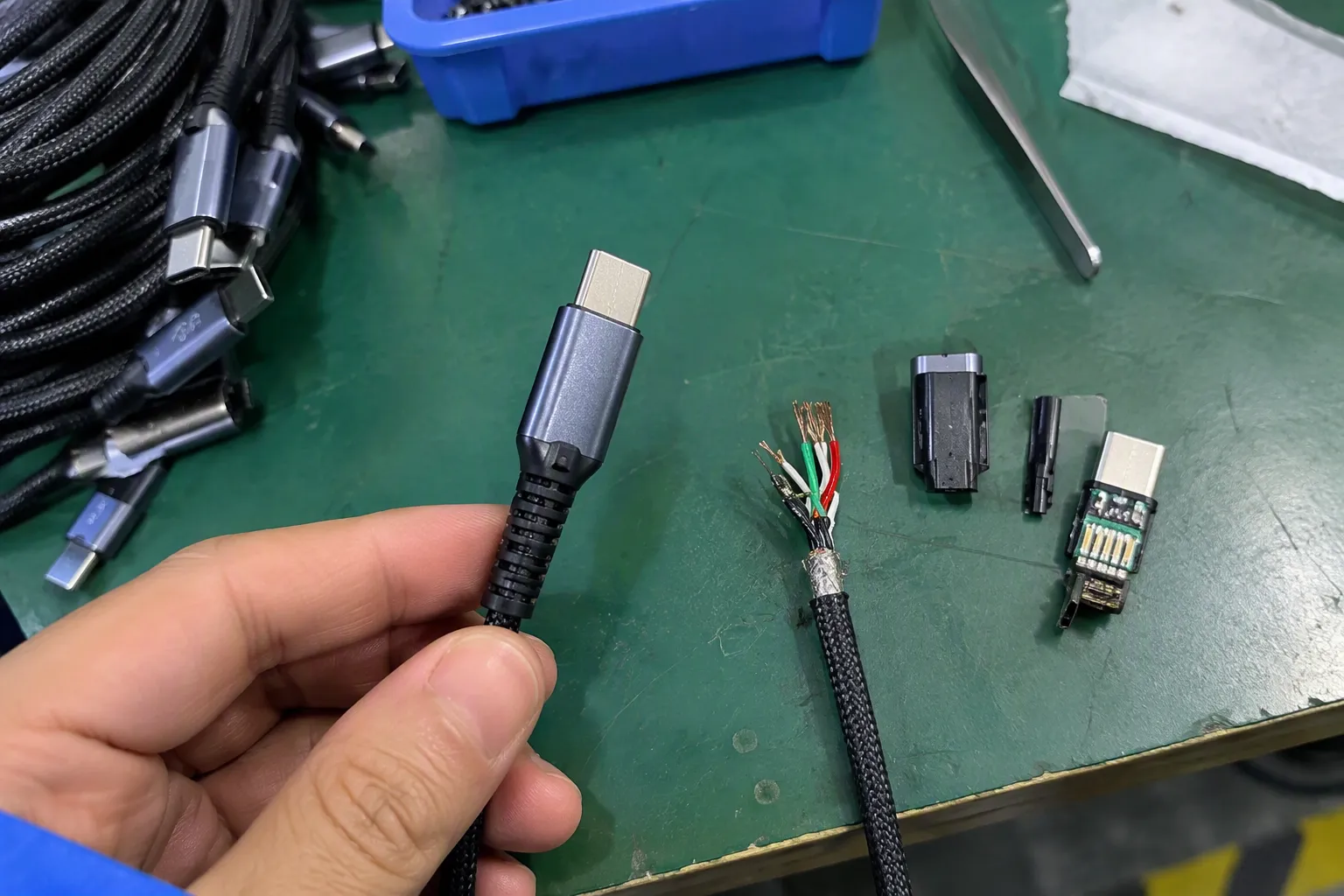
For procurement teams, the better question is not “How do we modify a cable?” The better question is: What must this cable do, what must it not do, and how will we confirm those requirements before mass production?
Start With the Meaning of “Charge-Only”
In my experience supporting specification discussions, the first point to clarify is the buyer’s definition of charge-only. This term can describe several goals, and a supplier should not assume that they all require the same design.
A buyer may mean:
- The cable is not intended for routine file transfer or synchronization.
- The cable should provide controlled charging use for a particular device category.
- The cable is intended for a public, travel, retail, hospitality, or workplace setting where the buyer wants to reduce perceived data-transfer risk.
- The buyer wants a simple cable that supports basic charging only, without promising advanced protocol compatibility.
- The buyer wants a product marketed as a data-blocking charging cable and needs clear, supportable product language.
These goals overlap, but they are not interchangeable.
For example, a retailer may sell a cable to travelers who want to charge from shared USB outlets. The retailer may focus on a security-oriented message. However, product language should remain careful. A cable designed to prevent intended data transfer does not automatically guarantee absolute protection in every device, charger, port, or connected environment.
Similarly, an importer may want a charge-only USB cable for a basic power bank accessory kit. That project may have no special cybersecurity claim at all. The buyer may simply want a low-complexity charging lead for a known product combination.
I recommend that buyers write the intended use in one or two plain sentences before requesting a quotation. For example:
“We need a USB-A to USB-C charging cable for basic charging of selected portable devices. We do not intend the cable for data transfer. The final charging behavior must be confirmed through samples using our target devices and chargers.”
This kind of statement gives a supplier a usable starting point. It also helps the buyer avoid a common sourcing problem: ordering a general concept rather than a measurable product.
Basic USB Charging and USB-C Are Different Cases
A charge-only USB cable for traditional USB 5V charging should not be treated as the same product as a USB-C charging cable. The connector shape alone does not tell the full story. USB-C products can involve different charging behavior, device expectations, and protocol requirements[2].
For basic USB charging applications, the buyer may only need a cable that works with a defined charger and device range. Even then, real performance can vary because of cable resistance, connector quality, length, and the target device’s charging logic.
For USB-C applications, the evaluation becomes more detailed. Some USB-C devices may require specific signaling behavior before they accept charging as expected[3]. Some devices may charge slowly under a basic configuration. Some may require compatibility with a particular charger or power-delivery arrangement[4]. A cable that is acceptable for one USB-C accessory may not be suitable for a laptop, tablet, high-power phone charger, or other demanding product.
I suggest separating the project into practical categories:
| Charging scenario | Typical buyer question | What should be confirmed by sampling? |
|---|---|---|
| Basic USB 5V charging | Will the cable charge our selected low-power device? | Charging start, stability, connector fit, cable heat, and expected user experience |
| USB-A to USB-C | Will the target USB-C device recognize and charge correctly? | Device behavior with the selected charger, cable length, and charging indication |
| USB-C to USB-C | Does the cable support the intended device and charger combination? | Protocol-dependent charging behavior, power expectation, and product labeling |
| Fast-charging accessory | Can we advertise a named charging capability? | Model-specific compatibility, test records, charger conditions, and approved claims |
| Security-oriented charging product | Can we state that the cable blocks intended data transfer? | Product design review, sample checks, supported wording, and limitation statements |
I do not recommend using broad terms such as “fast charge for all devices” or “100% secure charging” unless the buyer has model-specific evidence and reviewed documentation to support those claims. The market often rewards simple claims, but B2B buyers carry the cost when those claims create returns, complaints, or platform disputes.
Cable Gauge, Length, and Heat Affect Charging Stability
A charge-only USB cable still needs sound electrical construction. The lack of intended data transfer does not remove the need for suitable power conductors, dependable connectors, insulation, strain relief, and production controls.
The most practical issue is often voltage drop. As cable length increases, resistance can increase[5]. When a device draws current, that resistance can reduce the voltage reaching the device[6]. This may affect charging stability, charging speed, or the device’s ability to maintain charging under use.
The final result depends on several linked factors:
- Conductor gauge: Larger conductors generally offer lower resistance than smaller conductors[7], though buyers should review the actual cable specification rather than relying on appearance.
- Cable length: A short cable and a long cable should not be assumed to perform the same way.
- Target current: Higher current demand places more importance on conductor design and connector quality.
- Connector construction: Poor contact quality can contribute to resistance, heat, intermittent charging, or premature failure[8].
- Charger output: The charger’s real behavior and supported protocols matter.
- Device charging logic: Devices can limit, negotiate, reject, or vary charging based on their own internal design.
- Ambient conditions: Heat, repeated bending, vehicle use, public charging stations, and heavy daily use can change practical performance.
A supplier quotation should therefore identify at least the intended cable length, outer material, connector combination, and charging expectation. If the buyer requires a specific current or power claim, that claim should be reviewed through sample testing and documentation before production.
Use Samples to Test the Real Purchase Scenario

I see sampling as the most important stage in sourcing a charge-only USB cable. A pre-production sample cannot prove every possible use case, but it can reveal whether the requested design matches the buyer’s actual devices, chargers, packaging claims, and end-user expectations.
The sample plan should be based on the buyer’s sales channel. An e-commerce seller may need to test the devices most frequently mentioned in product reviews. A wholesaler may need a broader but still controlled device list. A chain retailer may need packaging, barcode, labeling, and compliance documents checked alongside physical samples.
A practical sample-validation checklist can include:
-
Confirm the connector combination.
The buyer should verify USB-A, USB-C, Micro USB, Lightning-compatible, or other connector requirements before tooling or production starts. -
Test with the intended charger types.
The buyer should test wall chargers, power banks, vehicle chargers, desktop ports, or charging stations that match the proposed market use. -
Test with representative devices.
The buyer should choose a defined list of target devices. The list should include the most important models, not every device on the market. -
Observe charging behavior.
The buyer should check whether charging starts consistently, remains stable, and meets the expected user experience. The buyer should document the test conditions. -
Review cable temperature and physical condition.
The buyer should watch for abnormal heat, loose connectors, intermittent charging, or visible stress near the connector ends during reasonable test use. -
Confirm intended data behavior.
The buyer should evaluate whether the sample meets the stated no-data-transfer or data-blocking requirement within the tested setup. The buyer should avoid turning limited testing into an absolute security promise. -
Approve labeling and packaging language.
The package should state the intended function clearly. It should not imply universal fast charging, universal compatibility, or guaranteed cybersecurity unless validated evidence supports those claims.
I would also ask the supplier to identify what has changed between the sample and the mass-production specification. Small changes in cable length, conductor material, connector mold, or internal construction can affect performance. This is especially important when a buyer approves one sample but later requests a lower price.
Build a Procurement Specification Before You Negotiate Price
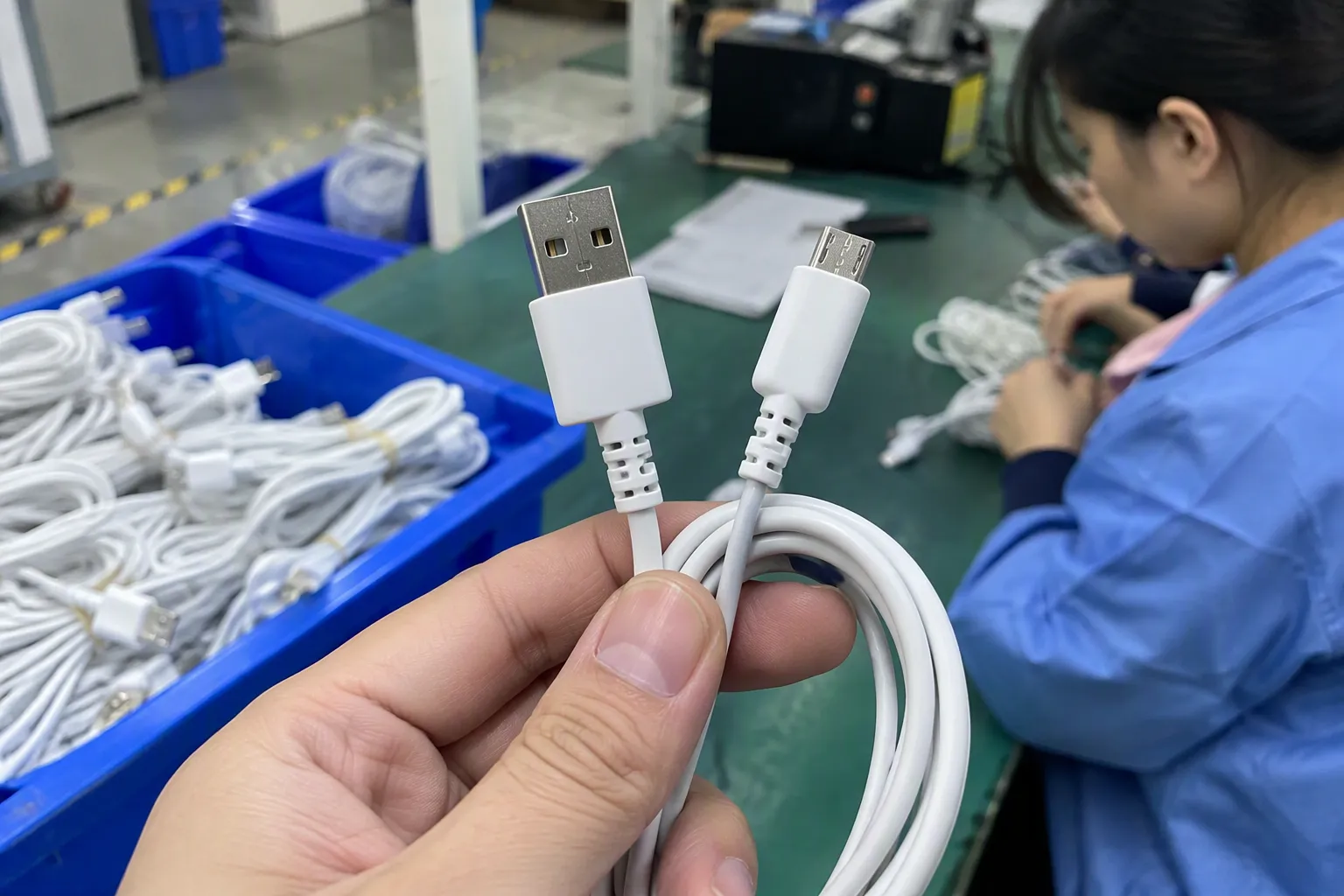
A charge-only USB cable should be purchased against a written specification. Price negotiation is important, but a low quotation has limited value if the supplier is quoting a different cable construction from the product the buyer intends to sell.
I recommend that buyers include the following points in their RFQ or purchase specification:
| Specification item | Why it matters |
|---|---|
| Connector type at each end | It defines the basic device and charger connection |
| Intended charging use | It separates basic charging from higher-power or protocol-dependent expectations |
| Data-transfer expectation | It defines whether the cable is not intended for data, or whether a specific data-blocking function is requested |
| Cable length | It affects convenience, resistance, packaging, and charging performance |
| Cable material and color | It affects appearance, durability expectations, and retail positioning |
| Target market | It guides labeling, documentation, packaging language, and commercial requirements |
| Target devices and chargers | It makes sample testing relevant instead of generic |
| Custom logo and packaging | It affects MOQ, lead time, artwork approval, and production planning |
| Quality checks | It defines what must be inspected before shipment |
| Claim limitations | It reduces unsupported statements about speed, compatibility, or security |
For our export business in Shenzhen, I would normally ask these questions before confirming a customized cable project:
- Which country or region will receive the product?
- Which devices will the buyer list as compatible, if any?
- Is the product for basic charging, travel use, public charging locations, or another controlled application?
- What cable length does the buyer need?
- Does the buyer require a specific connector shell, braid, PVC, TPE, or other appearance?
- Does the buyer need private labeling, retail packaging, or bulk packing?
- What is the acceptable MOQ and target delivery window?
- What sample tests will the buyer use for approval?
- Which certificates or reports must be provided, and which documents must be verified by the buyer?
This discussion may feel detailed for a simple cable, but it prevents avoidable misunderstandings. A clear specification also lets suppliers compare material options honestly instead of offering an unclear “same function” alternative.
Quality Control Should Match the Product Claim
Quality control for a charge-only USB cable should focus on the features that affect the buyer’s stated product promise. A basic charging accessory may need different controls from a premium retail cable with custom branding and a security-oriented marketing message.
At a practical level, buyers can request inspection points such as:
- Visual checks for cable finish, color consistency, logo placement, and packaging accuracy.
- Connector fit checks with the approved target ports.
- Charging-function checks using agreed sample devices and chargers.
- Continuity or functional checks appropriate to the agreed cable design.
- Basic pull, bend, or strain-relief evaluations where relevant to the agreed quality standard.
- Packing quantity verification and carton marking checks.
- A review that the production cable matches the approved golden sample.
The exact test methods, acceptance criteria, and sample size should be agreed with the supplier or a qualified third-party inspection provider. I do not recommend treating generic factory claims as a substitute for a buyer’s own approval criteria.
Documentation deserves the same care. Our business can provide relevant product documents based on the product and destination market, but buyers should always verify the document scope, issuing party, model coverage, validity, and market relevance. A document for one cable model or one destination does not automatically cover every customized version.
Avoid Overstated Security and Compatibility Claims
Security-focused accessories can be attractive in retail. However, a charge-only USB cable should be marketed with disciplined language. Buyers should avoid statements that imply complete protection from every possible threat, port, device, or charging environment.
A more balanced product position may say that the cable is designed for charging use and is not intended for data transfer, subject to the product’s verified design and tested configuration. The final wording should be reviewed against the buyer’s evidence, sales platform rules, and applicable market requirements.
The same caution applies to compatibility and speed claims. A USB cable may physically connect to a device and still not provide the charging result the customer expects. This is why I prefer language such as:
- “Designed for charging use with supported device and charger combinations.”
- “Charging performance depends on the connected device, charger, and protocol.”
- “Please verify compatibility with your target devices before mass purchase.”
- “Fast-charging claims should be confirmed through model-specific sample testing.”
These statements may sound less dramatic than broad marketing slogans, but they protect the retailer’s reputation. They also help customer-service teams explain the product correctly.
Frequently Asked Questions
What is a charge-only USB cable?
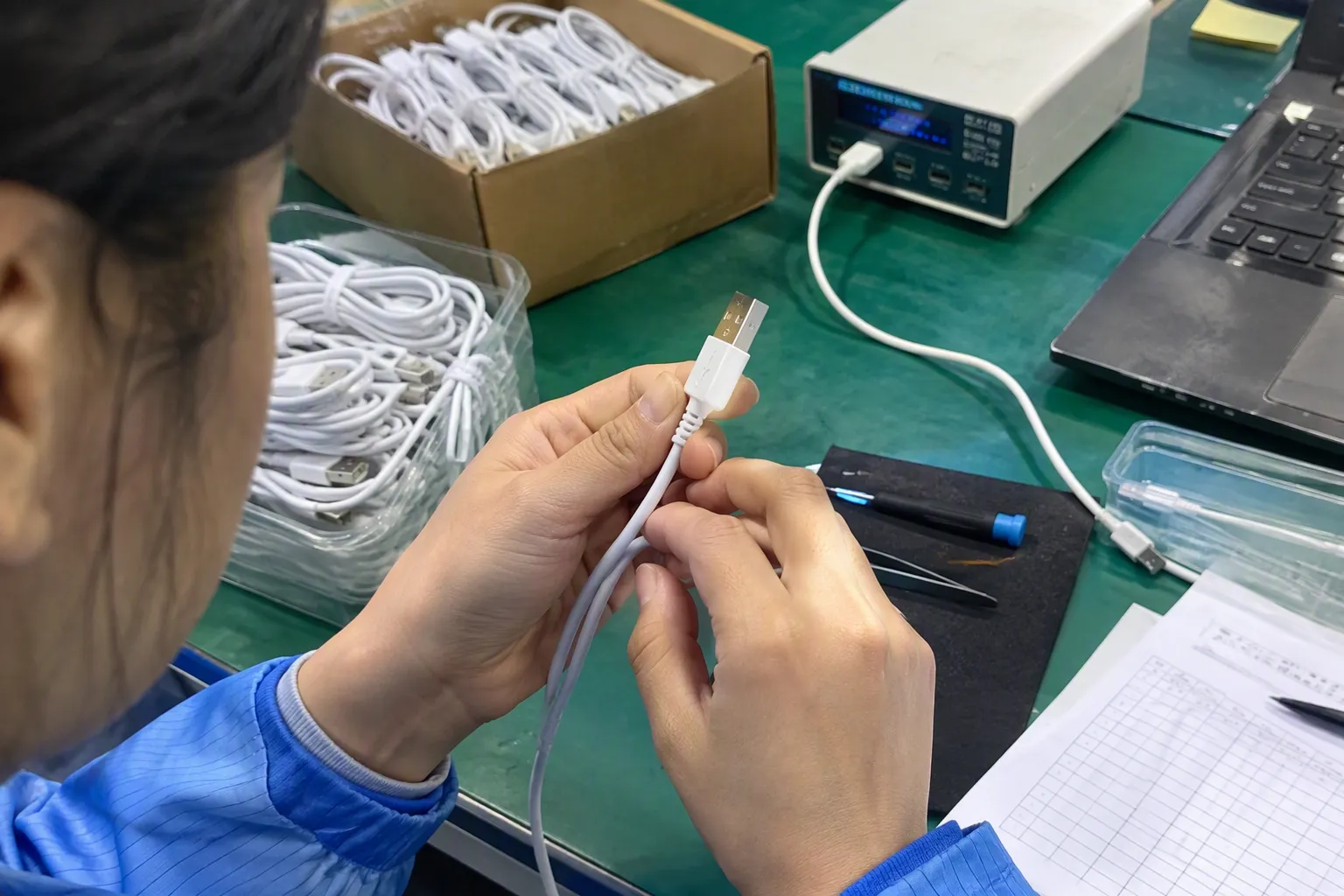
A charge-only USB cable is a cable intended to supply power to a connected device without serving as a normal data-transfer cable. Its actual behavior depends on the connector design, device, charger, and protocol. Buyers should confirm the intended function through approved samples.
Can a charge-only USB cable support fast charging?
A charge-only USB cable may support some charging scenarios, but fast-charging compatibility depends on the cable design, connector type, charger, device, and charging protocol. Buyers should not assume that a basic charging cable supports every fast-charging system. Sample testing should confirm any advertised performance.
Is a charge-only USB cable completely secure?
A charge-only USB cable should not be marketed as completely secure in every situation. A cable may be designed to prevent intended data transfer, but security outcomes can depend on the device, port, connected equipment, and use environment. Buyers should use careful, evidence-based product claims.
What should I test before ordering charge-only USB cables in bulk?
Buyers should test the approved sample with representative devices, chargers, cable lengths, and expected use conditions. They should also review connector fit, charging consistency, packaging text, logo quality, and relevant documentation. A written approval standard reduces risk before bulk production.
Can I customize the packaging and logo for a charge-only USB cable?
Yes, many B2B cable projects can include custom logos, colors, packaging, and packing configurations. MOQ, tooling needs, artwork approval, and lead time depend on the requested design. I recommend confirming the final cable specification before finalizing packaging claims.
Conclusion
A charge-only USB cable is a sourcing project that needs clear functional boundaries, not a shortcut definition. Buyers should separate basic charging, USB-C behavior, fast-charging expectations, and security objectives before they compare quotations. I recommend approving samples with real target devices and chargers, checking production against the approved specification, and using cautious packaging claims. If you are sourcing USB cables for retail, wholesale, or e-commerce, we can help you clarify specifications, evaluate customization options, and prepare samples for your market.
Sources
- USB Charger (USB Power Delivery)", USB-IF technical materials explain that USB charging and USB Power Delivery behavior is determined by the capabilities and communication of the power source, sink device, and cable
- A Primer on USB Type-C and Power Delivery Applications ...", USB-IF documentation describes USB Type-C as a connector and power-management system with defined roles and signaling, while USB Power Delivery enables negotiated power arrangements beyond basic USB power
- A Primer on USB Type-C and Power Delivery Applications ...", The USB Type-C specification assigns the Configuration Channel functions including connection detection, source-to-sink role determination, and available-current advertisement
- USB Charger (USB Power Delivery)", USB Power Delivery documentation describes charging as a negotiated source–sink power contract whose available voltage and current depend on the capabilities advertised by the connected equipment
- Resistance of conductors of various types and sizes as ...", Standard electrical-resistance relations express conductor resistance as proportional to length and inversely proportional to cross-sectional area, all else being equal
- Operation of NIST Josephson Array Voltage Standards - PMC", Electrical engineering teaching materials apply Ohm's law to show that current flowing through a conductor's resistance produces a voltage drop along the conductor
- Standard Reference Material 1861", The resistance equation for a uniform conductor shows that resistance is inversely related to cross-sectional area, so a larger conductor has lower resistance under otherwise similar conditions
- Contact Resistance Measurements | Center for Advanced Life ...", Research on electrical contacts identifies contact resistance as a source of localized Joule heating and documents its importance to connector reliability and intermittent electrical performance