Quick Answer
Data-only USB cables sound simple, but the phrase can create problems for buyers who need predictable performance. A listing may mean a cable that transfers files with limited charging, or one that physically blocks power. If I do not define the requirement first, I risk buying a product that fails with the target device, creates customer complaints, or increases returns.
Yes, data-only USB cables exist, but the term is not always a standardized product category[1]. Some cables carry USB data signals while still allowing certain power connections[2], while charge-blocking designs aim to prevent power delivery. Buyers should confirm the internal wiring, data capability, connector type, device compatibility, test evidence, MOQ, and supplier support before purchasing.
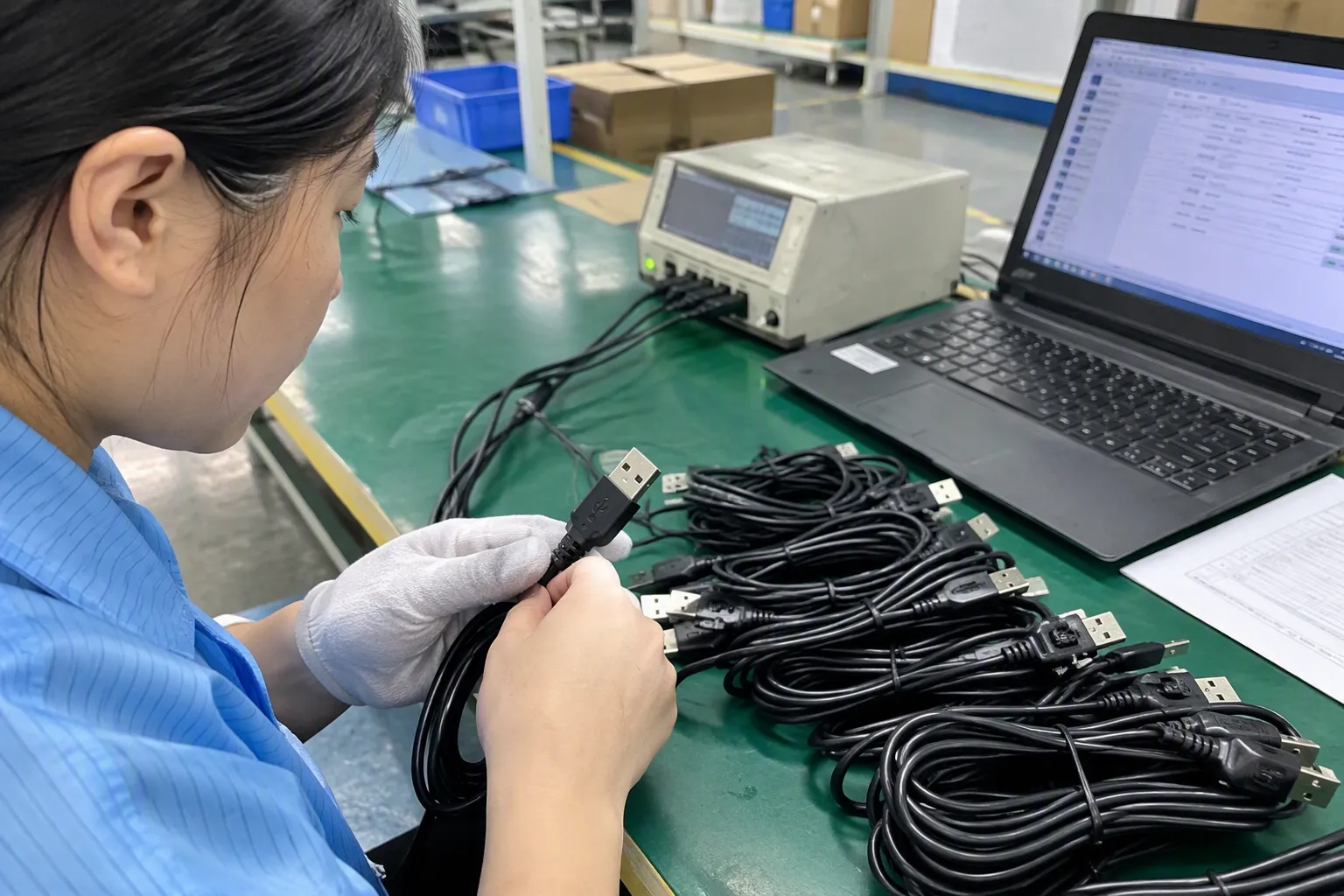
The safest approach is to treat “data-only” as a buyer requirement, not as proof of a confirmed specification. I first separate data transfer from no power, then identify the exact host and peripheral. After that, I ask the supplier for documentation and test samples. This process is especially important for retailers, wholesalers, and online sellers planning to stock the product.
Why is “data-only USB cable” not necessarily a standardized product category?
The phrase “data-only USB cable” can describe different electrical designs, so buyers should not rely on the product title alone. I ask suppliers whether the cable passes the required data lines, whether VBUS is connected, whether the design blocks charging, and whether any connector-specific identification affects operation. I also verify the intended host and peripheral with samples.
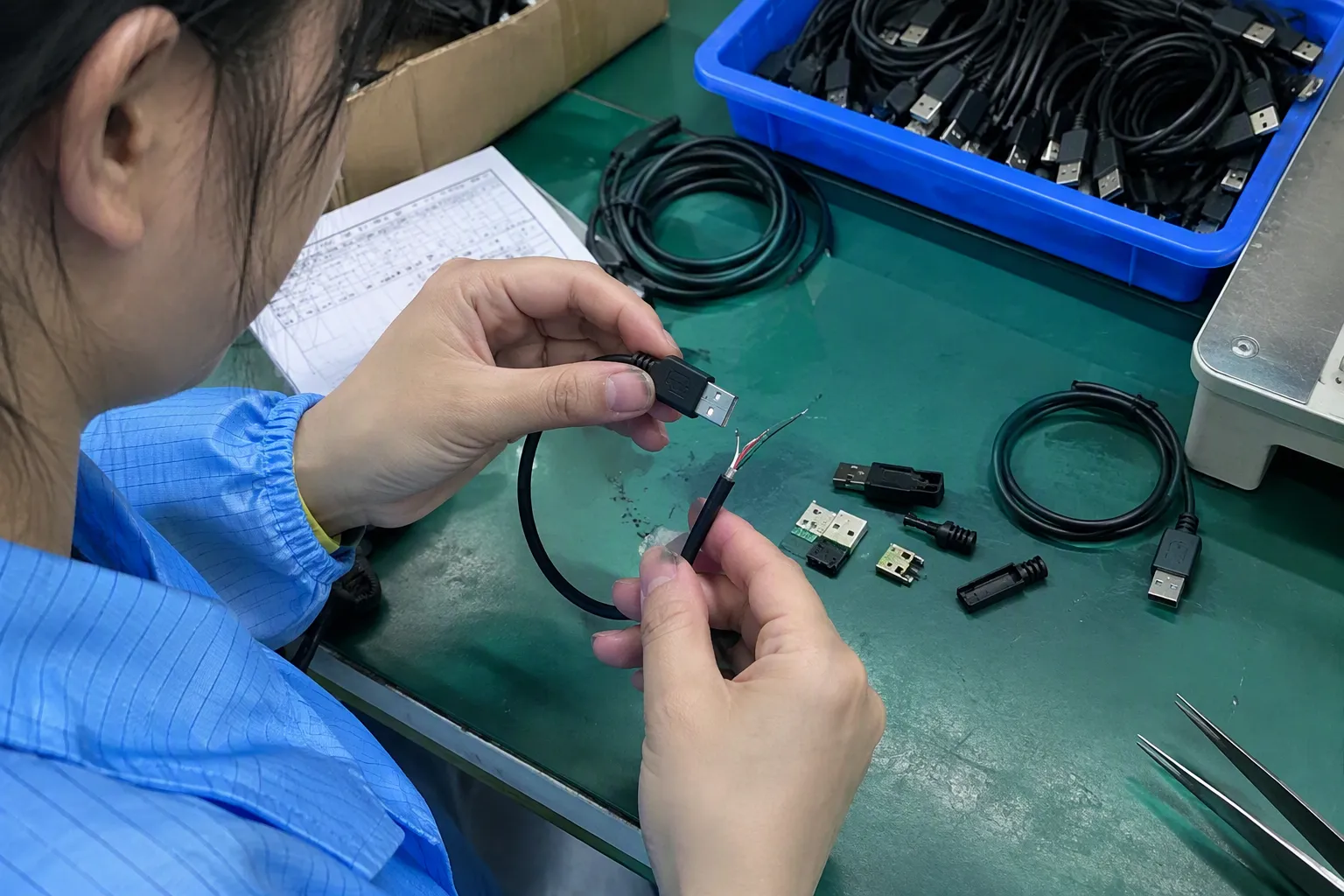
When I discuss USB cables with customers and suppliers, I often find that the first issue is not the cable itself. The issue is the meaning of the request. One buyer may want a cable for transferring files between a computer and a device while reducing unwanted charging. Another buyer may want a cable that physically prevents power from passing through the connection. Those are not automatically the same product.
Data transfer does not always mean no power
USB communication can depend on electrical power supplied through the connection[3]. A peripheral may need power to start its electronics, identify itself, or maintain a data link[4]. Therefore, a cable that supports data transfer may still have some power path. The exact behavior depends on the device design, host, connector arrangement, and USB implementation.
This creates an important distinction:
| Buyer’s intended requirement | What it may mean | Main question to verify |
|---|---|---|
| USB data cable | The cable carries data signals | Which data standard and lines are supported? |
| Data transfer with limited charging | Data works, but charging is reduced or restricted | What power lines remain connected? |
| No charging cable | The seller claims that charging will not occur | Does the design actually block the relevant power path? |
| Charge-blocking cable | The construction is intended to interrupt power | Has the design been tested with the target devices? |
| USB sync cable | A consumer term for data and charging functions | Is the product specification clear enough for resale? |
I do not treat these terms as interchangeable. A cable described as “non-charging” may still behave differently from a cable designed to block VBUS. A cable marketed as “data-only” may simply be a low-power or synchronization cable. The listing may not explain the internal wiring clearly.
What should a supplier confirm?
A serious supplier should be able to answer practical technical questions. I would request the following information in writing:
-
Are the power lines connected?
Ask specifically about VBUS and ground. Do not assume that “data-only” means all power conductors are removed or interrupted. -
Which data lines are connected?
The answer may differ between USB 2.0-style data connections and newer connector or protocol configurations. The supplier should identify the supported wiring rather than relying only on a USB version label. -
Is the cable intended to block charging or only limit it?
“Limit,” “reduce,” “disable,” and “block” can describe different outcomes. The supplier should explain the design in plain language. -
Does the cable include an identification component?
Some connector-specific products can involve identification or configuration features. I ask whether any chip, resistor, or other component is present and what function it serves. -
Which devices have been tested?
A supplier’s test list is useful, but it is not universal proof. I still test samples with the exact host and peripheral intended for sale. -
What are the production controls?
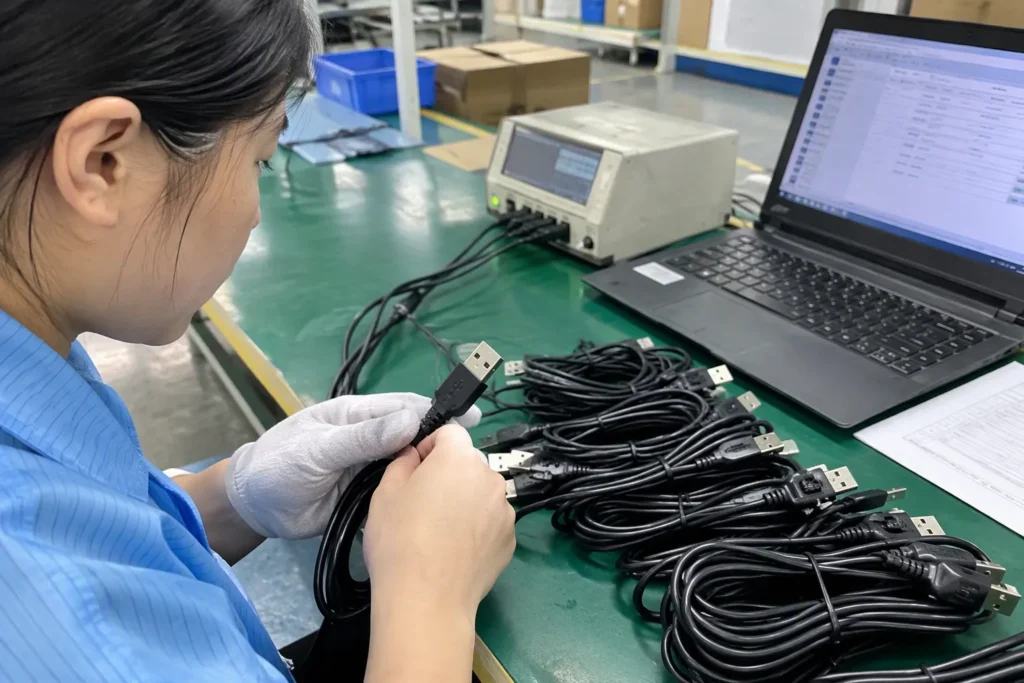
I ask how the factory checks continuity, data performance, connector assembly, strain relief, and appearance during production.
A supplier that cannot explain these points may still sell a functional cable, but I would treat the purchase as higher risk. Product language should match the actual construction and the evidence available.
Why does connector shape not prove cable function?
USB-A, USB-C, Micro-USB, and other connector forms describe physical interfaces[5]. They do not, by themselves, prove the internal wiring or the final user experience. Two cables with similar plugs can have different conductors, shielding, electronic components, data capabilities, and power behavior[6].
The same caution applies to labels such as “high speed,” “USB 3,” or “fast data.” A USB generation or speed claim does not automatically prove that charging is blocked[7]. A connector that fits a device does not prove that the device will recognize the connection.
For this reason, I separate procurement into three levels:
- Physical compatibility: Will the plugs fit the host and peripheral?
- Electrical compatibility: Are the required power, ground, and signal paths present or absent?
- Functional compatibility: Will the target devices perform the expected data operation without unwanted charging?
A product should pass all three checks before I consider it suitable for a retail or wholesale program.
What does “no power” mean in practice?
Buyers should define the outcome they want. For example:
- The device must transfer files but should not charge from the host.
- The cable should prevent a host from powering a peripheral.
- The cable should avoid charging a phone while allowing a specific accessory to communicate.
- The cable should be used in a controlled industrial or test setup.
- The cable should reduce the likelihood of unwanted power exchange, without guaranteeing universal behavior.
These statements are more useful than “I need a data-only cable.” They give the supplier a measurable requirement to discuss.
I also recommend documenting what the cable does not guarantee. A supplier should not promise identical behavior across every computer, phone, hub, operating system, charger, and accessory. USB systems can involve device-side power management and connector-specific behavior[8]. Application-specific evaluation by a qualified professional may be appropriate when power isolation is safety-critical or part of a regulated product.
Where can I buy data-only USB cables?
Retail buyers can look through specialist cable manufacturers, industrial and electronics distributors, and general marketplaces. However, the most visible listing is not necessarily the most reliable source. I focus on whether the seller can provide samples, wiring information, test records, packaging details, MOQ, lead time, and after-sales support.
For a small personal purchase, a specialist marketplace listing may be a practical starting point. For a retailer, wholesaler, or e-commerce seller, supplier capability matters more than the listing title. A product that appears inexpensive can become costly if customers receive inconsistent versions or if the cable does not perform with the advertised devices.
I normally divide sourcing into three routes:
| Sourcing route | Useful for | Risks to manage |
|---|---|---|
| Specialist cable supplier | Custom wiring, samples, technical discussion | Higher MOQ or longer development time |
| Industrial/electronics distributor | Small quantities and established documentation | Limited customization and narrower packaging options |
| Online marketplace | Early research and sample comparison | Ambiguous descriptions, mixed batches, weak technical support |
| Export trading supplier | OEM packaging, consolidated sourcing, international logistics | Buyer must verify factory control and product documentation |
I do not recommend a named seller without independent verification. The appropriate source depends on the target market, order quantity, connector combination, packaging, compliance requirements, and application.
What should B2B buyers request before placing an order?
I recommend sending a short written specification rather than asking only for a quotation. The specification can include:
- Host connector and peripheral connector
- Required data function
- Intended data speed, if relevant
- Whether charging must be limited, interrupted, or simply not promoted
- Target devices and operating scenario
- Cable length and external construction
- Jacket material and color
- Connector housing and strain relief
- Packaging and labeling language
- Sample quantity
- Expected MOQ
- Required lead time
- Inspection method
- Warranty and replacement policy
A supplier quotation should then separate confirmed facts from assumptions. I look for answers such as:
“This sample passes data between the listed host and peripheral. VBUS is interrupted according to the supplier’s wiring drawing. Compatibility with other devices requires buyer testing.”
That wording is more useful than:
“Universal data-only cable, no charging, works with everything.”
The second statement is too broad for responsible B2B purchasing.
How should a buyer test a sample?
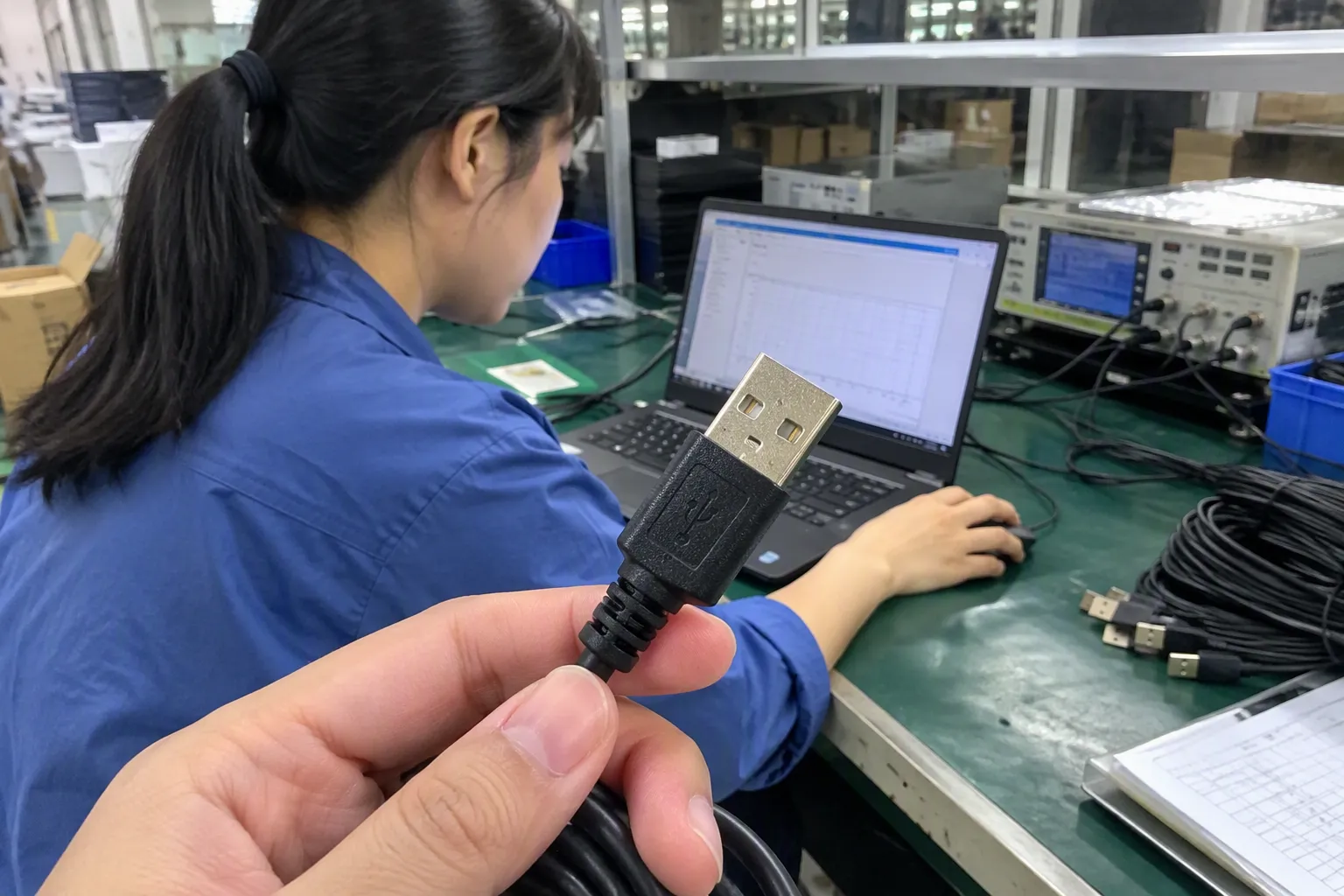
I would begin with the exact devices that customers will use. I would not test only with one laptop and one phone and then assume universal compatibility. A basic evaluation plan can include:
- Connect the cable to the intended host and peripheral.
- Confirm whether the peripheral is detected.
- Check whether the expected data operation completes.
- Observe whether the target device indicates charging.
- Repeat the test after reconnecting in the opposite direction where the connector permits it.
- Test more than one unit from the sample batch.
- Record the host, peripheral, operating system, connector type, and result.
- Ask a qualified technical professional to review the design if power isolation is critical.
The buyer should define what counts as success before testing. “No charging” might mean that the device shows no charging icon, that measured current stays below a defined threshold, or that the power line is electrically interrupted. These are different acceptance criteria.
I am careful not to present a simple consumer test as a laboratory result. A visible charging icon may not fully describe electrical behavior, and the absence of an icon does not prove that every power path is blocked. The test method should match the commercial claim.
How do retailers avoid returns and support problems?
A retailer should make the product description narrower and more accurate than a vague marketplace title. The packaging and online page should state the connector combination, intended data function, known limitations, and tested device examples. If the cable is not confirmed to work with every device, the retailer should not use universal language.
A practical product page might explain:
- “Designed for data transfer between selected USB host and peripheral devices.”
- “Please confirm connector type and device compatibility before purchase.”
- “This product is not a universal guarantee of power isolation.”
- “Charging behavior may depend on the connected devices and system configuration.”
- “Contact us for samples or compatibility review before bulk purchase.”
This approach may sound less attractive than an absolute claim, but it can reduce misunderstandings. In my export work, I have seen that customers care about stable quality, competitive pricing, MOQ, delivery time, customization, and after-sales service. A clear limitation is part of quality control because it helps the buyer sell the right product to the right user.
What supplier documents should be verified?
Certifications and compliance documents should be treated as documents to verify, not as automatic proof of performance. Buyers should check the issuing organization, product model, report scope, test date, manufacturer information, and whether the document applies to the actual cable construction and market.
I would also request:
- Product specification sheet
- Wiring or functional description
- Sample test record
- Batch inspection procedure
- Packaging artwork
- Material information where relevant
- Warranty terms
- Factory or supplier quality-control explanation
- Export and shipping information
The exact documentation depends on the destination market and product claim. A buyer should obtain qualified regulatory advice for application-specific compliance decisions. A document that supports general product compliance may not prove that a cable blocks power or works with a particular device.
Is this a viable product for European and North American buyers?
It can be a viable niche product when the use case is clear. Possible buyers may include electronics users, test engineers, IT departments, device integrators, privacy-oriented consumers, and customers who need controlled connections. However, demand is more difficult to evaluate when the product name is inconsistent across suppliers.
For a retailer or online seller, I would validate demand before committing to a large MOQ. A sensible process is:
- Compare several supplier samples.
- Ask existing customers which devices they need to connect.
- Test the most common combinations.
- Use a limited initial order.
- Track returns by failure reason.
- Improve the listing based on actual compatibility feedback.
The product can perform well when the seller explains its purpose. It can perform poorly when the seller presents it as a universal solution. A cable designed for a narrow requirement should be sold with narrow, accurate claims.
Frequently Asked Questions
Are data-only USB cables real?
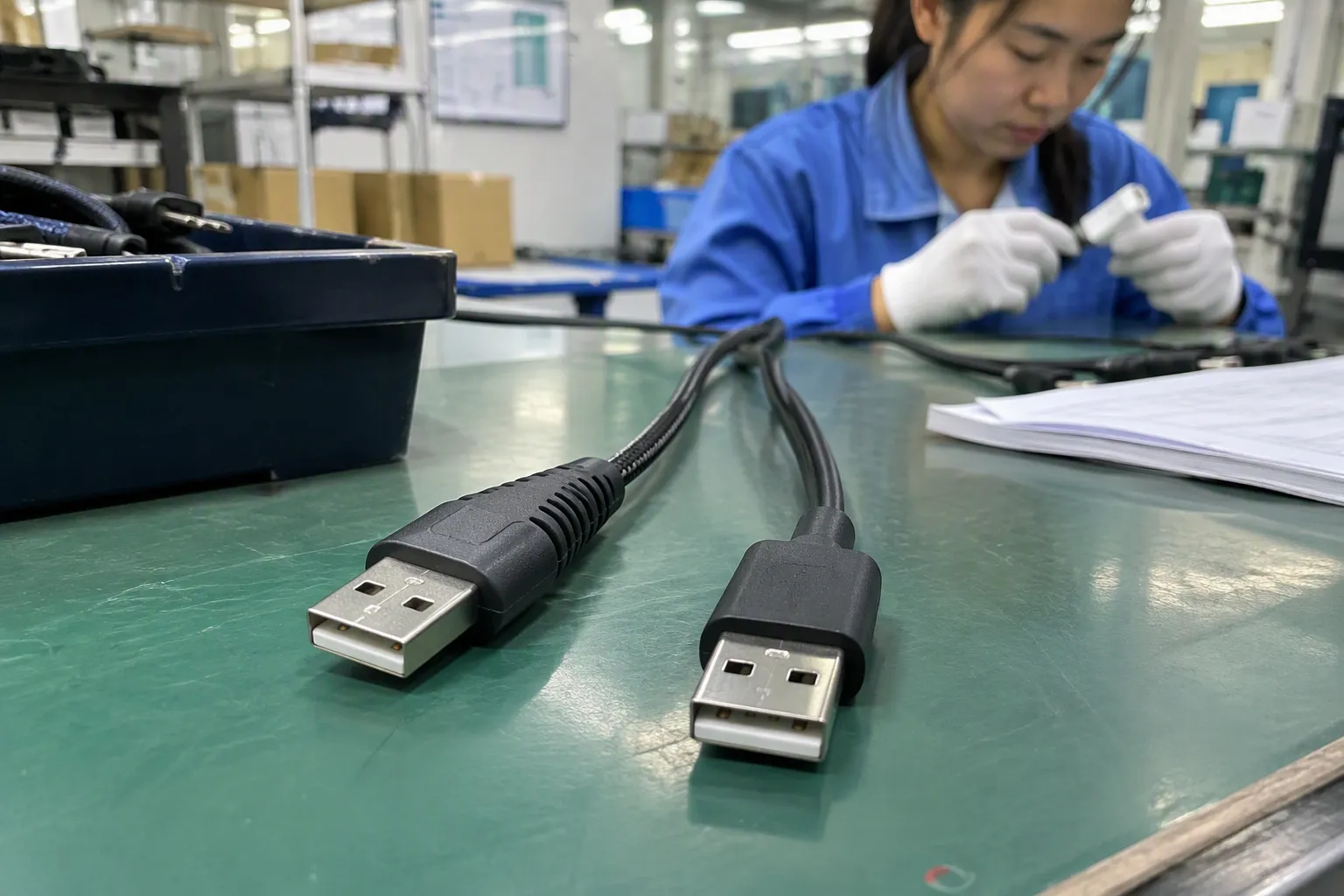
Yes, products marketed as data-only USB cables exist. However, “data-only” does not always identify one standardized wiring design. Some products support data while retaining a power path, while others are designed to interrupt or limit power. Buyers should confirm the construction and test it with the intended devices.
Do data-only USB cables transfer files without charging?
They may, but the answer depends on the cable design and connected equipment. Data communication can still depend on power supplied through the connection. A cable advertised as non-charging may not block every form of power in every device setup, so buyers should request specifications and verify samples.
Where can I buy a charge-blocking USB cable?
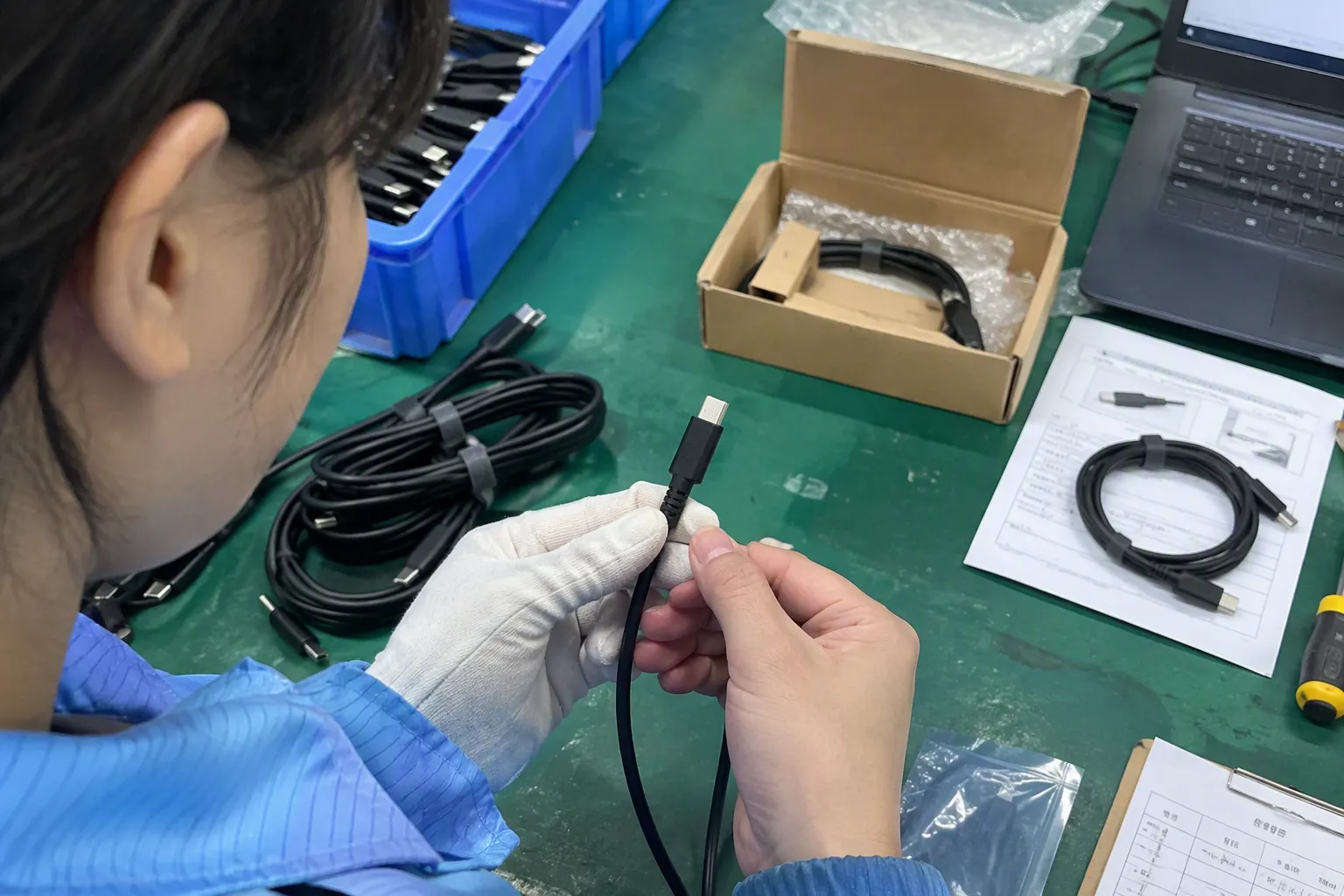
You can research specialist cable suppliers, industrial distributors, electronics sellers, and online marketplaces. For a commercial purchase, choose a supplier that can provide samples, wiring details, test evidence, MOQ, lead time, packaging, and after-sales support. Verify seller claims independently before listing the product.
Does USB-C automatically mean a cable supports data-only operation?
No. USB-C describes a connector format, not a guaranteed internal function. USB-C cables can differ in data capability, power behavior, identification components, and construction. The buyer should confirm the exact wiring and intended device compatibility instead of relying on the connector shape.
What is the best way to test a data-only USB cable?
Test several samples with the exact host, peripheral, connector arrangement, and operating system used by the target customer. Confirm data detection and the expected transfer function, then evaluate charging behavior against a defined acceptance method. A qualified professional should review applications where power isolation is safety-critical.
Conclusion
Data-only USB cables do exist, but the phrase does not provide enough information for a safe purchasing decision. I first clarify whether the buyer needs data capability with limited power or a design intended to block power physically. I then verify the wiring, connector configuration, device compatibility, sample results, supplier documents, MOQ, lead time, and after-sales terms. If you are sourcing for a retail, wholesale, or e-commerce program, contact my Shenzhen 3C trading team to discuss samples, customization, packaging, and a practical supplier evaluation.
Sources
- [PDF] Universal Serial Bus Type-C Cable and Connector Specification", USB standards documentation defines electrical, signaling, and connector requirements but does not establish “data-only USB cable” as a universal product category; the phrase therefore requires interpretation against the applicable specification
- USB Pinout Reference | Type-A Type-B Micro USB USB-C ...", USB interface documentation describes separate power and signaling conductors, supporting the possibility that a cable may provide data connectivity while retaining some power path
- Does USB Host always supply power on VBUS?", USB technical specifications assign a power and reference role to VBUS during connection and device operation, supporting the contextual claim that USB communication may depend on power supplied by the host
- USB Peripheral Power Draining : r/MicrosoftTeams", Technical analyses of USB devices describe bus power as a condition that can support peripheral initialization and enumeration, consistent with the claim that removing power may prevent some devices from establishing a data link
- [PDF] Universal Serial Bus Type-C Cable and Connector Specification", USB documentation treats connector geometry as one part of the interface and specifies data, power, and identification capabilities separately; connector shape alone therefore does not establish the complete function of a cable
- Shielding Structures for High-Speed USB Cables", USB engineering documentation identifies differences in conductors, shielding, cable assemblies, and optional electronic markers as factors that can affect supported data rates and power functions, supporting the claim that similar plugs do not ensure identical performance
- USB Charger (USB Power Delivery) | USB-IF", USB standards specify data signaling capability and power-related behavior through distinct requirements, so a speed designation alone does not demonstrate that a cable interrupts charging
- Build Better Devices: USB Power Delivery Explained", USB technical documentation describes device- and connector-dependent identification and power-management procedures, supporting the contextual claim that observed behavior is not determined solely by the cable’s plug shape