Travel charging looks simple, but one bad charger can waste time, heat up, or damage trust. I see this mistake often with fast-moving 3C buyers.
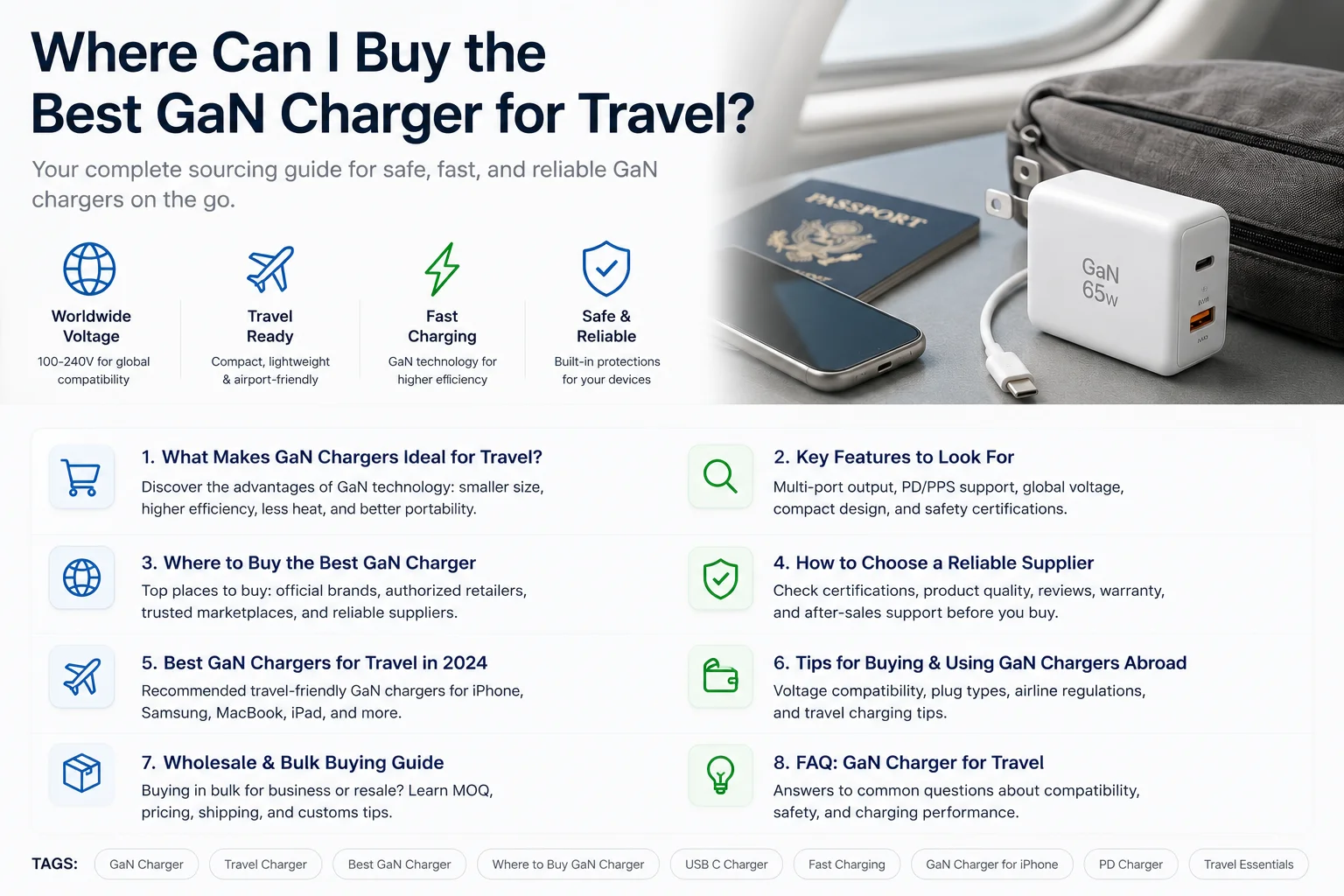
I buy the best travel GaN charger by checking power output, ports, plug type, safety certificates, supplier history, and real charging tests. I do not choose only by price. A good GaN charger should be compact, certified, stable under load, and suitable for the target travel market.
I have worked in 3C export from Shenzhen for 15 years. I have sold USB cables, chargers, GaN chargers, TWS earphones, smart watches, and other small electronics to buyers in Europe and the United States. I learned one clear thing from these talks. Most buyers do not fail because they cannot find a charger. They fail because they pick the wrong risk level for their market. A travel GaN charger is not only a small power product. It is also a product linked to safety, local rules, brand trust, returns, and customer reviews. I use this article to explain how I think about buying one, both for personal travel use and for B2B sourcing.
Why Is a GaN Charger Ideal for Travel?
Old chargers feel safe because they are familiar, but they can be bulky and slow. I often see travelers carry three chargers when one good GaN unit can work better.
A GaN charger is ideal for travel because it can deliver high power in a smaller body1. It can charge phones, tablets, earbuds, and many laptops.2 It also reduces bag weight and outlet use, which matters in hotels, airports, and shared workspaces.
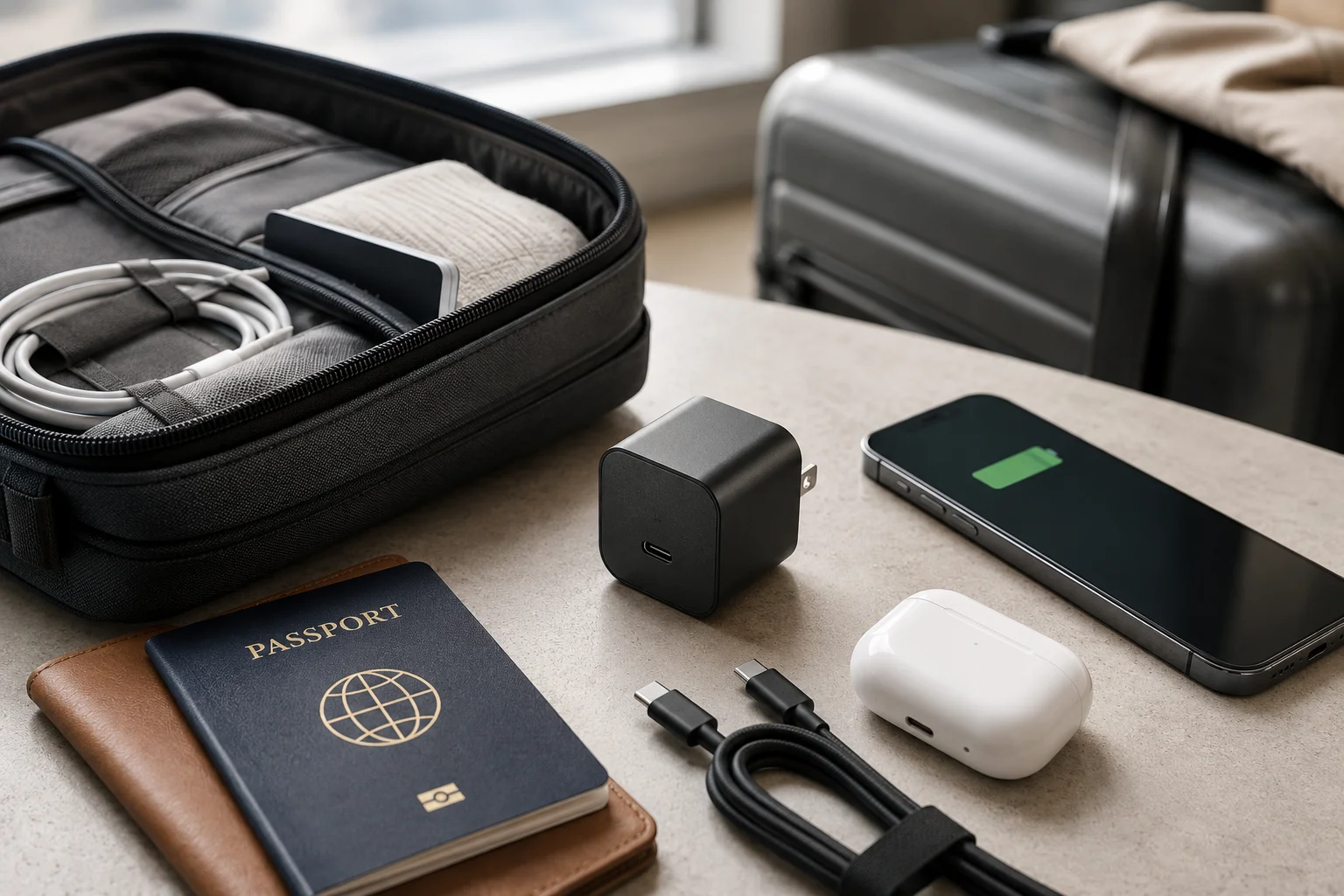
I look at travel charging as a space and time problem
When I speak with retail buyers, I often ask about their customers first. A business traveler has different needs from a student. A family traveler has different needs from a digital worker. A GaN charger helps because it solves several common problems at once. It saves space. It supports faster charging. It can replace several older adapters. It also gives sellers a clear product story.
| Travel problem I see | How a GaN charger helps | Buyer risk to check |
|---|---|---|
| Too many chargers in one bag | One charger can support several devices | Port output must be real |
| Slow charging in airports | Higher wattage can reduce waiting time | Cable quality must match |
| Few wall sockets in hotels | Multi-port design helps share power | Heat control must be tested |
| Heavy travel kit | Smaller body saves space | Plug design must fit the market |
I do not treat GaN as magic. I treat it as a better tool when the design is honest. Some low-cost sellers use the word “GaN” only as a marketing label. I have seen buyers ask for the cheapest GaN charger, and then they are surprised by bad reviews. The better question is not “Is it GaN?” The better question is “Can this charger deliver stable power during real travel use?”
What Key Features Should I Look for in a Travel GaN Charger?
A nice shell can hide weak parts. I have seen samples that look premium, but they fail when several devices charge at once.
I look for wattage, USB-C PD support, PPS support3, port layout, plug type, heat control, weight, and cable match. I also check whether the charger can keep stable output when all ports are used together.
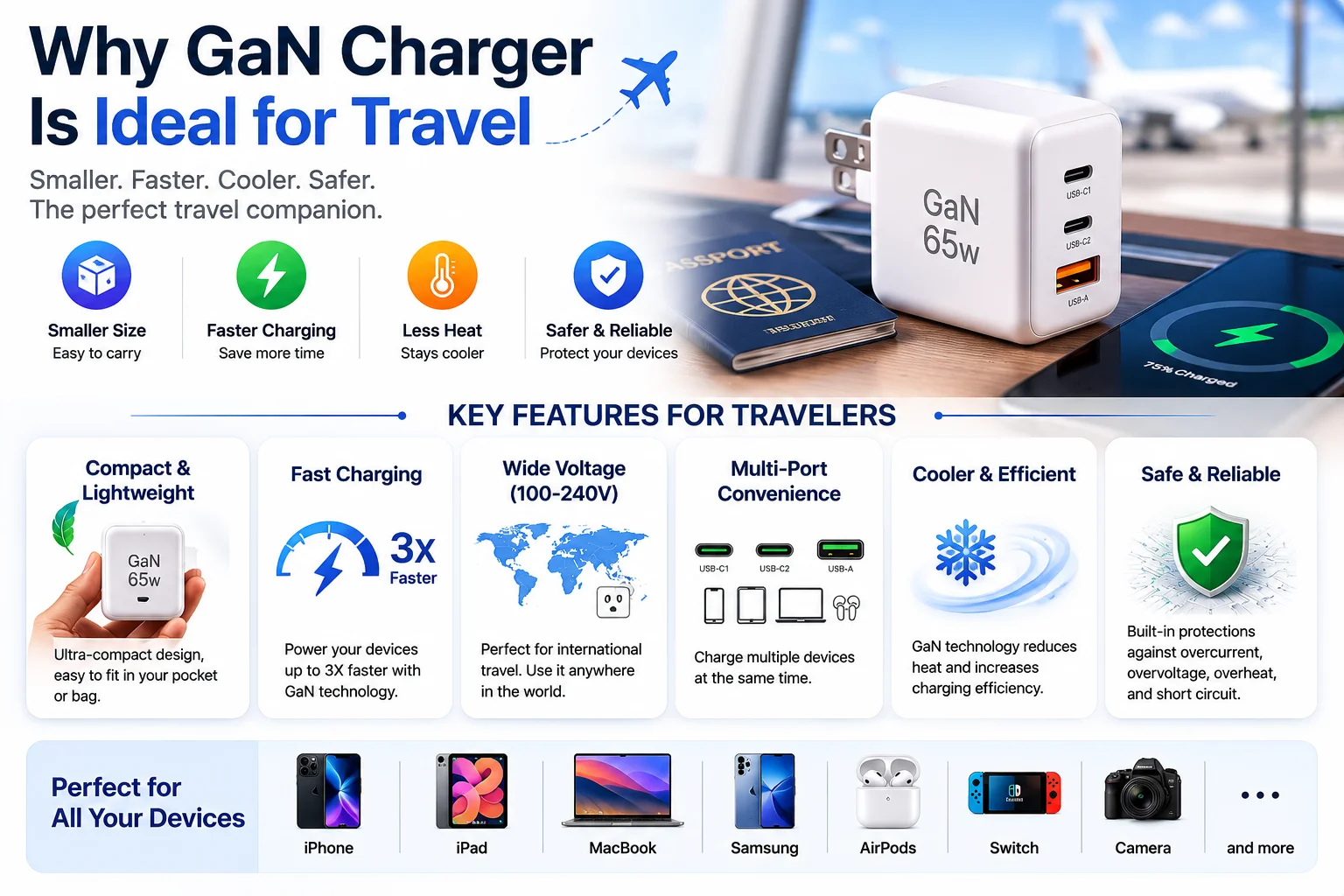
I start with the use case, not the catalog photo
A common question I get from first-time importers is, “Which wattage sells best?” I do not answer right away. I first ask where they sell and who buys from them. A 30W GaN charger may be enough for phone users. A 65W model is more useful for tablets and many laptops. A 100W or 140W model can serve heavier users, but it costs more and needs stronger quality control.
| Feature | What I check | Why it matters |
|---|---|---|
| Wattage | 30W, 45W, 65W, 100W, 140W | It decides the device range |
| Protocol | PD, PPS, QC, AFC | It affects real fast charging |
| Ports | USB-C, USB-A, mixed ports | It affects daily convenience |
| Plug | US, EU, UK, AU, foldable | It affects travel fit |
| Size | Body volume and weight | It affects bag space |
| Cable match | E-marker cable for high power4 | It affects real output |
I also check power distribution. Some chargers advertise 65W, but only one port can reach that output. When two or three ports are used, the output changes. This is normal, but the label and product page must explain it clearly. If a retail customer expects laptop fast charging while a phone and earbuds also charge, the wrong product will create complaints. I prefer a supplier that gives clear power tables, not only nice lifestyle images.
What Safety and Certification Points Matter Most?
Fast charging creates trust when it works, but it creates fear when it overheats. I never treat safety certificates as decoration.
The most important safety points are valid certifications for the target market, real test reports, proper labeling, stable temperature control, overload protection, short-circuit protection, and fire-resistant materials5. For Europe and the United States, buyers should check CE, UKCA, FCC, ETL, UL, RoHS, and related local needs.6
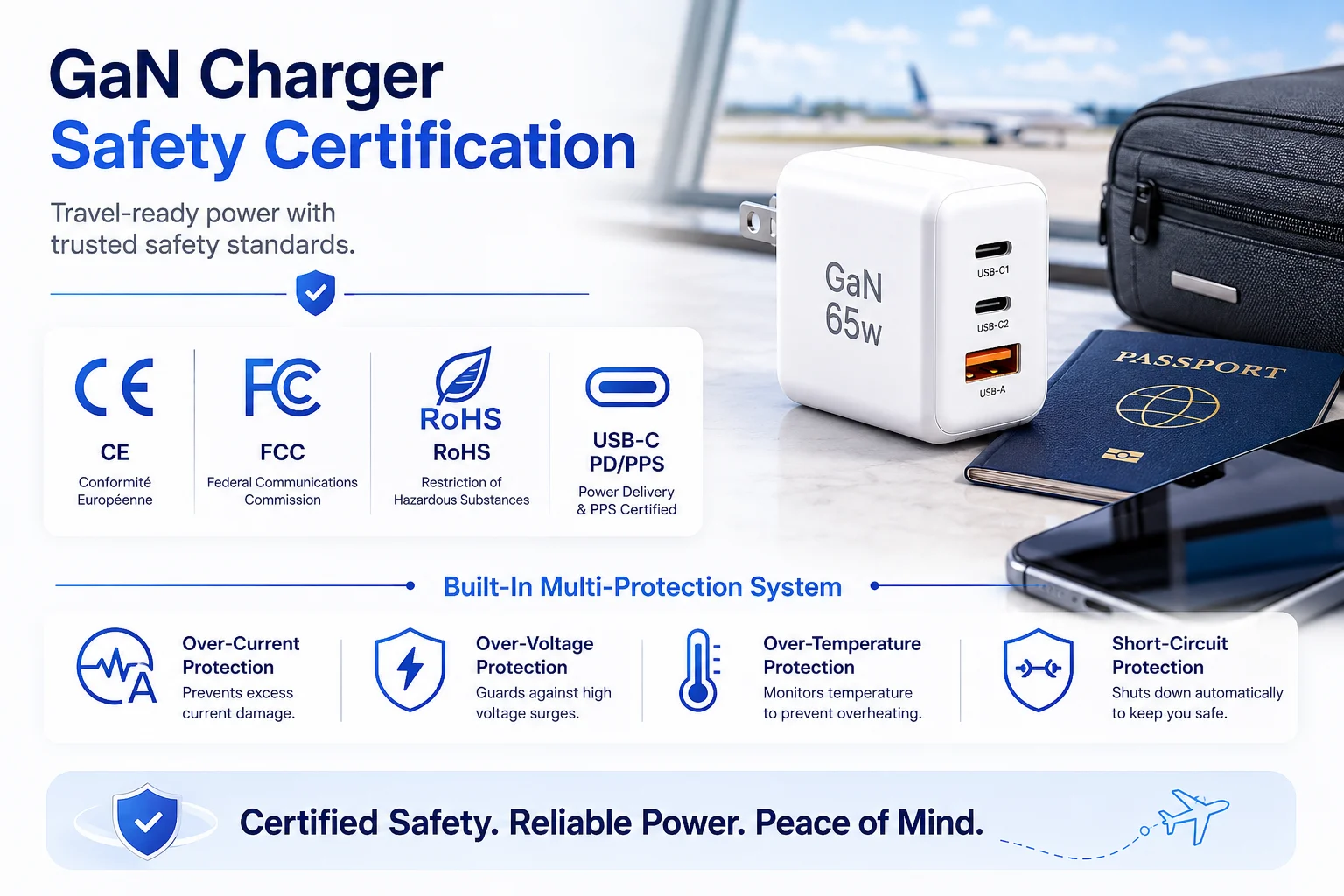
I treat certification as market access and brand protection
In my work, buyers often ask whether one certificate can cover all markets. I understand why they ask. Certification costs money and time. But I have learned that unclear certification can cost more later. Customs issues, platform takedowns, and customer claims can hurt a small brand very fast.
| Market | Common checks I discuss | Main risk |
|---|---|---|
| European Union | CE, RoHS, REACH, proper plug standards7 | Customs and platform checks |
| United States | FCC, ETL or UL options, DOE rules where needed8 | Safety claims and retailer approval |
| United Kingdom | UKCA and UK plug needs9 | Local selling rules |
| Australia | RCM and AU plug needs10 | Import compliance |
| Online marketplaces | Test reports and product labeling | Listing removal |
I do not suggest that every buyer needs the most expensive certification package at the first step. I suggest matching certification to the sales channel. A small online seller may start with a ready certified model from a reliable supplier. A chain store usually needs deeper paperwork and stronger lab support. The trade-off is clear. More certification means more cost and longer lead time. Less certification means faster launch, but it can raise business risk. I prefer to discuss this before production, not after the goods are ready.
How Can Fast Charging and Multi-Device Support Help Travelers?
A charger with many ports looks useful, but weak power sharing can disappoint users. I see this problem often in travel charger reviews.
Fast charging and multi-device support help travelers by reducing waiting time and reducing the number of chargers they carry.11 The best choice depends on device mix. A phone-only traveler may need 30W. A laptop traveler often needs 65W or more.
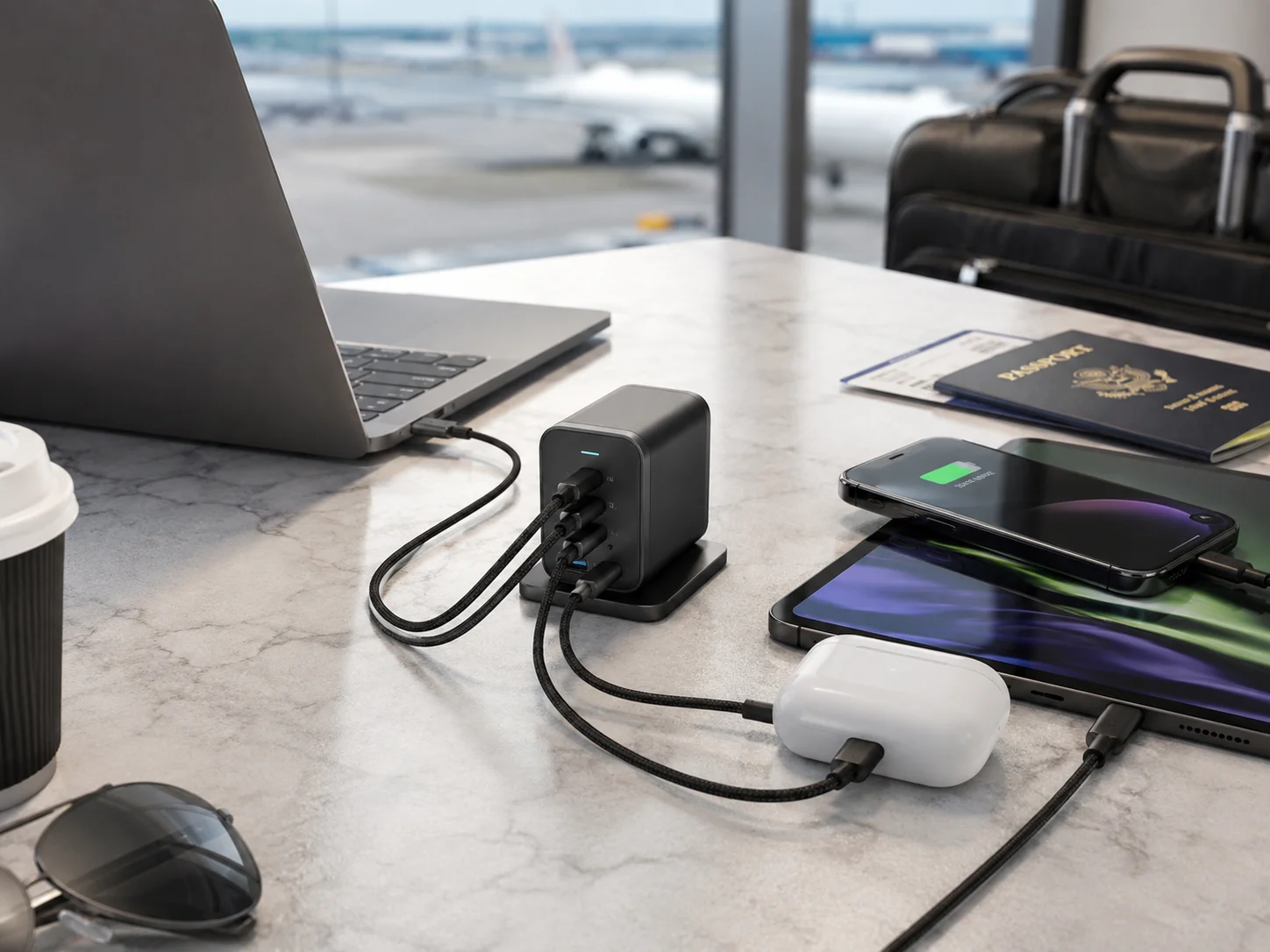
I match wattage to the real device set
When a client asks for the “best option,” my first question is always about their sales channel and user type. An e-commerce seller may want one popular SKU that covers many users. A retail chain may want a good-better-best shelf plan. A corporate gift buyer may care more about safe phone charging than laptop support.
| User type | Common devices | Charger range I usually consider |
|---|---|---|
| Light traveler | Phone, earbuds, smartwatch | 20W to 35W |
| Daily commuter | Phone, tablet, earbuds | 35W to 45W |
| Business traveler | Phone, laptop, earbuds | 65W to 100W |
| Heavy digital worker | Laptop, tablet, phone, power bank | 100W to 140W |
I also pay close attention to port logic. A 3-port charger is not always better than a 2-port charger. If the user plugs in a laptop, phone, and earbuds, the charger must divide power in a way that makes sense. If the laptop drops too low, the buyer may think the charger is faulty. I ask suppliers for charging curves and temperature data when the order is serious. I also test with common phones and laptops. This is not academic testing. It is practical testing that helps me see if the product matches the sales promise.
Why Does Compact Design Matter for a Travel Bag?
Travelers often buy a GaN charger for size, but some compact designs sacrifice grip, heat flow, or plug strength. I check the design like a real traveler.
Compact design matters because a travel charger should save space without becoming hard to use. I look for foldable plugs, rounded edges, light weight, strong pins, and enough distance between ports. A small charger should still be safe and comfortable.
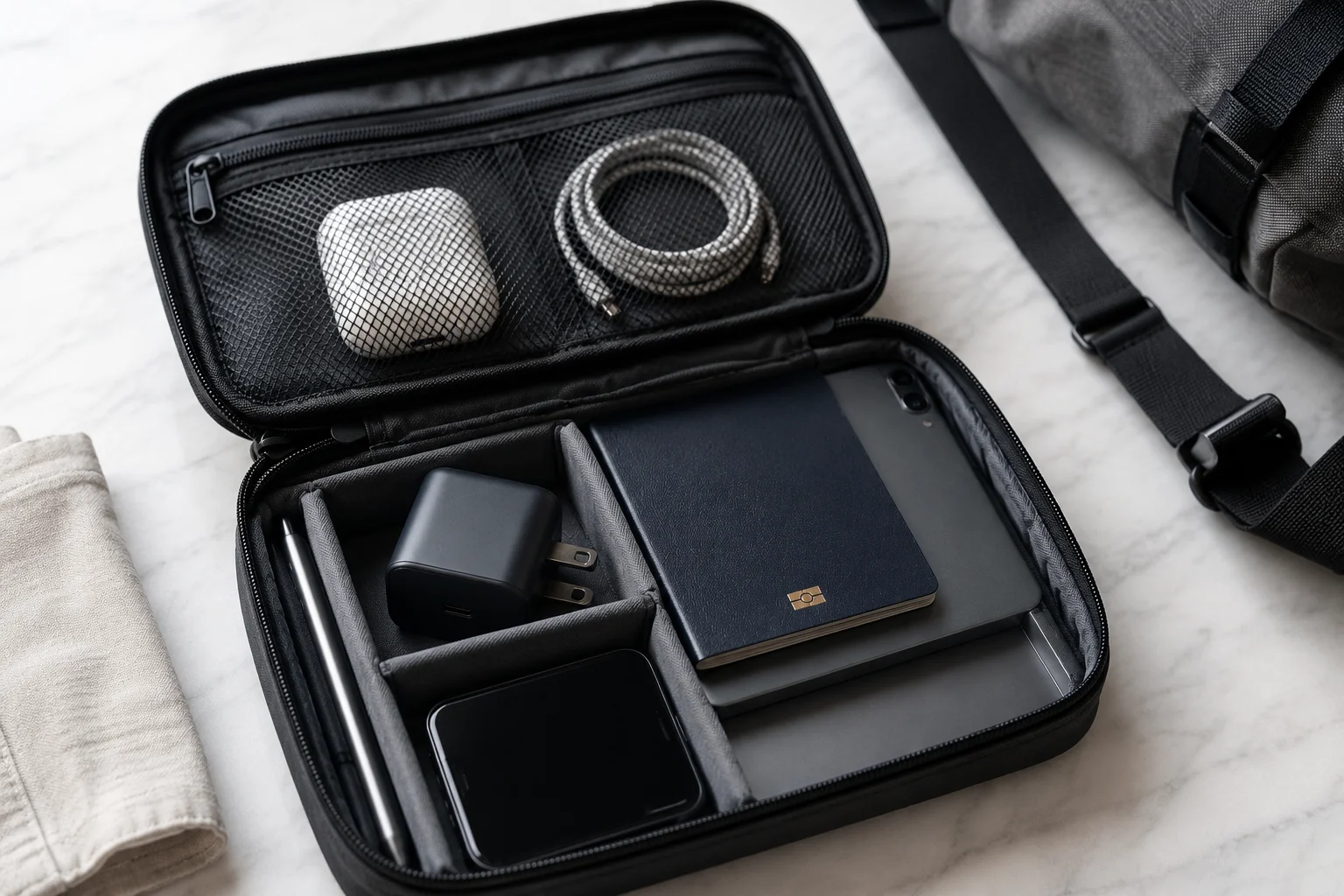
I do not judge compact design by size alone
I have seen very small chargers that are difficult to unplug. I have also seen foldable plug designs that feel loose after repeated use. Small size is good, but the user experience must be strong. For B2B buyers, this matters because the customer does not review the internal design. The customer reviews the feeling in daily use.
| Design point | What I check | Common issue |
|---|---|---|
| Foldable plug | Smooth movement and firm lock | Loose pins after use |
| Body shape | Easy grip and rounded edges | Hard to remove from socket |
| Port spacing | Room for cables | Cable heads block each other |
| Surface material | Scratch resistance | Cheap feel after shipping |
| Weight balance | Stable in wall socket | Charger falls from loose outlets |
| Heat area | Enough surface for heat release | Shell gets too hot |
For travel retail, packaging also matters. A compact charger should be easy to understand in three seconds. The box should show wattage, device compatibility, plug type, and port power. If the package looks good but hides key details, store staff will struggle to sell it. I often tell buyers that compact design is both engineering and communication. The product must fit the bag, and the information must fit the buyer’s decision time.
Should I Buy a GaN Charger Online or from Physical Stores?
Online buying gives more choices, but it also hides quality risk. Physical stores give touch and trust, but the price may be higher.
I buy online when I need wide selection, price comparison, and fast sourcing. I buy from physical stores when I need immediate use, local warranty, or hands-on checking. For B2B orders, I use supplier audits, samples, certificates, and testing instead of relying on a product page.
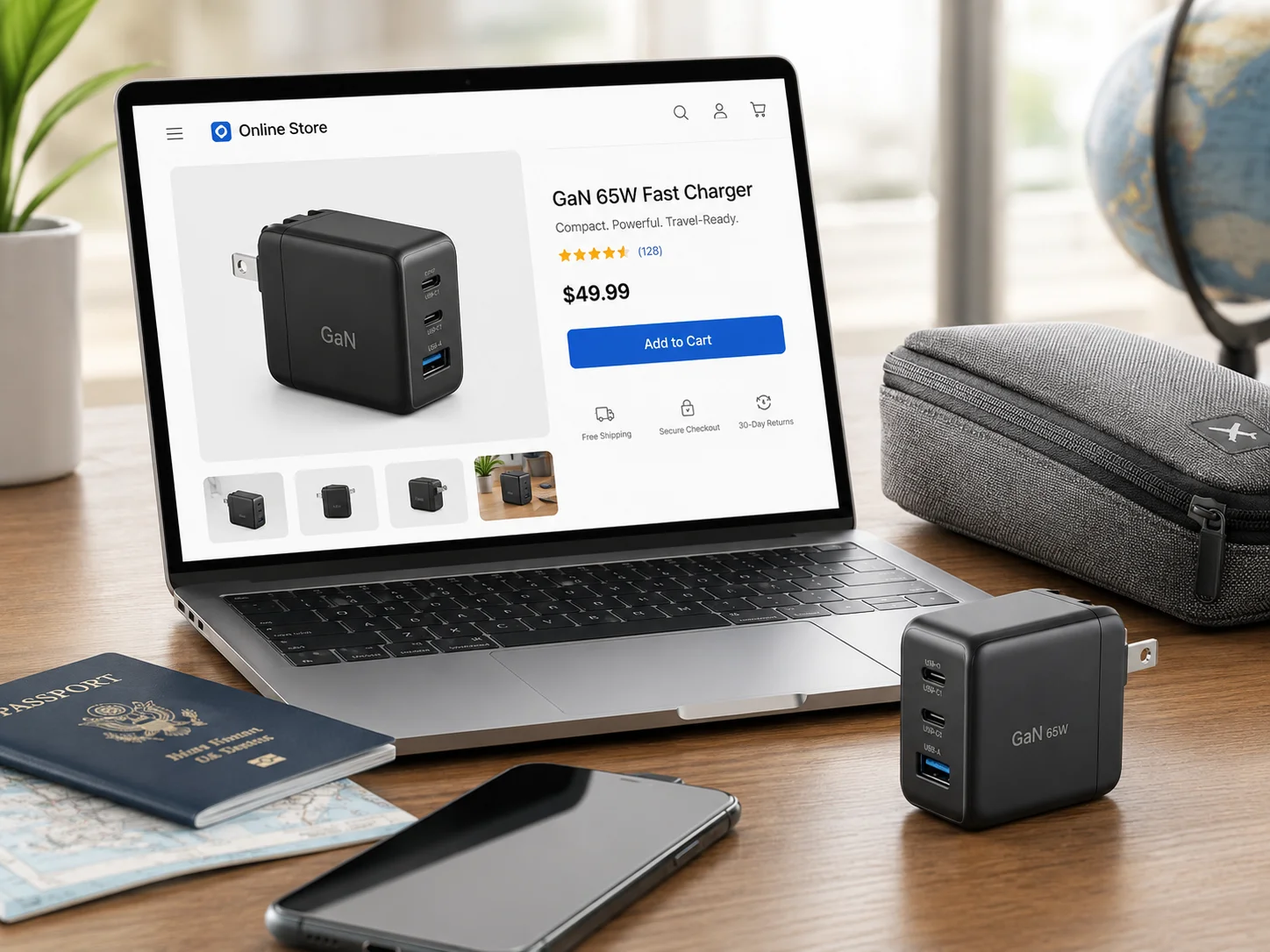
I separate consumer buying from business sourcing
A traveler can buy a charger from Amazon, Best Buy, Apple accessory stores, airport shops, or brand websites. That can be fine for one unit. A retailer or wholesaler has a different task. The buyer must think about repeat orders, warranty, MOQ, packaging, customs, lead time, and after-sales support. The buying channel changes the risk.
| Buying channel | Best for | Main trade-off |
|---|---|---|
| Amazon or online marketplace | Fast comparison and reviews | Fake reviews and mixed sellers |
| Brand website | Clear warranty and brand trust | Higher price |
| Physical electronics store | Immediate purchase and inspection | Limited models |
| Airport shop | Emergency travel need | Very high price |
| China supplier or trader | B2B price and customization | Need sample testing and checks |
| Distributor | Local stock and support | Lower margin |
In Shenzhen, I see many buyers move through stages. They first buy a branded charger online to understand the market. Then they test wholesale models with low MOQ. Then they move into private label when sales are stable. Some larger buyers later request custom tooling or special designs. I do not think one channel is always best. I think the right channel depends on the risk the buyer can carry. Speed, price, control, and safety never come for free at the same time.
What Should Importers and Wholesale Buyers Know Before Ordering?
A low unit price can look attractive, but hidden costs can remove the profit. I always ask buyers to calculate the full order risk.
Importers and wholesale buyers should check MOQ, certification, packaging, lead time, warranty terms, sample approval, power test reports, spare parts plan, and after-sales handling. The best supplier is not always the cheapest one. The best supplier reduces total business risk.
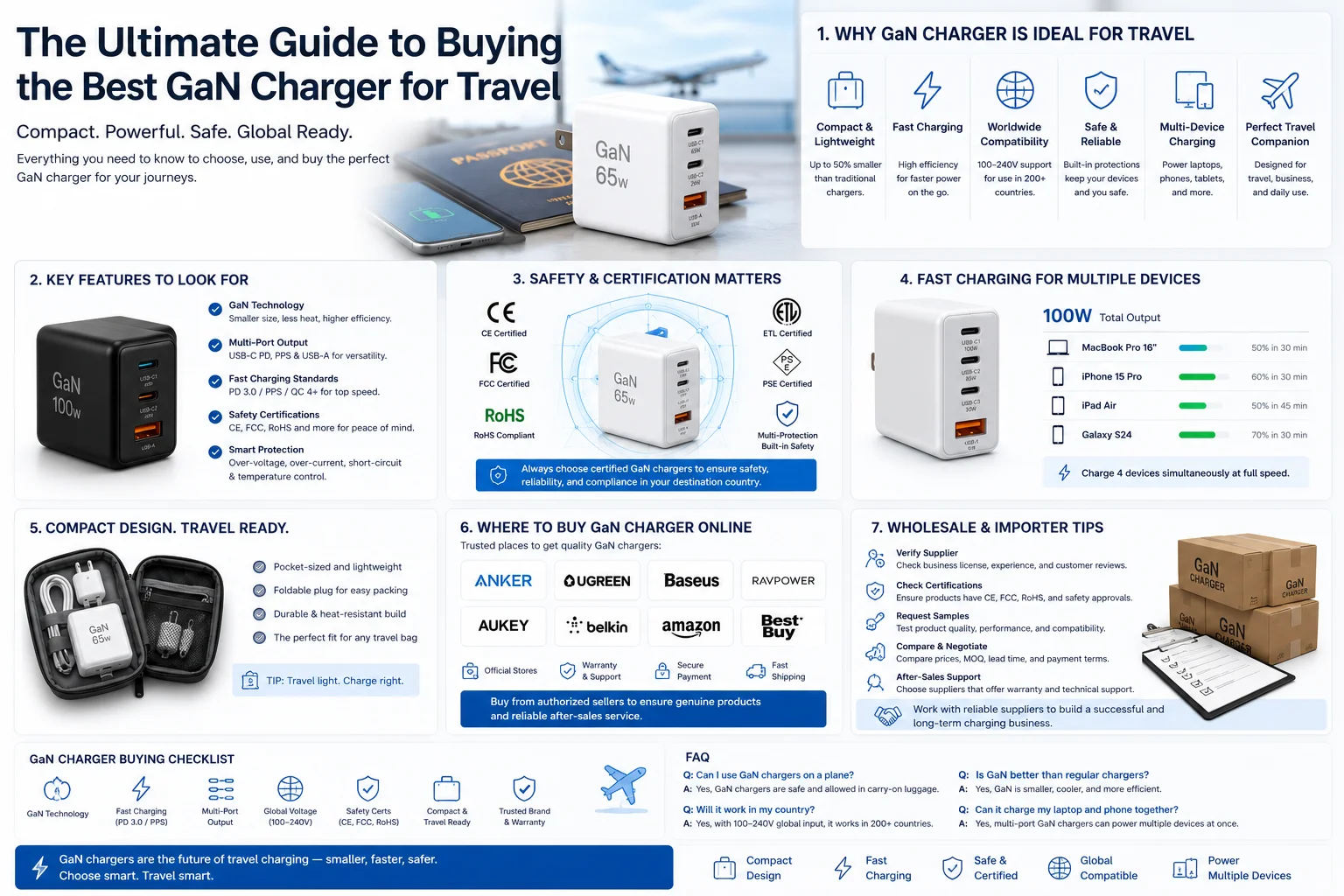
I treat sourcing as a risk decision
Here’s a scenario I often discuss with e-commerce sellers. They want a 65W travel GaN charger with private label packaging. They also want low MOQ, fast delivery, full certificates, and the lowest price. I understand the request. But each item creates a trade-off. Low MOQ can limit customization. Fast delivery may require using existing materials. Full certification can increase cost. Lower price can reduce testing time or component quality if the supplier is not careful.
| Buyer goal | Good path | Risk to accept |
|---|---|---|
| Test market fast | Wholesale ready model | Less customization |
| Build brand image | Private label model | More packaging and planning work |
| Sell to chain stores | Certified stable model | Higher cost and longer lead time |
| Create unique product | OEM or custom design | Tooling, testing, and higher MOQ |
I often suggest a staged plan. A buyer can start with a ready certified model and test sales. If the market responds well, the buyer can add private label packaging and better content. If the brand needs unique hardware, then OEM work may make sense. This thinking is not only for smart watches or earphones. It also works for GaN chargers. The right question is not “Which option is best?” The right question is “Which risk can my business afford now?”
How Can I Verify Authenticity and Avoid Low-Quality Knockoffs?
Fake or low-quality chargers can look almost the same in photos. I do not trust appearance alone when safety is involved.
I verify authenticity by checking certificates with report numbers, testing samples under load12, reviewing supplier history, confirming labeling, checking teardown or lab data when needed, and comparing the product with claimed specifications. I avoid suppliers that refuse documents or change key details without notice.
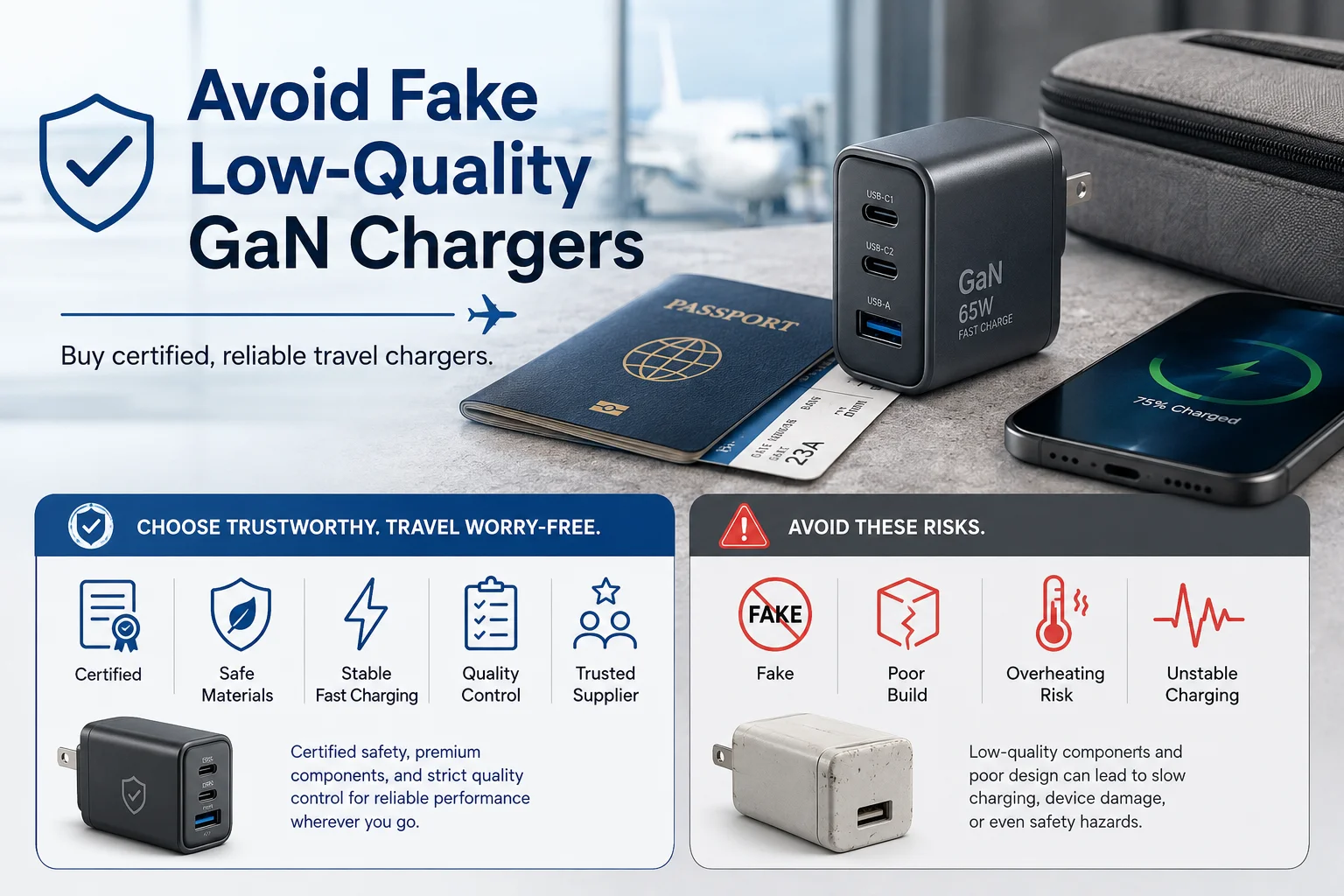
I use proof instead of promises
Many low-quality knockoffs use strong words. They may say “100W fast charger,” “certified,” or “original GaN technology.” Those words do not prove much. I ask for documents, sample units, and stable communication. A serious supplier should be able to explain the model, power table, material, certificate scope, and packaging details.
| Check point | What I ask for | Warning sign |
|---|---|---|
| Certificate | Full report and certificate number | Only a cropped image |
| Label | Output table and safety marks | Different from report |
| Sample | Real unit before order | Refusal or delay without reason |
| Load test | Multi-port output test | Big power drop or high heat |
| Supplier history | Export markets and product line | No clear past orders |
| Packaging | Barcode, manual, warning text | Poor translation or missing details |
I also compare the sample with the mass production unit. This step matters. A good sample does not always mean good bulk goods. I use a golden sample as the standard. I keep it for checking color, weight, plug feel, port fit, printing, and performance. For larger orders, I suggest pre-shipment inspection. It is not about mistrust. It is about control. Travel chargers are small, but the risk is not small. A bad batch can create returns, platform complaints, and brand damage. I would rather find a problem in Shenzhen than let a customer find it after a holiday trip.
Conclusion
I choose a travel GaN charger by matching power, safety, design, channel, and business risk. I do not let low price make the full decision.
"Gallium nitride - Wikipedia", https://en.wikipedia.org/wiki/Gallium_nitride. A peer-reviewed review of GaN power electronics explains that GaN devices can enable higher power density through properties such as wide bandgap operation, high breakdown field, and high-frequency switching; this supports the general basis for smaller high-power chargers, although final charger size also depends on circuit topology, thermal design, and safety margins. Evidence role: mechanism; source type: paper. Supports: GaN power devices can support compact high-power charger designs because of material and switching characteristics associated with higher power density.. Scope note: Contextual support: the source would explain GaN device capability, not verify the performance of any specific travel charger. ↩
"USB hardware - Wikipedia", https://en.wikipedia.org/wiki/USB_hardware. USB-IF documentation describes USB Power Delivery as a negotiated USB-C power standard capable of supplying substantially higher power than default USB charging, supporting use across device categories from small peripherals to notebook computers; actual compatibility still depends on the device, charger profile, cable rating, and protocol support. Evidence role: definition; source type: institution. Supports: USB Power Delivery provides negotiated power levels over USB-C that can support a range of devices from small electronics to laptops.. Scope note: Contextual support: standards capability does not prove that every GaN charger supports every listed device. ↩
"USB Charger (USB Power Delivery)", https://www.usb.org/usb-charger-pd. USB Power Delivery materials describe PD as a protocol for negotiated voltage and current over USB-C, while Programmable Power Supply allows finer voltage and current adjustment during charging; this supports treating PD and PPS as relevant fast-charging features, though individual device charging rates depend on manufacturer implementation. Evidence role: mechanism; source type: institution. Supports: USB-C PD and PPS allow negotiated power delivery, and PPS enables programmable voltage/current adjustments used by some fast-charging systems.. Scope note: Contextual support: the source supports protocol relevance, not the performance of a particular charger model. ↩
"What is an E-Marker in a USB Type-C Cable and How Does It Work?", https://www.totalphase.com/blog/2020/10/what-is-e-marker-how-does-it-work/?srsltid=AfmBOorvCVMLTFUjWkyq5auvAX-ih9GMSj0DVboqDZdS_YCF22NvWD1D. USB-IF Type-C and Power Delivery guidance identifies electronically marked cables as the mechanism by which higher-current USB-C cables report their capabilities, supporting the claim that high-power charging requires a suitably rated cable; the requirement varies by power level and cable current rating. Evidence role: definition; source type: institution. Supports: USB-C cables intended for higher-current operation use electronic marking to identify cable capability to connected devices.. ↩
"[PDF] PRVV0001-R1_UL 62368-1 2019.pdf", https://www.eac.gov/sites/default/files/2024-08/PRVV0001-R1_UL%2062368-1%202019.pdf. IEC/UL 62368-1 safety frameworks for audio/video and information-technology equipment address hazards such as abnormal operation, excessive temperature, overcurrent or short-circuit conditions, and fire containment, supporting the article’s focus on thermal control and protective materials; compliance must be verified through an applicable test report for the specific charger. Evidence role: expert_consensus; source type: institution. Supports: Recognized electrical safety standards evaluate hazards including excessive temperature, abnormal operation, short circuits, overcurrent, and fire propagation controls.. ↩
"Types of products requiring NRTL approval - OSHA", http://www.osha.gov/nationally-recognized-testing-laboratory-program/products-requiring-approval. Official EU, UK, FCC, and OSHA/NRTL guidance distinguishes conformity marking, electromagnetic-compatibility authorization, hazardous-substance rules, and safety certification for electrical equipment, supporting the article’s point that charger compliance must be checked by target market; the exact obligations depend on product design, voltage, radio/EMC characteristics, and distribution channel. Evidence role: general_support; source type: government. Supports: Different jurisdictions require different compliance routes for electrical products, including CE/UKCA marking, FCC authorization, RoHS compliance, and recognized safety testing or listing depending on product type and sales channel.. Scope note: Contextual support: no single official source covers all listed marks for every charger scenario. ↩
"CE marking - Wikipedia", https://en.wikipedia.org/wiki/CE_marking. European Commission guidance on CE marking, RoHS, and REACH shows that electrical and electronic products can be subject to conformity assessment and substance-control obligations in the EU, supporting the need to check these requirements for chargers; plug and socket requirements may also involve national rules rather than a single EU-wide plug standard. Evidence role: general_support; source type: government. Supports: EU electrical and electronic products may be subject to CE-related conformity assessment, RoHS substance restrictions, REACH chemical obligations, and national plug/socket requirements.. Scope note: Contextual support: the source would establish relevant EU frameworks, not determine compliance for one charger model. ↩
"Energy Conservation Standards for External Power Supplies", https://www.regulations.gov/document/EERE-2020-BT-STD-0006-0001. U.S. Department of Energy rules for external power supplies, FCC equipment-authorization guidance, and OSHA’s NRTL program provide regulatory context for checking DOE efficiency, FCC emissions, and UL/ETL-type safety listings for chargers; applicability depends on the product’s electrical design and intended market channel. Evidence role: general_support; source type: government. Supports: U.S. charger compliance can involve FCC equipment authorization for electromagnetic emissions, DOE efficiency rules for external power supplies, and safety testing/listing through OSHA-recognized NRTLs depending on product and buyer requirements.. Scope note: Contextual support: official rules explain relevant compliance categories but do not state that all chargers need every item. ↩
"AC power plugs and sockets: British and related types - Wikipedia", https://en.wikipedia.org/wiki/AC_power_plugs_and_sockets:_British_and_related_types. UK government guidance on UKCA marking and plug/socket safety regulations describes conformity and plug requirements for electrical goods placed on the UK market, supporting the article’s emphasis on UKCA and UK plug checks for chargers; exact marking and plug obligations depend on product category and supply route. Evidence role: general_support; source type: government. Supports: UK electrical products can be subject to UKCA conformity marking rules and plug/socket safety requirements.. Scope note: Contextual support: the source establishes UK compliance context, not approval of a specific charger. ↩
"Regulatory Compliance Mark - Wikipedia", https://en.wikipedia.org/wiki/Regulatory_Compliance_Mark. Australian regulator guidance on the Regulatory Compliance Mark explains that certain electrical and electronic products must meet applicable safety and electromagnetic-compatibility requirements before supply, supporting the article’s reference to RCM and Australian plug checks for chargers; product classification determines the precise obligations. Evidence role: general_support; source type: government. Supports: Australian electrical and electronic products can be subject to RCM marking and local plug/electrical safety requirements.. Scope note: Contextual support: the source would confirm the regulatory framework rather than certify a given model. ↩
"USB Charger (USB Power Delivery)", https://www.usb.org/usb-charger-pd. USB-IF descriptions of USB Power Delivery show that the standard permits negotiated higher power levels over USB-C, providing a technical mechanism for faster charging and charger consolidation across compatible devices; actual time savings depend on device battery management, cable rating, temperature, and port power allocation. Evidence role: mechanism; source type: institution. Supports: USB Power Delivery enables higher negotiated power levels than default USB charging, which can shorten charging under compatible conditions and allow one charger to power multiple device types.. Scope note: Contextual support: the standard supports the mechanism but does not measure traveler behavior or guarantee fewer chargers in every use case. ↩
"Energy Conservation Program: Test Procedure for External Power ...", https://www.federalregister.gov/documents/2022/08/19/2022-15975/energy-conservation-program-test-procedure-for-external-power-supplies. The U.S. Department of Energy external power supply test procedure measures power-supply performance under specified loading conditions, supporting the use of controlled load testing to check charger output and efficiency claims; such testing verifies performance characteristics but does not by itself prove supplier authenticity or long-term reliability. Evidence role: case_reference; source type: government. Supports: External power supply performance can be assessed using defined load conditions, making load testing a relevant verification method.. Scope note: Contextual support: the source supports load-test methodology, not the full sourcing-authenticity process. ↩