Many buyers choose Apple Watch charger adapters too fast. Then returns, slow charging, and poor packaging hurt sales, reviews, and repeat orders.
Apple Watch charger adapters help users connect their watch charging cable to a power source safely and easily. For importers and retailers, the right adapter choice depends on plug type, port type, safety certification, charging speed, packaging, MOQ, and the real sales channel.
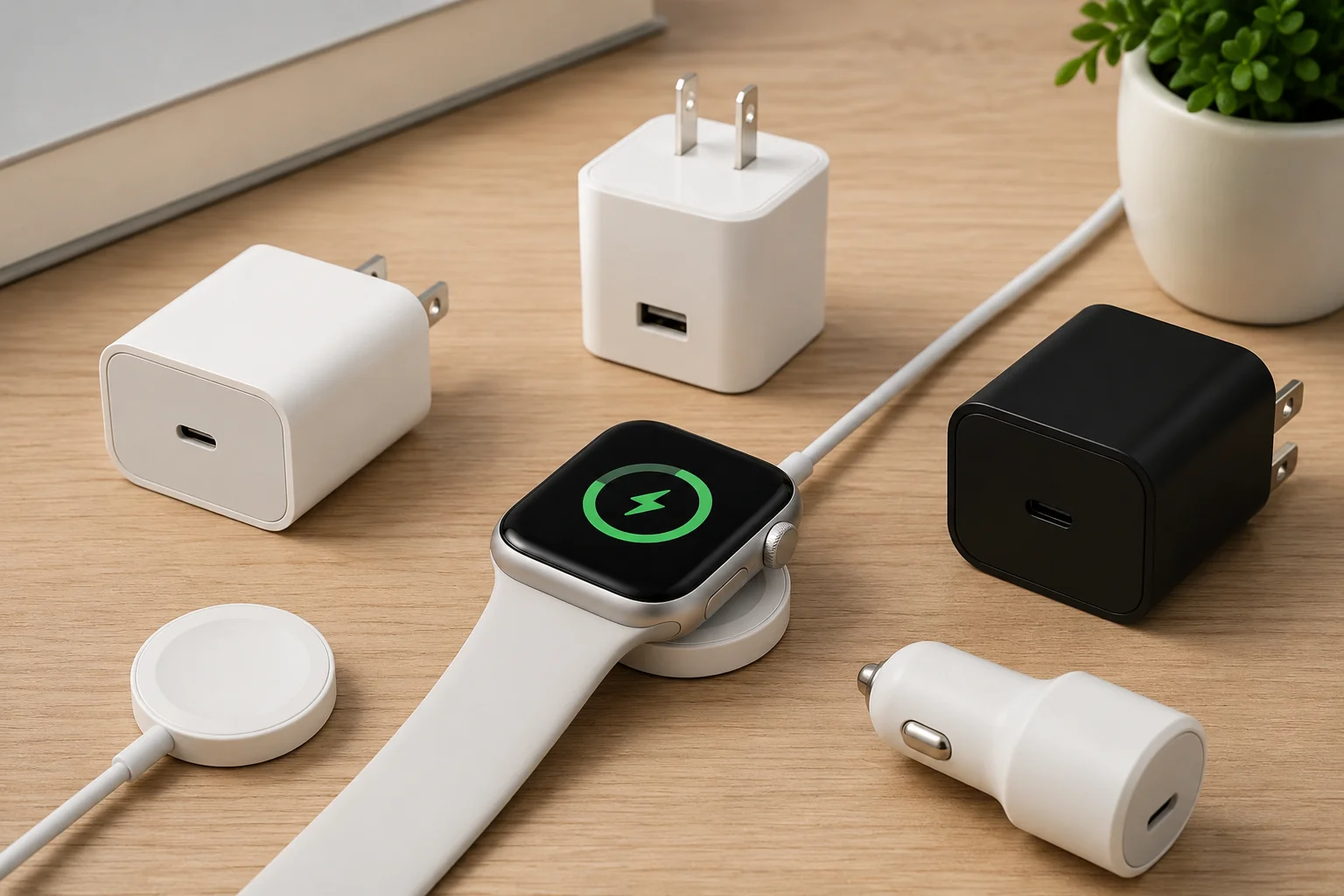
I have worked with many buyers from Europe and the United States for many years. A common question I get is simple: “Which Apple Watch charging adapter sells best?” My answer is usually not one model number. I first ask where they sell, who their customers are, and how much risk they can take on the first order. A chain store, an Amazon seller, and a wholesale importer may all need different choices. The product looks small, but the buying decision is not small.
What Are Charger Adapters for Apple Watch?
Many buyers mix up cables, docks, and adapters. This small misunderstanding can lead to wrong quotes, wrong packaging, and wrong stock.
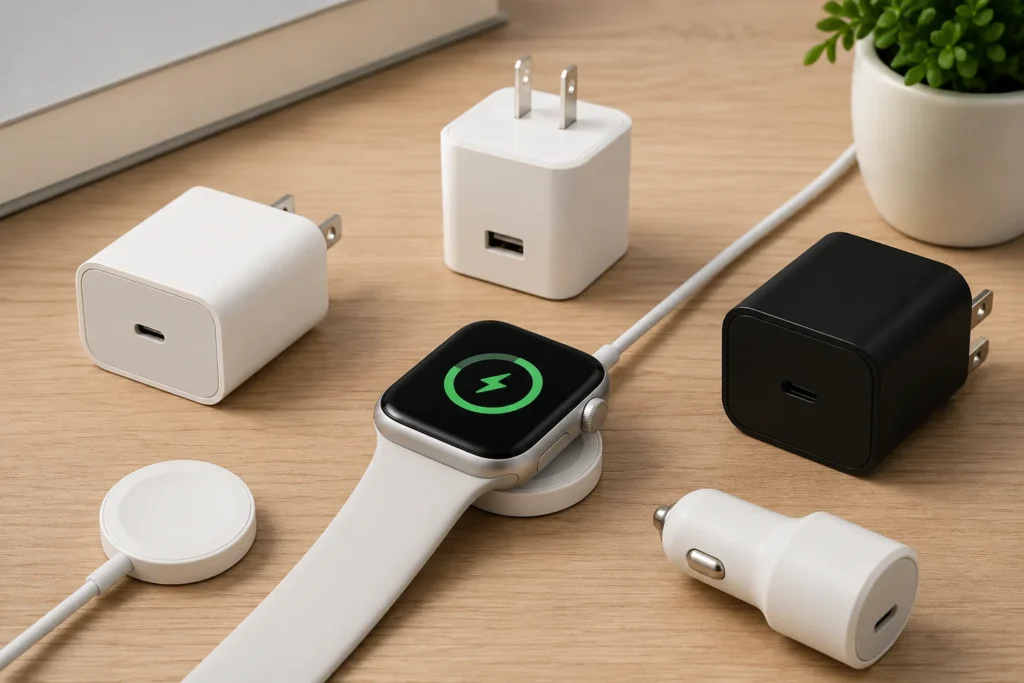
Apple Watch charger adapters are power accessories that connect an Apple Watch magnetic charging cable or charging module to wall power, USB-A, USB-C, or travel power sources. For B2B buyers, the main job is to match the adapter with the user’s device, region, and daily charging habit.
What I Usually Clarify First
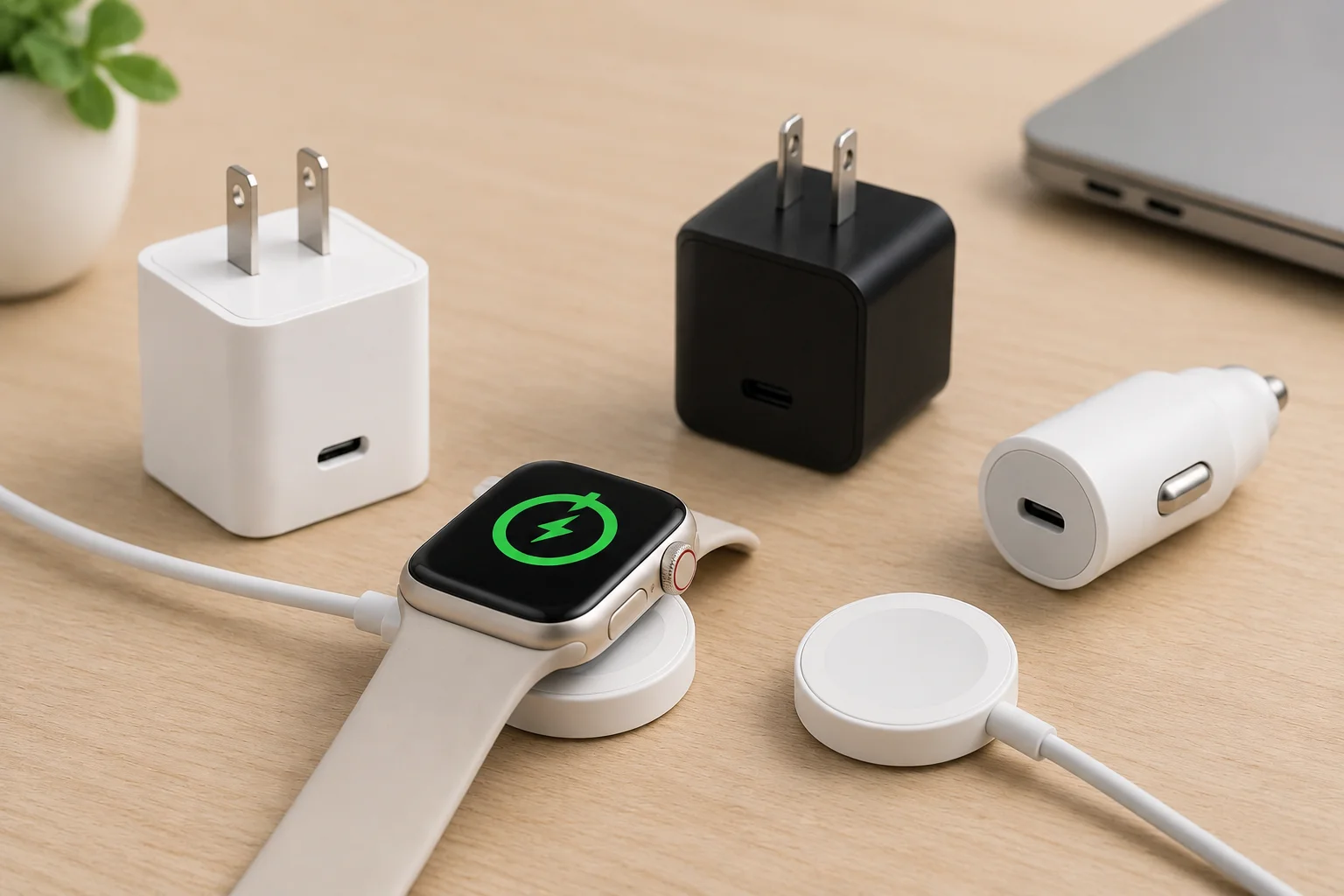
When a client asks me for an “Apple Watch charger,” I do not quote at once. I first ask what they mean. Some buyers mean only a wall adapter. Some mean a magnetic charging cable. Some mean a 2-in-1 charging dock for iPhone and Apple Watch. This question sounds basic, but it saves time and cost.
In daily sourcing work, I separate the products like this:
| Product Type | What It Does | Main Buyer Concern |
|---|---|---|
| Wall charger adapter | Gives power from wall socket | Plug type, output, safety |
| USB-A or USB-C adapter | Connects cable to power source | Port type and compatibility |
| Magnetic watch charger | Charges the watch directly | Chip, heat, charging stability |
| Charging dock | Holds and charges devices | Design, size, packaging |
| Travel adapter set | Works in different regions | Plug options and safety |
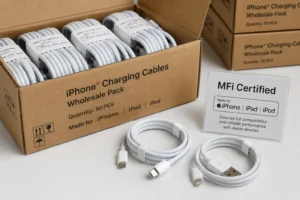
I also tell buyers that “for Apple Watch” does not always mean Apple original. Most products in our trade are compatible accessories. So the wording in listing, packaging, and customs documents should be clear. Good communication at this point helps avoid complaints later.
Why Apple Watch Users Need a Reliable Charging Adapter?
Some users blame the watch when charging is unstable. Many times, the real problem is a weak or unsafe adapter.
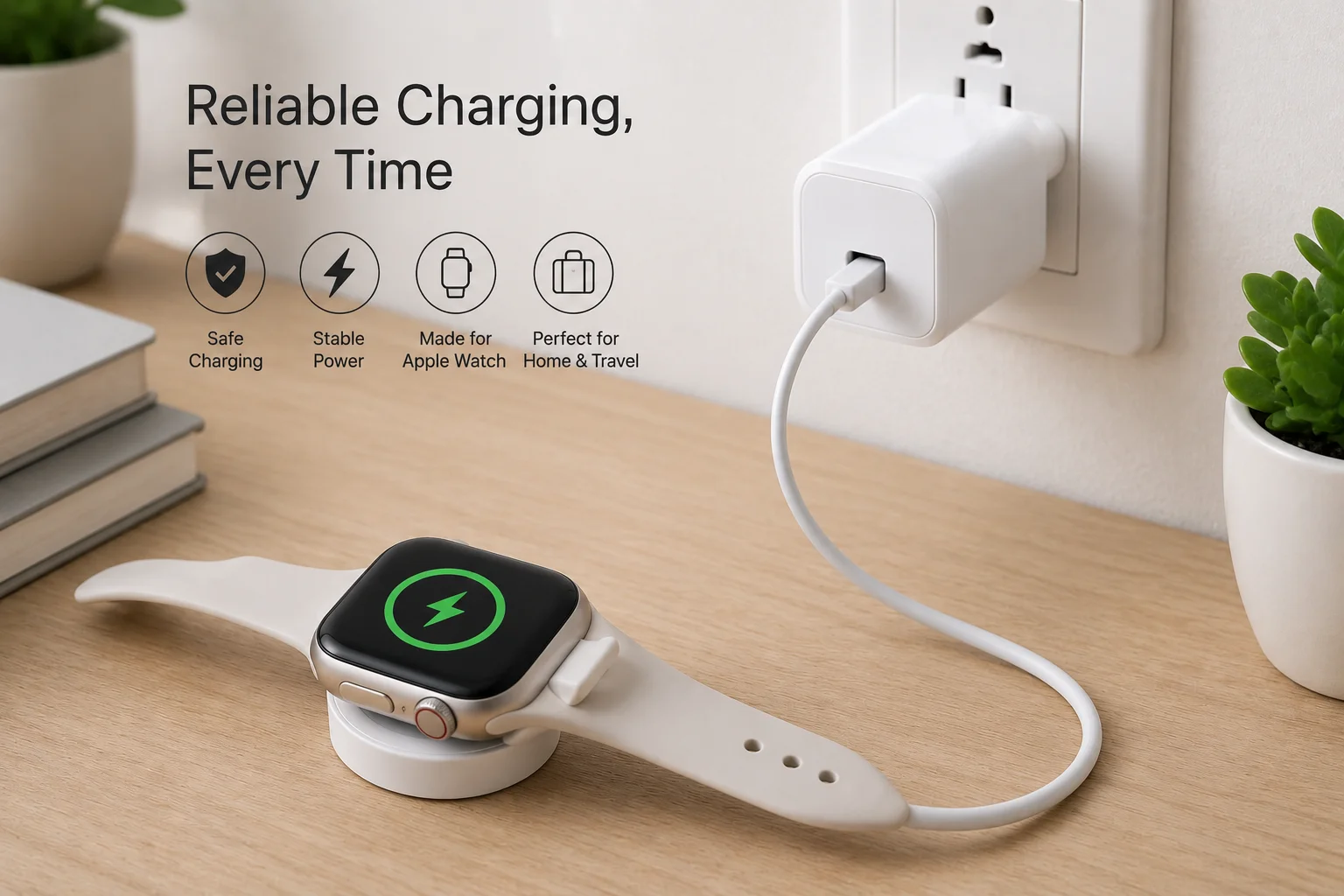
Apple Watch users need a reliable charging adapter because watch batteries are small, charging happens often, and poor power output can cause heat, slow charging, or charging stops1. For retailers, a reliable adapter means fewer returns, better reviews, and stronger repeat sales.
Why Reliability Matters in Retail Sales
I often discuss this with e-commerce sellers. A buyer may accept a simple package. A buyer may accept a basic design. But a buyer will not accept a charger that works one day and fails the next day. Charging products are trust products. If the adapter feels cheap or gets too hot, the customer loses confidence fast.
For importers, reliability is not only a product issue. It is also a business issue. A low price looks good before shipping. But after sales start, one-star reviews cost more than the saving2. Chain stores also care about customer service time. Every return takes labor, shipping, and shelf space3.
| Risk Area | Cheap Adapter Problem | Business Result |
|---|---|---|
| Charging stability | Watch disconnects during charging | More complaints |
| Heat control | Adapter gets too hot | Safety concern |
| Output accuracy | Slow or unstable power | Bad reviews |
| Build quality | Loose port or weak shell | Higher return rate |
| Certification | Missing test documents | Customs or platform issue |
So I usually advise buyers to see the adapter as a support product that protects the main device experience. It may be low cost, but it carries high trust.
USB-A vs USB-C Charger Adapters for Apple Watch?
Many buyers choose a port type only by price. Then they find the market has moved, and the stock feels outdated.
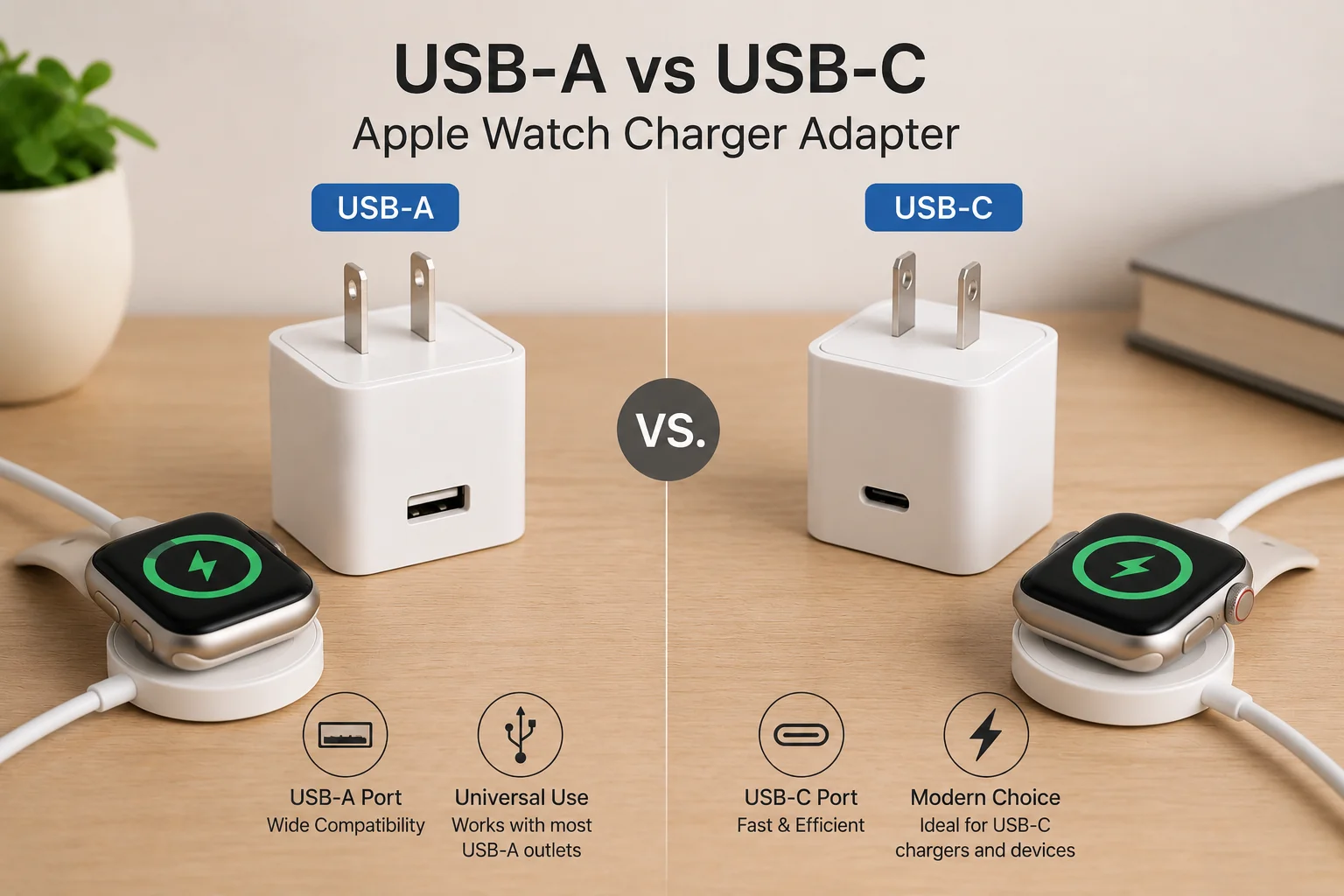
USB-A adapters are still useful for price-sensitive markets and older cables. USB-C adapters are better for newer Apple Watch charging cables4, faster power delivery setups5, and premium retail positioning. The best choice depends on the buyer’s customer base, price level, and sales channel.
How I Help Buyers Choose the Port
When a client asks for the best option, my first question is always about the sales channel. If they sell through discount stores, USB-A may still move well because many households have USB-A cables and low price matters. If they sell through online stores with newer Apple users, USB-C may be safer for the future.
I do not treat USB-A as bad or USB-C as always better. Each one has a clear trade-off.
| Port Type | Strong Point | Weak Point | Best Fit |
|---|---|---|---|
| USB-A | Lower cost and familiar use | Older image and slower trend | Budget retail, wholesale packs |
| USB-C | Modern look and wider future use | Higher cost than basic USB-A | E-commerce, premium retail |
| Dual port | More flexible use | Higher price and larger size | Gift sets, travel kits |
| GaN USB-C6 | Small size and higher power | Needs stronger quality control | Premium tech stores |
I also remind buyers to check the cable type in their bundle. If the Apple Watch charging cable is USB-C, a USB-A adapter will create a mismatch. If the target market still uses many USB-A cables, a USB-C-only item may feel less useful. The right answer comes from the real user, not from the trend alone.
Key Features to Check Before Buying?
A charger adapter looks simple on a product page. But small hidden details decide whether it sells well or causes trouble.
Before buying Apple Watch charger adapters, importers should check plug type, port type, output power, material, heat control, safety protection, certification, packaging, MOQ, warranty, and supplier communication. These points affect both user experience and import risk.
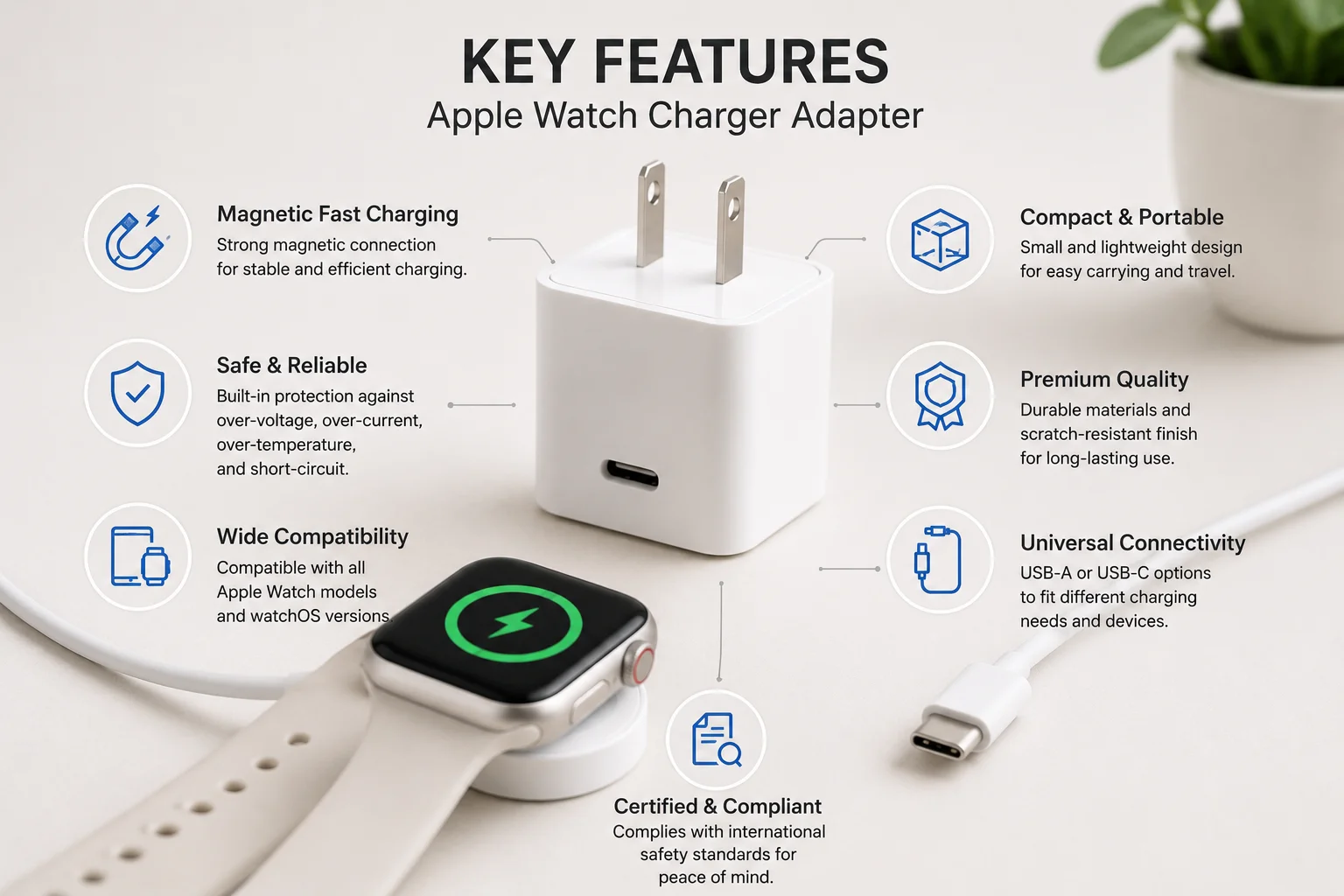
My Practical Checklist Before Quoting
In my work, I like to slow down before sending a price. Many new buyers ask only for “best price.” I understand that. Price matters. But if the product does not match their market, the low price is not useful.
Here is the basic checklist I use with buyers:
| Feature | What I Check | Why It Matters |
|---|---|---|
| Plug type | US, EU, UK, AU | Fits target country |
| Input voltage | 100-240V | Works in global markets |
| Output | 5V/1A, 5V/2A, PD options | Matches charging needs |
| Port | USB-A or USB-C | Matches cable and user habit |
| Protection | Over-current, over-voltage, short-circuit7 | Reduces safety risk |
| Shell material | PC fire-retardant material8 | Better heat and safety control |
| Certification | CE, FCC, RoHS, UKCA as needed9 | Helps customs and platform checks |
| Packaging | Bulk, color box, blister, gift box | Matches channel |
| MOQ | Trial order or custom order | Controls first-order risk |
I also ask whether the buyer wants wholesale, private label, or a more customized product. Wholesale gives speed and lower MOQ. Private label gives brand space, but it needs better packaging work. Full custom design brings more control, but it also brings tooling, testing, and more responsibility.
Charging Speed, Safety, and Compatibility?
Some sellers advertise fast charging too loosely. Then customers expect too much, and the adapter gets blamed.
Charging speed, safety, and compatibility depend on the adapter output, cable quality, Apple Watch model, and protection circuit. Importers should avoid vague claims and choose adapters with stable output, proper safety design, and test documents for their target market.
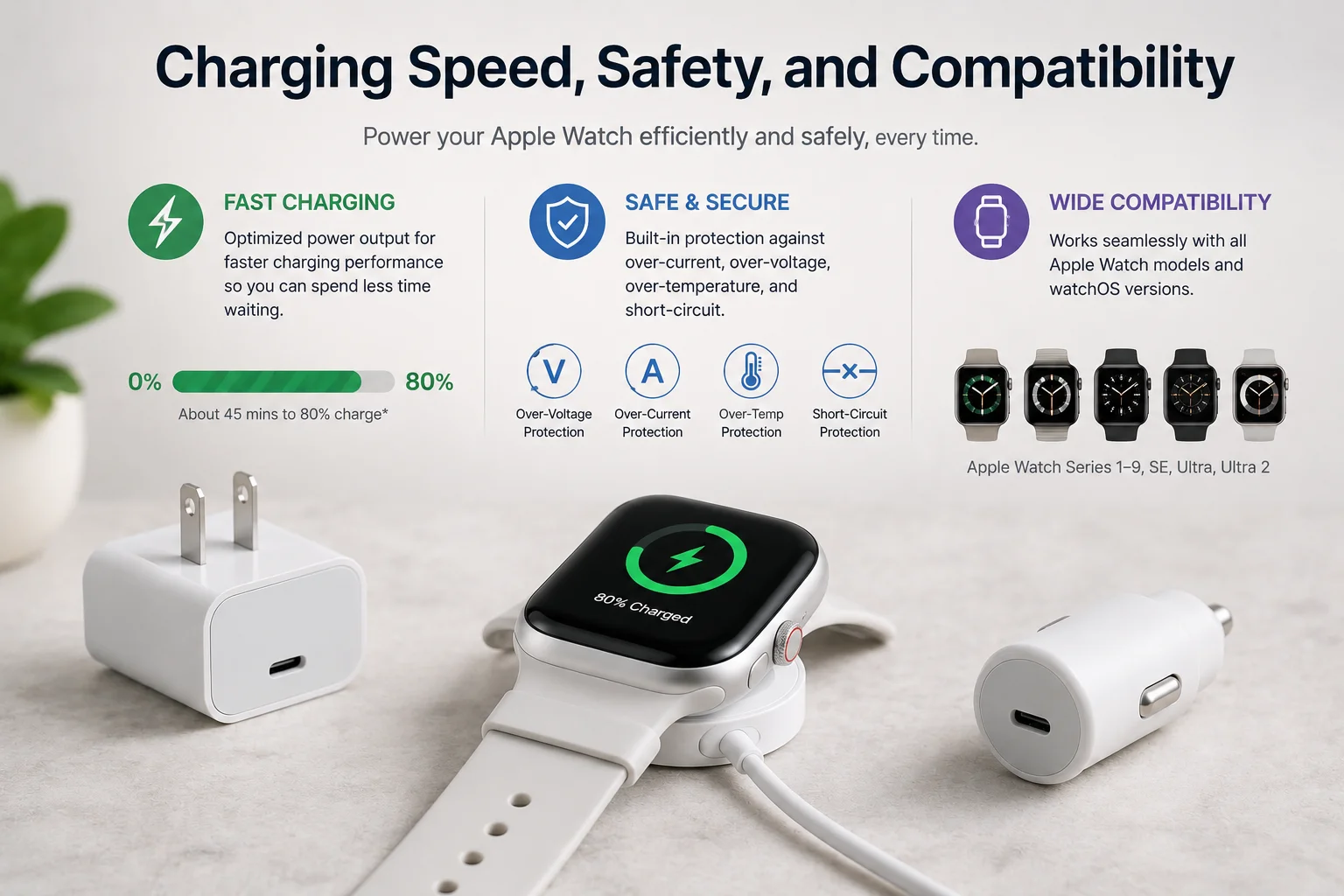
What I Tell Buyers About Performance Claims
Apple Watch charging is not only about the wall adapter. The watch, the cable, and the charging module all affect the final result. So I am careful with words like “fast charging.” If a buyer plans to use that claim on packaging or online listings, I suggest they confirm the full charging set first.
A safe sourcing decision should look at the whole charging path:
| Part | What Can Go Wrong | What I Suggest |
|---|---|---|
| Wall adapter | Unstable output or heat | Use tested models |
| Cable | Poor wire or weak connector | Match cable and adapter |
| Watch model | Different charging limits10 | Avoid overpromising |
| Plug | Wrong regional type | Confirm country list |
| Packaging claim | “Fast” claim is unclear | Use accurate wording |
I also remind buyers that safety is not only for end users. It is also for platform approval and retail buyers. Large retailers may ask for test reports, product photos, user manual, label files, and packing details. Online sellers may face listing checks. If the adapter has no clear certification path, the first order can become a long problem. I prefer to solve these issues before production, not after shipment.
Common Use Cases: Home, Office, Travel, and Retail Sales?
One adapter cannot serve every sales story. If the use case is unclear, the product selection becomes weak.
Apple Watch charger adapters are commonly used at home, in offices, during travel, and as retail add-on products. Importers should match design, packaging, and price level with the use case, because each scene has different user expectations.
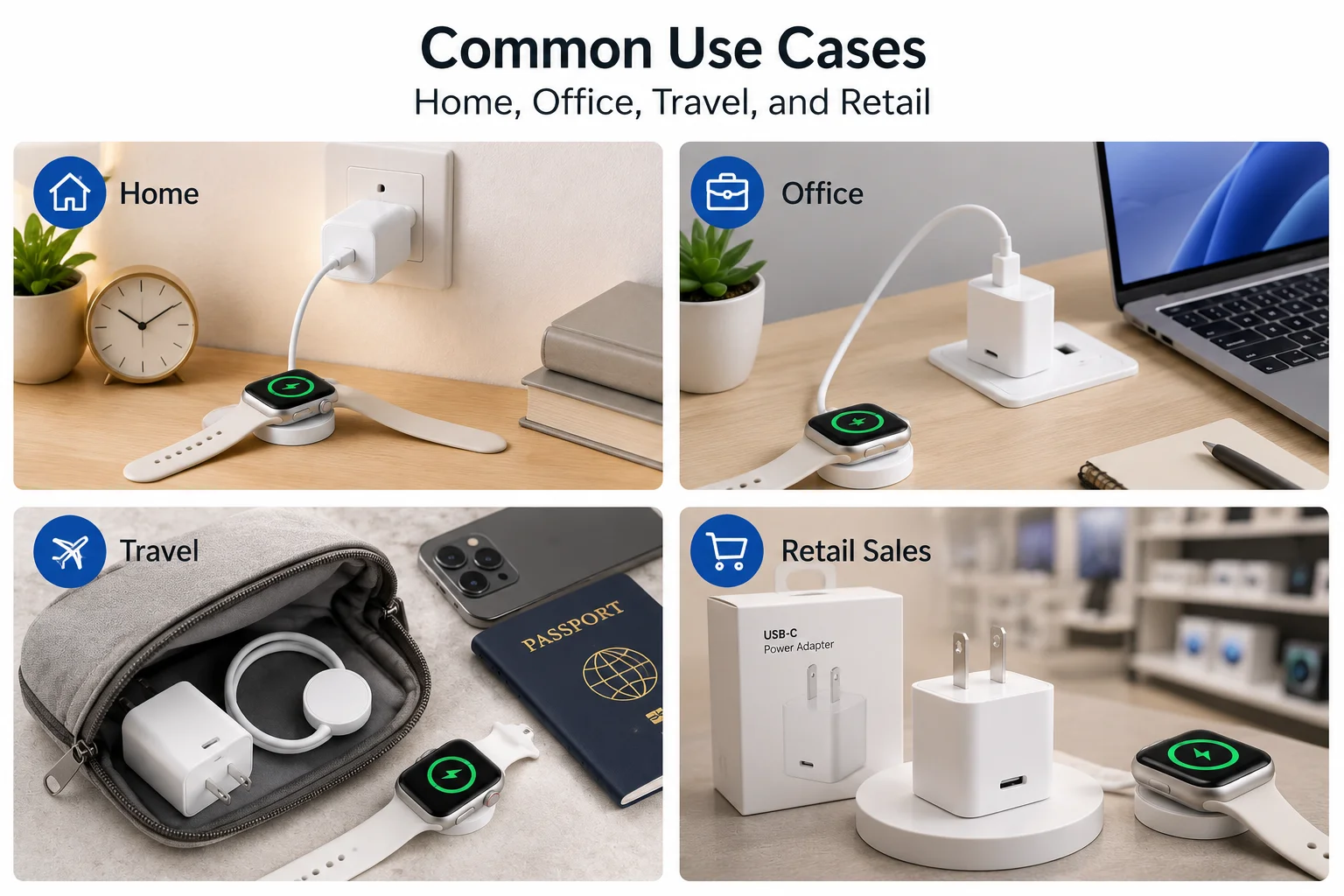
How Use Case Changes the Product Choice
I often see buyers choose products by catalog pictures. That is normal at the first step. But I prefer to ask where the product will be used. A home user may want a small wall charger near the bed. An office user may want a USB-C adapter that also supports phone charging. A traveler may care more about size and plug options. A retail store may care more about packaging and shelf display.
| Use Case | Best Product Direction | Key Buying Point |
|---|---|---|
| Home | Simple wall adapter | Stable and safe charging |
| Office | USB-C or dual-port charger | More device support |
| Travel | Compact adapter or plug set | Small size and region fit |
| Retail add-on | Color box or blister pack | Shelf look and barcode |
| E-commerce bundle | Adapter plus cable | Better order value |
Here is a scenario I often discuss with online sellers. If they sell Apple Watch straps, a charger adapter can be a good add-on item. The price does not need to be high. The product needs to be stable, easy to explain, and easy to pack. If they sell premium smartwatch accessories, a cheap-looking adapter may hurt the brand image. So the same adapter can be right or wrong. The sales story decides.
How Importers Choose Apple Watch Charger Adapters Wholesale?
Many importers want the lowest MOQ and the best price at the same time. That is not always possible.
Importers choose Apple Watch charger adapters wholesale by balancing MOQ, unit price, certification, packaging, lead time, and after-sales support. Wholesale is best for market testing, fast delivery, and lower first-order risk, but it gives less control over design and features.
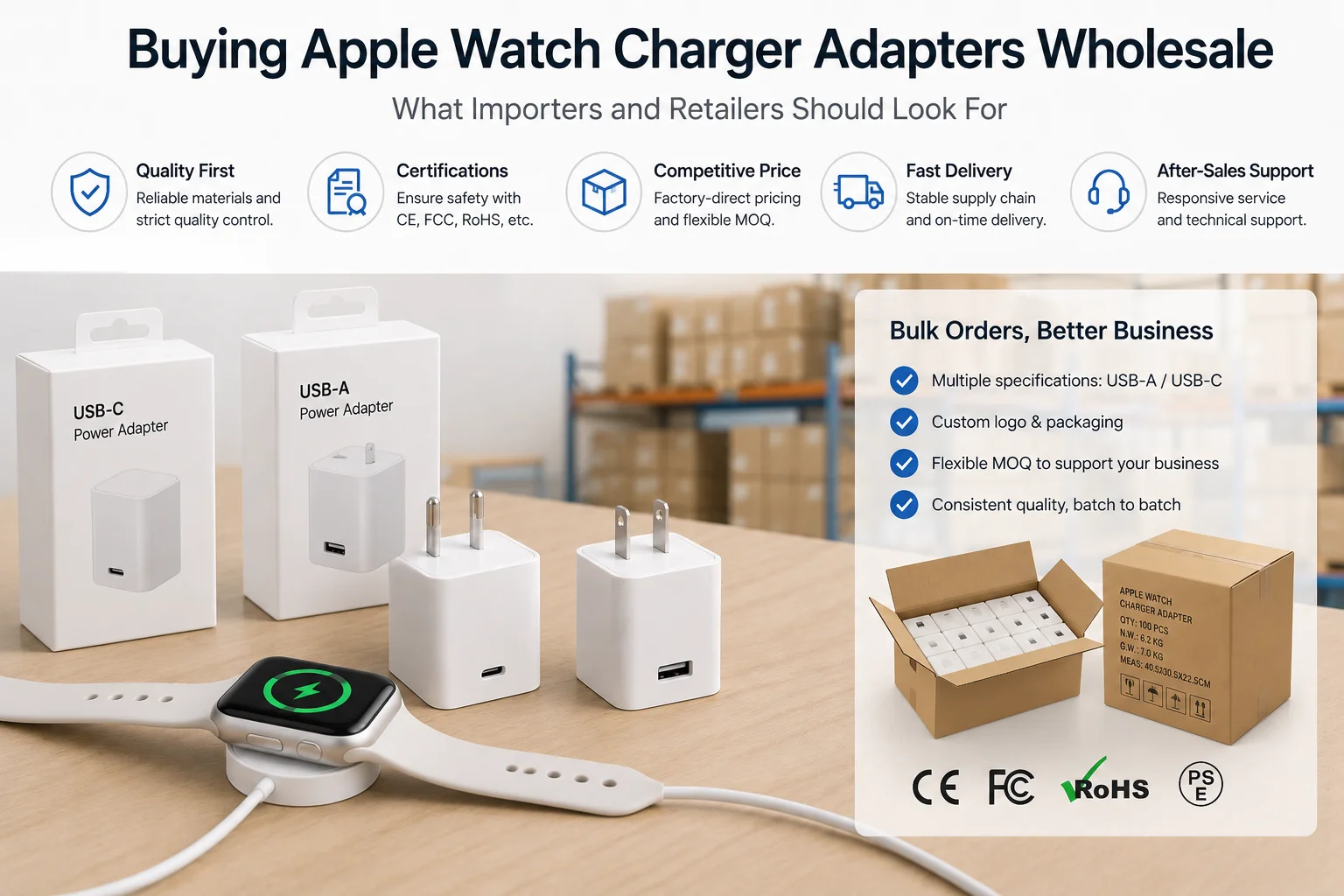
Wholesale as a Market Test, Not Just a Cheap Choice
A common question from first-time importers is, “Can I start with a small order?” My answer is yes, but they need to accept the trade-off. Small orders usually mean existing models, standard colors, and limited packaging choices. That is not bad. It is often the right way to test a market.
I see wholesale as a risk control tool. It helps buyers learn which plug type sells, which package customers like, and what price point works.
| Buying Model | Main Benefit | Main Trade-Off | Best Buyer Type |
|---|---|---|---|
| Wholesale | Fast and low MOQ | Less customization | New importers, market testers |
| Private label | Brand presence | More packaging work | Growing sellers and retailers |
| OEM/custom | More control | Higher cost and longer time | Larger brands with technical staff |
If a buyer has no sales data yet, I do not push them into heavy customization. A branded box may look nice, but unsold stock is still unsold stock. I prefer a first order that can move fast and teach the buyer something. After the buyer knows the market, private label or custom options become easier to manage.
Why Buy Apple Watch Charger Adapters from China Suppliers?
Some buyers think China sourcing is only about low price. In real business, the bigger value is product range, speed, and supply chain support.
Buying Apple Watch charger adapters from China suppliers can help importers access wide product options, competitive pricing, flexible MOQ, custom packaging, and mature export support. Buyers should still check certification, quality control, communication, and after-sales terms before placing orders.
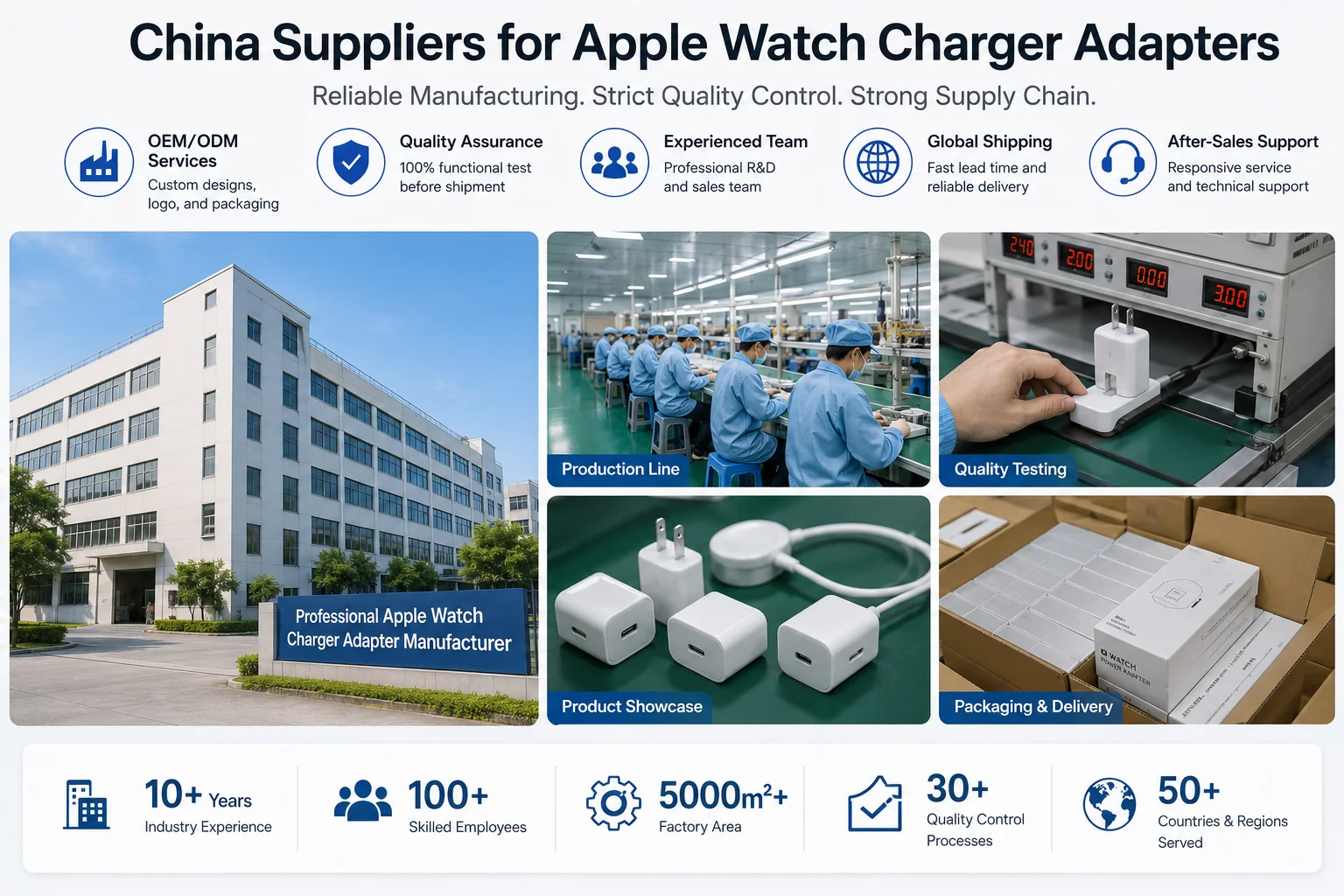
What I Have Learned from Shenzhen 3C Export Work
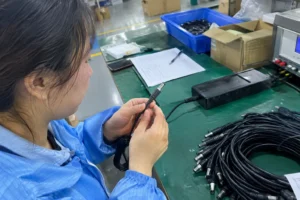
I work in Shenzhen, and our company has been in 3C export for 15 years. We handle products like USB cables, chargers, GaN chargers, TWS earbuds, smart watches, and related accessories. From this experience, I can say that China sourcing is strong because many parts of the supply chain are close together11. A buyer can compare adapters, cables, packaging, and testing options faster.
But I also tell buyers not to choose only by the lowest quotation. A very low price can mean thinner material, unstable output, weak packaging, or unclear certification12. That can damage the buyer’s business in Europe or the United States.
| China Sourcing Advantage | What Buyer Should Still Check |
|---|---|
| Many ready models | Product stability and real samples |
| Competitive price | Material and output accuracy |
| Flexible packaging | Print files and barcode needs |
| Fast production | Real lead time before holidays |
| Export experience | Documents and market certification |
| Custom options | MOQ, cost, and development time |
When a client asks for the “best supplier,” I usually change the question. I ask, “Which risk can your business afford?” If speed is most important, ready wholesale models may be best. If brand image is important, private label packaging matters more. If unique hardware is critical, then a custom project needs budget, time, and technical support. China can support all these paths, but the buyer should choose the path with open eyes.
Conclusion
I choose Apple Watch charger adapters by risk, market fit, and user need, not by price alone. The right product protects sales and trust.
"Are unoriginal adapters hurting my phone's battery? - Quora", https://www.quora.com/Are-unoriginal-adapters-hurting-my-phone-s-battery. A study on battery charging systems can illustrate how inconsistent voltage or current from a power adapter can lead to increased heat dissipation, slower charging rates, and protective disconnections by the device's battery management system. Evidence role: mechanism; source type: paper. Supports: The source should explain how an unstable or poorly regulated power supply can lead to inefficient charging, thermal issues, and charging interruptions in modern electronics with battery management systems.. ↩
"How Online Reviews Influence Sales - Spiegel Research Center", https://spiegel.medill.northwestern.edu/how-online-reviews-influence-sales/. Research in e-commerce has shown that negative reviews can significantly impact sales revenue and brand reputation, with some studies quantifying the financial cost associated with each negative star in a product's rating. Evidence role: statistic; source type: research. Supports: The source should provide data or analysis showing a correlation between negative online reviews and decreased sales, customer trust, or increased customer acquisition costs.. Scope note: The exact financial impact can vary widely by product category and market, so the source would provide general evidence rather than a specific cost for this product. ↩
"[PDF] The Effects of Return Policies in E-commerce", https://www.colorado.edu/economics/sites/default/files/attached-files/newberry.pdf. Studies in supply chain management and retail operations detail the significant costs of 'reverse logistics,' which include not only shipping but also labor for processing returns, inspection, repackaging, restocking, and potential inventory write-downs. Evidence role: mechanism; source type: research. Supports: The source should break down the costs associated with reverse logistics, including processing fees, labor for inspection and restocking, shipping costs, and the loss of value for opened or used products.. ↩
"Apple Watch Series 9 - Charging Essentials - All Accessories", https://www.apple.com/shop/accessories/all/charging-essentials?f=series9&fh=459d%2B7f9533. Apple's official product specifications confirm that recent Apple Watch models, particularly those supporting fast charging, ship with a Magnetic Charger to USB-C Cable. Evidence role: case_reference; source type: other. Supports: The source should confirm that recent models of the Apple Watch (e.g., Series 7 and later) are supplied with a Magnetic Fast Charger to USB-C Cable.. ↩
"USB-C - Wikipedia", https://en.wikipedia.org/wiki/USB-C. The USB Implementers Forum (USB-IF) defines the USB Power Delivery (PD) specification, which enables higher power for faster charging by allowing devices to negotiate for more current and voltage over USB-C connections than is possible with legacy USB-A standards. Evidence role: definition; source type: institution. Supports: The source should define the USB Power Delivery (PD) specification, explaining that it is a protocol primarily used over USB-C connectors that allows for higher power output and faster charging.. ↩
"GaN vs. Silicon in High-Frequency Power Transistors - Stanford", http://large.stanford.edu/courses/2025/ph240/jahan2/. Technical articles on semiconductor materials explain that Gallium Nitride (GaN) offers higher efficiency and power density compared to traditional silicon, enabling the creation of smaller, lighter, and more powerful chargers that generate less waste heat. Evidence role: mechanism; source type: education. Supports: The source should explain that Gallium Nitride (GaN) is a semiconductor material with properties that allow it to sustain higher voltages and temperatures, leading to more efficient and compact power converters (chargers) compared to silicon.. ↩
"How does Over Current Protection (OCP) work?", https://docs.keysight.com/kkbopen/how-does-over-current-protection-ocp-work-620692888.html. Technical resources on power supply design explain that protection circuits are critical for safety. Over-voltage protection (OVP) prevents excessive voltage from reaching the device, over-current protection (OCP) prevents the charger from delivering dangerously high current, and short-circuit protection (SCP) shuts down the output to prevent catastrophic failure in case of a short. Evidence role: definition; source type: education. Supports: The source should define the function of key safety circuits in power supplies: Over-current Protection (OCP), Over-voltage Protection (OVP), and Short-circuit Protection (SCP).. ↩
"Understanding Flame Retardant Polycarbonate - Total Plastics", https://totalplastics.com/blog/understanding-flame-retardant-polycarbonate/. Material science data sheets and safety standards like UL 94 specify fire-retardant polycarbonate (PC) for consumer electronics enclosures due to its high impact strength, thermal stability, and ability to resist ignition and slow the spread of fire. Evidence role: general_support; source type: research. Supports: The source should describe the properties of fire-retardant polycarbonate (PC) plastics, such as high heat resistance and self-extinguishing characteristics, and why these are specified in safety standards like UL 94.. ↩
"47 CFR Part 15 -- Radio Frequency Devices - eCFR", https://www.ecfr.gov/current/title-47/chapter-I/subchapter-A/part-15. Governmental and regulatory bodies provide guidance confirming that certifications like FCC (for the U.S.), CE (for the EEA), and UKCA (for Great Britain) are mandatory legal requirements for placing electronic products on the market, attesting to their compliance with safety and emissions standards. Evidence role: definition; source type: government. Supports: The source should be an official government or regulatory body website that defines the scope of these certifications: CE for the EU, FCC for the US, and UKCA for Great Britain, confirming they are legal prerequisites for market entry.. ↩
"Charge the battery on Apple Watch", https://support.apple.com/guide/watch/charge-the-battery-apd2b717523a/watchos. Apple's official support documentation specifies that fast charging is available on Apple Watch Series 7 and later models, requiring a USB-C cable and a compatible USB-C power adapter. Evidence role: case_reference; source type: other. Supports: The source should be a support document or technical specification page that details which Apple Watch models support fast charging and the specific adapter and cable combinations required.. ↩
"Shenzhen - Wikipedia", https://en.wikipedia.org/wiki/Shenzhen. Economic and geographical studies on industrial clusters describe how regions like Shenzhen benefit from 'agglomeration economies,' where the close proximity of suppliers, manufacturers, and logistics services reduces transaction costs and accelerates innovation and production cycles. Evidence role: historical_context; source type: education. Supports: The source should describe the development of Shenzhen as a global hub for electronics, explaining how the co-location of component suppliers, factories, and logistics providers creates an 'industrial cluster' that accelerates product development.. ↩
"Recalls & Product Safety Warnings | CPSC.gov", https://www.cpsc.gov/Recalls. Investigations by consumer safety organizations and electrical standards bodies have repeatedly shown that low-cost, uncertified chargers often lack essential safety components, use substandard materials, and fail basic safety tests, posing significant risks of fire, electric shock, and damage to devices. Evidence role: case_reference; source type: government. Supports: The source should be a report or public warning from a consumer safety organization that links low-cost, uncertified chargers to specific hazards like poor materials, lack of safety features, and risks of fire or electric shock.. ↩