Quick Answer
Branded charging cables can look simple, but a poor product decision can create compatibility complaints, delayed launches, and expensive returns. Many buyers focus first on logos or unit price, while the real risks involve power, data performance, device fit, quality consistency, and supplier support. I use a more practical approach: define the use case first, then evaluate customization and supply reliability.
Branded charging cables and custom USB cords should be evaluated by device compatibility, charging power, data requirements, customization needs, quality documentation, MOQ, lead time, and after-sales support. A USB-C connector alone does not prove fast charging, high wattage, or universal compatibility. Buyers should approve product samples, verify technical and certification documents, confirm production standards, and compare total commercial risk instead of choosing only the lowest quotation.
In my work with overseas 3C customers, I often see the same pattern. A retailer starts with a logo, a color, or a target price. Later, the discussion moves to whether the cable supports a particular device, charging requirement, packaging format, or sales channel. That is where the important purchasing questions begin.
Branded Charging Cables and Custom Cords: How Should Buyers Evaluate Them
A branded cable proposal can appear attractive until the buyer checks the details behind the quotation. The product may have the right appearance but the wrong power capability, unsuitable connectors, unclear documentation, or an MOQ that does not match the sales plan. I recommend treating customization as a product and supply decision, not simply a printing service.
Buyers should evaluate branded charging cables in five stages: define the use case, confirm technical requirements, decide the customization scope, verify the supplier and documents, and compare the total cost and risk. This process helps retailers, wholesalers, and e-commerce sellers avoid choosing a cable that looks competitive but performs poorly in real customer use.
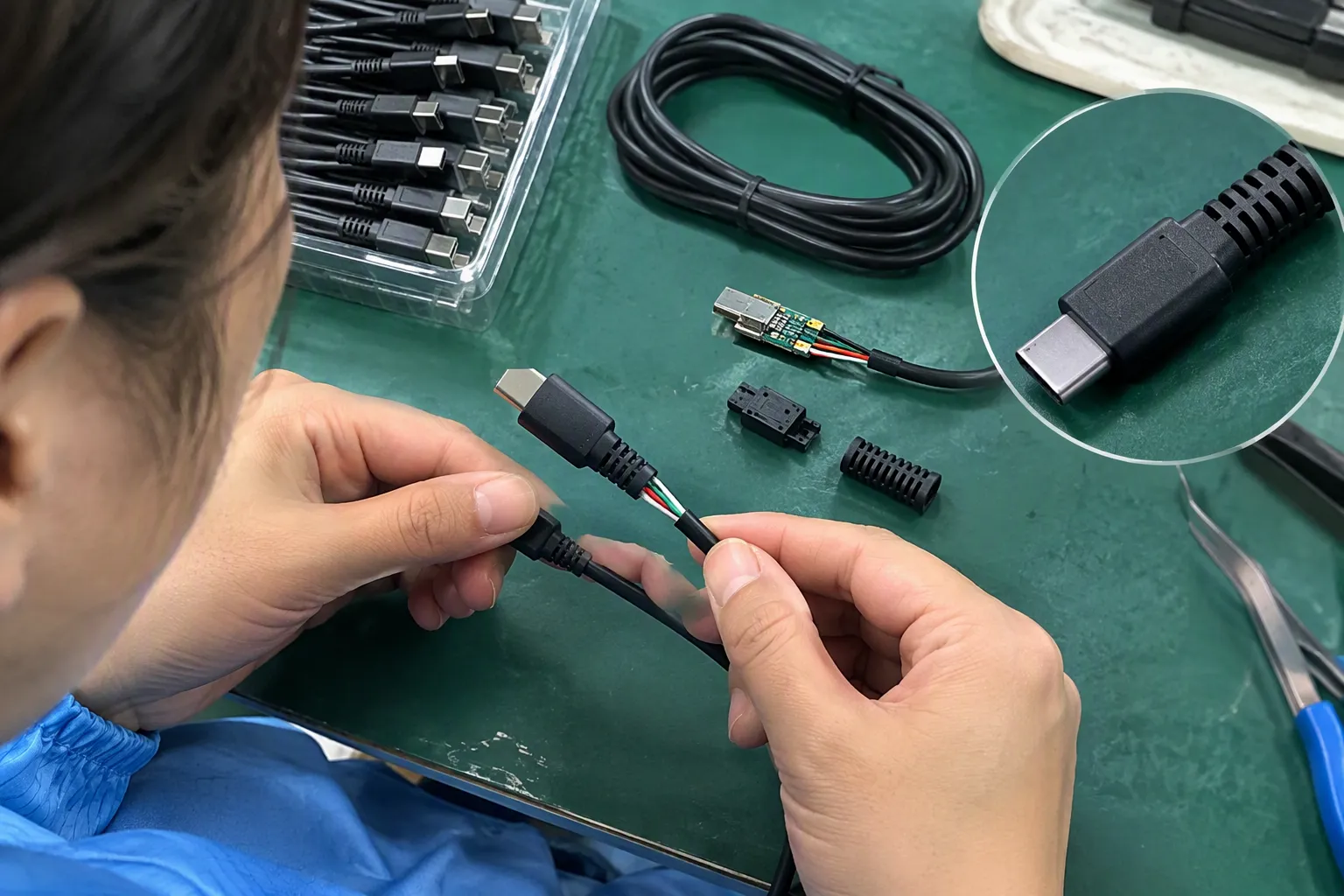
Start with the connected devices, not only the connector
In customer inquiries, “USB-C cable” is often the first specification I receive. I then ask what the cable will connect and what the customer expects it to do. The same connector shape can be used in products with very different charging and data capabilities.[1]
A buyer should clarify:
- Which devices will the cable support?
- Will it charge phones, tablets, laptops, power banks, headphones, or several device types?
- What charging power does the application require?
- Does the cable need data transfer, or is charging alone sufficient?
- Does the product need to support a particular charging protocol?[6]
- Does the customer expect video, docking, or other advanced functions?[7]
- What cable length and flexibility suit the intended environment?
A USB-C connector identifies a physical interface.[2] It does not automatically confirm a specific wattage, current rating, data speed, or universal compatibility.[3] A cable intended for a phone accessory may not be suitable for a laptop charging bundle. A low-cost charging lead may be acceptable for a basic retail pack but unsuitable for a data-focused product.[5]
I normally separate the specification into three levels:
| Evaluation area | Buyer’s question | Why it matters |
|---|---|---|
| Physical compatibility | Do the plugs fit the intended devices and cases? | A technically compatible connector may still be difficult to use with a thick protective case. |
| Electrical performance | What charging power and current are required? | The cable, charger, and device must work together for the intended result.[4] |
| Functional performance | Is data transfer, display output, or another feature required? | A charging-only cable may not meet a data or accessory bundle requirement. |
The buyer should record these requirements in a product specification sheet before requesting samples. This document can include connector combinations, length tolerance, outer material, color, logo method, packaging, required testing, and target market. A clear specification reduces misunderstandings between the buyer, supplier, factory, and inspection team.
Separate branding from performance
Custom USB cords can include much more than a printed logo. I usually divide customization into four groups:
-
Product appearance
This includes color, braid or surface finish, connector housing, logo placement, and visible markings. -
Product configuration
This includes cable length, connector combination, material, reinforcement, and possible functional requirements. -
Packaging
This includes retail boxes, paper cards, barcode labels, multilingual instructions, inserts, and shipping cartons. -
Commercial setup
This includes MOQ, sample charges, production lead time, payment terms, replacement policy, and forecast quantities.
Each group affects cost and timing differently. A logo printed on an existing model may require limited preparation. A special color may require a material or production minimum. A new connector housing or mold can involve development charges and a longer approval process. Custom packaging may require artwork checks, barcode confirmation, and a separate packaging production schedule.
I have found that buyers often underestimate packaging details. A cable may be approved at the product level, but the retail package can still contain a wrong barcode, incorrect language, unsuitable dimensions, or a missing warning. These mistakes can delay a launch even when the cable itself is acceptable.
A practical customization brief should state:
- Brand name and logo files
- Preferred logo position and printing method
- Pantone or other approved color reference, if applicable
- Cable length and acceptable tolerance
- Connector combination
- Outer material and finish
- Packaging dimensions and artwork requirements
- Barcode and carton-marking requirements
- Estimated order quantity
- Target delivery date
- Destination market and sales channel
I also recommend separating “must have” features from “nice to have” features. A buyer may want a premium braided finish, a special housing, and custom packaging, but those additions may increase MOQ and lead time.[8] If the main commercial goal is a reliable private-label charging accessory, the buyer may achieve better results by customizing the brand identity and packaging while using a proven product platform.
Match the cable to the sales context
The correct product for a chain store may not be the correct product for an online seller. A chain store may need barcode control, retail-ready packaging, stable replenishment, and formal quality records. An e-commerce seller may care more about small initial quantities, attractive product photography, review performance, and flexible packaging.
A wholesaler or importer may need a broader assortment with several connector combinations. A private-label brand may prefer fewer models but stronger consistency between batches. A travel accessory seller may value compact packaging and a short cable, while a laptop accessory seller may require a different performance profile and clearer technical communication.
I ask buyers to consider the following commercial questions:
- What is the expected monthly or seasonal volume?
- Is the first order a market test or a long-term program?
- Will the buyer reorder the same model?
- Does the sales channel require retail packaging?
- Will the product be sold alone or bundled with a charger?
- What customer claims must the packaging avoid?
- How quickly must the supplier replenish stock?
- What happens if a batch contains defects or inconsistent printing?
These questions connect product specifications to business risk. A technically acceptable cable can still be a poor purchase if the MOQ is too high for the sales plan or if the supplier cannot repeat the same color and packaging later.
Verify technical claims and certification documents
A supplier should provide product-specific information that the buyer can review. I do not recommend relying on a general statement such as “fast charging cable,” “high-speed cable,” or “all certifications available.” Those phrases may not explain the actual configuration.
The buyer should request and compare:
- Product specification sheet
- Sample identification or model number
- Applicable test reports
- Certification documents for the relevant product and market
- Material or component information where relevant
- Packaging and labeling details
- Inspection standards or quality-control criteria
- Warranty and replacement terms
Buyers should verify whether a document applies to the exact model, connector combination, material, and market. A document for one cable should not automatically be assumed to cover a different model. Buyers should also check the document issuer, date, product description, and tested configuration. I present certifications as documents for buyer verification, not as a substitute for technical evaluation.
The intended market matters as well. European and North American buyers may have different requirements for labeling, packaging, importer information, environmental statements, or supporting records. The buyer should ask the supplier what documents are available and then obtain qualified local or regulatory advice when the application requires it.
Use samples to test the purchasing assumptions
A sample is not only a visual approval. It is a way to test whether the supplier understood the requirement.
I suggest checking the sample in several stages:
1. Visual and physical inspection
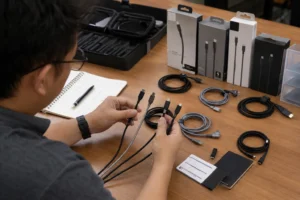
The buyer can check connector fit, housing alignment, logo position, surface finish, strain relief, cable flexibility, packaging quality, and visible defects. The buyer should test the cable with the device cases and accessories that customers will actually use.
2. Functional testing
The buyer should use suitable equipment and qualified personnel to assess the required charging and data functions. Testing should match the intended claim. A buyer who plans to market a cable for a specific charging application should confirm that the complete charger, cable, and device combination performs as expected.
3. Documentation review
The buyer should compare the sample with the specification sheet and supporting documents. The product code, packaging, printed claims, and physical construction should be consistent.
4. Repeatability discussion
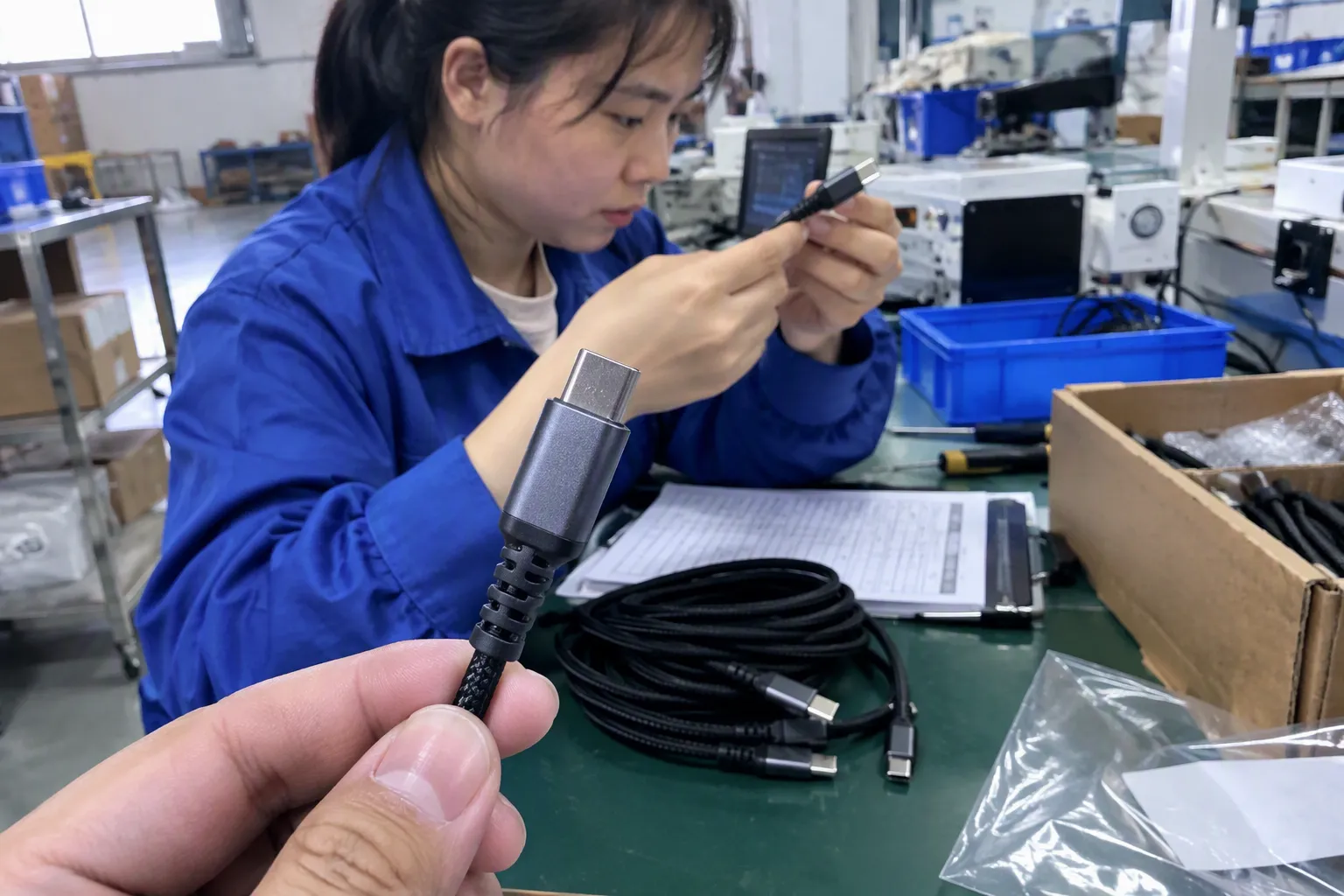
The buyer should ask how the supplier will control production consistency. Important questions include:
- Which components or materials are fixed?
- How does the factory control incoming materials?
- What checks occur during assembly?
- How are finished products sampled?
- How does the supplier handle printing or color variation?
- Will the approved sample become the production reference?
In my experience with sampling and quotation discussions, buyers often spend considerable time negotiating the sample price but much less time defining the approval standard. The second discussion is more important. A low-cost sample has limited value if both parties later interpret “same product” differently.
Compare suppliers by total commercial risk
Unit price is easy to compare. Total risk is harder, but it is more important. A lower quotation may become expensive if the supplier delivers inconsistent batches, misses a seasonal deadline, or cannot resolve customer complaints.
I use a broader comparison like this:
| Factor | Questions to ask | Possible commercial effect |
|---|---|---|
| Product consistency | Can the supplier repeat the approved construction and appearance? | Inconsistent products can create returns and poor reviews. |
| Technical clarity | Are power, data, and compatibility claims specific? | Unclear claims can cause customer disputes. |
| Documentation | Are relevant reports and certifications available for verification? | Missing documents can delay approval or market entry. |
| MOQ | Does the quantity match the buyer’s forecast? | Excess stock can tie up cash and increase storage costs. |
| Lead time | Does the schedule include materials, printing, packaging, and inspection? | Delays can cause missed promotions or stock-outs. |
| Communication | Does the supplier answer questions clearly and promptly? | Poor communication increases specification errors. |
| After-sales support | Are defect handling and replacement terms written down? | Weak support increases the buyer’s exposure after delivery. |
I also encourage buyers to calculate the likely landed cost. This calculation can include product price, packaging, tooling or setup, inspection, freight, duties, warehousing, and the expected cost of defects or returns. The exact calculation depends on the buyer’s market and shipping arrangement, so a professional purchasing or finance team should confirm the assumptions.
Control customization complexity
Not every custom request deserves immediate development. Buyers should first identify whether the change improves sales or solves a real user problem.
For example, custom color may strengthen brand recognition, while an unusual cable length may make the product less useful on a retail shelf. A special connector housing may look distinctive but require a new mold. A highly decorated box may increase shelf appeal but also increase packing volume and shipping cost.
I recommend ranking proposed changes:
- Essential: Required for compatibility, legal labeling, or the intended retail program.
- Commercially useful: Supports brand identity, shelf presentation, or customer convenience.
- Optional: Adds appearance or differentiation but may not justify more cost or complexity.
This ranking helps buyers control development risk. It also gives the supplier a clear basis for quotation. A quotation should identify whether the price assumes an existing model, a new mold, a particular packaging quantity, or a specific printing method.
Confirm MOQ, lead time, and after-sales terms before ordering
MOQ is not simply a factory rule. It affects inventory, cash flow, and the buyer’s ability to test a new product. I have seen inquiries where the buyer wants full private-label packaging but expects a very small test order. In that situation, the supplier may need to offer standard packaging, digital printing, shared materials, or another lower-commitment option.
The buyer should ask for a schedule that separates:
- Artwork confirmation
- Sample preparation
- Sample delivery and approval
- Material preparation
- Production
- Packaging
- Inspection
- Shipment
A supplier should also explain which events may change the schedule. Custom packaging and special materials can create different lead times from the cable assembly itself.
After-sales terms should cover more than “warranty available.” The buyer should ask:
- How is a defect defined?
- What evidence is required?
- What is the notification period?
- Will the supplier replace products, issue credit, or provide another solution?
- Does the policy cover packaging and printing defects?
- How will the supplier handle repeated batch problems?
The final terms should appear in the quotation, purchase order, sales contract, or another written commercial document. Buyers should ask qualified professionals to review contractual and regulatory matters when the order value or market exposure is significant.
Build a clear approval process for bulk production
Before bulk production begins, I recommend creating one approval package. It should include the approved sample, specification sheet, artwork, packaging files, carton markings, agreed quantity, inspection requirements, and commercial terms.
The buyer can use a simple pre-production checklist:
- Product model and connector combination confirmed
- Cable length and tolerance confirmed
- Functional requirements recorded
- Logo artwork approved
- Color and printing position approved
- Packaging artwork approved
- Barcode checked
- Quantity and MOQ confirmed
- Production and shipment dates confirmed
- Relevant documents received for review
- Defect handling terms confirmed
- Pre-shipment inspection arranged where appropriate
This process does not remove every risk. It creates a reference that both sides can use when questions arise. It also helps the buyer communicate with internal teams, inspectors, retailers, and logistics providers.
Frequently Asked Questions
Does USB-C automatically mean a cable supports fast charging?
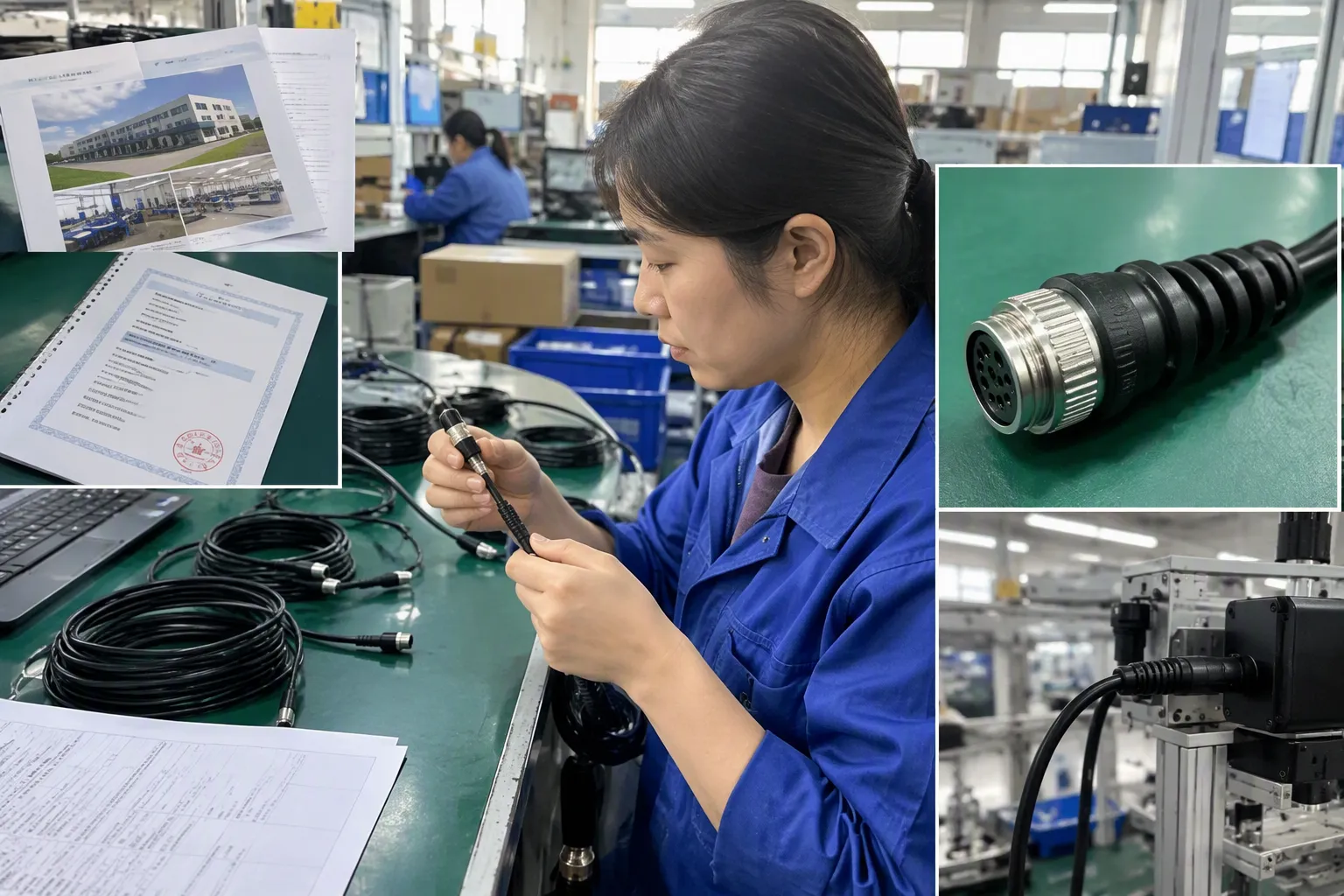
No. USB-C describes a connector and interface family, not one guaranteed performance level. Charging capability depends on the cable construction, connected charger, device, protocol, and any required identification or control components. Buyers should verify the complete application rather than relying on the connector name.
Can I order custom USB cords with a small MOQ?
Sometimes, but the answer depends on the customization scope. Using an existing cable model with simple logo printing may require less quantity than developing a new housing, special color, or fully customized package. I recommend asking the supplier for several options, including standard, semi-custom, and fully custom solutions.
What documents should I request from a cable supplier?
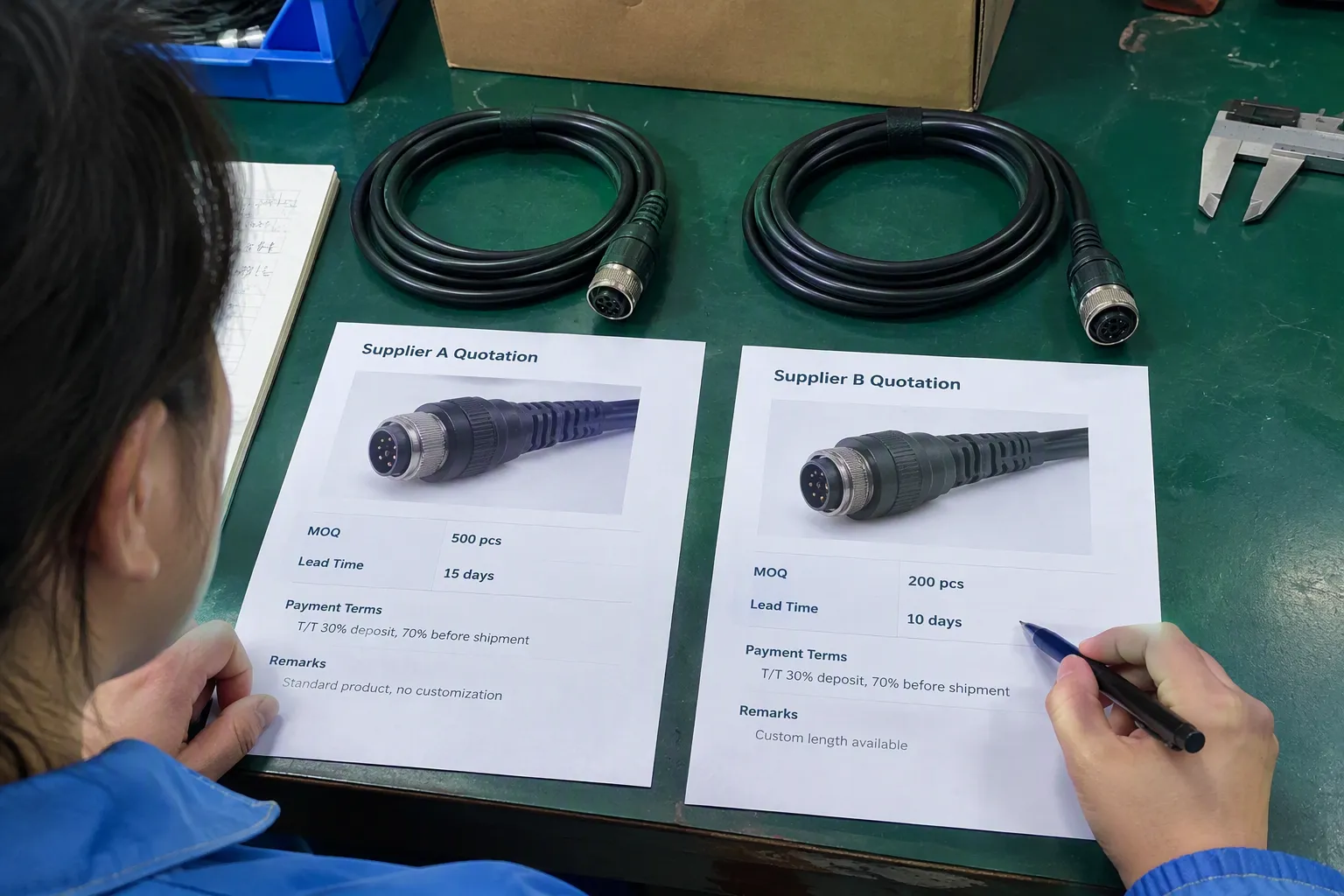
I would request a product specification sheet, relevant product-specific test reports, applicable certification documents, packaging information, and written warranty or replacement terms. Buyers should verify that each document matches the actual model and intended market. A qualified professional should review application-specific regulatory requirements.
How can I compare two cable quotations fairly?
I would compare more than the unit price. Check the same connector configuration, length, materials, functional requirements, packaging, MOQ, lead time, inspection scope, documentation, shipping terms, and after-sales policy. A quotation with a higher unit price may create lower total risk if it offers better consistency and clearer support.
Should I customize the cable or only the packaging?
The decision depends on the brand strategy and sales plan. Packaging-only customization can reduce MOQ and development risk when the existing cable already meets the application. Product-level customization may be worthwhile when color, length, ergonomics, or construction directly supports the target users. I recommend proving demand before adding unnecessary complexity.
Conclusion
Branded charging cables should be selected as complete commercial products, not as logo-printing items. I recommend starting with the connected devices, required charging and data functions, sales channel, and expected volume. Buyers should then verify samples, technical claims, certification documents, packaging, MOQ, lead time, quality controls, and after-sales terms. The lowest unit price is not always the lowest purchasing risk. If you are planning a private-label cable program, I can help you compare suitable product options, customization levels, sample requirements, and quotation details for your target market.
Sources
- A Primer on USB Type-C and Power Delivery Applications ...", A USB Type-C technical specification distinguishes the connector and receptacle from the power, data, and alternate-mode capabilities implemented through the associated standards and circuitry
- Universal Serial Bus Type-C Cable and Connector ...", Reference descriptions of USB Type-C define it as a connector and cable interface whose physical form is distinct from the USB data-transfer and power specifications used with it
- Is USB-C to USB-C not any faster then ...", USB Type-C and USB Power Delivery documentation indicate that connector presence alone does not specify a cable's supported current, power level, data rate, or compatibility with every USB-C device
- The Basics of USB Power Delivery Negotiations", Research and technical literature on USB Power Delivery describe charging as an interaction among the source, cable, and sink, with the achievable operating point constrained by the capabilities of all three components
- Plugable USB-C Cable, Data Blocker Charge Only, 240W ...", Technical research and standards documentation distinguish charging functionality from USB data signaling, showing that a cable may provide power without supporting the data rate or signaling mode required by a data-oriented application
- Electric Vehicle Charging Data and Communications ...", Educational and technical accounts of USB charging protocols explain that protocol-specific signaling and negotiation determine which power modes compatible devices can establish
- PSA: USB-C Bus Powered Dock with DP 1.4 Alt Mode ...", USB Type-C and DisplayPort documentation describe video and docking functionality as supported through defined alternate modes and compatible system components rather than through the connector shape alone
- Why Focusing on Lead Time, Not Just Efficiency and Cost ...", Research on customized manufacturing and supply chains indicates that product differentiation and additional setup or packaging operations can increase batch constraints and production lead times