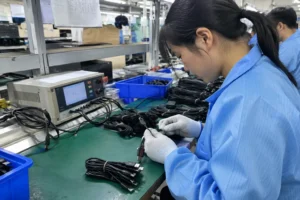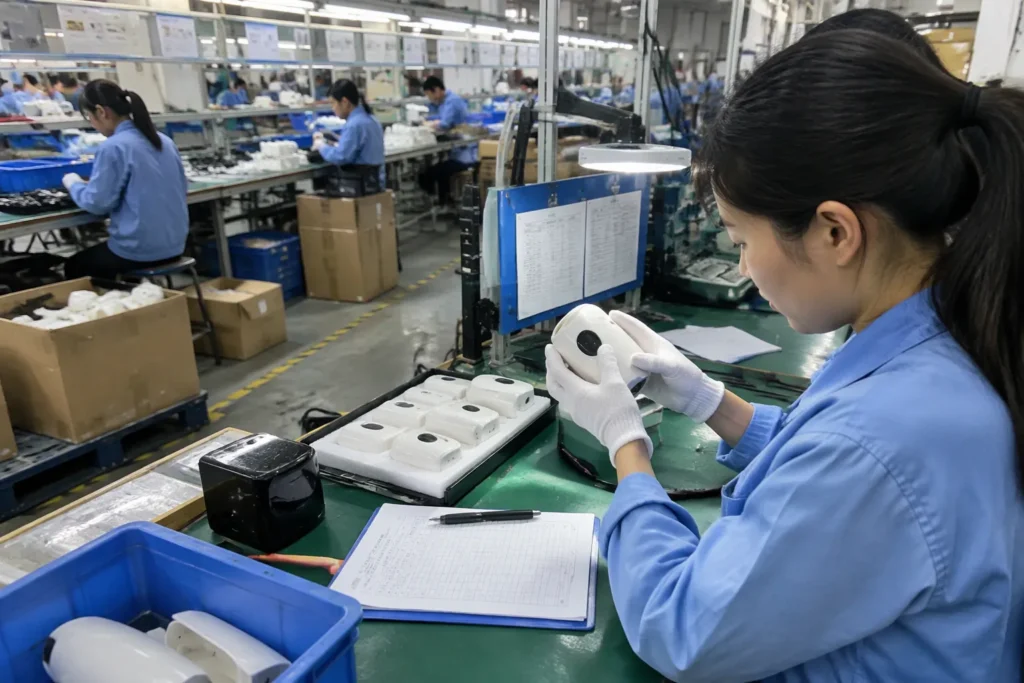
A USB cable can look like a simple accessory, but the wrong specification can create compatibility complaints, slow charging claims, returns, and inconsistent batches. I help buyers turn device, charging, data, length, construction, packaging, and volume requirements into a clear quotation request, so suppliers can deliver the same product reliably.
Quick Answer
- Start with the devices and use case, not only the connector shape.
- Separate connector type from charging power, data speed, and compatibility.
- Confirm connector combinations, cable length, conductor construction, jacket material, and testing requirements.
- Ask suppliers to state measurable performance and limitations in the quotation.
- Control samples, approved specifications, packaging, and batch consistency before mass production.
- Verify certifications and product documents for the target European or North American market.
The best USB cable for B2B purchasing is the one whose connector combination, charging requirement, data function, length, materials, customization, packaging, and quality controls match the intended devices. USB-A and USB-C identify interfaces, but they do not independently prove charging power, transfer speed, or overall compatibility.[1]
The central purchasing question is therefore not simply, “Which cable has USB-C?” I recommend asking, “What must this cable do, with which devices, under which commercial and quality conditions?” The answer creates an RFQ that suppliers can quote accurately and that buyers can inspect later.
Complete Cable Buyers: What Should I Confirm First
Many cable enquiries start with a short message such as “Please quote a fast USB-C cable.” That description leaves too much open. A supplier may interpret “fast” as charging only, while the buyer may expect high-speed data transfer or a particular laptop application.
Start with the device ecosystem
- Smartphones and tablets
- Laptops and monitors
- Power banks and wall chargers
- TWS earphones and charging cases
- Smartwatches and other wearable products
- POS equipment, cameras, controllers, or industrial accessories
- Retail bundles sold with a specific charger or electronic product
Separate four different requirements
| Requirement | Example question | Why it matters |
|---|---|---|
| Interface | Is the cable USB-A to USB-C or USB-C to USB-C? | Defines the physical connection |
| Charging | What charger, device, and expected power level are involved? | Helps select suitable conductors and construction |
| Data | Does the buyer need synchronization, file transfer, or a defined data class? | Prevents a charging-only cable from being sold as a data cable |
| Mechanical design | What length, jacket, connector housing, and bend resistance are needed? | Affects usability, cost, and production consistency |
A connector can fit a device while the cable still fails to meet the customer’s expected function.[2] I therefore treat compatibility as a complete system question involving the source, cable, device, and sometimes the charger protocol.
Build an RFQ before requesting prices
- Connector combination and orientation.
- Intended devices and application.
- Charging requirement and any supported power expectation.
- Data requirement, if applicable.
- Cable length and tolerance.
- Conductor or construction preference.
- Outer jacket material and color.
- Connector housing and strain relief.
- Logo, color, or other customization.
- Packaging and labeling.
- Target quantity, MOQ, and delivery schedule.
- Required inspection documents and market requirements.
I do not recommend filling every field with a technical number before the application is understood. A buyer can state the business need first and ask a qualified supplier to confirm the appropriate construction. The final quotation should then show exactly what the supplier is offering.
Why the first sample is not enough
A sample answers only part of the purchasing question. It shows how one item performs under the conditions tested. It does not automatically prove that later production will use the same materials, internal construction, artwork, packaging, and inspection process.
- Approved cable length and measurement method
- Connector appearance and housing dimensions
- Jacket color and material
- Markings and logo position
- Packaging artwork and carton labels
- Required tests and acceptable results
- Changes that require buyer approval
How Do USB-A and USB-C Cables Differ?
Buyers often compare USB-A and USB-C as if they were performance categories. They are mainly connector interface descriptions. The same connector family can appear in cables with different charging, data, construction, and identification characteristics.[7]
USB-A and USB-C describe connector interfaces, while a cable’s charging and data capability depends on the complete design, including conductors, wiring, identification, source equipment, device requirements, and any applicable specifications. Buyers should request documented capability instead of relying on the connector name alone.
USB-A remains relevant in some product ranges
USB-A is still common on older chargers, computers, car adapters, hubs, power banks, and retail accessories.[3] A USB-A to USB-C cable can therefore remain commercially useful, especially for customers replacing older cables or using mixed device fleets.
- Replacement accessories for established consumer electronics
- Entry-level charging kits
- Travel and office bundles
- Retail products designed for broad backward compatibility
- Accessories where the customer already owns USB-A power sources
USB-C offers a wider range of applications

USB-C has become common on phones, tablets, laptops, monitors, chargers, power banks, and other electronics.[4] Its reversible connector is convenient, but the connector does not define every capability.[5]
- Charging suitability
- Data transfer capability
- Internal wire arrangement
- Electronic identification components
- Cable length
- Shielding and construction
- Display or other specialized support
- Mechanical durability
The product page and carton should avoid broad claims that the actual cable cannot support. If a buyer wants to market a cable for laptop charging or high-speed data, the supplier should explain the applicable conditions and provide relevant documents where available.
Cable-to-cable comparison
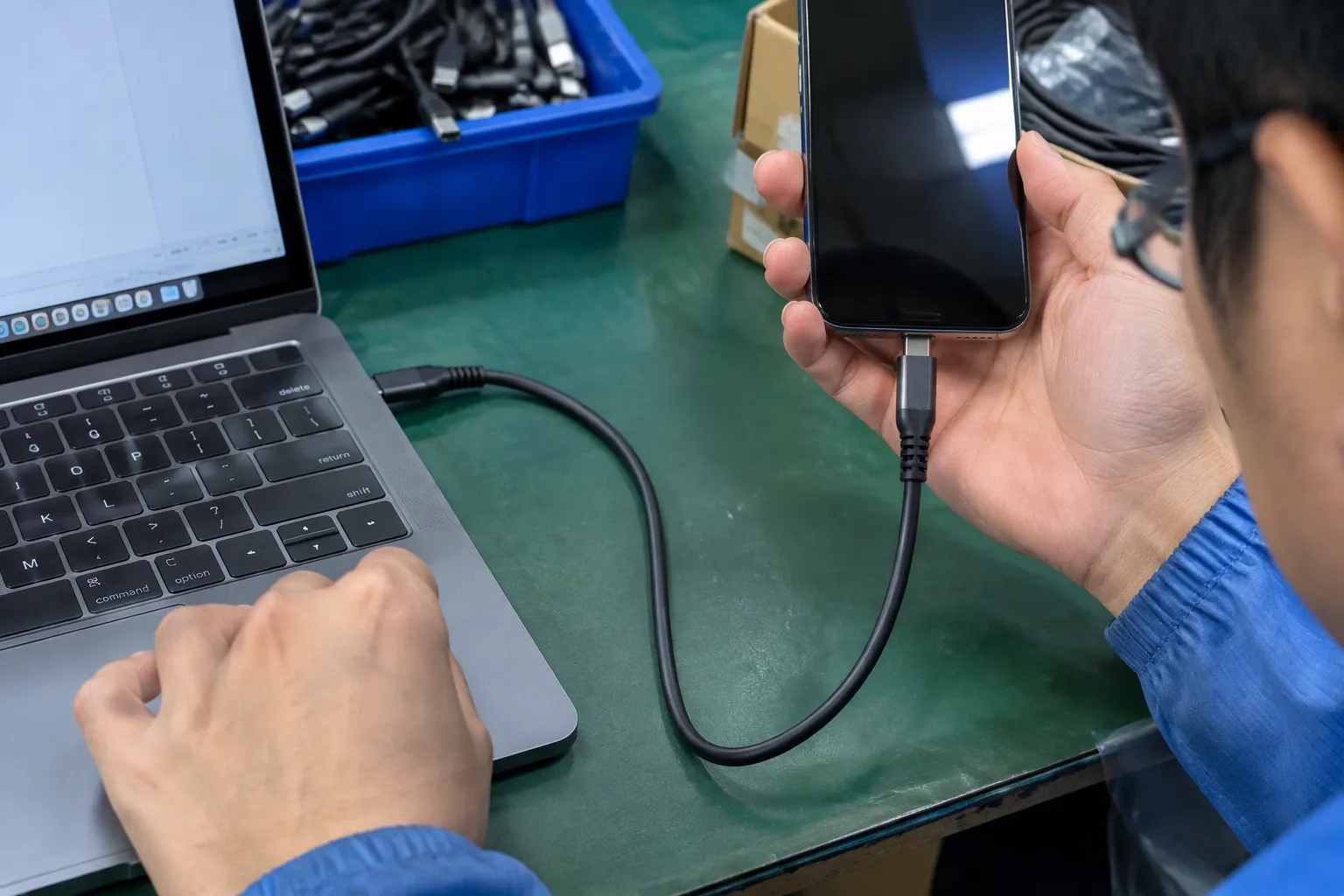
| Cable description | Common use | What I would still confirm |
|---|---|---|
| USB-A to USB-C | Older charger or computer to newer device | Charging expectation, data function, device compatibility |
| USB-C to USB-C | Modern charger, laptop, tablet, or phone connection | Power requirement, data capability, identification, source and device conditions |
| USB-A to Micro-USB | Older accessories and legacy devices | Device fit, charging use, remaining market demand |
| USB-C to Lightning-style device connector | Selected legacy device ecosystems | Licensing or program requirements, compatibility, labeling |
| USB-C to proprietary connector | Specific products or accessories | Exact device list and connector sourcing |
Check current technical references
For USB-related technical information, I recommend reviewing materials from the USB Implementers Forum rather than relying on a supplier’s informal description alone. The USB-IF publishes information about USB technology and certification programs. Buyers should still ask the supplier which specific product documents apply to the quoted cable.
What Charging and Data Performance Should I Request?
“Fast charging” and “high-speed data” are useful commercial phrases, but they are incomplete procurement specifications. A buyer needs to convert them into an intended application and a verifiable supplier statement.
I have seen specification discussions become clearer when buyers describe the charger and device first. For example, “a cable for a USB-C laptop charger and selected laptops” is more useful than “a powerful Type-C cable.”
Buyers should request charging and data performance as separate items. They should identify the source, device, expected application, and required performance, then ask the supplier to state supported conditions, limitations, and evidence. Connector type alone is not sufficient.
Charging is a system requirement
Each situation can place different demands on the cable and related equipment. I ask buyers to identify the expected charger output and the main devices. I then ask the supplier whether the proposed cable is suitable for that combination.
“Please confirm whether the proposed cable is suitable for the listed devices and charger conditions. State the supported charging application, any required identification components, and the test or inspection evidence available.”
Data performance needs a separate line item
Some cables are intended mainly for charging. Others are used for synchronization, file transfer, peripherals, or more demanding applications. The buyer should state whether data is required and what equipment will be connected.
- Charging-only or charging-and-data function
- Intended host and device
- Required data class or transfer expectation
- Whether the application involves a hub, monitor, storage device, or peripheral
- Cable length and shielding expectations
- Whether the supplier can provide a test method or report
A cable that charges a phone may not meet the buyer’s requirement for a laptop peripheral or monitor connection.[8] The retailer should not use a broad data claim unless the product has been evaluated for that claim.
Why length can affect selection
Longer cables can be more convenient, but length may influence electrical behavior, mechanical handling, packaging, and cost.[6] A buyer should specify the required working length and how it is measured. A supplier should explain any design changes needed for a longer version.
| Use case | Common length discussion | Purchasing focus |
|---|---|---|
| Travel charging | Compact length | Portability, storage, strain relief |
| Desk charging | Medium length | Reach, appearance, retail positioning |
| Laptop or bedside use | Longer length | Construction, handling, packaging size |
| Vehicle or fixed installation | Application-specific | Routing, bend conditions, connector security |
Ask for evidence without overstating it
Available evidence may include internal inspection records, sample test results, third-party reports, or certification documents. These records are not interchangeable. A buyer should ask what product, model, date, test method, and laboratory or organization each document relates to.
Where a buyer needs a regulated-market assessment, I recommend qualified technical and compliance professionals. Certifications and reports should be verified for the actual product and market rather than copied from a similar cable.
How Should I Specify Materials and Construction?
A USB cable is not defined only by its end connectors. The conductor, insulation, shielding, jacket, connector shell, soldering or termination, strain relief, and assembly process all influence the finished product.
Material choices also affect quotation price and customer perception. A braided cable may look more premium, while a soft PVC jacket may suit a cost-sensitive retail bundle. Neither option is automatically right for every application.
A complete USB cable specification should cover conductor and internal construction, insulation, outer jacket, connector housing, strain relief, finish, color, and mechanical requirements. Buyers should connect each material choice to the intended use, target price, and quality expectation.
Common outer jacket choices
| Jacket or finish | Possible advantages | Questions for the buyer |
|---|---|---|
| PVC | Familiar, scalable, often cost-effective | Does the flexibility and appearance suit the target range? |
| TPE | Soft feel and flexible handling | What formula, color consistency, and abrasion expectations apply? |
| Silicone | Soft touch and high flexibility in selected uses | Does the price and surface behavior fit the product? |
| Braided textile | Premium appearance and tactile differentiation | What is underneath the braid, and how are ends protected? |
Conductor and internal design
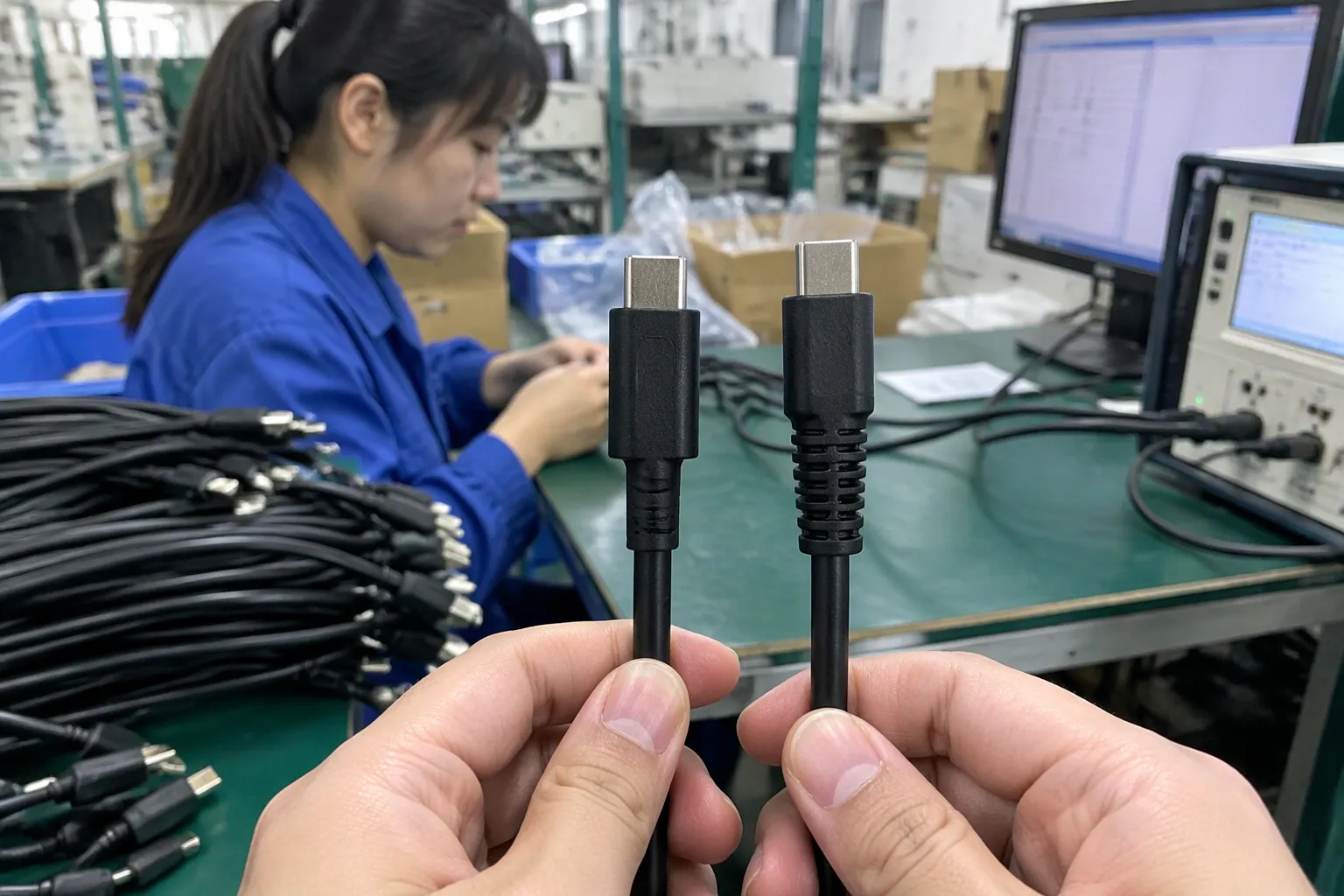
The buyer does not always need to dictate every internal detail. However, the buyer should explain the required application and ask the supplier to recommend a construction. If the buyer has a required wire gauge, shielding structure, or conductor material, that information should appear in the RFQ.
I also recommend asking whether the internal construction changes between cable lengths or performance versions. A supplier may use different designs for a short charging cable and a longer cable intended for a more demanding application.
Connector housing and strain relief
During sample review, I pay attention to whether the cable sits naturally in the connector housing and whether the strain relief looks consistent on both ends. A good appearance does not replace testing, but poor molding, misalignment, or uneven printing can indicate production control issues.
Customization requires a visual specification
- Pantone or other agreed color reference where relevant.
- Logo artwork and file format.
- Printing method and acceptable position.
- Connector housing finish.
- Braid pattern or jacket texture.
- Packaging dieline and artwork.
- Barcode, warning, and language requirements.
- Approved sample photographs.
How Do I Compare USB Cable Suppliers?
A low quotation can be attractive, but price comparison is difficult when suppliers quote different specifications. One supplier may include a branded connector housing and retail packaging, while another may quote a basic cable with a simpler construction.
Compare USB cable suppliers on specification clarity, sample quality, production controls, customization capability, documentation, MOQ, lead time, packaging, and communication. Price should be evaluated after confirming that each supplier is quoting the same product scope.
Normalize every quotation
- Unit product price
- Tooling or mold charge
- Sample charge
- Logo and customization cost
- Packaging cost
- Testing or inspection cost
- Carton and shipping information
- MOQ by color or design
- Lead time for samples and mass production
- Payment terms
- Replacement or complaint handling process
Review the sample process
- Is the sample made with production-intended materials?
- Is the logo process the same as mass production?
- Is the packaging a mock-up or final structure?
- What changed between the first and revised sample?
- Which tests were performed?
- What is the approval process before production?
Evaluate manufacturing and quality control
- Incoming material checks
- Connector and cable construction confirmation
- In-process assembly inspection
- Appearance and dimension inspection
- Functional testing
- Packing inspection
- Carton quantity and label verification
- Retention of approved samples and records
Certifications are documents to verify
My business context includes a range of export certifications and documents, but I do not treat a general statement such as “certified” as sufficient evidence. The buyer should request documents for the actual model and destination market.
- Product name and model number
- Manufacturer or responsible company
- Document date and validity where applicable
- Test standard or certification program
- Product photos or description
- Rated specifications
- Testing organization
- Whether the document covers the finished cable or only a component
European and North American requirements can vary by product type, claims, packaging, and market. Buyers should use qualified compliance professionals when they need a formal determination. Useful starting points include the European Commission product safety information and the U.S. Consumer Product Safety Commission. These resources do not replace product-specific advice.
Use a supplier comparison table
| Evaluation area | Supplier A | Supplier B | Buyer decision |
|---|---|---|---|
| Connector and function | Clearly stated | Partly stated | Reject unclear scope or request revision |
| Charging and data claims | Conditions provided | Broad marketing language | Prefer measurable, application-specific wording |
| Customization | Artwork and sample process | Logo only | Match the retailer’s needs |
| MOQ | By color and model | Total quantity only | Confirm purchasing flexibility |
| Lead time | Sample and production stages | One estimated date | Prefer a documented schedule |
| Quality control | Inspection plan available | No details | Assess batch risk |
| Documents | Model-specific files | Generic certificates | Verify before approval |
| Packaging | Dieline and labels confirmed | Basic polybag | Compare total landed product value |
How Can I Control Quality Across a Production Batch?
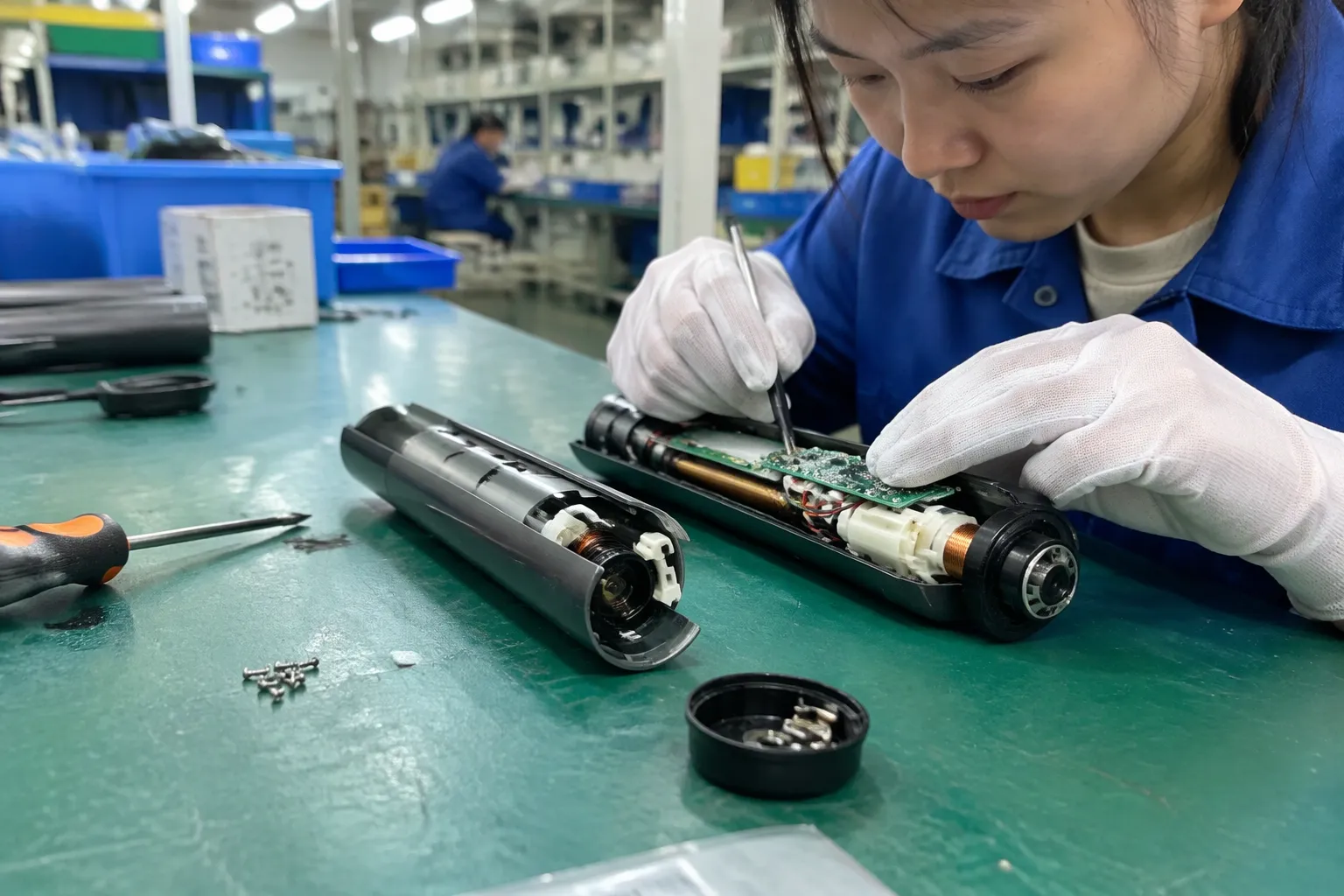
Batch quality control should connect the approved sample with documented materials, construction, appearance, functional checks, packaging, and change approval. Buyers should use pre-production confirmation and shipment inspection to reduce the risk of inconsistent cables reaching customers.
Control changes after approval
A supplier may need to change a material, component, sub-supplier, mold, or packaging method. The buyer should require advance communication for changes that can affect function, compliance, appearance, or customer perception.
Plan inspections at useful stages
- Pre-production review: Confirm materials, artwork, approved sample, and production plan.
- During-production check: Review early units, construction, appearance, and functional samples.
- Pre-shipment inspection: Check quantity, cartons, labels, appearance, and selected functions.
- Receiving inspection: Confirm the shipment against the approved standard.
- Complaint review: Trace the issue to model, batch, material, or packing record.
What Should a Wholesale USB Cable Specification Include?
A specification should be detailed enough to prevent conflicting interpretations but simple enough for purchasing, sales, quality, and factory teams to use. I prefer a one-page commercial summary supported by artwork, test requirements, and packaging files.
A wholesale USB cable specification should identify the application, connector combination, charging and data function, length, construction, customization, packaging, quantity, documents, inspection method, and approval procedure. It should also record which claims the supplier has confirmed.
RFQ-ready template
| Specification field | Buyer entry |
|---|---|
| Product name | Example: USB-C to USB-C charging and data cable |
| Intended devices | List models or device categories |
| Connector combination | USB-A to USB-C, USB-C to USB-C, etc. |
| Charging application | State charger, device, and expected use |
| Data function | Charging-only, synchronization, or defined application |
| Length | Working length and tolerance |
| Jacket | PVC, TPE, silicone, braid, color |
| Connector housing | Shape, finish, logo, strain relief |
| Customization | Color, printing, packaging, labels |
| Packaging | Unit pack, carton quantity, barcode |
| Quantity | Initial order and forecast |
| MOQ | By model, color, and packaging |
| Documents | Required reports, declarations, or certificates |
| Inspection | Functional, appearance, dimensions, packing |
| Delivery | Sample date and production lead time |
Keep marketing claims under control
Retail packaging often uses short claims such as “fast,” “durable,” or “high-speed.” Those words should match the approved product and evidence. If a claim depends on the charger, device, protocol, or operating condition, the packaging should not present it as universal.
I recommend that buyers ask a qualified technical reviewer or compliance professional to review claims when the product will be sold widely in Europe or North America. A clear claim can support sales. An unsupported claim can create returns, marketplace disputes, or regulatory questions.
Frequently Asked Questions
Is USB-C always faster than USB-A?
No. USB-C and USB-A identify connector interfaces, not complete cable performance. A USB-C cable can have different charging and data capabilities from another USB-C cable. I recommend checking the source, device, cable construction, and supplier’s documented performance conditions.
How do I choose between USB-A to USB-C and USB-C to USB-C?
I start with the charger, computer, and target devices. USB-A to USB-C may suit customers with existing USB-A power sources. USB-C to USB-C may suit newer chargers, laptops, tablets, and phones. The correct choice depends on the device ecosystem and required application.
Should I buy a charging-only cable or a data cable?
I recommend a charging-only cable when the product has no data requirement and the packaging states that clearly. Buyers should request a data cable when customers need synchronization, file transfer, peripherals, or another defined data application. The supplier should confirm the intended function before quotation.
What documents should I request from a cable supplier?
Request documents that relate to the actual model, manufacturer, market, and declared claims. Depending on the project, these may include test reports, declarations, certification records, material information, and inspection records. Buyers should verify documents and obtain qualified compliance advice for application-specific decisions.
How can I reduce inconsistent USB cable batches?
Use an approved production-intended sample, written construction and packaging specifications, change control, supplier confirmation, and inspection at suitable stages. Keep batch and carton records. If a cable is customized, control artwork, materials, logo position, and packaging as carefully as the electrical function.
Conclusion
A reliable USB cable purchasing decision begins with the customer’s devices and use case. I separate connector shape from charging and data capability, then define length, construction, customization, packaging, documents, MOQ, and inspection requirements. I also treat batch consistency as part of quality because a successful sample does not guarantee identical mass production. For your next wholesale or private-label project, send your device list and target application to our Shenzhen OEM/ODM team so we can help turn the requirement into a clear, production-ready quotation.
Sources
- USB Charger (USB Power Delivery)", USB standards documentation distinguishes the USB Type-C connector from the separately specified power-delivery and data-transfer capabilities that may be implemented by a cable and connected devices
- Universal Serial Bus Type-C Cable and Connector ...", Technical descriptions of USB Type-C systems indicate that physical receptacle compatibility does not by itself determine supported signaling modes, current capability, or negotiated power
- Power Banks Market Demands and Forecast 2033", Market and technology-adoption evidence may support the continued presence of USB-A interfaces in legacy consumer-electronics and charging ecosystems
- USB Type C Market Size ($15.2 Billion) 2030", European Union common-charger policy documents provide contextual evidence that USB Type-C has become an established interface for several categories of portable electronic devices
- USB Charger (USB Power Delivery)", USB-IF technical materials describe Type-C as a reversible connector system whose supported data rates, power-delivery behavior, and alternate modes depend on the applicable implementation and specifications
- USB cable maximum length", Electrical engineering literature identifies cable length as a factor in conductor resistance, attenuation, and high-speed signal integrity, while longer assemblies also impose additional handling and packaging requirements
- Do USB-C to USB-C cables need an emarker chip ...", USB-IF specifications describe Type-C cables with differing current ratings and functional capabilities, including cases in which electronic marking communicates cable characteristics to the connected system
- What is USB-C DisplayPort (DP Alt Mode) and Why it Matters", USB Type-C technical documentation treats power delivery, USB data transfer, and display alternate modes as distinct functions, so charging performance alone does not establish monitor or peripheral support